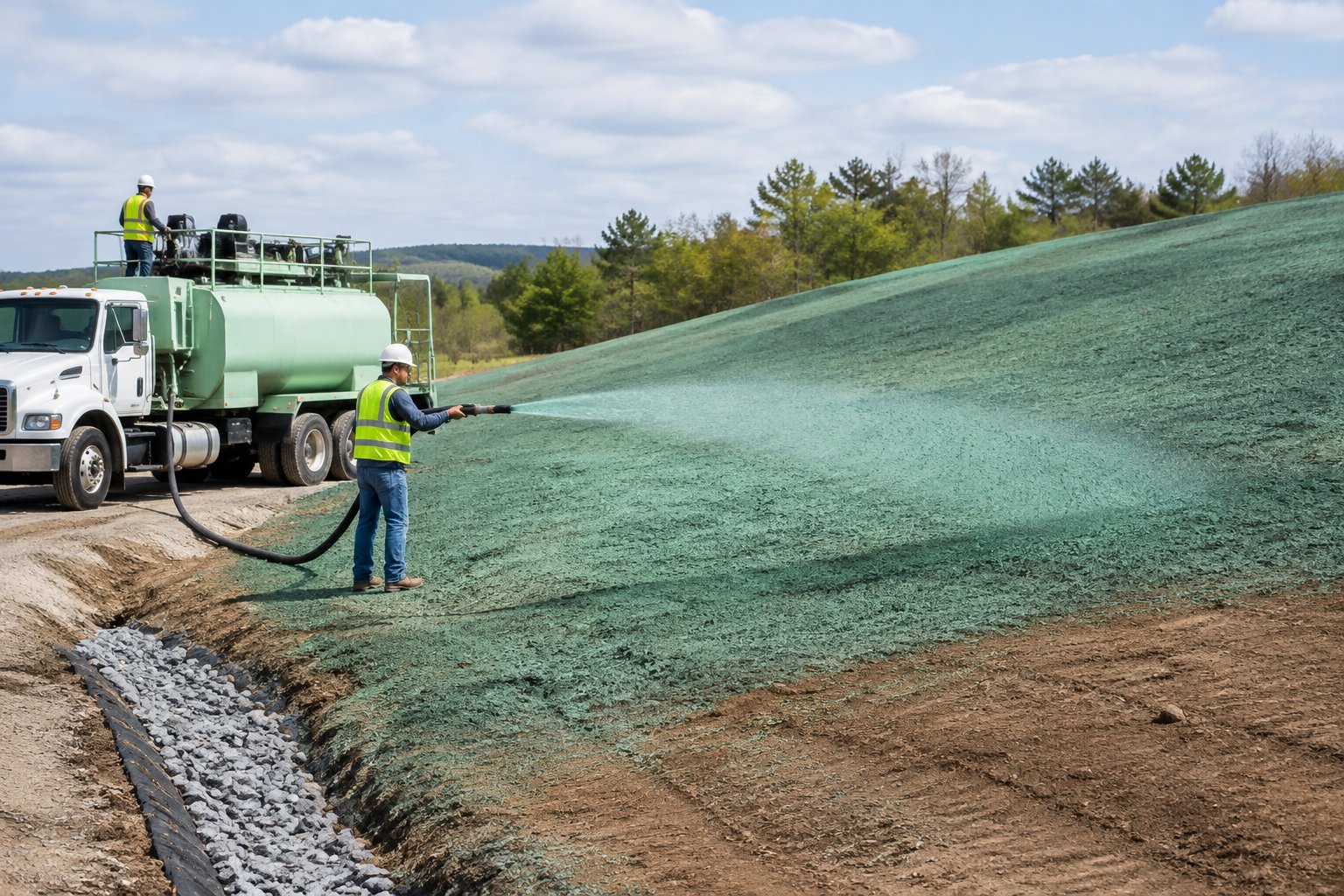
The same truck can show up for a hydroseed item, a hydromulch item or a hydromulch cap, so the label on the bid tells you less than the material list does. On a spec or bid, "hydroseed" means seed goes into the slurry and the goal is a growing stand, "hydromulch" means hydraulic mulch is the deliverable and seed may or may not be included, and "hydromulch cap" means a mulch layer sprayed over seed that was already placed by a drill or another method. Which one your site needs depends on whether the ground is finished, how big it is and how long it has to hold.
We have covered the basic difference between the two methods in hydroseed vs. hydromulch for Texas construction sites. This article is for the person holding the plans or the bid tab, trying to work out what each line item will put on the ground and which one belongs on each part of the site.
What Does Each Line Item Actually Cover?
In the field, people use these terms loosely. Some crews call every hydraulic application "hydromulch," and some specs use "hydraulic seeding" for anything sprayed. The way to read a line item is to ignore the name for a moment and look at three things: whether seed is listed, what mulch product and rate are listed, and whether the item stands alone or follows another operation.
If a bid lists "hydromulch" with no seed species or rate, assume it is cover only and ask. If it lists seed but no mulch rate, ask for that too, because a light application and a heavy one are very different jobs under the same name.
When Does a Site Need Mulch-Only Cover?
Mulch-only cover is for bare ground that has to be held but is not ready to grow grass. Typical cases are stockpiles, future pads, utility corridors that will be cut again, and graded areas waiting on the next phase. It also makes sense when grading finishes outside a good seeding window and the ground cannot sit bare until spring.
The point is to keep sediment on site and the SWP3 in order without paying for seed that will be torn up. What mulch-only cover will not do is get you to final stabilization. It is a temporary measure, so the schedule still needs a seeded application on that ground before the permit can close. On a phased job it is common to see mulch-only cover go down two or three times on the same area before it finally gets seeded.
When Should Seed and Mulch Go On Together?
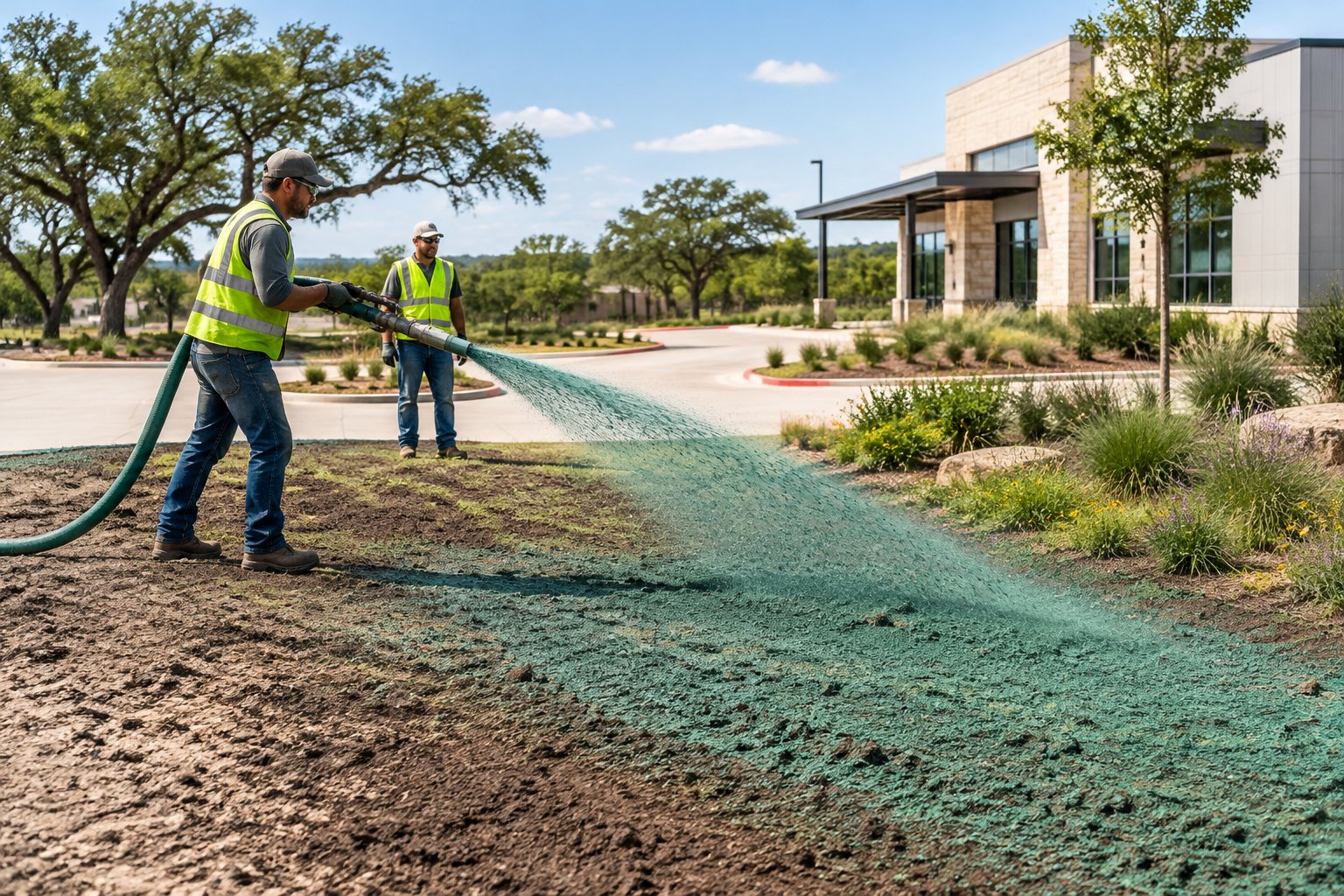
A combined hydroseed application is the standard choice once an area reaches final grade and needs vegetation for closeout. Lot perimeters, finished pads, common areas, ditch sides and detention areas are the usual candidates. One pass seeds the ground and covers it, which saves a mobilization and shortens the time soil sits exposed.
The thing to watch is the mulch rate. A basic hydroseed rate is built to hold moisture around seed on gentle ground. Where the area slopes, faces a storm forecast or sits near a drainage path, the spec may call for the seed to go into a heavier hydromulch application instead. That is still seed and mulch together, but with more protection on the surface, and it should be priced and scheduled as its own item. Very steep faces and areas with concentrated flow move up again to bonded fiber matrix or Flexterra HP-FGM, which are separate products with their own line items.
When Does a Hydromulch Cap Over Drill Seeding Make Sense?
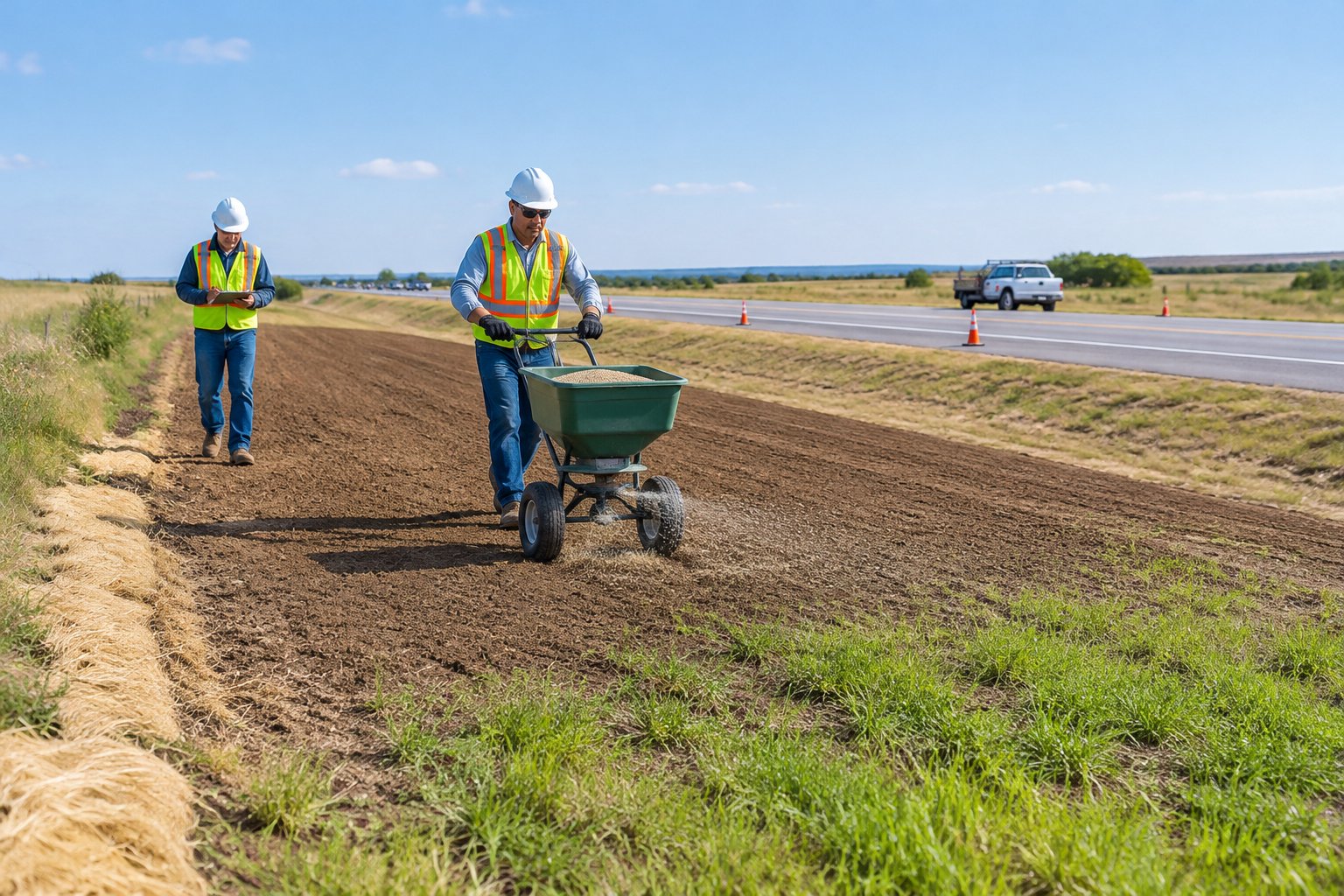
A cap over drill seeding fits large acreage where getting seed into the soil matters as much as covering it. The drill places seed at a set depth with good soil contact, which suits native mixes, pasture and fluffy or chaffy seed that does not always meter well through a tank. The sprayed cap then holds moisture, softens raindrop impact and keeps the surface from moving while that seed comes up.
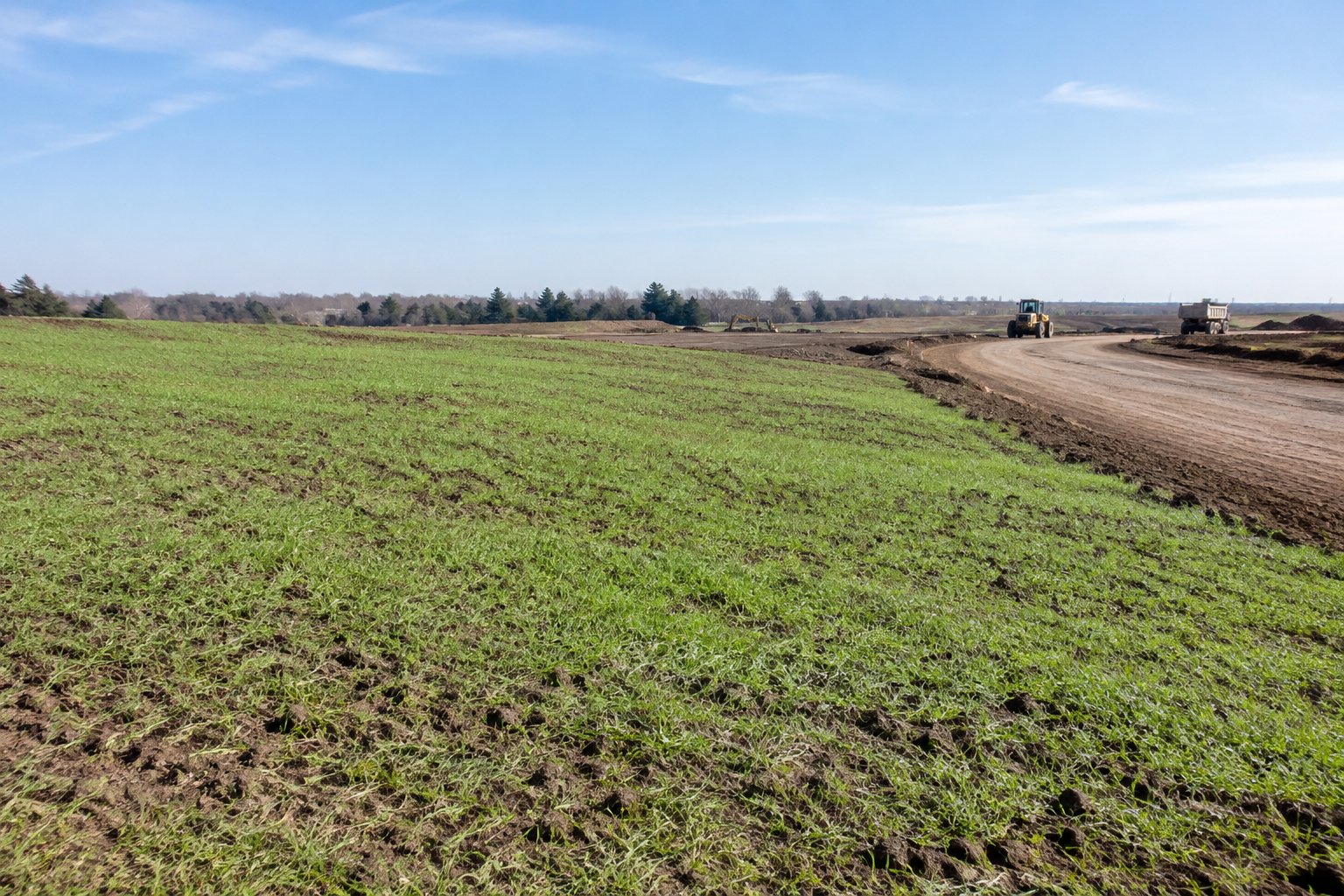
This sequence shows up on ranch land, pipeline and utility right of way, solar sites and other restoration work. On one Texas ranch project, our crews drill seeded the ground and followed with a hydromulch cap over the seeded area. If you are weighing the two seeding methods themselves, our comparison of hydroseeding vs. drill seeding for Texas project sites goes through when each one is the better fit.
When you see a cap on a bid, check that the drill seeding is either in the same contractor's scope or clearly assigned to someone else. A cap priced without the seeding, or seeding priced without a cap, leaves a gap in the sequence that tends to surface after the first heavy rain.
What Should the Line Item Spell Out?
Two bids that both say "hydromulch, 10 acres" can describe very different work. Before comparing numbers, make sure each line item states:
- Seed: species, rate (often in pure live seed per acre on spec work) and season, or a clear "no seed"
- Mulch: product type and application rate
- Additives: whether tackifier and fertilizer are included, and which products
- Method: combined hydroseed, mulch only, or cap over seed placed by another method
- Area and phasing: total area and how many mobilizations are assumed
- Prep: who handles harrowing, loosening compacted soil or repairing rills before application
- Water: who provides establishment water on seeded items
Once those are lined up, the price differences usually make sense. For a rough range on standard hydroseeding before you request a firm number, try our hydroseeding pricing calculator. Mulch-only items, caps and heavier products are priced on the actual scope.
How Do You Match Line Items to a Phased Site?
Most commercial sites end up using more than one of these items, and the trick is assigning them by zone rather than picking one for the whole job. A practical way to do it is to walk the plan sheet by sheet and tag each disturbed area by its status:
- Final grade, staying as vegetation: hydroseed, with a heavier mulch where it slopes or drains
- Graded but due to be disturbed again: mulch-only cover
- Large open acreage, native or pasture mix: drill seed with a hydromulch cap
- Steep cuts and concentrated flow: an engineered hydraulic product or other measure from the erosion control plan
That tagging also helps the schedule. Mulch-only areas get covered as soon as grading stops, seeded areas get scheduled for the right season, and nothing sits waiting on a decision. Our erosion control services cover all of these applications, so one crew can work through the zones as the site comes ready.
Have a Seeding Spec You Want a Second Read On?
If you are looking at a spec or bid tab and are not sure which line items the site needs, send it over. Our team has been doing hydroseeding, hydromulching and drill seeding across Texas and Louisiana since 1990, and we are happy to walk through it zone by zone with you. Contact Allied Hydromulch or call 281-482-8212 to talk it over.
Frequently Asked Questions
Can a mulch-only hydromulch item close out a stormwater permit?
No. Mulch-only cover is temporary stabilization. Final stabilization needs established vegetation or another permanent measure, so seeded work still has to happen before the permit can close.
Is a hydromulch cap the same as hydroseeding?
Not quite. A cap is sprayed over seed that was already placed, usually by a drill, so its job is protection. In a hydroseed application the seed travels in the slurry itself.
Why do two "hydromulch" bids for the same area differ so much?
Usually because they assume different things: seed or no seed, a light or heavy mulch rate, a different product, or a different number of mobilizations. Line up the scope items before comparing prices.
Does a hydromulch cap need seed in the tank as well?
Normally not, because the seed has already gone in with the drill. Some specs add seed to the cap for extra cover, so check the line item.