A creek bank behind a new development or the side slope of a pond can lose a surprising amount of soil in one storm, and the damage tends to grow from there. Most bank stabilization on commercial and municipal sites works best as a combined treatment: protect the toe where water hits hardest, grade the upper bank to a stable slope and cover that slope with a hydraulic product and deep-rooted vegetation. Where the flow is strong enough to strip plants and soil at the toe, vegetation alone will not hold, and the toe needs rock or another engineered armor.
This guide covers how banks fail, where vegetative stabilization can do the job on its own, where hard armor is needed and how to sequence the work so the bank survives establishment.
Why Do Banks Erode or Slump?
Banks fail in three main ways, and the fix depends on which one you are dealing with.
Surface erosion. Sheet flow from a pad, parking lot or road picks up speed as it crosses the top of the bank. On bare soil it cuts rills that grow into gullies working back into the crest. Clearing and grading strip the existing root mat, so banks are at their most exposed during construction.
Toe scour. At the base, flowing water pulls soil from the outside of bends, and pipes and swales dump concentrated flow onto one spot. Once the toe goes, the upper bank loses its support and a well-vegetated slope can still slide into the channel.
Saturation and slumping. Soaked soil is heavy and weak. After long rain or a fast drop in water level, a saturated bank can slump. Gulf Coast clays swell when wet and crack when dry, which opens paths for water deeper into the bank. Vertical faces with fresh soil at the waterline are the usual sign.
Look upstream as well. New pavement, an undersized outfall or a channel that is cutting downward will keep attacking a repaired bank. Fixing only the visible damage leaves the cause in place.
When Can Vegetation Stabilize a Bank on Its Own?
Vegetation does the long-term work on most banks. Fibrous grass roots bind the surface, deeper-rooted natives reinforce the soil below and the leaf cover slows water at the surface. Once established, a vegetated bank repairs itself in a way rock never will.
A vegetative treatment, with hydraulic cover to protect the seed, is a good fit where:
- The toe is already stable, or the water at the base moves slowly.
- The slope has been graded to the design the engineer has set.
- The bank gets good sun for grass growth.
- Flow is mainly rain and sheet runoff rather than sustained current.
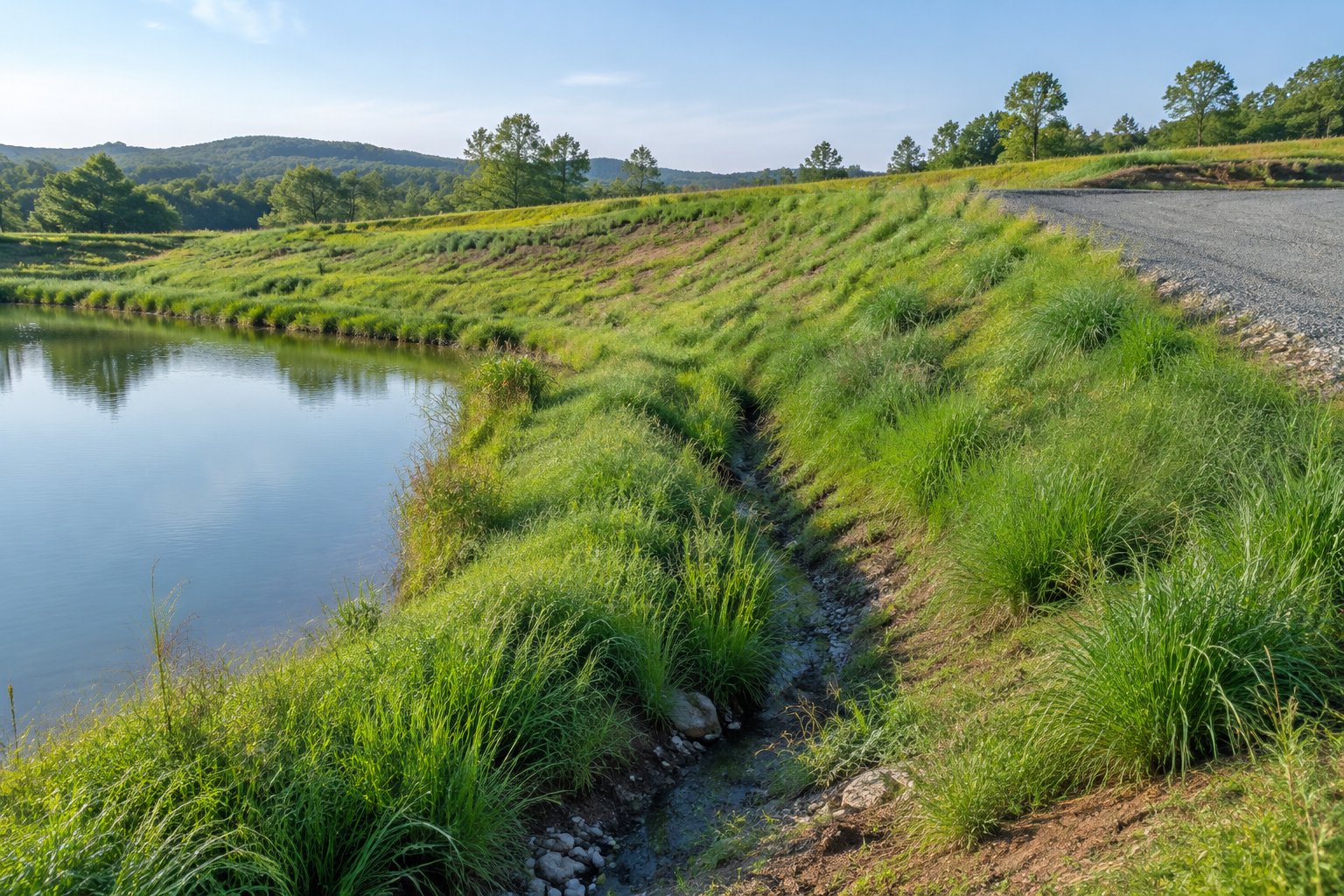
That describes the upper banks of many detention and retention ponds, channel side slopes above normal flow, pond edges with little wave action and graded banks behind a structural toe. Our post on hydroseeding detention ponds and stabilizing banks before storms covers pond side slopes in particular.
Choosing the Hydraulic Cover
The hydraulic product holds seed and soil in place until roots take over, and it scales with the slope. Tackified hydromulch suits moderate graded banks. Bonded fiber matrix forms a continuous bonded layer that holds better on steeper or longer slopes, and our guide to when bonded fiber matrix outperforms standard mulch explains where it fits. Flexterra HP-FGM is the step up for severe slopes and disturbed soils. Spray equipment can reach a bank from the top, which helps where machines cannot get close to the water.
Choosing the Seed
Pick species for the zone of the bank. The lower slope stays wet longer than the crest, so a single mix may not suit the whole face. Warm-season grasses such as bermuda give fast surface cover, and native grasses build deeper roots for the long term. Our native grass seeding services are often used on banks where low maintenance matters. Project specs and the engineer frequently set the seed list.
When Does a Bank Need Hard Armor Instead?
Seeded cover is built for surface erosion. It does not stand up to sustained current at the toe or a pipe discharging onto the slope. Hard armor belongs where water velocity and force exceed what vegetation can resist, even once established. Typical spots:
- Outfall aprons and pipe discharges
- The outside of tight bends in creeks and channels
- Bridge abutments and culvert headwalls
- Channels below large paved areas with flashy storm flows
- Pond inlets and areas exposed to strong wave action
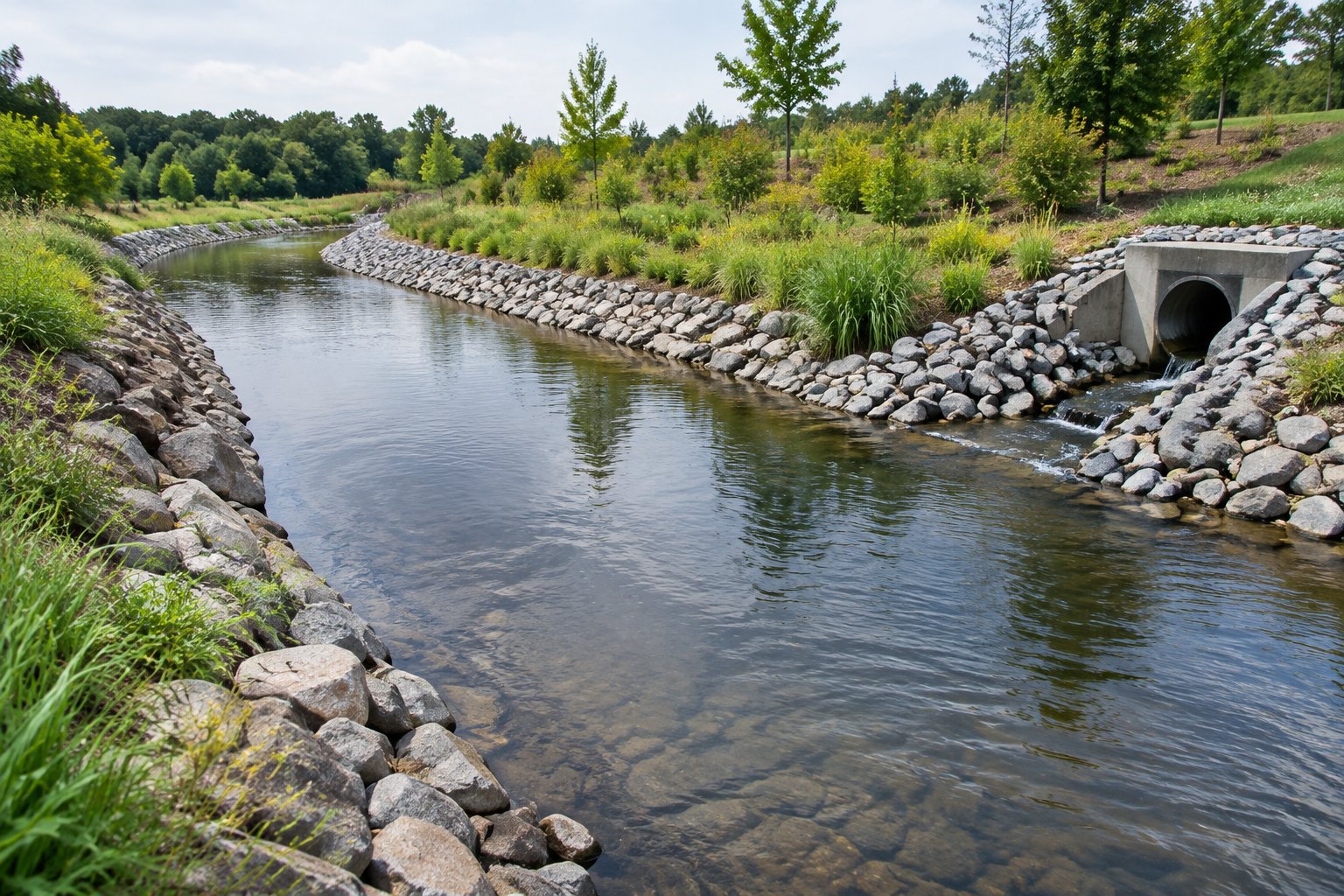
In those places the engineer sizes riprap or another armor from flow calculations, usually with filter fabric beneath to stop soil washing out between the stones. Armor protects the toe but can shift erosion downstream and offers little habitat value, which is why the usual design limits it to where it is needed and vegetates the slope above.
How Should Bank Work Be Sequenced?
Bank work goes from the bottom up, and gaps between steps are where repairs fail.
- Divert or manage flow so crews can work safely.
- Install toe protection: rock, coir logs or the engineered toe.
- Regrade the upper bank to the design slope.
- Apply seed and hydraulic cover right after grading, before the next rain.
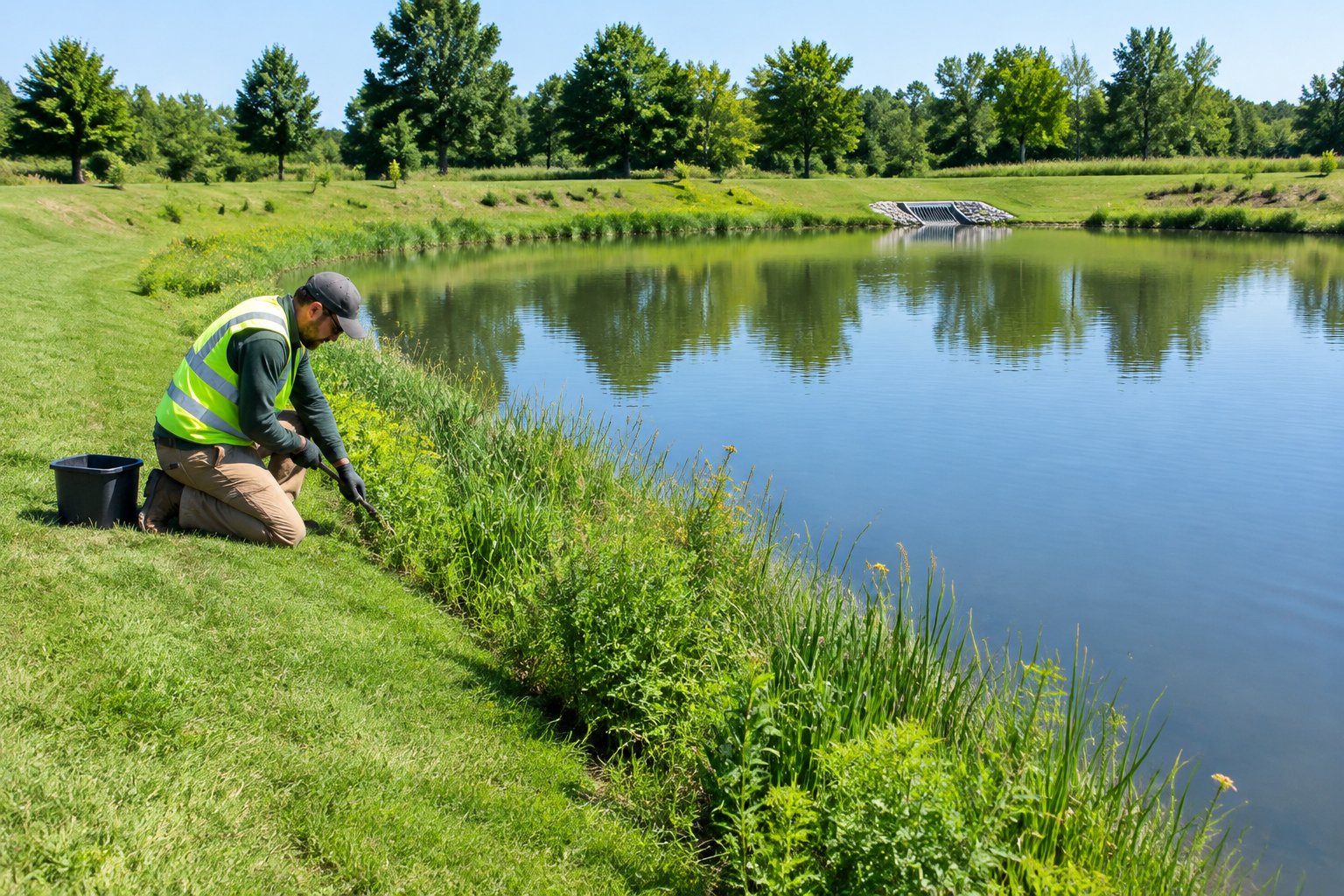
- Inspect after significant storms and repair rills, washed cover or toe scour promptly.
Bank work in or along a regulated stream can need a licensed engineer's design and federal, state or local permits, so settle who owns the design, who holds the permits and who signs off on final stabilization before mobilizing. The SWP3 should show the bank treatments and inspection points. Plan for moisture during establishment too; a graded bank in Texas summer heat without a watering plan can stall. For a rough budget on the seeding and hydraulic cover portion, our online pricing calculator gives a range for standard hydroseeding.
Talk to Us About Your Bank Before the Next Storm Season
Allied Hydromulch has stabilized banks, channels and slopes for contractors, developers and public agencies across Texas and Louisiana since 1990. We apply hydromulch, bonded fiber matrix and Flexterra on the vegetated portion of the bank and work alongside your engineer and the crews installing the toe. Contact Allied Hydromulch or call 281-482-8212 to walk through your bank, slope and schedule.
Frequently Asked Questions
Can vegetation alone stabilize an eroding creek bank?
Only where the toe is stable and the flow at the base is gentle. If the creek is scouring the base or the bank is vertical, toe protection and regrading come first, and vegetation then holds the slope above.
Can a bank be hydroseeded above riprap?
Yes, and it is a common design. The rock takes the flow at the toe while the seeded hydraulic cover protects the upper bank from rain and runoff as vegetation establishes.
Do we need a permit for bank stabilization?
It depends on where the work is. Work in or along a regulated stream or below the water line can trigger federal, state or local permits. Your engineer should confirm before design is finalized.
What information helps estimate a bank stabilization job?
Square footage or acreage, bank height and slope, access from the top of the bank, the seed spec, any required product such as bonded fiber matrix or Flexterra, and whether toe protection is already in place.