.svg)



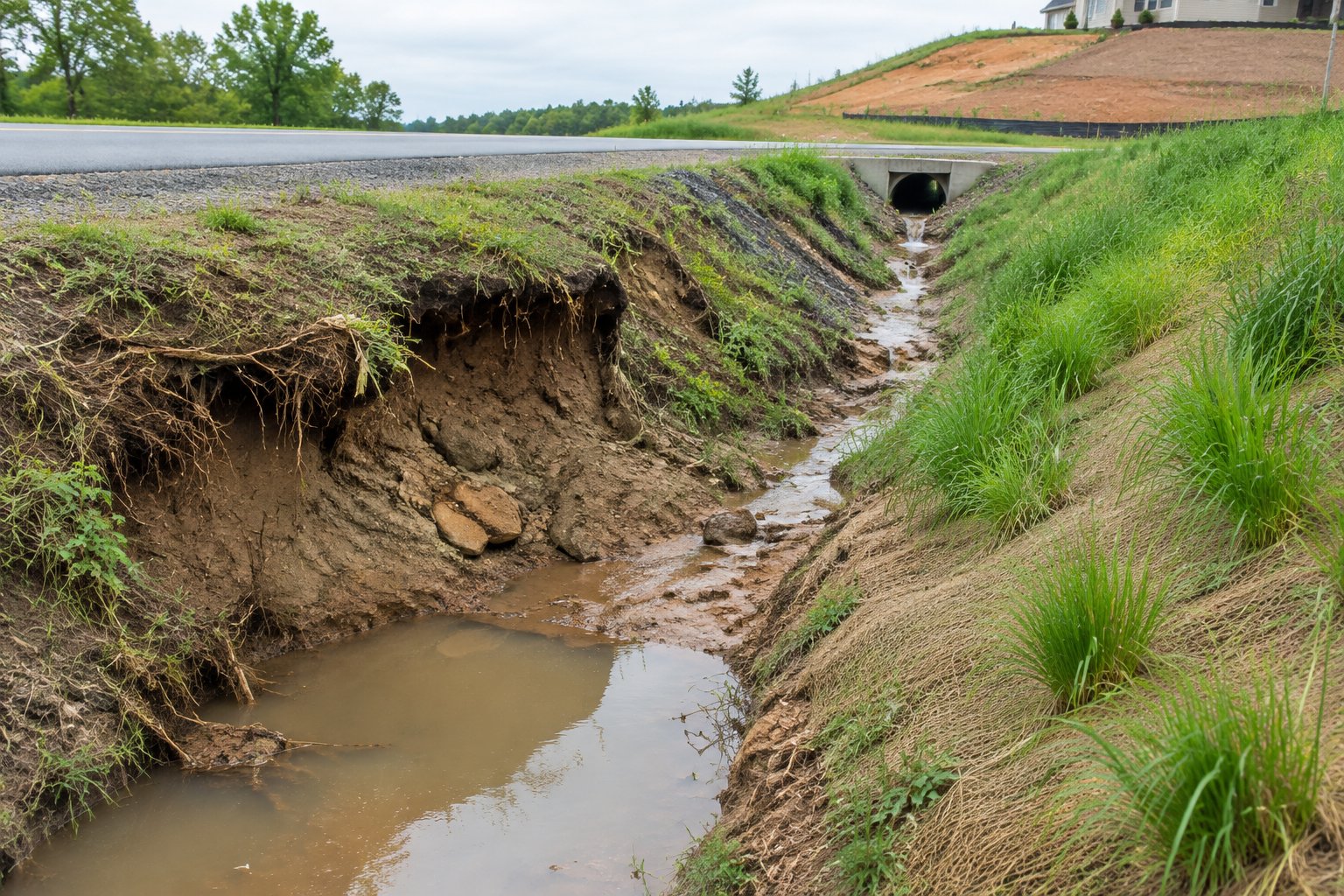
At Allied Hydromulch TX, we have seen how high-intensity Gulf Coast rain events can wash away standard hydraulic mulch on exposed clay soil. While loose wood fiber might hold during light rain, steeper site conditions often lead to displacement and sediment loss.
We solve this gap by applying a bonded fiber matrix (BFM), which forms a continuous, interlocking layer that bonds directly to the soil surface. A bonded fiber matrix is hydraulically applied like standard mulch but cures to behave like a breathable erosion control blanket.
For the contractors we serve across Texas and the Gulf Coast, choosing BFM often determines whether vegetation establishes on the first application or requires costly rework. This right-first-time approach is why we maintained a 100% satisfaction rate across more than 60 unique clients in 2025.
With 35 years of field experience and 15 million square feet installed in 2025 alone, we understand the technical variables that make BFM a superior choice for site stabilization. Our senior field team ensures that every application meets project specifications without delay.
Critical Site Conditions for BFM
We typically recommend BFM based on slope angle, soil type, and rainfall intensity. Standard mulch works on flat sites but often fails when slopes exceed a 3:1 grade or when concentrated runoff forms rills that undermine the seedbed.
On the compacted fill and heavy Texas clay common in the Houston and Corpus Christi markets, standard mulch sits on the surface without bonding. This makes it prone to washing away during the first major storm before seeds can germinate.
The BFMs we use consist of elongated wood fibers combined with cross-linked bonding agents. Once we allow the matrix to cure for 24 to 48 hours, the fibers form a mat that resists the shear forces of surface runoff and wind.
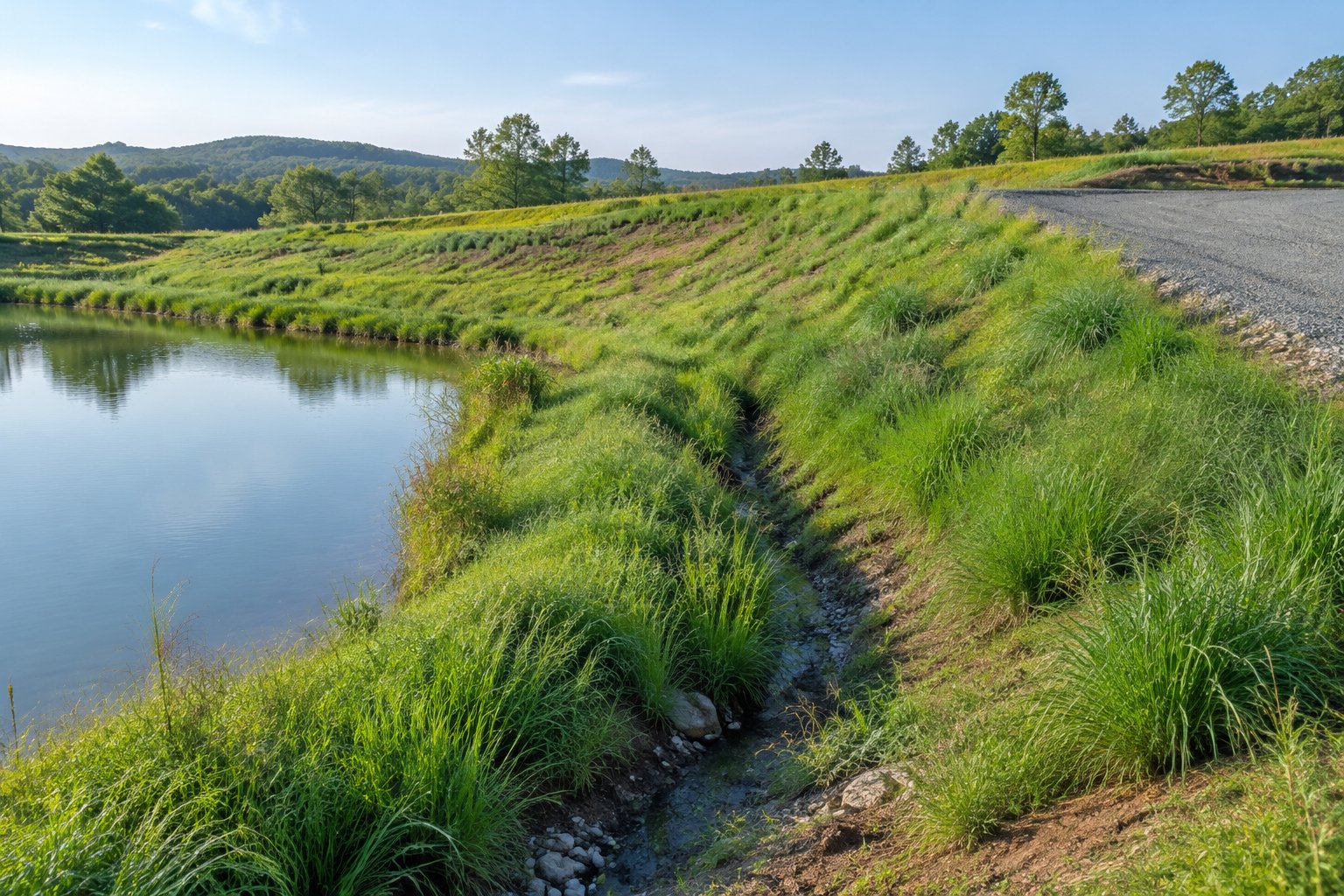
This structural integrity makes it the ideal solution for 2:1 cut slopes and drainage corridors where standard mulch cannot provide adequate soil conservation. It ensures the seed stays in place to establish permanent vegetation according to schedule.
Where BFM Excels Over Mulch and Blankets
In our experience, BFM fills the performance gap between spray-applied mulch and hand-installed blankets. We find it particularly effective for large disturbed areas. On sites larger than half an acre, we apply BFM more cost-effectively than rolled blankets.
Our hydraulic equipment reaches contours and steep faces that are difficult or dangerous for manual blanket installation crews to access. This capability allows us to provide uniform coverage on irregular terrain that traditional methods might miss or leave exposed.
The matrix’s water-holding capacity keeps the soil moist, while the interlocking mat prevents seed migration on steep grades. While BFM is a powerful surface treatment, we often pair it with soil amendments on nutrient-depleted fill to ensure rapid germination.
Application Variables for Success
Field performance depends on proper execution. We typically apply BFM at 3,000 to 4,000 pounds per acre using two opposing passes. This technique ensures "shadow-free" coverage, preventing thin spots behind soil clods or surface irregularities that could lead to undercutting.
Cure time is a non-negotiable factor in our process. The matrix requires 24 to 48 hours without rain to reach full strength. We apply the product to surfaces free of standing water to ensure the fibers bond directly to the soil particles.
Our senior field team—including veterans like Ray and Josh who have been with us for decades—maintains strict mixing ratios. This ensures pump pressure and fiber integrity remain consistent across the entire site, regardless of the project's scale or technical difficulty.
Comparing BFM to Blankets and FGMs
While erosion control blankets provide reliable protection, they are labor-intensive and introduce safety risks on steep slopes. We offer BFM as a way to achieve comparable protection at a lower installed cost without the risk of "tenting" or water flowing underneath.
For the most demanding conditions—such as extreme slopes or aggressive TxDOT timelines—we may prefer a flexible growth medium (FGM) like Flexterra. This high-performance system offers even faster revegetation and higher shear resistance for sites that cannot afford any margin for error.
Frequently Asked Questions
When is BFM better than blankets?
We recommend BFM when site access is limited, the area is large, or the project schedule is tight. It conforms more tightly to the soil than a draped blanket, preventing water from flowing underneath the material and causing hidden erosion.
What are the slope limits for BFM?
It performs well up to a 1.5:1 grade. We may suggest additional flow-control measures, such as diversion berms or stepping up to an FGM, for longer slopes to prevent undercutting at the toe of the embankment during heavy rain.
How does it compare to standard hydroseeding?
Standard hydroseeding focuses on seed protection for moderate slopes. BFM provides structural erosion resistance, keeping both soil and seed in place during the heavy 2-inch rain events common along the Gulf Coast and throughout the Texas region.
Allied Hydromulch TX has delivered hydroseeding and erosion control across Texas and the Gulf Coast region since 1990. Call 281-482-8212 or request a project estimate online