.svg)


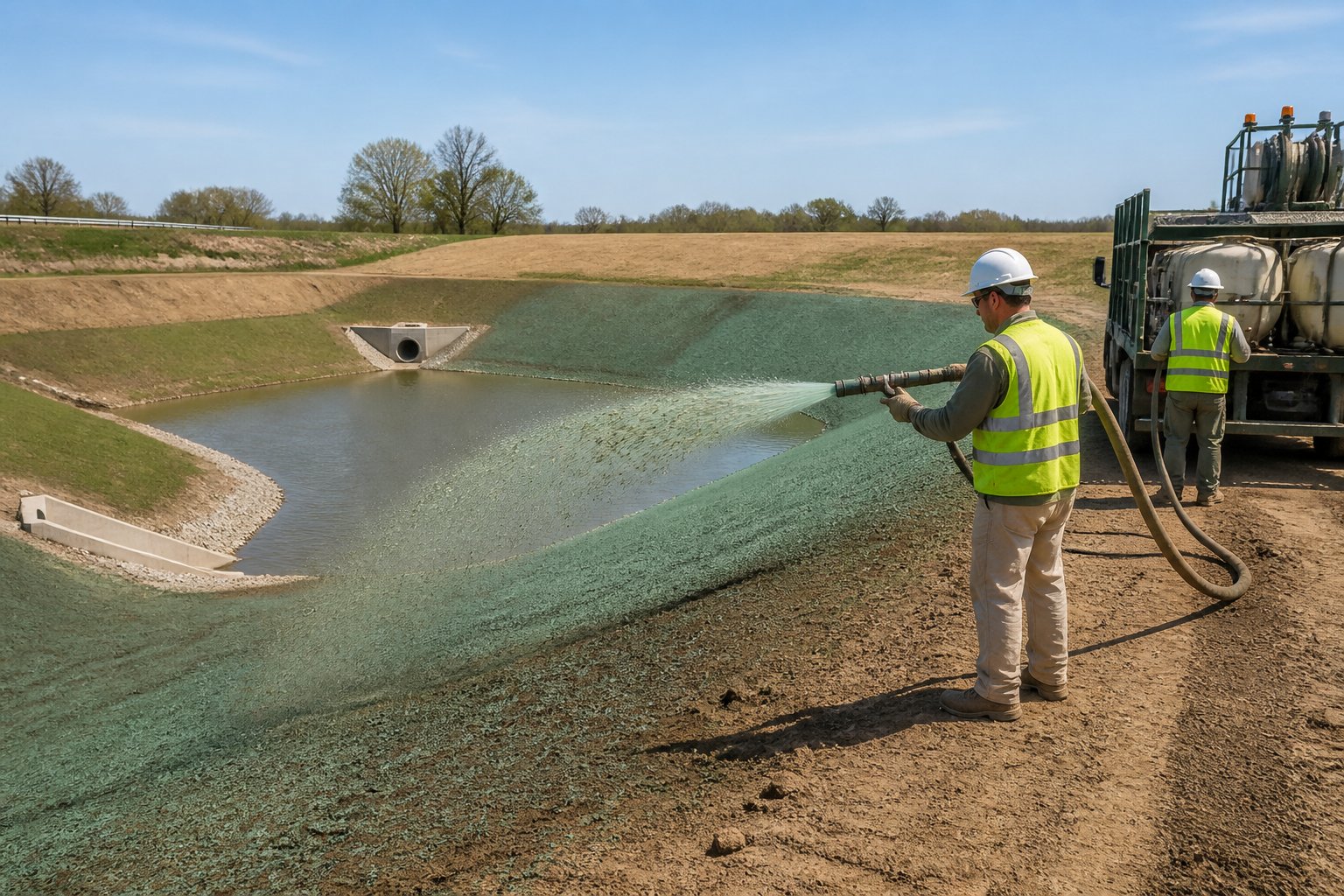
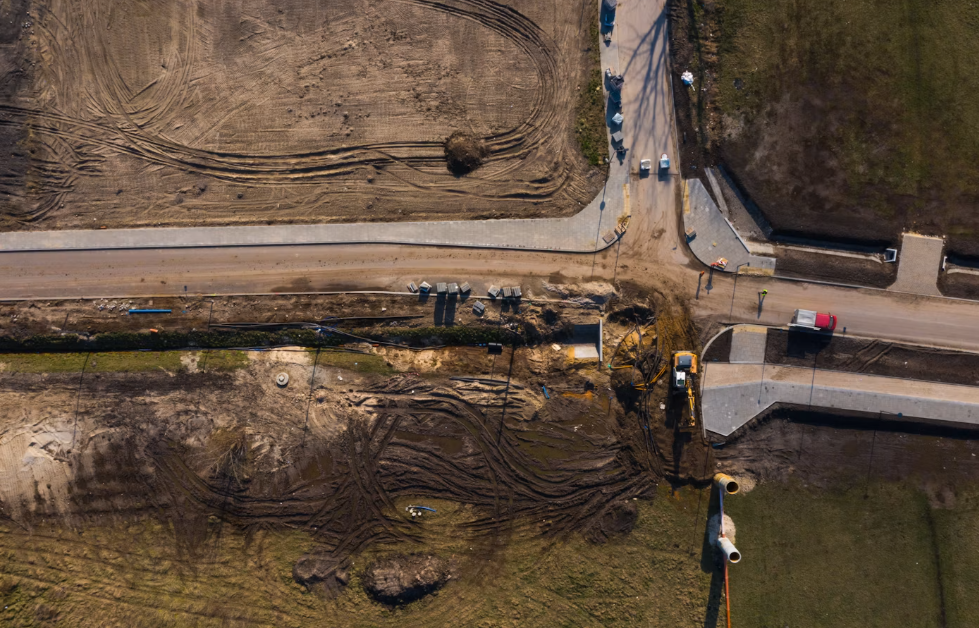
A freshly graded detention pond is just about the most exposed part of any construction site. The side slopes are cut, the basin bottom is bare, and the first big rain will move that soil straight into the outfall.
On Gulf Coast projects, rain often shows up before the grading crew even leaves. Hydroseeding for detention ponds doesn’t just fix a soil issue: it solves a timing headache. Pond banks sit right in the path of concentrated flow, hold water at the bottom, and dry out hard at the top.
Bare soil in that setting almost never survives one storm cycle. Rework usually means sediment cleanout, regrading, and failing that stormwater inspection.
Here’s a real-world look at why pond banks fail, how hydraulic application actually keeps soil in place while grass establishes, which seed mixes make sense for different pond zones, and when you need to bump up to blankets or bonded products.
Why Pond Banks Fail Before Vegetation Takes Hold
Detention pond banks pile every tough condition on a site into one tight spot. Steep slopes, soggy toes, poor soil, and concentrated runoff all meet in the same 20 feet.
Most detention basins are cut into the subgrade, not built up with topsoil. What’s left on the bank face is usually compacted clay with almost no organic matter. If you drop a seed on that surface without mulch or soil amendment, it struggles to hold, let alone sprout.
Wet-Dry Swings and Saturated Margins
The lower third of a pond bank swings from soggy to bone dry. After rain, water sits at the toe and softens the soil. Two weeks later, summer heat cracks it wide open. Roots can’t get established unless the seed mix and mulch layer are matched to those swings.
Clay soils around Houston, Fort Bend County, and the Gulf Coast just make it tougher. They shrink, crack, and then shed water when dry, pushing runoff toward the bottom instead of soaking it in.
Steep Slopes, Runoff, and Losing Soil
Pond side slopes usually get built at 3:1 or 4:1. On tight urban sites, they’re sometimes even steeper. Water picks up speed as it runs down, grabbing loose soil along the way. That sediment drops into the basin bottom, eats up storage space, and clogs outlets.
On municipal stormwater jobs, sediment buildup can trigger maintenance before the site even gets signed off. Riprap only protects the outfall, not the other 90 percent of those banks.
Compliance and Rework Risks from Exposed Banks
Stormwater inspectors check bare pond banks first. Texas Commission on Environmental Quality and local reviewers want to see progress, not a muddy slope surrounded by silt fence.
When banks fail, you’re hit with sediment removal, slope repair, and re-seeding. Any one of those can delay closeout. That’s why the application method is just as important as the seed itself.
How Hydraulic Application Actually Helps Bank Stabilization
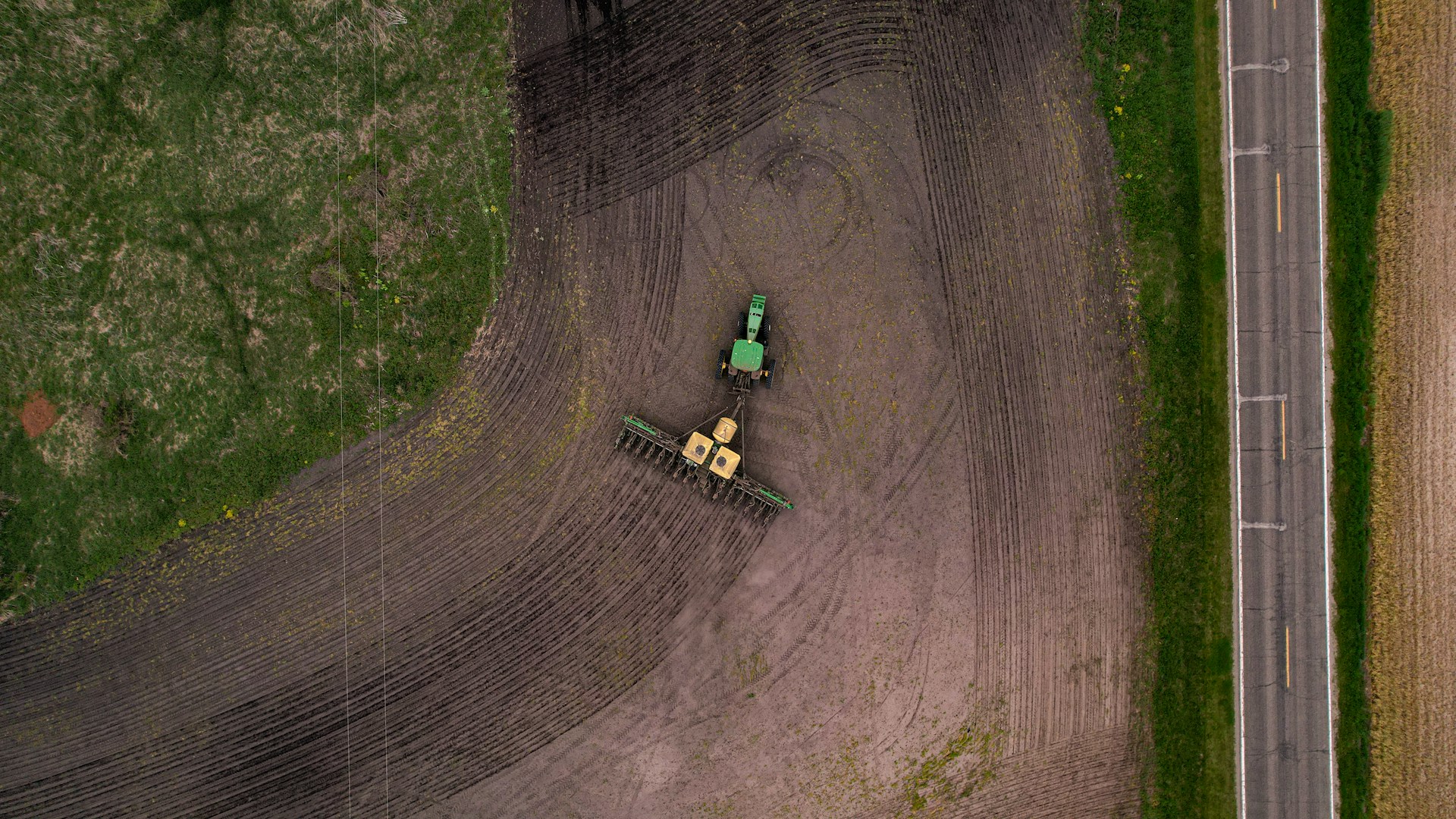
Hydraulic application lets you put seed, mulch, fertilizer, and soil boosters on the bank in one shot. The mulch holds seed in place, shields the soil from pounding rain, and slows sheet flow while roots get going.
That’s the key difference between hydroseeding and just tossing seed on a slope. Loose seed on a 3:1 bank washes away with the first inch of rain. Bonded wood fiber mulch stays put.
What Goes Into a Hydromulch Mix
A typical hydromulch slurry gets built for the job, not just pulled off a shelf. You’re looking at:
- Grass seed picked for the pond zone and season
- Wood fiber mulch for a protective surface
- Fertilizer based on soil test or project spec
- Tackifier to glue the mulch to the soil
- Soil conditioners for compacted clay
Rates and blends shift with slope, soil, and the spec. Steeper banks and channels need more mulch and stronger tackifier.
Moisture and Seed-to-Soil Contact
The mulch layer pulls double duty. It keeps moisture near the seed during dry spells and presses the seed right into the soil. Seed-to-soil contact is everything on a pond bank. Without it, the seed just sits on crusted clay, dries out, and never germinates.
With good contact and a moisture-holding layer, you’ll usually see germination in 7 to 14 days, and full establishment in 4 to 6 weeks if the weather and irrigation cooperate.
Why Large Ponds Lean Toward Hydroseeding Over Sod
Sod can work on small, flat, high-visibility areas. But on a full detention basin, the math rarely adds up.
- Cost: Sod runs several times the price of hydroseeding per acre.
- Labor: You have to stake sod on slopes and fit it by hand around structures.
- Water: Fresh sod needs heavy irrigation before it takes hold.
- Failure risk: Sod seams open up on slopes and can lift during big flows.
Hydroseeding covers big basins quickly and gives consistent coverage. Once you pick your method, the next step is picking the right seed for each zone.
Match Seed Mixes to Pond Zones and Conditions
A detention pond isn’t just one growing environment. The basin bottom, wet margin, and upland slope all need different seeds. Using one mix everywhere is a big reason banks thin out. Plan sets for commercial, residential, and industrial projects often specify the mix. If they don’t, picking by zone protects your investment.
Vegetation for Wet Margins and Basin Bottoms
The basin bottom and lower bank stay wet the longest. Plants here need to handle temporary flooding and heavy clay. Native species usually hold up better than turf in these spots. Deep-rooted native grasses can handle the wet-dry swings and keep the soil anchored for years.
Texas Parks and Wildlife points out that native wetland plants bounce back well after soil disturbance, which is exactly what you get with a new basin.
Upland Slopes and Long-Term Cover
Banks above the water line dry out fast and need dense, permanent cover. Tall fescue, red fescue, and perennial rye are common in cool-season specs. Colonial bentgrass appears on some specs.
In most of Texas, warm-season grasses carry the load through summer, while a cool-season blend gives quick early coverage. Compost or soil conditioner helps on cut slopes where topsoil never came back.
Native Mixes Versus Turf Specs
It comes down to what you’re after: maintenance or quick coverage.
- Native mix: Slower to establish (think 2 to 3 months), drought-tolerant, needs less mowing, deep roots for bank strength.
- Turf mix: Faster cover, better for maintained municipal sites, but needs more mowing and water.
For long-term results, native grass seeding for site restoration usually wins on maintenance. If the slope or flow is more than seed and mulch can handle, you’ll need a stronger surface product.
Step Up Protection When Slopes or Flow Demand It
Some pond banks just need more than standard hydromulch. Steep slopes, long runs, and concentrated flow all push past what a basic mulch can hold.
TxDOT rates erosion control products by soil type, slope, and shear stress for channels, as laid out in their erosion prevention methods. Matching the product to those ratings helps you avoid doing the job twice.
When to Use an Erosion Control Blanket
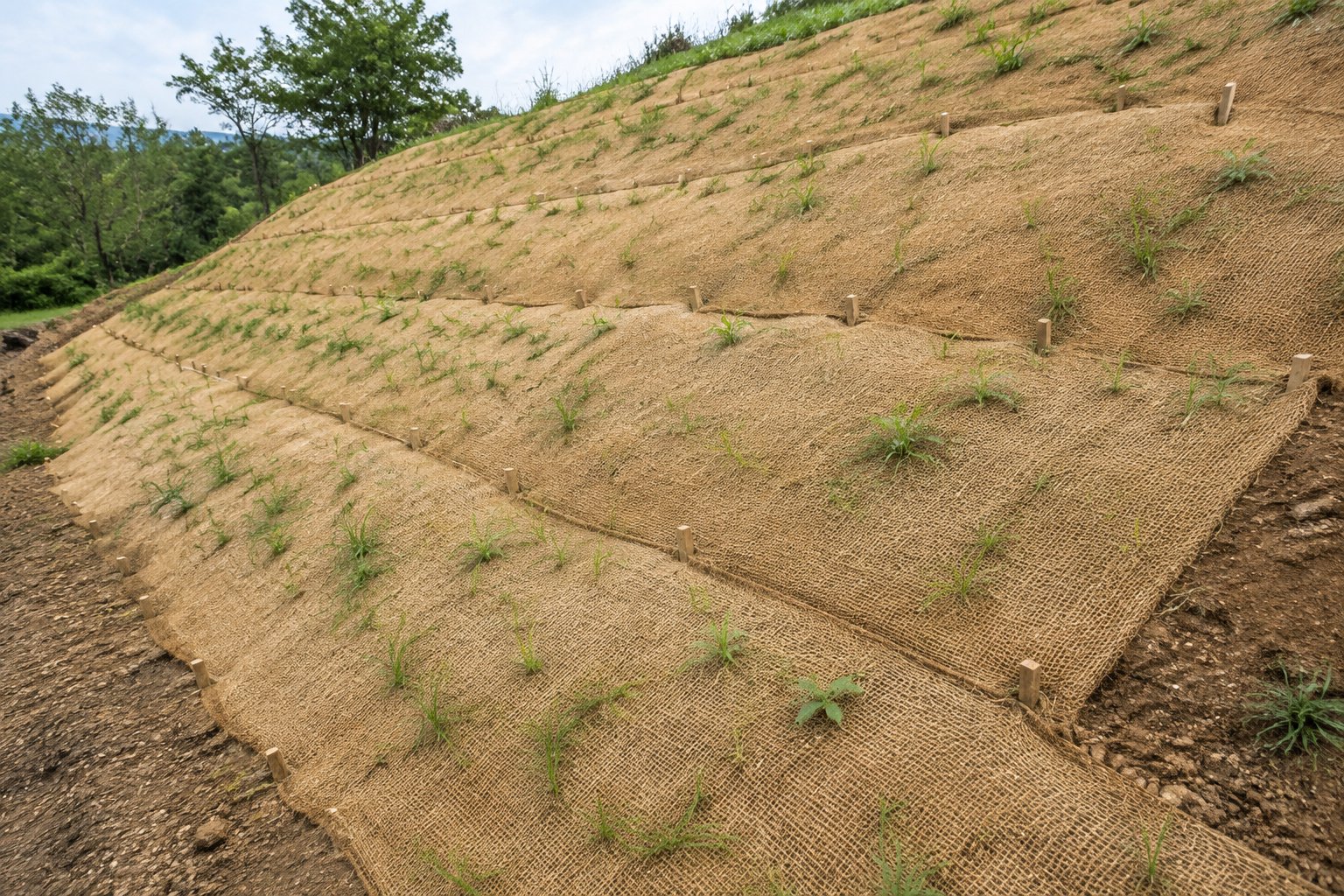
An erosion control blanket makes sense when the slope, length, or flow is more than hydromulch can manage. Typical triggers: banks steeper than 3:1, long uninterrupted slopes, or spots where water really concentrates.
You roll out blankets, staple them, and trim them at the top. They cost more and take more labor, so just use them where they’re actually needed.
Bonded Fiber Matrix and Flexible Growth Media
Bonded fiber matrix (BFM) and flexible growth media (FGM) go down hydraulically, so you can cover steep or rough ground fast. Flexterra is the FGM we reach for on tough slopes and disturbed soils where standard hydromulch won’t hold.
These products cure into a bonded layer that shrugs off rain right away but still lets seeds germinate. On tight schedules, a bonded fiber matrix for slope stabilization can replace blankets entirely and speed things up.
Protecting Channels, Outfalls, and High-Flow Areas
Inflow channels, emergency spillways, and outfall aprons take the highest velocities on site. Vegetation alone just won’t hold up during a big storm. These spots need channel-rated products or structural protection, tied in with the seeded bank. Once you pick the product, timing is the last piece.
Plan Around Texas Weather and Inspection Deadlines
Timing really makes or breaks pond bank stabilization. Germination speed depends more on soil temperature and moisture than on the calendar.
Hydroseeding usually germinates in 7 to 14 days if conditions are good. Native grass seeding takes longer, with germination in 2 to 4 weeks and full establishment in 2 to 3 months. If you’re using native mixes, build the schedule around the slower timeline.
Germination and Establishment Timelines
Standard hydroseed usually fills in after 4 to 6 weeks with enough moisture. Plan mowing and final inspection after that, not before.
Municipal stormwater projects often require a certain percent of cover for final stabilization. Miss it, and you’re back for another round, so schedule your application with enough time before acceptance.
Heat, Rain, and Irrigation
Gulf Coast summers dry out the surface fast, even under mulch. If you hydroseed in July or August without irrigation, your risk of failure goes way up.
Heavy rain right after application is the other big issue. A well-tacked hydromulch can handle normal rain, but a big storm on a fresh 3:1 bank can still cause rilling. In North Texas, cold snaps slow germination and can stall things for weeks.
Site Prep, Maintenance, and Final Checks
Prep matters more than anything else. Track-walk slopes, break up crusted clay, and put down topsoil if the spec calls for it. After application, keep equipment off the banks and make sure silt fence and inlet protection stay in place until you’ve got cover. Lining up that sequence early keeps the pond off your punch list.
Get Seed and Mulch Down Before the Next Rain
Detention pond banks are usually the last thing done on a site and the first thing to fail. Getting seed and mulch on those slopes early protects storage, keeps sediment out of the outlet, and keeps your stormwater record clean.
Treat it like a real line item, not just an afterthought. Double-check the seed mix by zone, decide where you need blankets or Flexterra, and set the application date to fit your inspection window.
That planning is what saves you from doing the job three times instead of once. Allied Hydromulch TX, LLC has handled hydroseeding and erosion control all over Texas and the Gulf South since 1990. In 2025 alone, we installed over 15 million square feet of mulch.
Run your acreage through the hydroseeding cost estimator for a ballpark range, then call 281-482-8212 or request a project estimate to talk through your pond slopes and schedule.
Frequently Asked Questions
What Seed Mix Works Best for Detention Pond Slopes and Basin Areas?
Pick by zone: water-tolerant native species along the wet margin and basin bottom, and dense permanent cover for upland banks. Many Texas plan sets already specify the mix, so check the erosion control sheet first.
If there’s no spec, native grasses usually give better long-term bank strength with less mowing.
How Much Does Hydroseeding a Detention Pond Cost per Acre?
Cost depends on acreage, slope, seed spec, soil, and site access. Steeper banks and premium products like bonded fiber matrix push the price up. An online estimator gives you a ballpark, and a site-specific quote nails it down once the scope’s set.
When’s the Best Time to Hydroseed a Detention Pond in Texas?
Spring and fall usually give you the best soil temperature and moisture across Texas and the Gulf South. Mid-summer hydroseeding on unirrigated banks is risky because of heat and surface drying. Winter works, but germination slows during cold snaps, especially up in North Texas.
How Long Does Hydroseed Take to Establish on a Detention Pond?
Germination usually kicks off within 7 to 14 days if the moisture and temperature cooperate. Full establishment tends to happen in about 4 to 6 weeks, though weather and irrigation can stretch that timeline. If you're using native grass mixes, expect a longer wait. They often take 2 to 3 months to get established.
Can Hydroseeding Prevent Erosion on Detention Pond Banks?
The mulch layer from hydroseeding gives the surface some protection right away. Once the roots grow in, the area gets a longer-lasting defense against erosion.
If the slopes are steeper than 3:1 or water really moves through, add an erosion control blanket or a flexible growth media like Flexterra. Picking the right product for the slope and water flow is what keeps the bank together.
What Site Preparation Is Needed Before Hydroseeding a Detention Pond?
Grade the banks to their final shape and clear away debris. If clay is crusted or packed down, loosen it up. Track-walking slopes and spreading the right topsoil help the seed reach the soil and sprout.
Make sure perimeter controls and inlet protection are set up before you start applying anything.