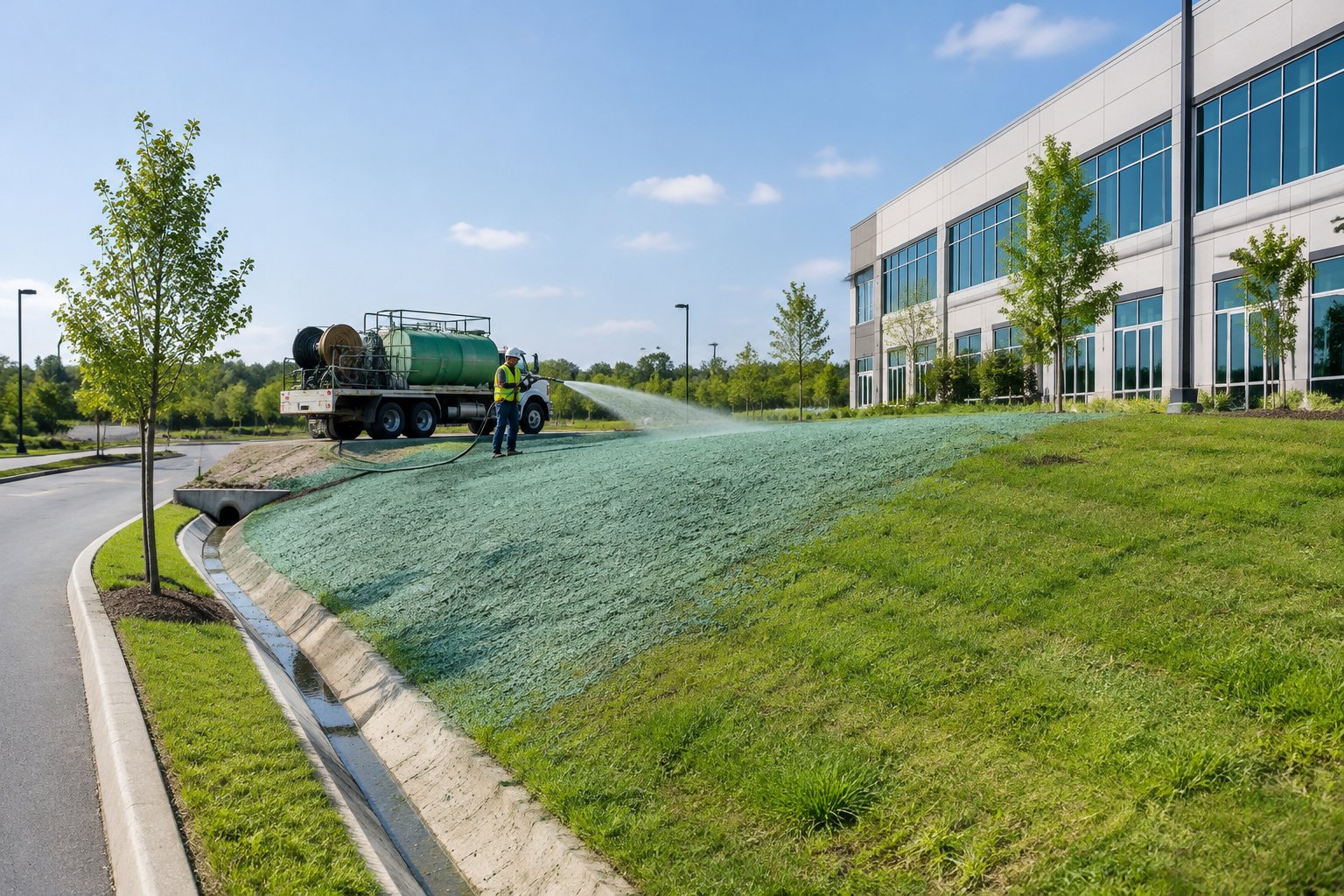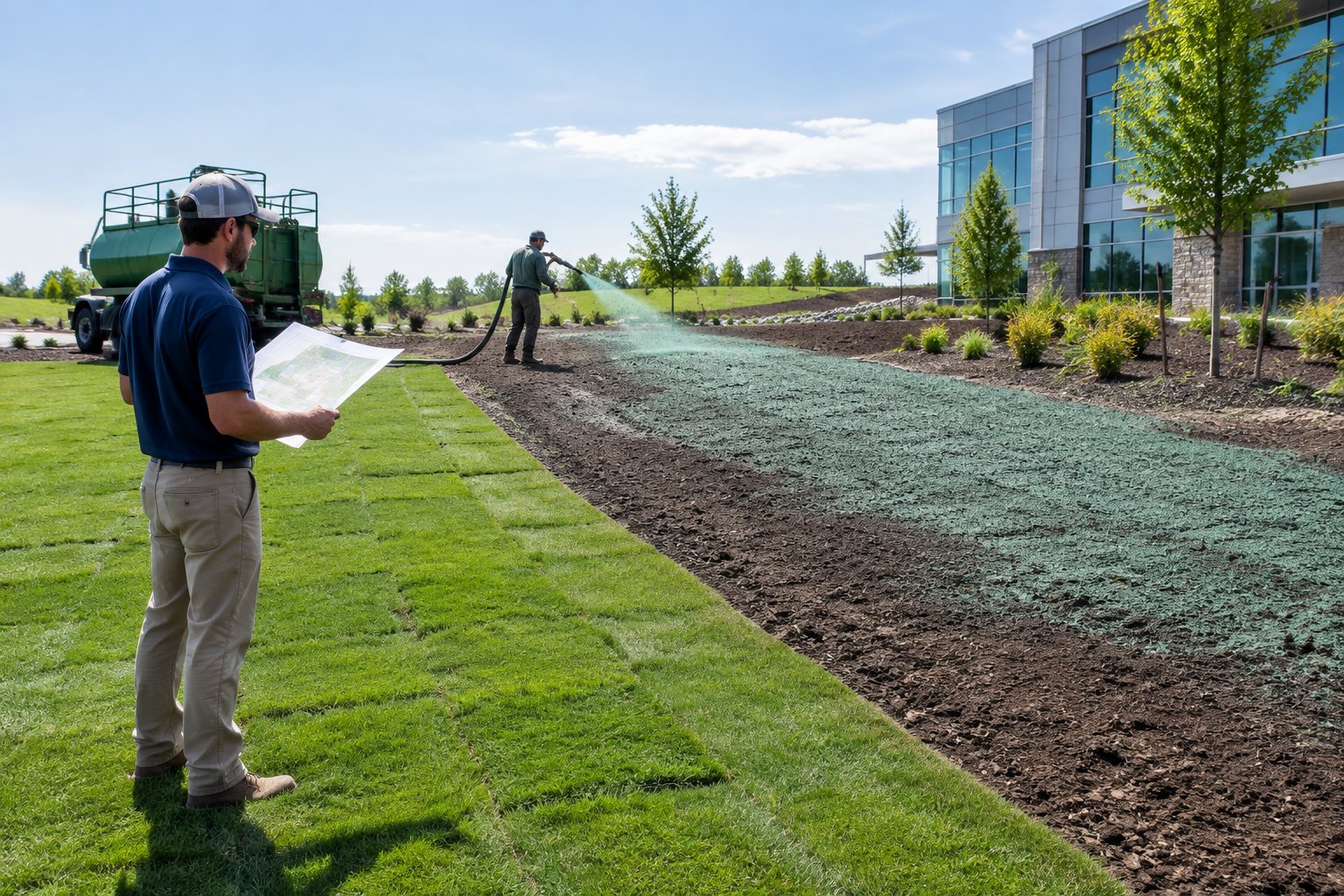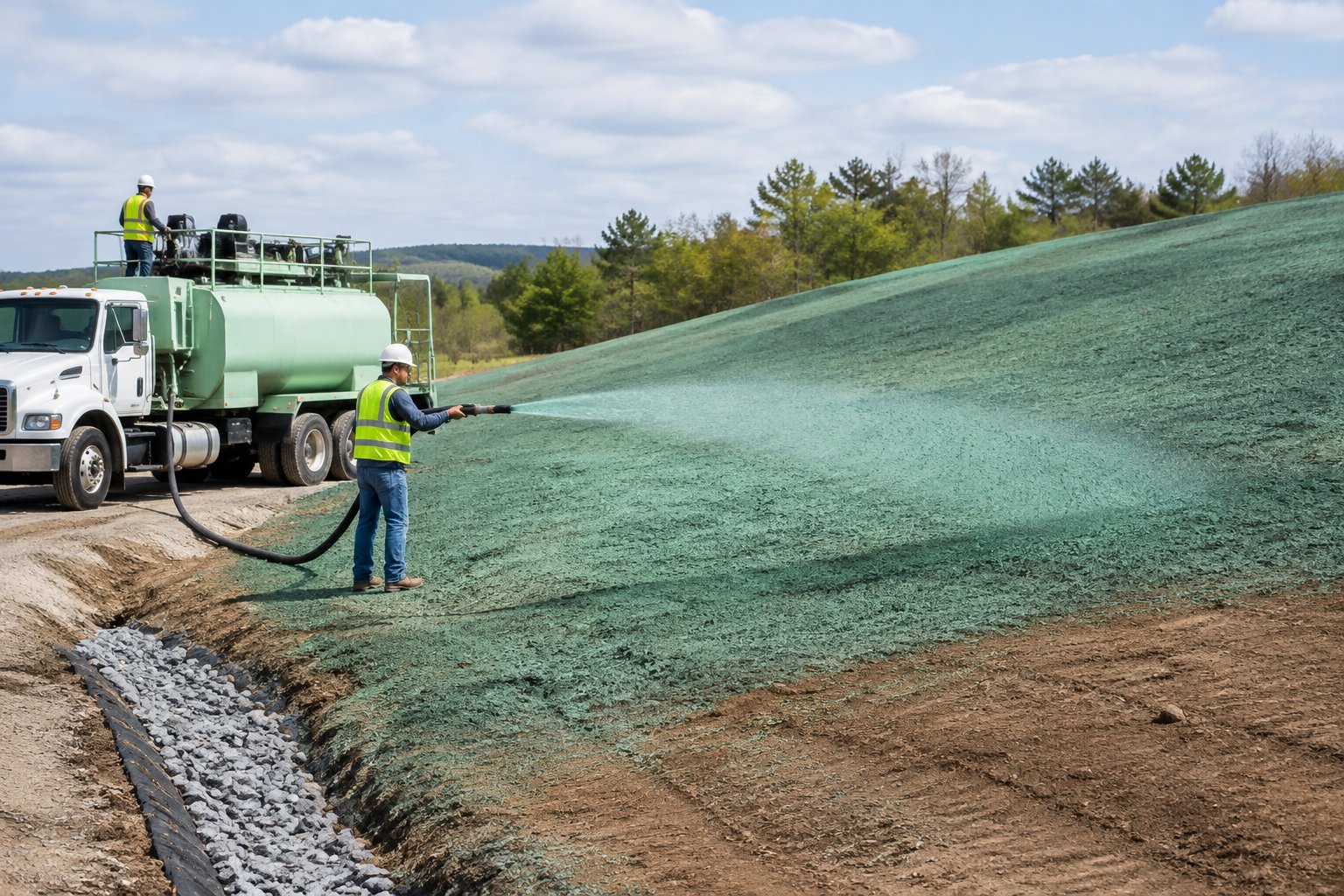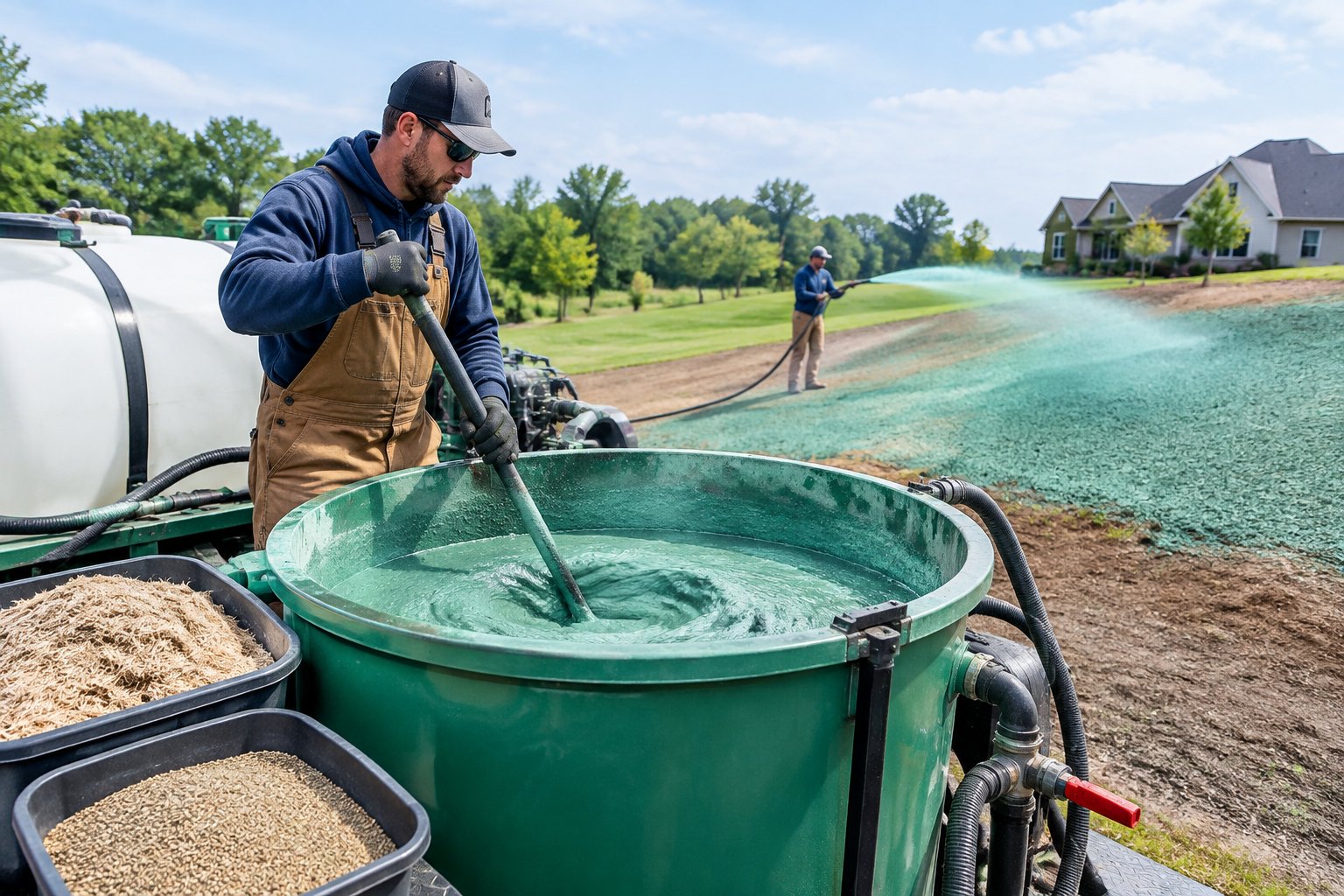
A hydroseed mix that fails usually fails on paper first: the wrong seed for the month, a rate copied from another job, or a tank recipe that never matched the area it was meant to cover. Building a hydroseed mix comes down to two decisions. First, the seed blend: which species, at what pure live seed rate, for what season and end use. Second, the slurry recipe: how much seed, fiber mulch, additives and water go into each tank so the specified rates land evenly on the area that load covers. On spec work the engineer, the city or TxDOT has usually made the first decision for you, and your job is to turn it into loads that put the right amount on the ground.
What Does the Seed Blend Have to Do?
Start with the end use, then the calendar, then the spec. Ask what should be growing on this ground a year from now, what will actually grow if it is seeded this month, and what the contract documents allow.
Permanent Turf for Finished Areas
Lot perimeters, common areas and anything that will be mowed after turnover usually get a warm-season permanent grass, with bermudagrass the most common choice on Texas and Louisiana commercial work. It establishes well in warm soil and fills in quickly with water. Seeded too far outside its window, it will sit under the mulch doing very little until conditions turn.
Temporary and Nurse Cover
When grading finishes in the cool months, or an area will be disturbed again, a temporary cool-season grass such as annual ryegrass or a cereal grain holds the soil until the permanent seeding window opens. Some blends add a small share of a fast nurse crop to permanent seed so something is growing early while the slower species come in. Keep that share small, because a heavy nurse crop competes with the grass you actually want.
Native and Wildflower Blends
Right of way, restoration areas, ranch land and ground that will not be irrigated after closeout often get native grass mixes, sometimes with wildflowers. They take longer to establish than turf, but they suit the long term on low-maintenance ground. Agencies frequently name these mixes by region and season, and our article on native grass seeding for durable Texas site restoration covers species selection in more depth.
How Do You Read Seed Tags and PLS Rates?
On spec work, seed rates are usually written in pure live seed (PLS) pounds per acre, not bulk pounds. PLS accounts for the fact that a bag of seed is never 100 percent viable seed of the right species. Every seed tag lists purity and germination, and the PLS percentage is purity multiplied by germination, divided by 100.
For example, a lot tagged at 95 percent purity and 90 percent germination is 85.5 percent PLS. To deliver each PLS pound the spec calls for, you need about 1.17 bulk pounds of that lot (1 divided by 0.855). Do that conversion for each species in the blend and for each seed lot, because tags vary from lot to lot. Many native seeds are also sold and specified only on a PLS basis for this reason.
Keep the tags. On public and engineered work the seed is a submittal item, and the inspector may ask to see that the species, the lot and the test date match what was approved. Swapping in an easier-to-find blend without written approval is one of the quickest ways to have an area rejected, which our guide to spec compliance on government infrastructure projects touches on as well.
How Do You Turn Per-Acre Rates Into a Tank Recipe?
The spec measures what lands on the ground, per acre or per 1,000 square feet. The tank recipe is how you deliver it. Mixing those two up is the most common reason for thin seeding at one end of a site and leftover seed at the other.
A workable sequence looks like this:
- Measure the real seeding area. Take it from the plan, break odd shapes into simple ones, and subtract paving, pads and zones that get a different product.
- Set the area each load covers. The mulch rate and the amount of fiber your machine can carry in one load decide this, not the tank's gallon rating.
- Scale every material to that area. Multiply each per-acre rate by the area per load to get pounds of seed, fiber and additives per tank.
- Count the loads. Divide the total area by the area per load, and round up so the last load is not short.
Heavy wood fiber and engineered products need more room to circulate, so usable load size changes with the product. Follow the equipment manufacturer and the mulch manufacturer on water volume and loading order. Too much water and the slurry runs on slopes. Too little and it can bridge in the hose.
Which Fiber Belongs in the Mix?
The fiber choice follows the hardest part of the zone, not the easiest. Paper (cellulose) mulch mixes easily and suits flat, low-risk ground. Wood fiber holds water longer and stands up to rain better, so it is the usual pick for slopes and erosion control work. Blends of wood and paper sit between the two.
Steep cuts, pond banks and areas facing concentrated flow often go beyond what any standard mulch can hold. Those zones get a separate mix built around bonded fiber matrix or Flexterra HP-FGM, and our article on when bonded fiber matrix outperforms standard mulch explains where that line usually falls.
Where Do Tackifier and Fertilizer Fit?
Both matter, but they should not drive the mix design. Tackifier is dosed from the product label and the spec, and many premium mulches already contain it, so check the bag before adding more. Fertilizer and any lime or amendments follow the soil test and any nutrient limits in the plans, especially near water. Add them to the recipe sheet once the seed and fiber numbers are set.
If you would like a rough range for standard hydroseeding on your area before working through a full mix, our hydroseeding pricing calculator is a quick place to start.
Why Should Every Load Be Recorded?
A batch sheet for each load is how you prove the mix matched the spec. Record the seed lots and tags, the products and quantities per tank, the water volume, the zone and area treated, the date and the weather. Dated photos help too.
Those records answer inspector questions, support pay applications and make it easy to see what went wrong if one area comes in thin. They also make the next phase faster, because the recipe for each zone is already worked out.
Have a Seed Spec You Need Turned Into a Mix?
Our crews have been building and applying hydroseed mixes for commercial hydroseeding projects across Texas and Louisiana since 1990, from permanent turf on finished lots to native blends on right of way. If you have a seed spec, a plan sheet and a schedule, contact Allied Hydromulch or call 281-482-8212 and we will work through the mix with you.
Frequently Asked Questions
How do I convert a PLS rate to bulk pounds?
Multiply purity by germination and divide by 100 to get the PLS percentage from the seed tag. Then divide the specified PLS pounds by that percentage, expressed as a decimal, to get bulk pounds.
Can one hydroseed mix cover both temporary and permanent seeding?
Sometimes, with a small nurse crop in a permanent blend. When the permanent species cannot germinate for months, a separate temporary mix followed by a permanent application usually works better.
What if the specified seed is not available?
Ask the engineer or owner for an approved substitute in writing before seeding. Using a different blend without approval risks rejection at inspection.
Why does the mix change from one zone to the next?
Slope, exposure, end use and the spec can all differ across a site. Flat lots, slopes and pond banks often need different fiber, rates or products, so each zone gets its own recipe.