.svg)


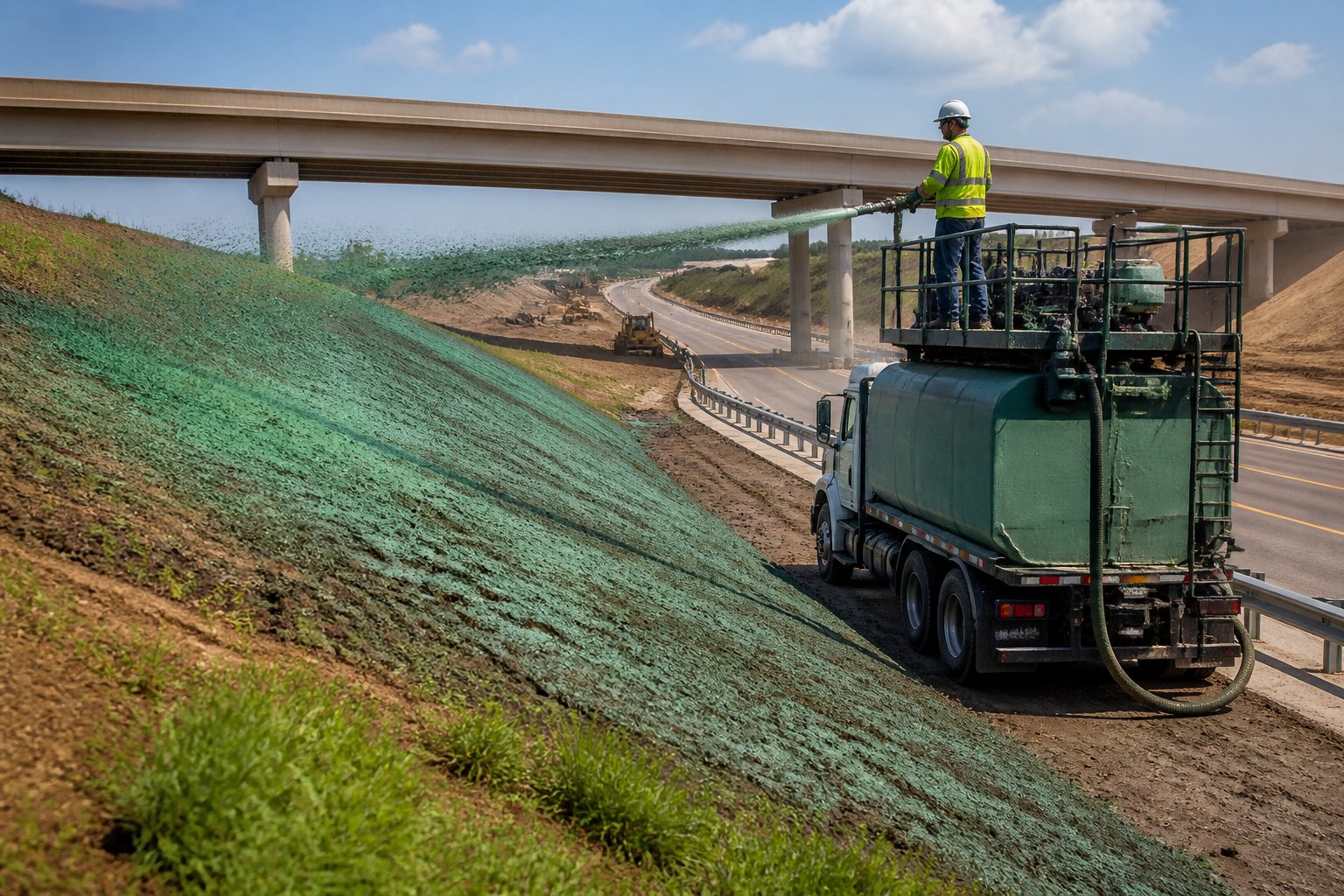
A right-of-way sitting bare past the seeding deadline is not just an eyesore. It is a stormwater inspection finding, a pay item held back, and a schedule problem that grows with every rain event. On public works, the vegetation scope is written into the contract, and the inspector reads it line by line.
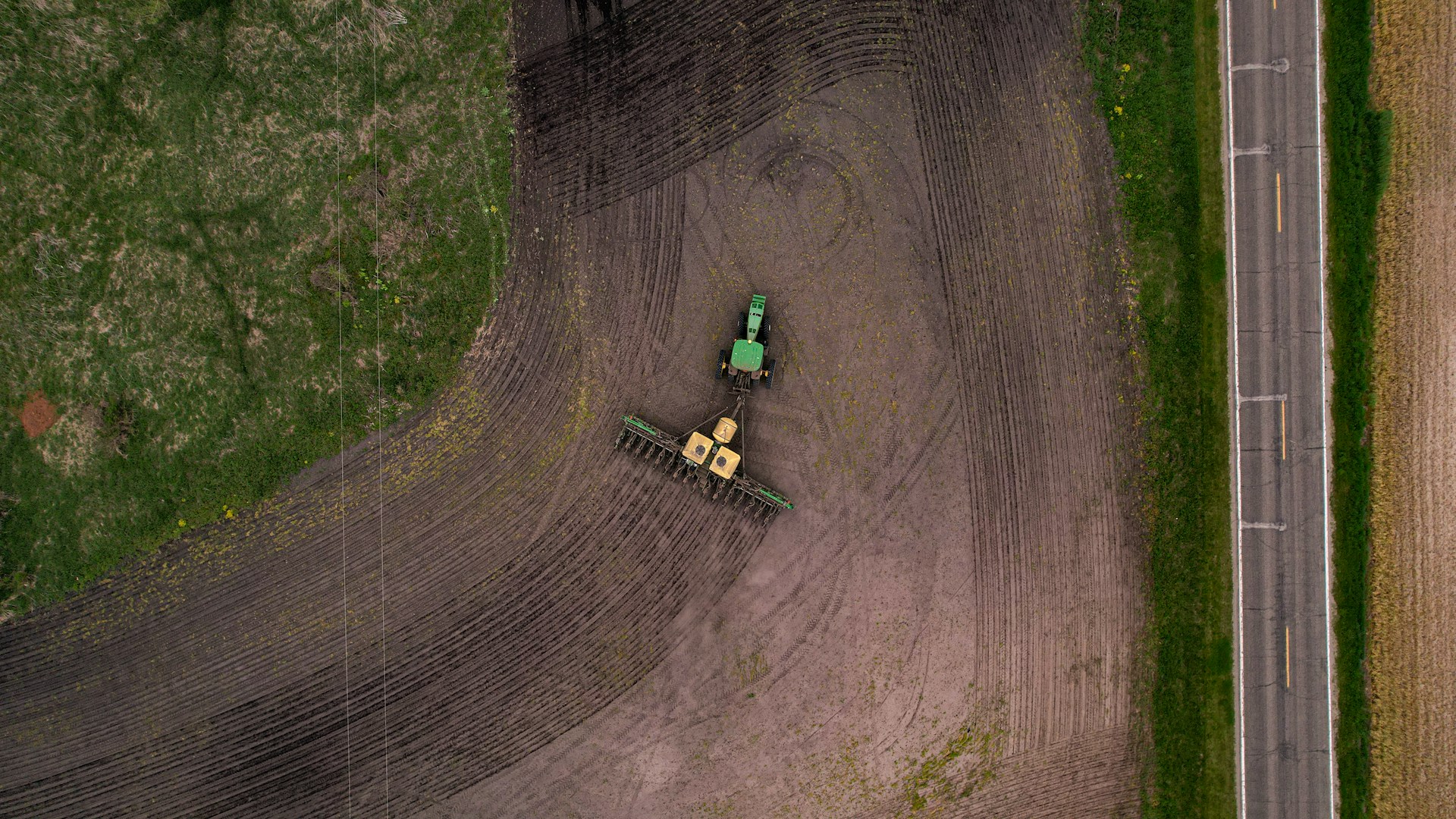
Hydroseeding for government infrastructure projects lives or dies on specification detail: approved seed, correct rates, documented timing, and coverage that holds. Allied Hydromulch TX, LLC has worked in Texas soils and Gulf Coast weather since April 1990 and installed roughly 15 million square feet of mulch in 2025 alone across Texas, Louisiana, Oklahoma, and New Mexico. That kind of volume on DOT-adjacent and municipal work builds the habits procurement officers look for.
In this guide, you will find how hydroseeding maps to Department of Transportation (DOT) and municipal specifications, how erosion control methods get matched to real site conditions, and what separates a qualified vendor from a low bid. By the end, you should be able to scope, schedule, and vet a seeding subcontractor with confidence before mobilization.
Meeting DOT and Municipal Seeding Specifications
Public seeding specs are prescriptive documents. They name the seed, the rate, the season, the mulch type, and the coverage percentage that triggers acceptance. Deviating from any of those costs you the pay item.
Most state DOT and municipal specifications trace back to a common structure. The work covers site preparation, furnishing seed and amendments, application, and protection until establishment. The seeding, sprigging, and mulching specification published by the Natural Resources Conservation Service follows that same sequence and is a useful reference when a local agency writes its own version.
The practical risk is not misunderstanding the spec. It is assuming your crew already knows it. Specs get revised. TxDOT updated its standard specifications for highway construction for projects letting from September 2024 forward, and local agencies using state or federal funds have to adopt current versions or get written approval for equivalents.
Approved Seed Mixes and Seed Blends
Agencies publish approved seed mixes by region, season, and application type. You do not get to substitute a cheaper blend because the specified species is out of stock at the supplier.
Most highway and municipal specs separate temporary cover from permanent stands. Temporary seed blends stabilize soil fast during construction. Permanent mixes lean on native and adapted species that survive without irrigation once the contractor demobilizes.
What agencies typically require documentation for:
- Certified seed tags showing purity, germination percentage, and test date
- Pure live seed (PLS) calculations, since rates are usually specified in PLS pounds per acre
- Species list matching the plan sheet or region-specific seeding table
- Weed seed limits, including prohibited noxious species
- Fertilizer analysis and application rate, where fertilizer is part of the spec
Native mixes carry longer establishment windows, typically two to three months. Plan the substitution conversation early. Our native grass seeding for Texas restoration work often runs alongside temporary cover on the same corridor.
Application Rates, Submittals, and Acceptance Criteria
Rates are specified, not suggested. Hydraulic mulch, seed, fertilizer, and tackifier each carry a pounds-per-acre requirement. Inspectors verify by load ticket and area covered.
Submittals usually come before mobilization. Expect to provide seed tags, product data sheets for hydraulic mulch or a flexible growth medium, equipment information, and a proposed application schedule. Missing submittals stall the work order more often than weather does.
Acceptance is measured by vegetative cover, not by the fact that you sprayed. Many agencies require a uniform stand with a set percentage of coverage before final acceptance, with reseeding required on bare patches. Build that possibility into your schedule and your subcontract.
Texas, Louisiana, Oklahoma, and New Mexico Specification Differences
Each state writes its own seeding tables. The differences are real. Texas leans heavily on regional seed lists tied to climate zones. Louisiana work often sits near wetlands and coastal drainage, which adds environmental review steps.
Oklahoma and New Mexico projects tend toward large rural corridors and reclamation. Drill seeding and native mixes carry the load. Lower rainfall shifts the timing window and pushes species selection toward drought-tolerant natives.
Federal-aid projects add another layer. Local agencies running state or federal money must follow current local government standard specifications or document an approved equivalent. Once the spec is settled, the next question is where on the corridor the risk actually sits.
Highway Hydroseeding and Roadside Stabilization Priorities
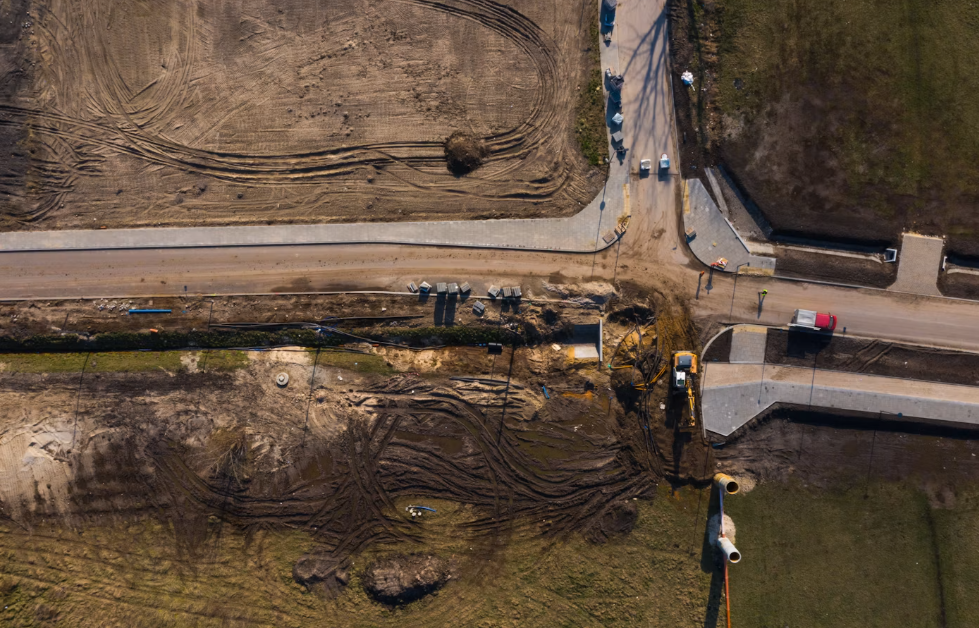
On a highway job, the erosion risk concentrates in a few predictable places: new embankments, cut slopes, ditch lines, and the verges next to pavement. Those areas get the concentrated runoff and take the most damage first.
TxDOT guidance notes that the areas most at risk are the slopes associated with embankments and drainage channels. Embankments collect runoff coming off pavement. That matches what we see in the field. A ditch that scours once will scour again until it holds vegetation.
Sequencing matters as much as product selection. Areas that reach the final grade first should be stabilized first. Do not batch them at the end of the job when the calendar has already gotten tight.
Roadside Embankments, Verges, and Drainage Corridors
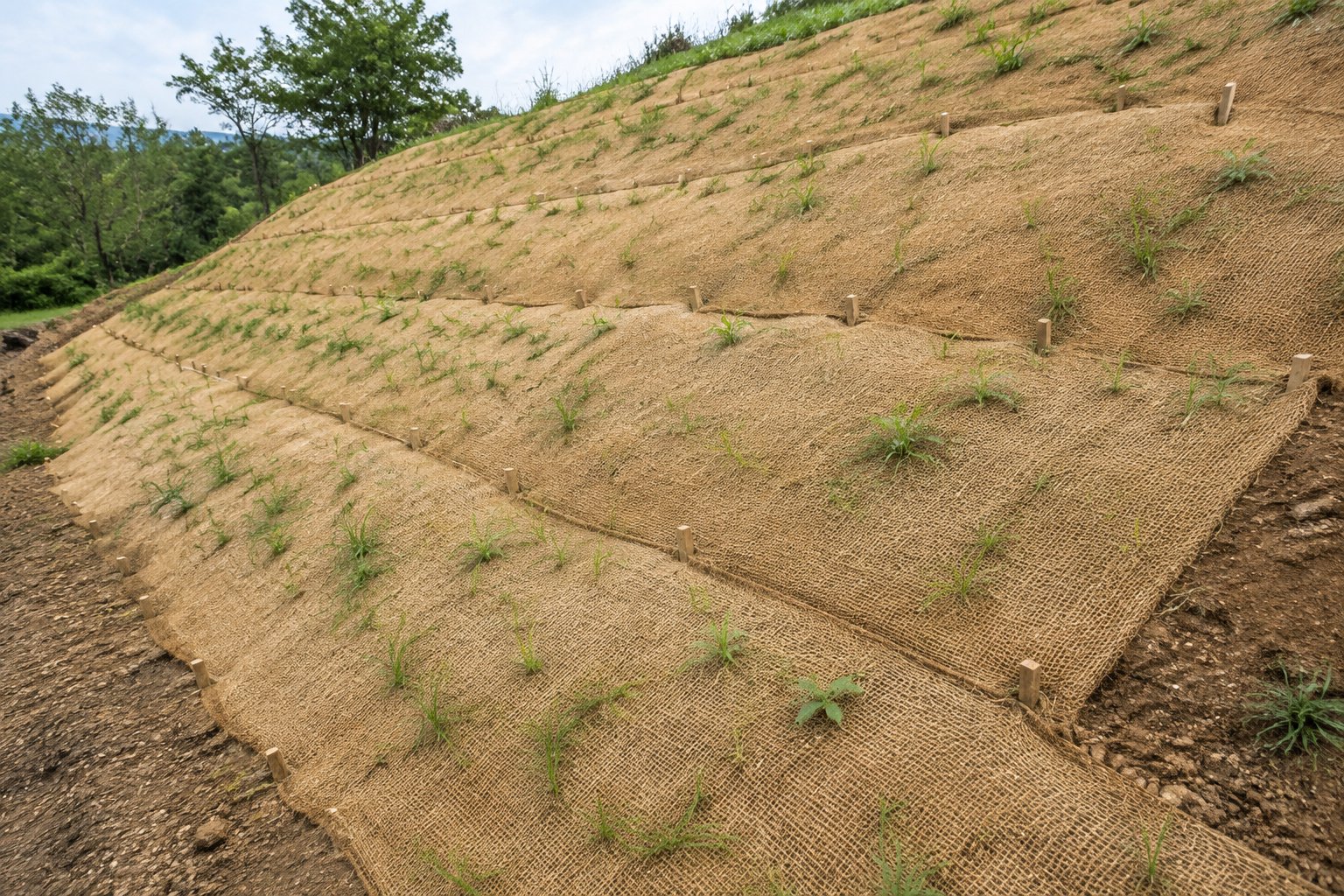
Embankments and cut slopes need cover that stays put through the first storm. Hydroseed alone works on gentle grades. Steeper faces need a bonded product or a blanket over the seed.
Verges next to travel lanes carry a different constraint: access and traffic control. Hydraulic application from the shoulder covers ground fast and limits lane closures, which keeps the traffic control cost down.
Drainage corridors are the hardest zone. Concentrated flow moves faster than germination, so temporary protection has to carry the site until roots take hold. On Gulf Coast projects with clay-heavy soils, water sheets off rather than soaking in. This raises the demand for whatever product goes down.
Hydroseeding Services for DOT Projects
DOT work rewards production capacity and documentation discipline. Crews need to cover large linear footage in a short window. Then they hand over records that survive inspection.
What separates DOT-capable hydroseeding services from general seeding work:
- Equipment sized for long corridors and limited access points
- Familiarity with state seeding tables and temporary versus permanent pay items
- Load tickets and coverage records tied to stationing
- Ability to remobilize for reseeding without a schedule fight
- Coordination with traffic control and the prime contractor's daily plan
Our roadside hydroseeding for corridor stabilization approach is built around that sequencing rather than a single end-of-job pass.
Revegetation Windows That Protect Construction Schedules
Timing drives everything. Hydroseeding germination typically begins within 7 to 14 days, with full establishment in 4 to 6 weeks, depending on soil moisture and temperature.
Texas summers compress that window. Applications in July and August on unirrigated right-of-way carry a real failure risk unless rainfall cooperates. Fall and early spring generally give the most reliable revegetation results across the Gulf South.
Federal Highway Administration guidance on roadside revegetation planning reinforces the same point: site conditions govern outcomes more than the calendar. Which product goes on the ground depends just as much on the slope in front of you.
Matching Erosion Control Methods to Site Conditions
There is no single erosion control product that fits every part of a public project. Slope grade, soil type, flow concentration, and remaining schedule decide the choice.
Get the match wrong, and you pay twice. A standard hydraulic mulch on a steep, freshly cut batter will slide in the first heavy rain. The reapplication comes out of your margin.
Site walk first. Product second. That order saves money on nearly every corridor job we bid.
Hydraulic Mulch for Broad Disturbed Areas
Hydraulic mulch is the workhorse for flat to moderate ground. It covers large disturbed areas fast, holds moisture against the seed, and protects the soil surface from raindrop impact.
On broad graded pads, medians, and gentle backslopes, standard hydromulch usually satisfies the spec at the lowest cost per acre. Coverage uniformity matters more than product upgrade in those zones.
Where topsoil is thin, or the surface is compacted from equipment traffic, soil conditioners in the slurry help. Our approach to hydroseeding large commercial sites in Texas applies the same logic to infrastructure pads.
Erosion Blankets and Flexterra for Slopes and Batters
Steep slopes and batters need more than mulch. Once the grade gets past roughly 3:1, standard hydraulic mulch struggles to stay bonded through a heavy Gulf Coast rain event.
Two proven options:
- Erosion control blankets: rolled products stapled over seeded soil. Strong in channels and on slopes with concentrated flow. Labor-intensive but very durable.
- Flexterra flexible growth medium (FGM): a premium hydraulically applied product for demanding slopes and disturbed soils. Bonds to the surface, no staples, faster on large or awkward faces.
Choose blankets where flow concentrates. Choose Flexterra where the slope is long, steep, and hard to walk. Many jobs use both. Details on bonded fiber matrix slope stabilization cover where each product earns its cost.
Dust Suppression During Active Construction
Dust is a compliance issue in public works, especially near occupied areas and active roadways. Hydraulically applied stabilizers can hold the surface of stockpiles and haul routes while grading continues.
This is temporary protection, not permanent vegetation. It buys time in areas that will be disturbed again before final seeding.
On long-duration corridor jobs, planning temporary treatment separately from permanent seeding avoids paying for the same acre twice. That planning shows up again when inspectors start asking for records.
Stormwater Compliance Documentation and Establishment Monitoring
On government projects, the paperwork is part of the deliverable. Seeding records, inspection reports, and coverage documentation support permit closeout as much as the vegetation itself.
Construction sites disturbing one acre or more fall under stormwater permitting. The plan documents which practices stabilize which areas. TxDOT's stormwater pollution prevention plan guidance lays out the binder contents, inspection forms, and termination process contractors have to follow.
Final stabilization is what usually holds up a Notice of Termination. Until vegetative cover meets the threshold, the permit stays open, and inspections keep running.
Timing Applications Before Rain and Inspection Windows
Rain is both the enemy and the ally. Seeding just ahead of a moderate rain helps germination. Seeding two hours before a four-inch Gulf Coast event washes the slurry into the ditch.
Watch the forecast and the inspection calendar together. Getting cover down before a scheduled inspection changes the finding from a violation to a documented corrective action.
Areas reaching final grade should be seeded promptly rather than held. Delay is what turns a routine seeding item into an emergency.
Tracking Germination and Vegetative Coverage
Document the stand as it develops. Dated photos by station, tied to the seeding record, make acceptance conversations short.
What to track from application forward:
- Application date, area covered, and product rates by location
- Certified seed tags retained in the project file
- Photo records at roughly 14 days, 30 days, and at acceptance
- Bare or thin areas flagged early for spot reseeding
- Rainfall events between application and germination
Hydroseed germination typically starts within 7 to 14 days. Native grass seeding usually runs 2 to 4 weeks. Set inspector expectations against the mix you actually installed.
Managing Rework Risks on Public Projects
Rework on public jobs is expensive because it comes with delays, not just material costs. A washed slope means regrading, resurveying, and reseeding, often under an open permit.
Most failures trace back to three causes: wrong product for the slope, application into a poor weather window, or seeding onto unprepared soil. All three are avoidable at the planning stage.
Our notes on preventing stormwater violations in Houston get into how sequencing reduces that exposure. Which brings the decision back to who you put on the corridor.
How to Vet Highway Hydroseeding Contractors
Procurement officers and prime contractors look at three things: relevant public project history, equipment and crew capacity, and documentation practices. Price matters, but a failed application costs more than the bid spread.
A vendor that has never worked a DOT pay item will learn on your job. That learning shows up as missed submittals and reseeding.
Ask for corridor-scale references, not commercial pad references. The work is different.
Relevant DOT and Municipal Project Experience
Ask what state specifications the contractor has worked under, and on what type of project. Highway hydroseeding contractors with municipal and DOT history already know how pay items, temporary seeding, and acceptance criteria fit together.
Look for experience with the project type you are running: highway corridors, utility right-of-way, detention basins, or reclamation acreage. Each has different access and different failure modes.
Industrial and infrastructure references matter here. Large-scale work for clients like Bechtel LNG in Corpus Christi and Amazon on the Fort Bend Tollway involves the same compliance discipline public agencies expect.
Equipment Capacity, Mobilization, and Field Team Depth
Capacity is measurable. Ask how many square feet a crew covers in a day, how many units they can put on a corridor, and how fast they can remobilize for spot reseeding.
Field team depth is the quieter question. Crews who have worked Texas clay, coastal humidity, and West Texas dry ground make better product calls in the field. Our senior team includes Ray, with us since 1992, and Josh, since 2009.
Volume tells part of the story too. Roughly 15 million square feet of mulch installed in 2025 across more than 60 clients reflects real production capability. Not a claim.
Evaluating Roadside Erosion Control Contractors in Texas
For roadside erosion control contractors in Texas specifically, the site conditions do the vetting for you. Expansive clay soils, hurricane season rainfall, and 100-degree summers punish shortcuts.
Practical questions worth asking before awarding:
- Which state DOT seeding tables have you applied in the last two years?
- How do you handle hydraulic mulch versus Flexterra selection by slope grade?
- What documentation do you hand over at completion?
- What is your response time for reseeding a failed area?
- How do you coordinate with traffic control on active corridors?
Answers should be specific and fast. Vague answers on documentation usually predict vague documentation. With the vendor question settled, the scope needs to line up with the schedule.
Plan a Compliant Vegetation Scope Before Mobilization
Scope the seeding work during preconstruction, not during the closeout scramble. That is when you still have room to sequence, price, and adjust for weather.
A defined vegetation scope also protects the prime contractor. It sets who prepares the soil, who supplies water, and who owns reseeding if a stand fails.
Ambiguity on those three points causes most of the disputes we see in public jobs.
Aligning the Seeding Scope With Project Milestones
Tie erosion control and revegetation to grading milestones, not to substantial completion. Areas at final grade should move into stabilization while the rest of the job continues.
Break the corridor into stabilization zones with target dates. That gives the seeding contractor a real schedule and gives you a defensible record for inspections.
Build in a reseed contingency of a few weeks. Weather will eventually take a bite out of one application. A planned buffer keeps that from becoming a delay claim. Similar sequencing logic applies to hydroseeding for retention ponds and permit timelines.
Getting a Fast Quote for Government-Funded Work
Public bids need numbers early. Provide acreage, slope conditions, specified seed mix, and target application windows, and the pricing gets accurate fast.
The variables that move price most:
- Total acreage and access along the corridor
- Slope grade and product required, standard mulch versus Flexterra or blankets
- Specified seed mix, native and PLS requirements raise material cost
- Season and expected number of applications
- Traffic control coordination and mobilization count
An online hydroseeding cost estimator gives a working range for a bid sheet. A phone call sharpens it once the plan sheets are in hand.
Get Your Corridor Scoped Before the Next Rain Event
Public infrastructure work does not forgive a late seeding scope. Specs are written, deadlines are fixed, and the inspector is measuring cover, not effort. Matching the approved seed and the right erosion control product to each slope, then documenting the result, is what keeps the pay item clean.
If you have a corridor, right-of-way, or municipal site coming up, the useful move is scoping the vegetation work now rather than after grading wraps. Allied Hydromulch TX, LLC has delivered hydroseeding and erosion control across Texas, Louisiana, Oklahoma, and New Mexico since 1990.
Call 281-482-8212 for a fast quote, or request a project estimate with your acreage and spec sheet. One call gets your site scoped and scheduled.
Frequently Asked Questions
What Specifications Should Hydroseeding Meet on Public Roadway and Utility Projects?
Hydroseeding must match the agency's approved seed mix, pure live seed rate, fertilizer analysis, and mulch product for that region and season. Submittals with certified seed tags are usually required before application. Acceptance is based on uniform vegetative cover, not on the application alone.
How Much Does Hydroseeding Cost per Acre for a Government Infrastructure Site?
Cost per acre depends on acreage, slope grade, seed mix, product selection, and access along the corridor. Native mixes and Flexterra applications on steep slopes cost more than standard hydraulic mulch on flat ground. Our online estimator gives a working range. A call confirms it against your plan sheets.
How Does Hydroseeding Support Erosion Control and Stormwater Compliance?
Hydroseeding puts down seed and a protective mulch layer in one pass, shielding soil from rainfall impact while roots establish. That combination counts as a stabilization practice under construction stormwater permits. Final stabilization with adequate cover is typically required before a permit can be terminated.
What Causes Hydroseed Applications to Fail on Large Civil Construction Projects?
The three common causes are the wrong product for the slope grade, application into a bad weather window, and poor soil preparation. Compacted clay with no surface roughening sheds water and seed. Choosing a bonded product for steep faces prevents most slope failures.
How Long Does Hydroseed Take to Establish on Highway Slopes and Disturbed Right-of-Way Areas?
Germination typically begins within 7 to 14 days. Full establishment occurs in roughly 4 to 6 weeks, depending on soil moisture and temperature. Native grass mixes germinate in about 2 to 4 weeks and establish over 2 to 3 months. Summer heat in Texas can extend both windows.
What Hydroseeding Mix Works Best for Texas Public Works and Infrastructure Projects?
Most Texas public projects specify a regional mix combining a fast temporary cover species with permanent native grasses suited to the climate zone. The plan sheet or state seeding table governs the selection. Native mixes deliver better drought tolerance and lower long-term maintenance on right-of-way.