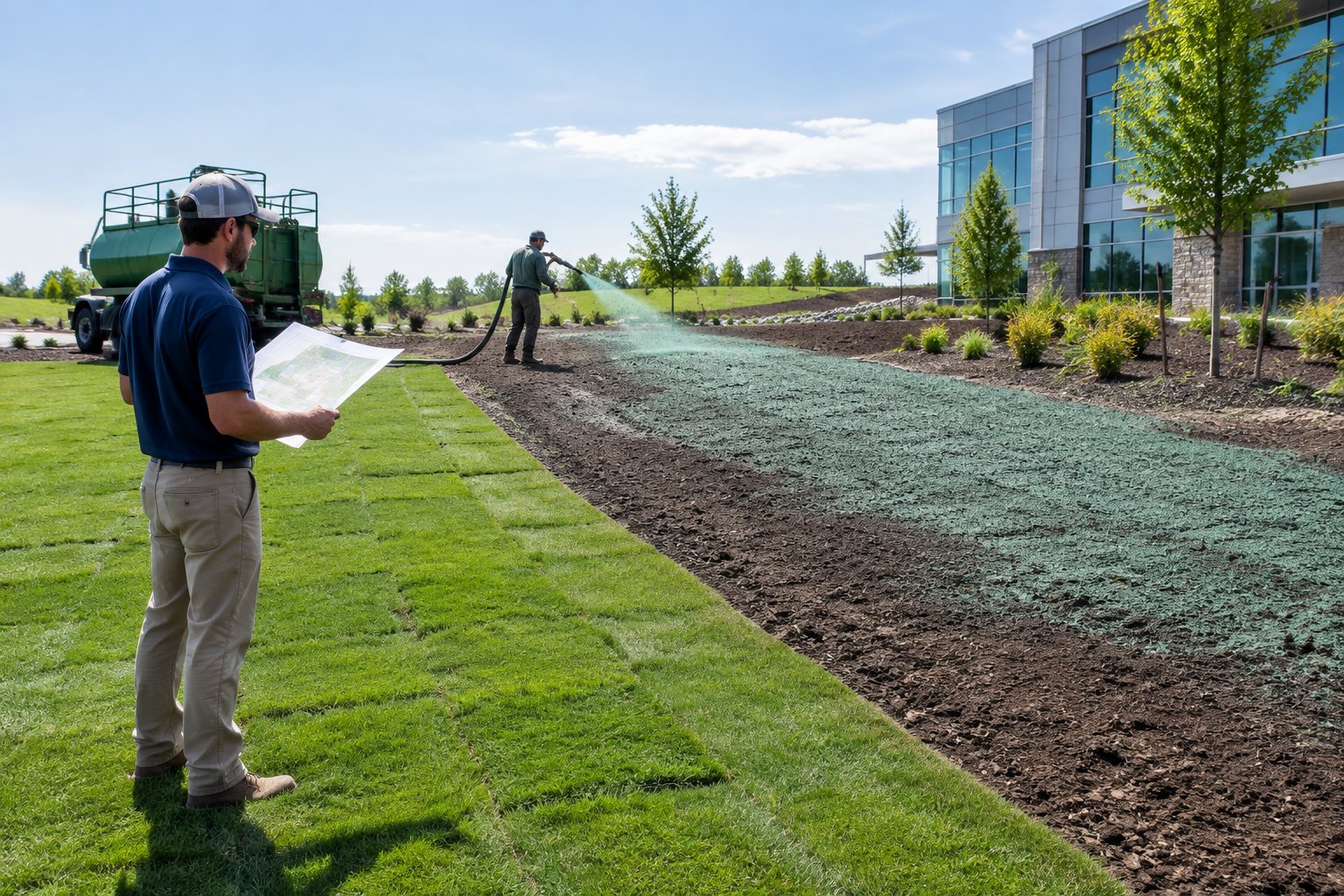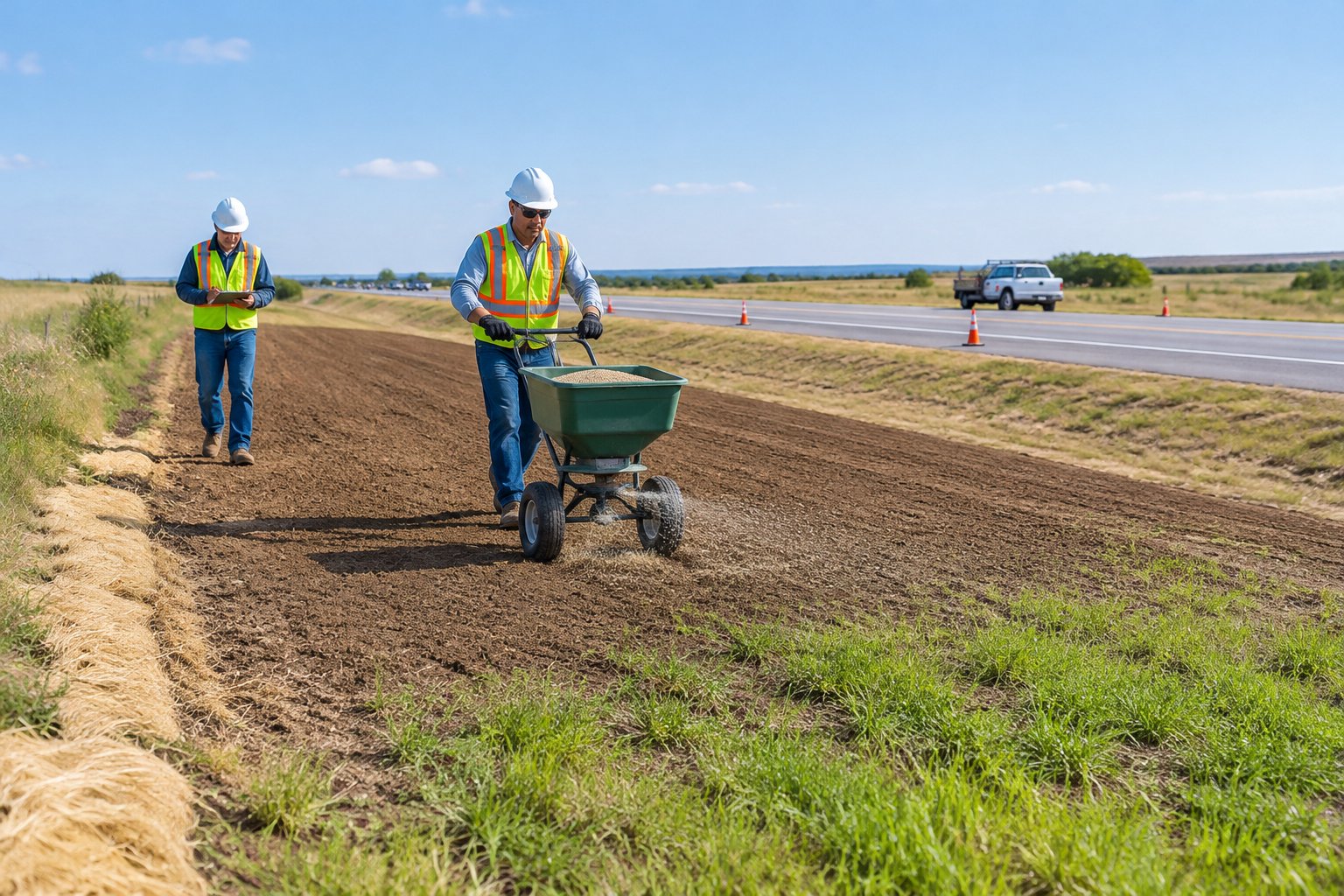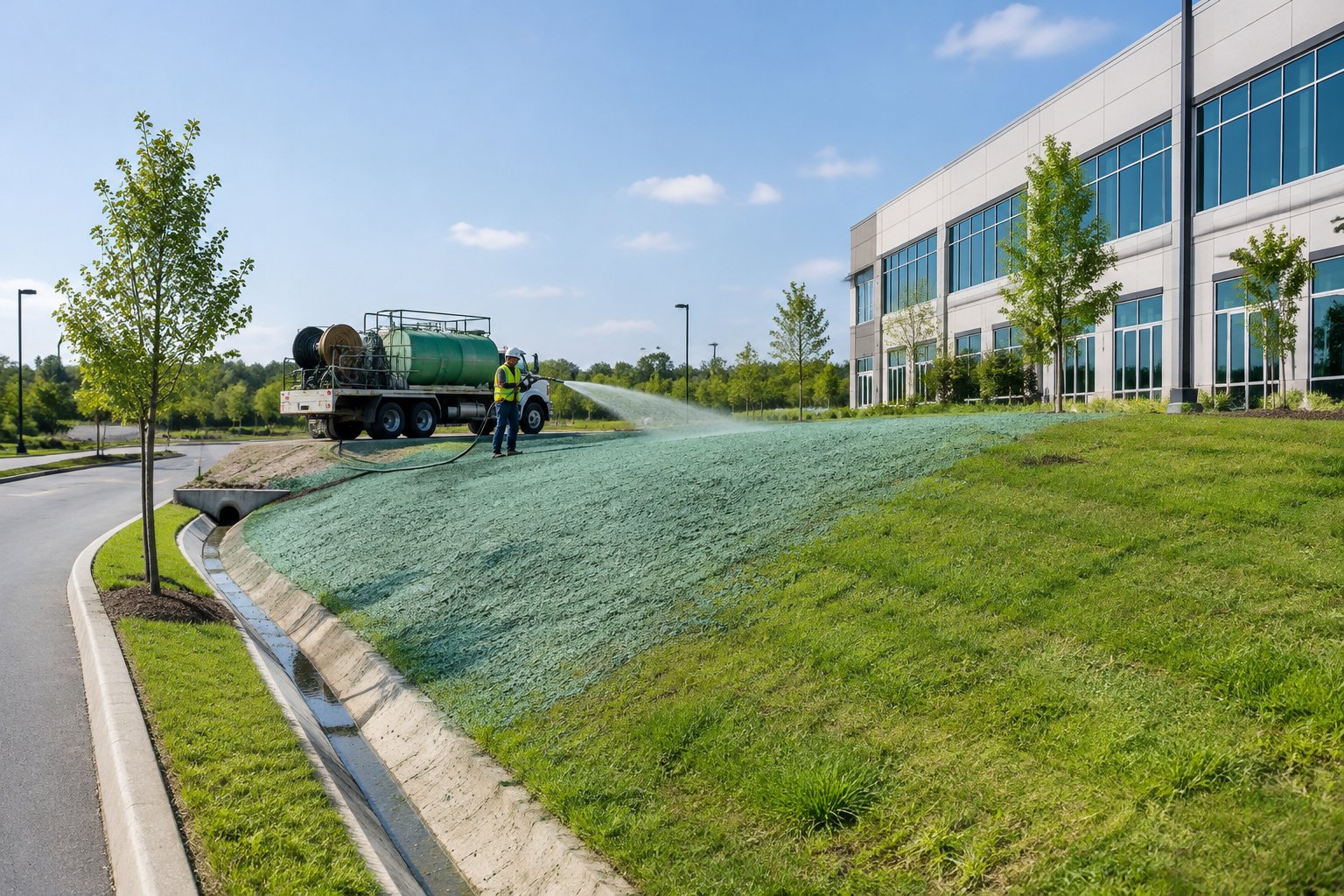
Most people who ask whether hydroseeding is worth it are comparing it with something cheaper, usually dry seed, or something faster looking, usually sod. On commercial work, hydroseeding is worth it when the area is large, the ground slopes or drains, the site has to reach final stabilization on a schedule, and there is a realistic plan to keep the seed watered while it comes in. It is poorer value on small showpiece areas, on ground that will be disturbed again, and on sites with no water during a hot, dry stretch. The rest of this article is about how to tell which side of that line your site is on.
How Should You Judge Whether It Is Worth the Money?
The square-foot price is the easy part to compare, and it is the least useful on its own. What you are really buying is a stand of vegetation that holds the soil, satisfies the permit and lets the job close. So the value question is how much it costs to get there, including the things that go wrong along the way.
On a commercial site those costs show up in a few places:
- Rework: a washed-out slope means another mobilization, more material and lost days
- Sediment leaving the site: sediment in inlets, streets or a neighbor's property leads to cleanup and corrective action
- Inspection findings: bare or failing areas get written up on SWP3 inspections and have to be fixed
- A delayed Notice of Termination: the permit, the inspections and sometimes retainage stay open until the site is stabilized
A seeding method that costs less up front but fails once on a slope is rarely the cheaper option by the end of the job. That is where hydroseeding earns its place, because the mulch layer protects the soil from the day it goes on, well before the grass does.
Where Does Hydroseeding Pay Off?
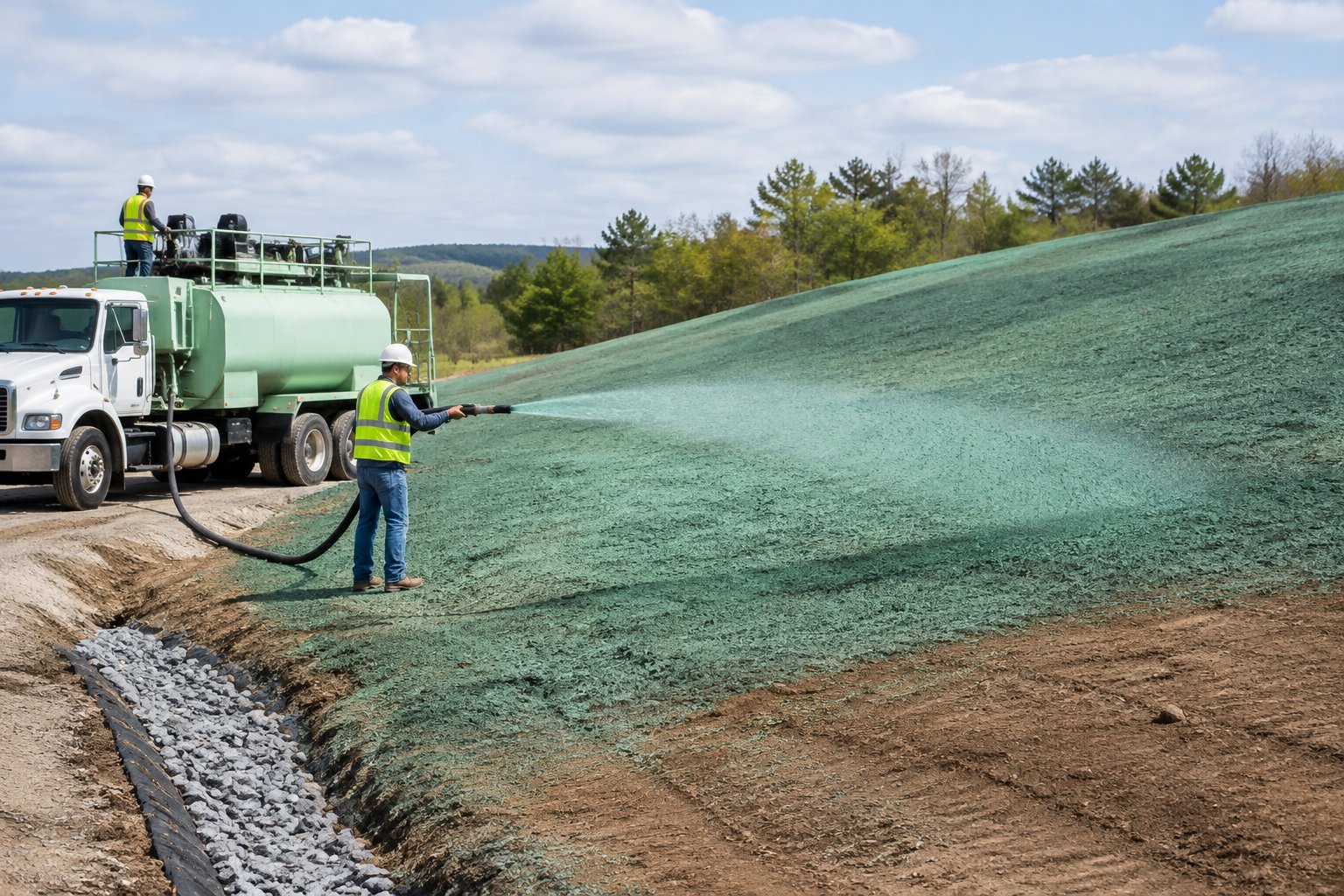
Hydroseeding gives the best return on large, open or awkward ground that has to be both protected now and vegetated later. Typical examples are pad perimeters, open lots, ditch sides, embankments, pond banks, corridors and phased developments where areas come ready over several months. The crew can work from a road or pad edge with a tower or a long hose, so access to slopes and odd shapes is rarely the limit.
It also pays off when the schedule matters. One crew can cover a large area in a day, and as grading finishes in phases, the seeding can follow it rather than waiting for one big application at the end. Getting the bulk of a site seeded early is often what keeps final stabilization from becoming the last item on the punch list. Our guide on preventing permit holds with erosion control hydroseeding covers that connection in more detail.
Does the Season Change the Answer?
It can. Warm-season grasses such as bermudagrass want warm soil, so seeding them in the middle of winter means the ground sits covered by mulch but not growing until spring. That is sometimes acceptable for temporary stabilization, and sometimes a temporary cool-season cover is the better value until the right window opens.
Summer brings the opposite problem. Germination is fast in the heat, but seed that sprouts and then dries out can die, so the value of a summer application depends on getting enough water or rain during establishment. In hurricane season the risk is a heavy storm before the slurry has set. None of this makes hydroseeding a bad choice in those months. It means the timing, the water plan and the product need to be decided together, and a good crew will tell you when a different approach would serve the site better.
What Makes One Bid Better Value Than Another?
Two quotes for the same acreage can be very different jobs. Before deciding which is the better deal, check that each one names:
- The seed mix and rate, matched to the season and the spec
- The mulch product and rate for each area, including heavier products on slopes
- Tackifier and fertilizer, and which products
- Surface prep: who handles loosening compacted soil, repairing rills and clearing debris
- Area, phasing and the number of mobilizations assumed
- Who provides establishment water and how touch-ups are handled
A low number that assumes a thin application on a slope, no prep and one mobilization for a phased site is likely to cost more by closeout. For a quick, rough range on standard hydroseeding, our pricing calculator is a good first step. Our article on hydroseeding cost in Texas for commercial site budgeting goes through the main price drivers.
How Do You Get the Most Out of It?
The value of a hydroseed application is mostly decided before and after the truck shows up. Before, it comes down to prepared soil, the right mix for the season and the right product for each zone. After, it is water, keeping equipment and foot traffic off seeded ground, and walking the site after storms so thin spots get touched up early instead of at the final inspection.
Clear responsibility makes a big difference. When the contract says who waters, who inspects and who repairs, problems get handled while they are small. Our crews installed roughly 15 million square feet of mulch for more than 60 clients in 2025, and the jobs that go most smoothly are the ones where those questions were settled before the first load was mixed.
Find Out What Seeding Your Site Will Take
If you are trying to decide where hydroseeding makes sense on your project, our team can look at the plans, the schedule and the season and give you a straight answer, including where another method would be the better buy. Allied Hydromulch has provided commercial hydroseeding and erosion control across Texas and Louisiana since 1990. Contact our team or call 281-482-8212 to talk through your site.
Frequently Asked Questions
Is hydroseeding worth it for a small commercial lot?
It can be, especially if the lot slopes or drains toward the street. On a very small, flat, irrigated area that needs to look finished right away, sod is often the better value.
Is it worth hydroseeding in a Texas summer?
Yes, if there is a reliable water plan. Seed comes up quickly in warm weather, but it needs steady moisture until it establishes, so plan irrigation or a water truck before application.
Should ground that will be regraded later be hydroseeded?
Usually not with permanent seed. Mulch-only cover or a temporary seed mix holds the soil for less money until the final work is done.
What is the biggest reason a hydroseed job loses its value?
Lack of water during establishment is the most common one. Heavy rain before the slurry sets and a product too light for the slope are the next two.