.svg)



Construction site erosion control failures cost more than dirt. They cost schedule days, permit standing, and real money in fines that land squarely on the general contractor's desk. The moment a blade hits undisturbed ground, every square foot of exposed soil becomes a liability.
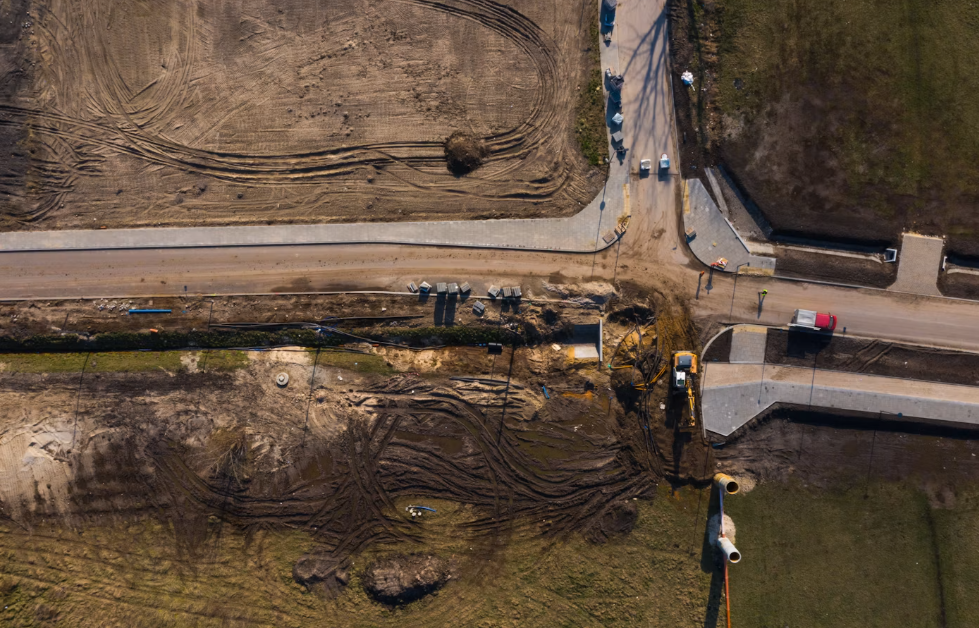
On Texas job sites, Gulf Coast storms can drop inches of rain in under an hour on expansive clay soil, causing runoff to build across bare pads within minutes.
A single missed BMP, a poorly placed silt fence, or bare soil left unstabilized for even a few days can trigger a permit hold that stalls an entire project. That is the reality for contractors managing sites across Houston, Corpus Christi, and the surrounding Gulf Coast region.
At Allied Hydromulch TX, we have spent 35 years keeping construction projects moving through exactly these conditions, applying hydroseeding and erosion control solutions that perform the first time.
Why Small Failures Turn Into Permit Holds
Most stormwater violations do not start with a catastrophic blowout. They start with small failures that compound during a single rain event, creating compliance problems that inspectors flag immediately.
Erosion vs. Sediment Control Strategy
A compliant site requires both erosion and sediment control working together. Erosion control keeps soil from detaching through temporary seeding, mulching, or blankets.
Sediment control, such as silt fences and basins, captures soil that is already moving. Relying on sediment control alone is a losing strategy on active pads with heavy equipment traffic; it assumes erosion is acceptable.
Visible Compliance Risks: Track-Out and Turbidity
Inspectors look for visible signs of failure. Track-out on public roads is one of the most common citations in Texas because it is immediately visible. Similarly, turbidity in discharge water signals that your sediment controls are overwhelmed. Either condition can trigger a corrective action notice or a stop-work order tied to your stormwater permit.
Proactive SWPPP Strategy: Planning Before the Dirt Moves
Effective site stabilization begins before equipment arrives. Your SWPPP and construction sequence must account for how water will move across the site at every phase. Water follows the path of least resistance.
If your plan does not account for concentrated flow paths and off-site discharge locations, your BMPs will be installed in the wrong places.
Permitting and Sequencing Requirements
Any project disturbing more than one acre requires a stormwater pollution prevention plan (SWPPP) and NPDES permit coverage via TCEQ. The SWPPP is an operational document specifying which BMPs will be installed and when.
Phasing land clearing to open only what your crew can actively work reduces the volume of runoff and sediment that perimeter controls must manage.
Hydroseeding & Rapid Soil Stabilization: Solving High-Risk Exposure
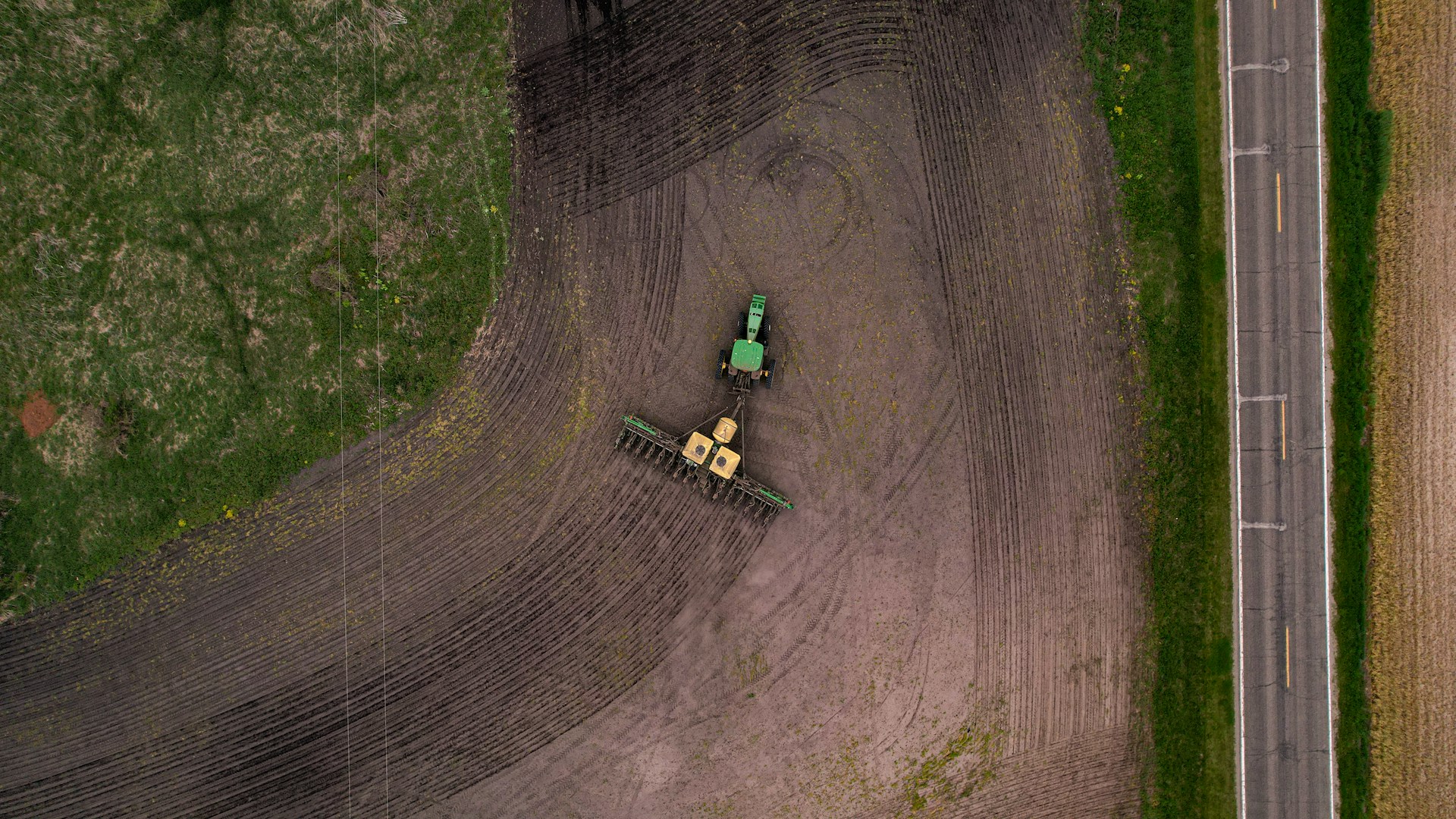
The faster exposed areas are stabilized, the lower the risk of a permit hold. Temporary seeding establishes fast-growing vegetation on inactive areas, while hydroseeding combines seed, mulch, and fertilizer in a single application to cover large areas quickly.
Germination typically begins within 7 to 14 days, depending on soil conditions and weather.
Using Blankets and Binders on Steep Slopes
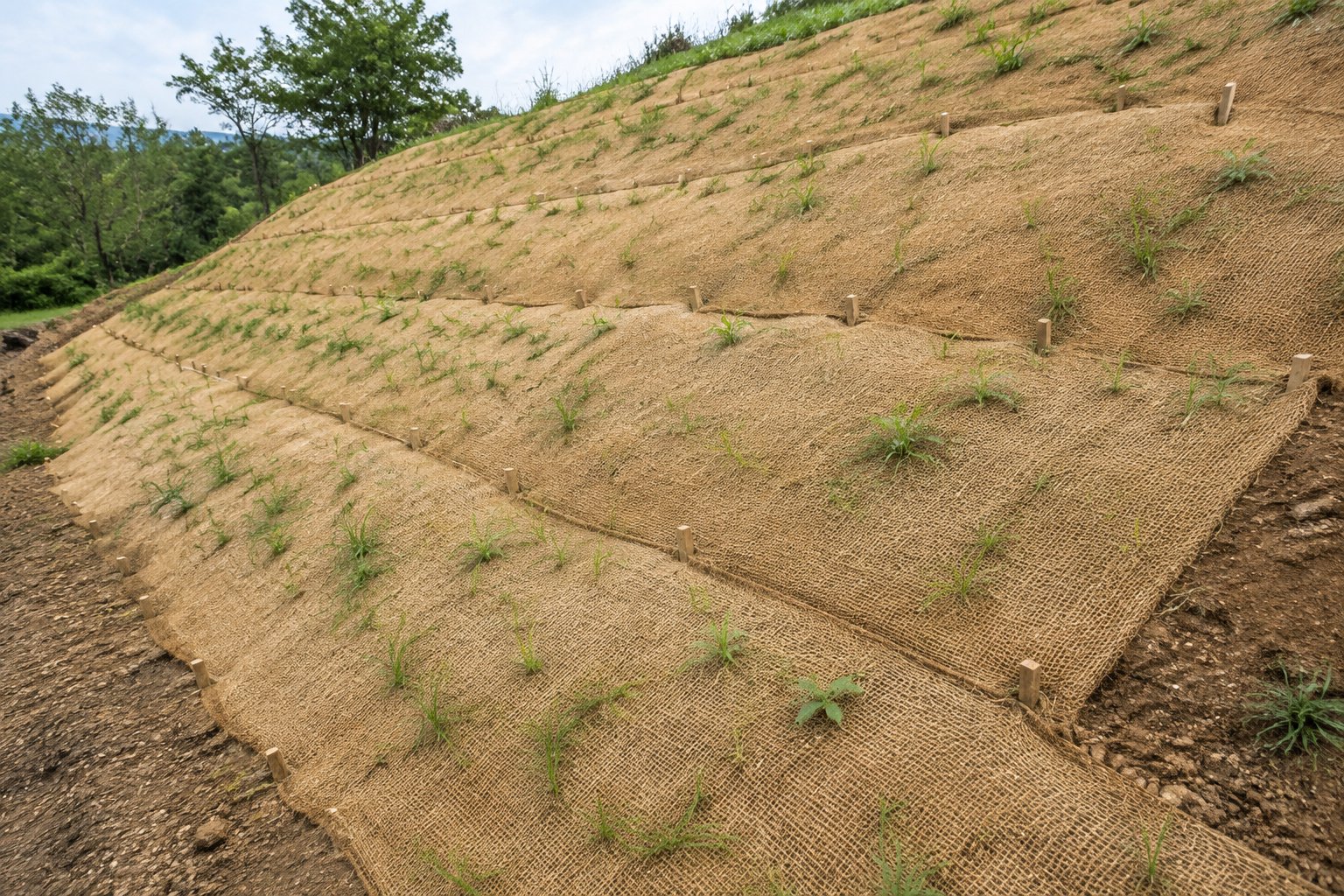
Slopes steeper than 3:1 often require more than seed and mulch. Erosion control blankets provide immediate physical protection while vegetation establishes. For steep Texas slopes where standard blankets might lift, premium flexible growth mediums or hydraulic soil stabilizers provide better anchoring. Once final grades are established, we use native grass seeding to provide durable, permanent soil erosion protection for permit closeout.
Erosion Control: Controlling Water and Containing Sediment
Perimeter controls, water diversion, and sediment capture systems keep soil on site. Silt fences are effective for sheet flow on flat boundaries, while straw wattles slow runoff on slopes. These tools fail if they aren't trenched correctly or if water overtops them.
We use swales, check dams, and diversion ditches to channel runoff to controlled discharge points. Every outfall should discharge clean water. If turbidity is visible at a discharge point, something upstream has failed and requires immediate adjustment.
Inspection, Maintenance, and Records
Most stormwater permits require inspections every seven days and within 24 hours of a significant rain event. These inspections must check every BMP for damage, sediment buildup, or signs of overtopping.
On active sites, equipment traffic and grading changes shift constantly—an inspection from Monday may not reflect conditions by Thursday.
Maintaining written records of every inspection and corrective action is critical. These documents protect you during regulatory audits, especially on industrial projects along the Gulf Coast, where environmental requirements are strict.
When conditions change, we update the SWPPP and adjust BMPs immediately to prevent small rills from becoming permit-level violations.
At Allied Hydromulch TX, our field experience is measured in decades, not just projects. Led by Greg and supported by a senior team including Ray (with Allied since 1992) and Josh (since 2009), we bring institutional knowledge of Texas soil and Gulf Coast weather to every site. Having installed over 15 million square feet of mulch in 2025 for clients like Bechtel and Amazon, we provide the technical precision required to hit specs and close out permits.
Our team has handled hydroseeding and erosion control across Texas and the Gulf Coast since 1990. Call 281-482-8212 or request a project estimate to talk through your site.
Frequently Asked Questions
What controls do inspectors expect before the first rain hits?
Inspectors want to see perimeter controls installed, inlet protection on storm drains, and a stabilization plan for exposed soil. If a pad is inactive for more than 14 days, temporary seeding or mulch is usually required.
How do we choose between silt fence and wattles?
Silt fence works best for sheet flow on flat perimeters. Wattles and fiber rolls are better for slope faces and concentrated flow. Most compliant sites use both in combination with inlet protection.
When should we use erosion control blankets on Texas slopes?
Blankets are effective on slopes up to 2:1 when properly anchored. On steeper slopes or clay soils where staples might not hold, we recommend hydraulic soil stabilizers or flexible growth mediums like Flexterra.
How do you hit TxDOT specs during summer heat?
Summer seeding requires heat-tolerant mixes and precise timing. Hydroseeding retains more moisture at the soil surface than dry broadcast seeding, helping germination establish even when temperatures exceed 95°F.