.svg)


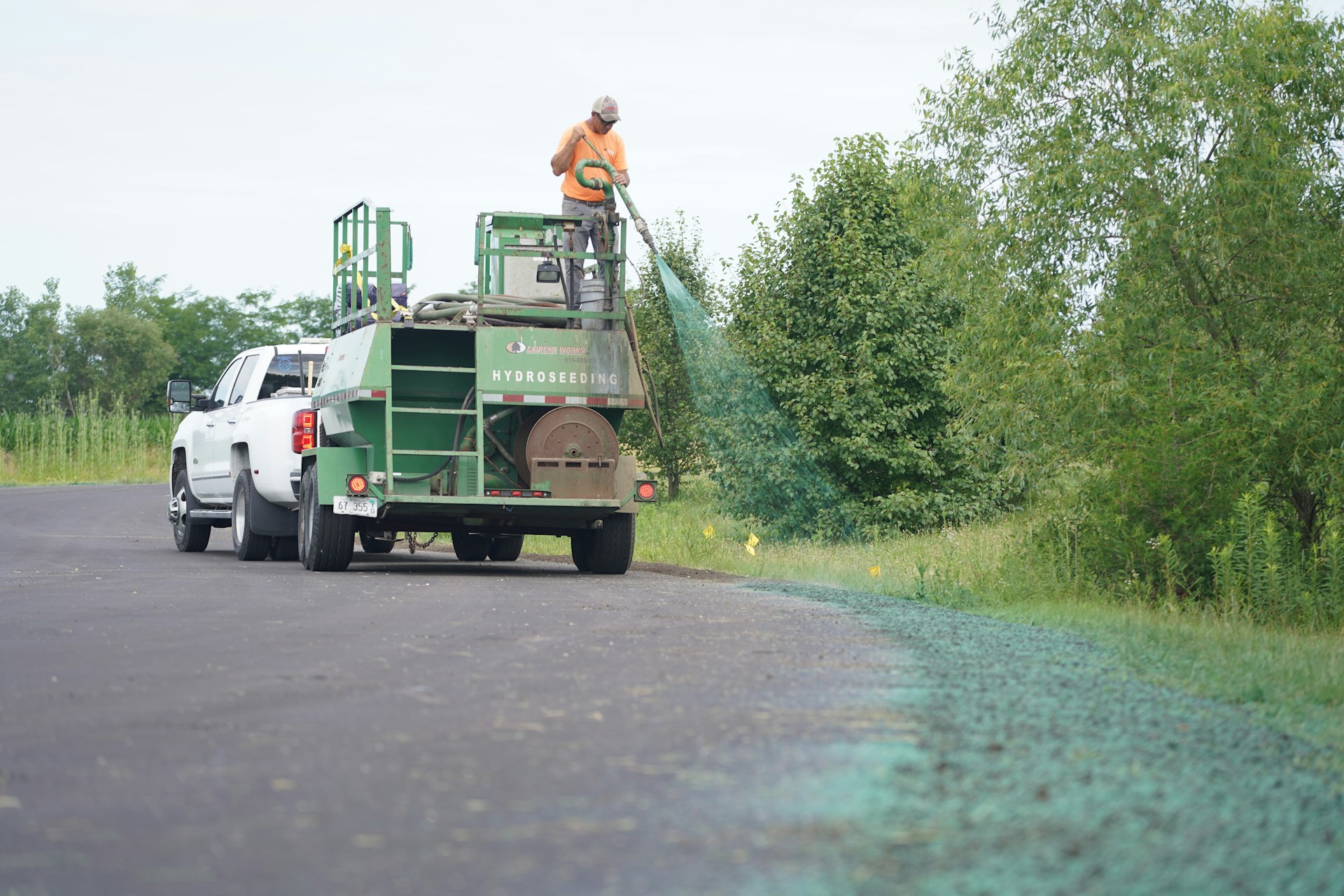
Budgeting hydroseeding cost in Texas starts with one fact: each commercial site is unique. A flat warehouse pad in Dallas and a sloped detention basin in Houston price out very differently, even at the same square footage.
Slope, soil condition, seed type, and logistics all shift the budget before any hydroseeding begins.
Knowing how pricing works, what site factors drive cost, and how to build a rough budget helps you prepare before requesting quotes.
What Commercial Buyers Should Expect from a Ballpark Price
Most commercial hydroseeding in Texas falls within a range set by site size, complexity, and seed specification. A ballpark figure early helps project managers plan for preconstruction meetings.
On a flat, well-graded site, hydroseeding usually costs less per unit than sod. As acreage grows, hydroseeding gets more cost-effective, because the equipment covers more ground with less labor.
Sites with poor access or steep slopes take more effort, which raises the average cost per square foot.
Typical Cost per Square Foot on Larger Texas Sites
On larger commercial sites, the square-foot rate is lowest for standard turf with basic seed, mulch, and fertilizer on flat terrain with good access and minimal prep.
Premium erosion control products or native seed mixes push the rate up. Projects with special specifications sit above that window.
When Cost per Acre Becomes the Better Budget Metric
For projects over five acres, pricing per acre is more practical. Open, graded land sits at the low end, and the number climbs with a heavier slurry or added passes.
Contractors often prefer per-acre pricing on large jobs because it simplifies comparisons and budgeting against owner schedules.
Why Small Disturbed Areas Can Price Higher Than Large Open Tracts
A 10,000-square-foot detention area can cost more per square foot than a 200-acre tract. Mobilization is the reason: bringing equipment and crew to a site is a fixed cost, whatever the area covered.
Small or scattered areas need more setup and manual work, which raises the per-unit rate. If your project includes several small disturbed zones, expect higher labor costs.
The Site Conditions That Move Pricing Up or Down
Site conditions are the biggest variable behind hydroseeding cost in Texas. Two projects with the same acreage can cost very differently based on slope, soil, and access.
Slope Severity, Drainage Features, and Erosion Exposure
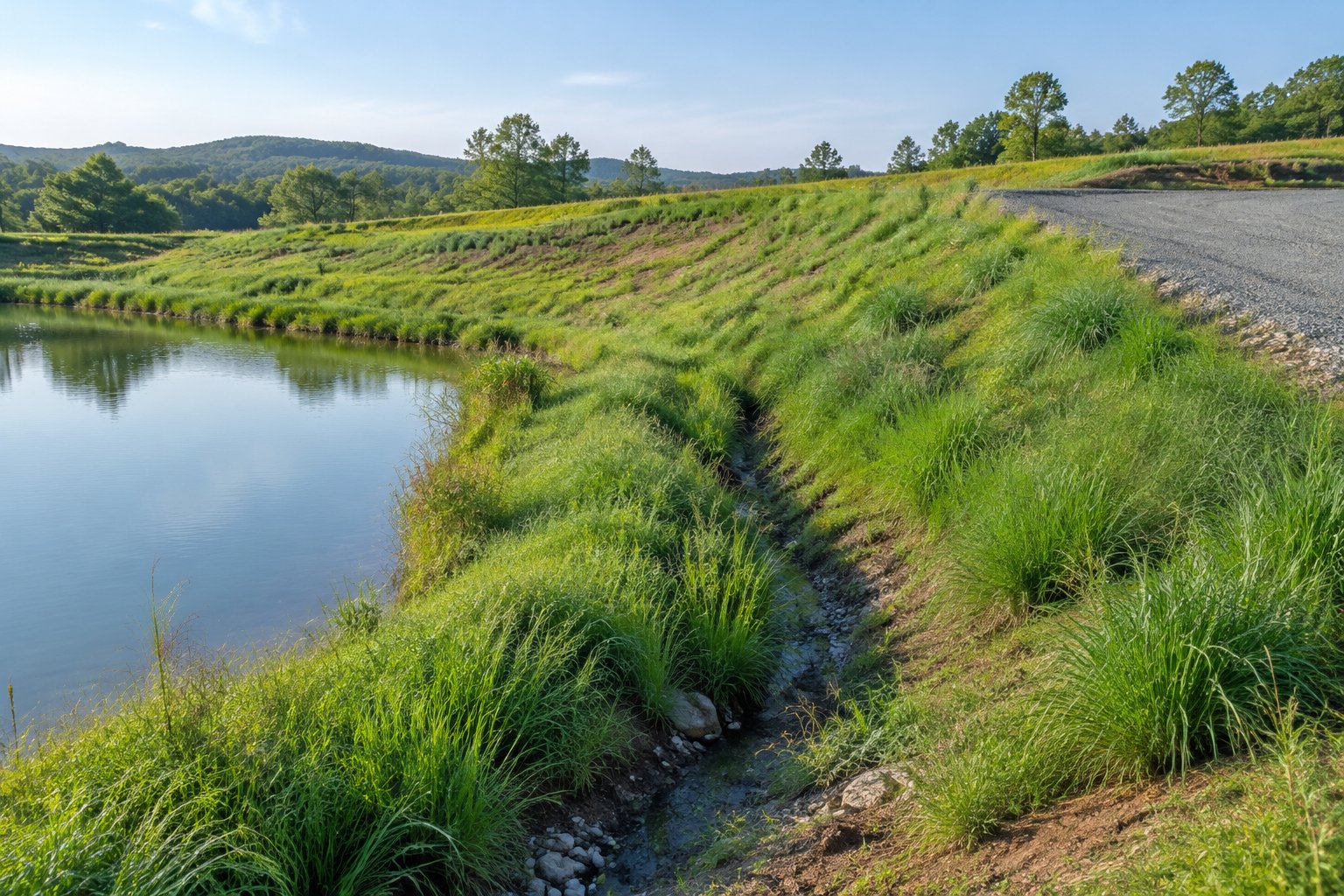
Steep slopes need more product per square foot. A 3:1 slope on a highway embankment takes heavier mulch and often a tackifier to hold the slurry until germination.
Slopes steeper than 2:1 may need Flexterra for steep slopes to prevent washout during heavy rain.
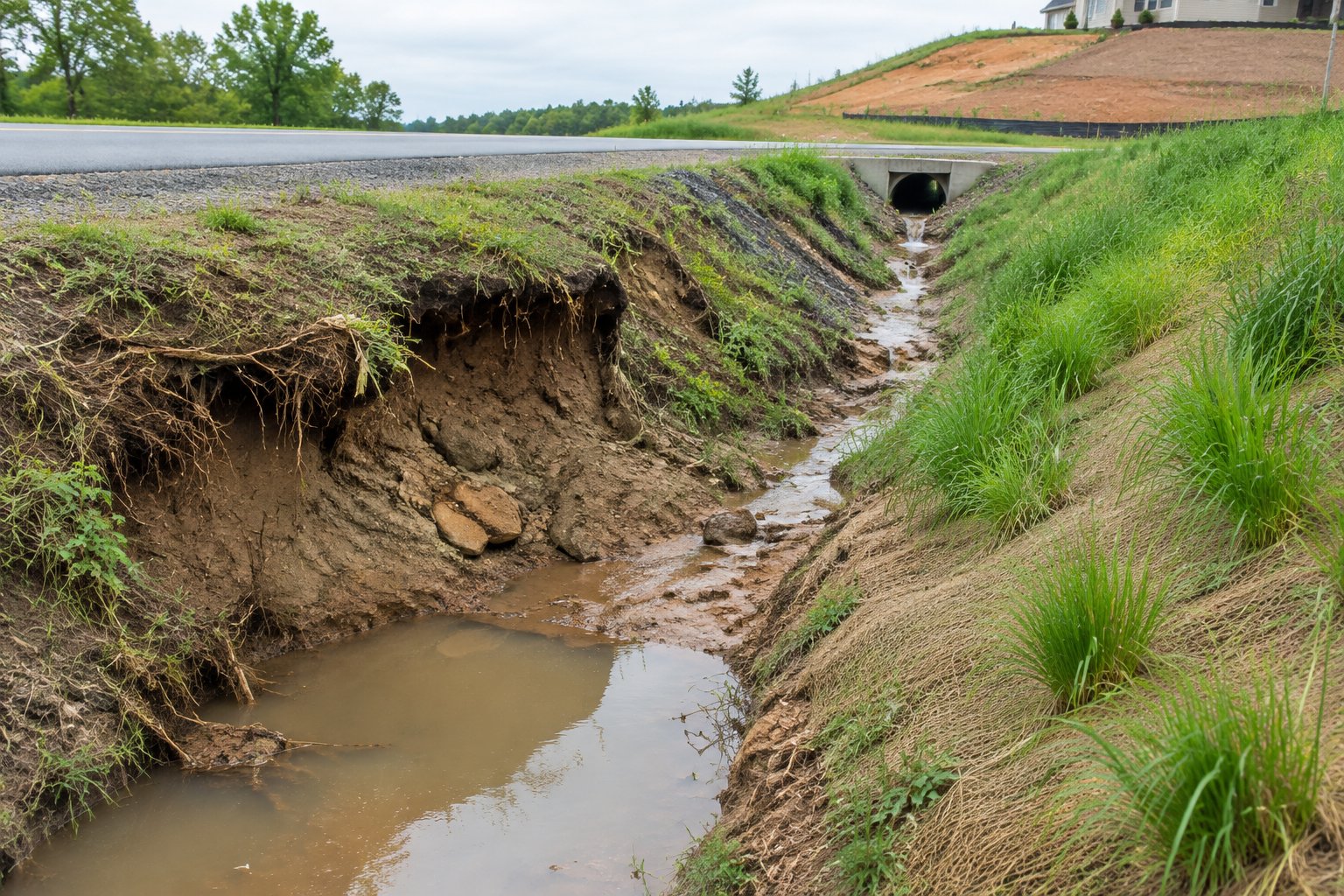
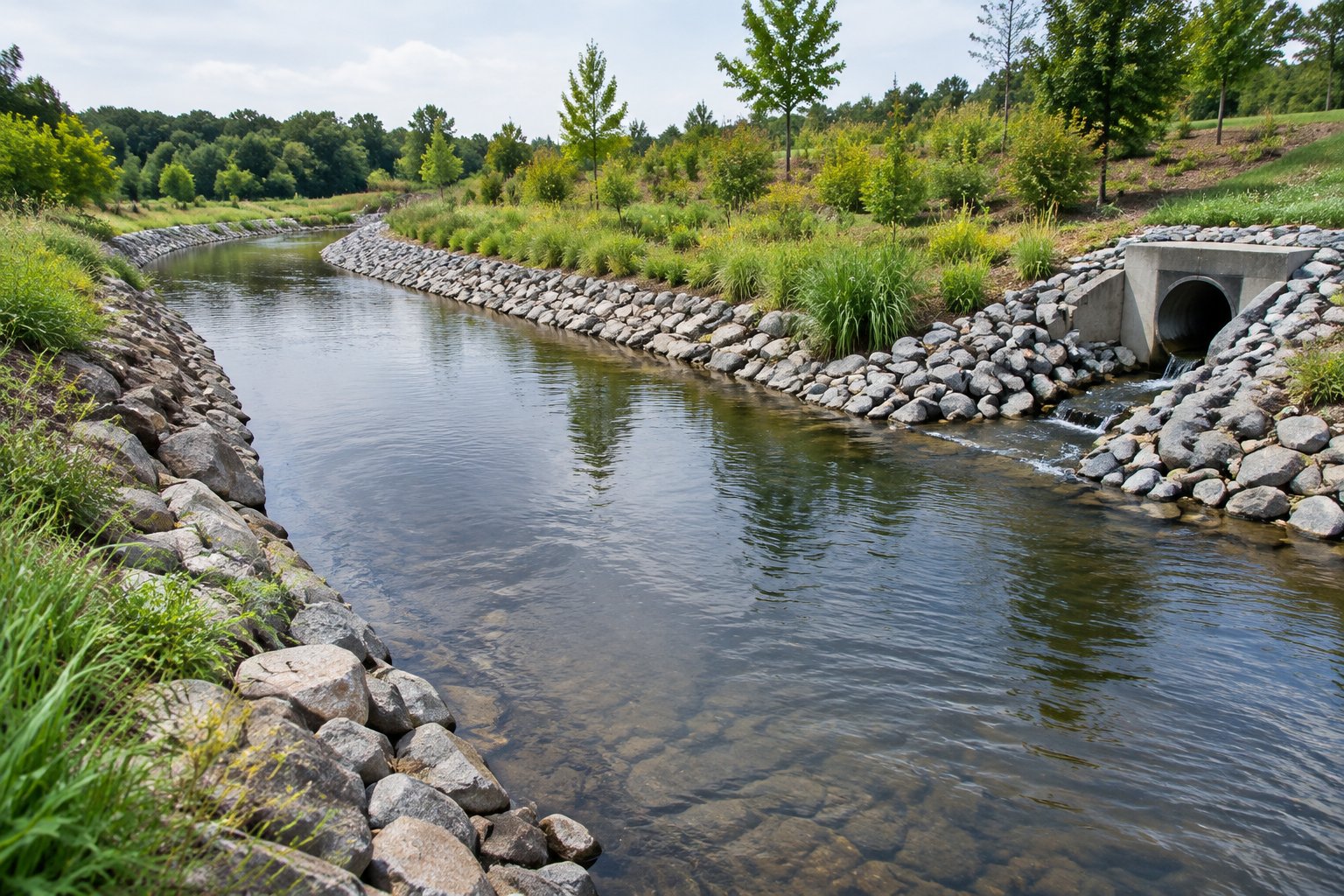
Drainage features add complexity. Channel inverts, pond banks, and outfall areas see concentrated flow and need higher-performance erosion control, sometimes blankets, which increases material and labor costs.
Projects along the Texas Gulf Coast face heavy rain and fast-draining soils. Houston and southeast Texas sites often need stronger stabilization than flat West Texas ground. That shapes product choice and erosion control for active sites.
Soil Condition, Grading Status, and Debris Removal
If the soil is not graded and free of debris, we cannot apply effectively. Rocks, rubble, or ruts reduce seed-to-soil contact and hurt germination.
Debris removal and final grading are usually the general contractor's job. If that work is incomplete, a return trip may be needed, which adds to mobilization charges. Confirm grading status before scheduling to protect your budget and timeline.
Soil type matters too. Texas clays crack and crust in heat, making germination harder unless we use soil conditioners. Sandy soils may need extra tackifier to hold moisture near the seed.
Access, Water Supply, and Number of Mobilizations
A hydroseeding rig needs a reliable water source on site or nearby. Trucking in water adds cost. Tight access, gate restrictions, or narrow roads slow production and raise the rate.
The number of mobilizations affects the total. A single-visit application on a prepped site is most efficient. Phased applications or return trips from incomplete grading raise costs.
- Confirm water source availability before requesting a quote.
- Check equipment access routes with the site superintendent.
- Combine application phases when possible to reduce mobilization charges.
Site logistics set up the next major cost driver: seed mix selection and project goals.
How Seed Mix and Project Goals Change the Scope
The seed mix can shift the price as much as slope or access. A basic turf slurry and a native grass mix differ in material cost, timeline, and expectations.
Here’s a cleaner bullet-point version:
- Standard turf, such as Bermuda or rye, has the lowest relative seed cost and typically establishes in about one month. It is best suited for warehouse pads and commercial perimeters.
- Native grass has a higher cost per pound and may take up to three months to establish. It is a good fit for highway rights-of-way, reclamation projects, and low-maintenance sites.
- Wildflower seed also has a higher cost per pound, while the establishment window varies by species. It works well for parks, campus edges, and beautification projects.
Standard Turf Establishment Versus Native Grass Seeding
Standard turf mixes with Bermuda, rye, or warm-season blends are the most affordable per pound. They germinate quickly, often within two weeks, and establish in about a month under good conditions.
Native grass restoration uses regional species that cost more per pound and take up to three months to establish. The payoff is lower long-term maintenance and deeper roots, often required on highway or reclamation projects.
Native mixes may also need higher mulch rates and soil amendments, which add to the application cost.
Wildflower Seeding and Low-Maintenance Project Objectives
Wildflower mixes suit parks, campus perimeters, and beautification projects. They provide seasonal blooms and reduce mowing. Seed cost varies by species, and bloom timing is less predictable than turf.
Wildflower seeding is not cheaper than turf. The seed often costs more and establishment takes longer. The advantage is reduced long-term maintenance for owners and municipalities.
When Erosion Control Products Need to Be Added
On many Texas commercial sites, hydroseeding alone does not meet erosion control needs. Steep slopes, flow paths, and areas near water may need bonded fiber matrix or erosion blankets in addition to hydromulch.
Hydraulic soil stabilizers work for moderate slopes. For steeper grades, erosion blankets installed before or after hydromulch add reinforcement until roots take hold. Each product adds material and labor costs but cuts the risk of washout and reapplication.
Knowing what products your site needs before requesting a quote helps prevent budget surprises.
How to Build a Rough Budget from Square Footage
Start with a measured area from your site plan. That gives you a starting number for preconstruction, even before a formal quote.
Using Site Plans and Takeoffs for a First-Pass Estimate
Pull disturbed-area quantities from your civil drawings or grading plan. Break the total into zones: flat areas, slopes, channel banks, and detention features. Each zone may carry a different rate based on method and products.
Apply the right rate band to each zone, using the low end for flat, well-graded areas and the high end for slopes or special products. Add the zones for a first-pass total.
This does not replace a contractor's quote, but it supports early budgeting and presentations.
When to Use an Online Hydroseeding Cost Calculator
An online calculator gives a quick estimate before you contact a contractor. The hydroseeding pricing calculator lets you enter square footage for a rough range based on typical scenarios.
Use it as a starting point. It reflects standard conditions but does not account for slope, soil, or specialty seed mixes. Treat it as a guide, not a final number.
What a Quote Needs Before It Becomes Job Ready
A rough budget is not a confirmed estimate. Before a quote is ready for a purchase order, we need specific site details:
- Graded area quantities by slope and condition
- Seed mix specification or vegetation requirements
- Water source location and access information
- Expected timing relative to the construction schedule
- Any erosion control products required beyond hydromulch
Missing any of these can produce a quote that does not match the real scope, which often turns into change orders later.
Gathering these details moves you from rough budgeting to real planning, which depends on timing and Texas-specific conditions.
Texas Conditions That Affect Performance and Cost Timing
When you apply matters as much as how much you pay. Texas weather and soil create windows where hydroseeding performs well and windows where it risks failure.
Spring and Fall Windows Versus Summer Heat
Spring and fall offer the best germination windows for most seed mixes in Texas. Soil temperatures between 60 and 80 degrees help seeds establish quickly, and rainfall is more consistent.
Applying in these windows raises the chance of success and lowers the risk of reapplication. Summer heat above 95 degrees stresses new seedlings. If you must apply in summer on the Gulf Coast, plan for extra irrigation and factor those water costs in early.
Clay Soils, Heavy Rain, and Gulf Coast Scheduling Pressure
Texas clay soils are a challenge. Dry, they crack and crust. Wet, they turn slick and nearly impermeable. Both conditions cut seed-to-soil contact and can wash slurry off slopes during heavy rain.
Gulf Coast projects face tropical storms and heavy rain from May through October. A stable site can wash out in days. On southeast Texas jobs, we use heavier mulch rates, tackifiers, and sometimes steep slope stabilization to keep material in place through the first weeks.
The Texas Department of Transportation (TxDOT) sets vegetation establishment specifications that require hydroseeding on state projects to follow set rates and watering schedules. Those rules affect both application cost and maintenance planning.
Why Compliance Deadlines Matter More Than Unit Price Alone
Stormwater permits focus on vegetation being established before inspections or rain, not on your cost per square foot. The lowest unit price can backfire if the vendor cannot work within your schedule or lacks the right erosion control products.
A failed application can trigger a Texas Commission on Environmental Quality (TCEQ) stormwater violation. That costs far more than a higher-quality bid. When you review quotes, weigh responsiveness, product capability, and track record alongside price.
Next Steps for Scoping the Right Application
To move from a budget range to a confirmed estimate, you need clear information and a way to compare quotes.
What to Gather Before Requesting Pricing
Before requesting a quote, gather the details that let contractors give accurate numbers. Missing information leads to placeholder pricing that may change later.
- Total disturbed area in square feet or acres
- Slope percentages and locations of steep grades
- Seed mix requirements or vegetation specs from the project engineer
- Water source type and proximity to the application area
- Construction schedule and any compliance deadlines for vegetation
- Site access restrictions, gate hours, or haul road limits
Having these ready shortens the bid process and keeps quotes matched to the real scope.
How to Compare Quotes Without Missing Scope Gaps
Hydroseeding quotes do not always cover the same scope. One contractor may include slope erosion control; another lists it as an add-on. Some bids assume one mobilization; others assume two.
When comparing bids, check each quote for:
- Seed mix species and application rate per square foot
- Mulch type and rate (standard hydraulic mulch or bonded fiber matrix)
- Whether erosion blankets or tackifiers are included
- Number of mobilizations and any return-trip charges
- Exclusions for debris removal, grading, or irrigation
A lower price that excludes slope protection or assumes a fully prepped site is not a true comparison. That gap drives change orders. To avoid hydroseeding rework, make sure the quote matches your actual site conditions.
When to Move from Budget Range to Confirmed Estimate
A budget range helps with preconstruction planning. A confirmed estimate is what procurement needs. You can get one once the site is graded, the seed spec is set, and the application window is defined.
If you are still in design or permitting, keep the budget range and mark hydroseeding as a line item to refine later. Once grading is done and the schedule is set, request a site-specific quote with a clear scope of work.
For phased applications, ask the contractor to break the estimate into stages so payments align with construction milestones. That approach is common on large commercial developments, corridor stabilization, and industrial sites where areas finish at different times.
Frequently Asked Questions
What Drives Hydroseeding Pricing on Texas Projects?
Slope, seed specification, mulch type, soil condition, and site access are the main drivers. A flat, open site with standard Bermuda seed costs less per square foot than a sloped area needing native grass and bonded fiber matrix. Limited water supply or restricted access raises the price too.
Is Hydroseeding Priced by the Acre or by the Square Foot?
Large tracts are usually priced per acre. Smaller commercial pads and disturbed areas are quoted per square foot. Most contractors carry a minimum mobilization charge regardless of area. On phased projects, each mobilization is usually invoiced separately.
What Should I Budget to Hydroseed One Acre in Texas?
For one acre on a well-graded Texas site, standard hydroseeding sits at the low end of the commercial range. Native seed mixes, slope stabilization products, or soil amendments for clay or sandy conditions move it up from there.
Why Does a Small Pad Cost More per Square Foot Than a Large Site?
Mobilization is a fixed cost for bringing equipment and crew to the site. On a 1,000-square-foot pad or detention area, that fixed cost is spread over very little ground. The per-unit rate runs higher than on a large-acreage job.
Is Hydroseeding More Cost-Effective Than Sod or Drill Seeding?
Hydroseeding usually costs less than sod on large commercial sites, and it avoids the labor and logistics of laying sod. Against drill seeding, it gives faster coverage and works better on slopes. Drill seeding may suit very large, flat native grass restoration.
Can We Hydroseed In House, or Should We Subcontract?
In-house hydroseeding needs a rig, a reliable water source, trained operators, and the right seed and mulch. Most general contractors subcontract to a specialist with the equipment and experience to get it right the first time.
Getting Your Hydroseeding Budget Right the First Time
Hydroseeding cost in Texas comes down to site specifics: slope, soil, seed mix, access, and timing. Start with a rough budget from your takeoff, then compare it against an online calculator. Get a site-specific quote with a defined scope before you issue a purchase order.
The most expensive hydroseeding job is the one that has to be done twice. Define the scope correctly, match products to your site, and schedule in a good germination window to protect your budget and timeline.
Allied Hydromulch TX, LLC has handled commercial hydroseeding and erosion control across Texas and the Gulf South since 1990. Use the online cost estimator for a rough range, or call 281-482-8212 to talk through your site with a crew that does this work every week.