The native grasses that do most of the work on Texas project sites are little bluestem, sideoats grama, buffalograss, switchgrass, Indiangrass and eastern gamagrass, with Texas wintergrass and a few shade-tolerant species filling the gaps. Each one has a home range of soil, moisture and height, and a good native mix is really a set of species matched to the different zones of one site: dry ridges, rocky cuts, mowed edges, wet swales and open acreage.
This page profiles those species so you can read a native seed spec, question a mix, or plan one from scratch. For the step-by-step restoration process (prep, seeding method and establishment), see our guide to native grass seeding for durable Texas site restoration.
Which Native Grasses Show Up Most on Texas Sites?
Upland and Dry-Site Natives
These are the species that hold thin, dry, sunny ground where turfgrass would need constant water.
Little Bluestem
Little bluestem (Schizachyrium scoparium) is a warm-season perennial bunchgrass found across most of Texas. Texas A&M AgriLife describes it at about 24 to 48 inches tall, bluish green in summer and turning orange-red in winter, which makes it easy to spot on a roadside. It suits well-drained upland pads, berms and shoulders, and it handles drought well once it has rooted. It struggles in clay that stays wet after rain, and AgriLife notes it declines under heavy grazing.
Sideoats Grama
Sideoats grama (Bouteloua curtipendula) is the official state grass of Texas. It grows on gravelly hills and on loamy, clayey and sandy loam soils, and it is a regular in Hill Country and West Texas mixes because it roots into the thin, limestone-based ground on cut slopes and caliche. The seeds hang from one side of the stem, which gives the plant its name. It also provides good nesting cover for ground-nesting birds, which matters on wildlife and mitigation work.
Buffalograss
Buffalograss (Bouteloua dactyloides, often still listed as Buchloe dactyloides) is the low-growing option. USDA NRCS describes it as a stoloniferous perennial that grows 4 to 6 inches tall and forms a dense sod, at home on clay soils in areas receiving roughly 15 to 30 inches of rain a year. That makes it the native of choice for mowed strips, detention pond tops and open space around commercial buildings in North, Central and West Texas. It needs full sun and does poorly in high-rainfall East Texas.
Tallgrass and Moist-Site Natives
These species want deeper soil and more moisture, and they bring height, root mass and structure to a mix.
Switchgrass
Switchgrass (Panicum virgatum) is a tall warm-season perennial that spreads by short rhizomes, so it fills in more than a pure bunchgrass. It handles heavier, moisture-holding soils better than most upland natives, which is why it shows up on Gulf Prairie sites, drainage swales and the wetter parts of channel and pond banks. Keep it away from driveways, intersections and anywhere it will block sight lines once it reaches full height.
Indiangrass
Indiangrass (Sorghastrum nutans) is one of the classic tallgrass prairie species. AgriLife lists it at 36 to 96 inches tall, growing from short, scaly rhizomes in bottomlands and protected places, and rates it good forage for livestock. Its golden fall seed heads stand out in a stand. It pairs with little bluestem and switchgrass in prairie-style mixes for open acreage, reclamation and wildlife areas, but it needs room and should stay out of zones that get mowed often.
Eastern Gamagrass
Eastern gamagrass (Tripsacum dactyloides) grows in large clumps 36 to 72 inches tall. AgriLife lists it in fertile bottomlands and swamps, lightly disturbed grasslands, roadsides and stream banks, and rates it good grazing. On project sites it belongs near low areas and drainage features with deeper soil. Livestock favor it, so on grazed land it can be the first species to disappear if a pasture is overstocked.
Natives for Winter, Shade and Visible Areas
The species above are all warm-season grasses. A few others cover what they cannot.
Texas Wintergrass
Texas wintergrass (Nassella leucotricha, also called speargrass) is, according to AgriLife, the most abundant native cool-season grass in Texas. It is a perennial bunchgrass 18 to 42 inches tall that greens up in winter when warm-season natives are brown. As a bunchgrass it leaves gaps between plants, so it is a supporting player in a native stand, not a stand-alone erosion cover.
Inland Sea Oats
Inland sea oats (Chasmanthium latifolium) is the go-to native for shade. It grows along creek banks and wooded edges in moist soil, with flat, drooping seed heads that are easy to recognize. Use it on shaded drainage edges and under tree canopy where the sun-loving species above will thin out.
Gulf Muhly
Gulf muhly (Muhlenbergia capillaris) is a clumping native known for its pink, airy fall bloom. It is a planted accent for entrances, medians and public-facing beds rather than something you would hydroseed across open acreage.
How Do You Match Native Species to a Site?
Start with what the ground is like, then build the mix zone by zone. A practical sort looks like this:
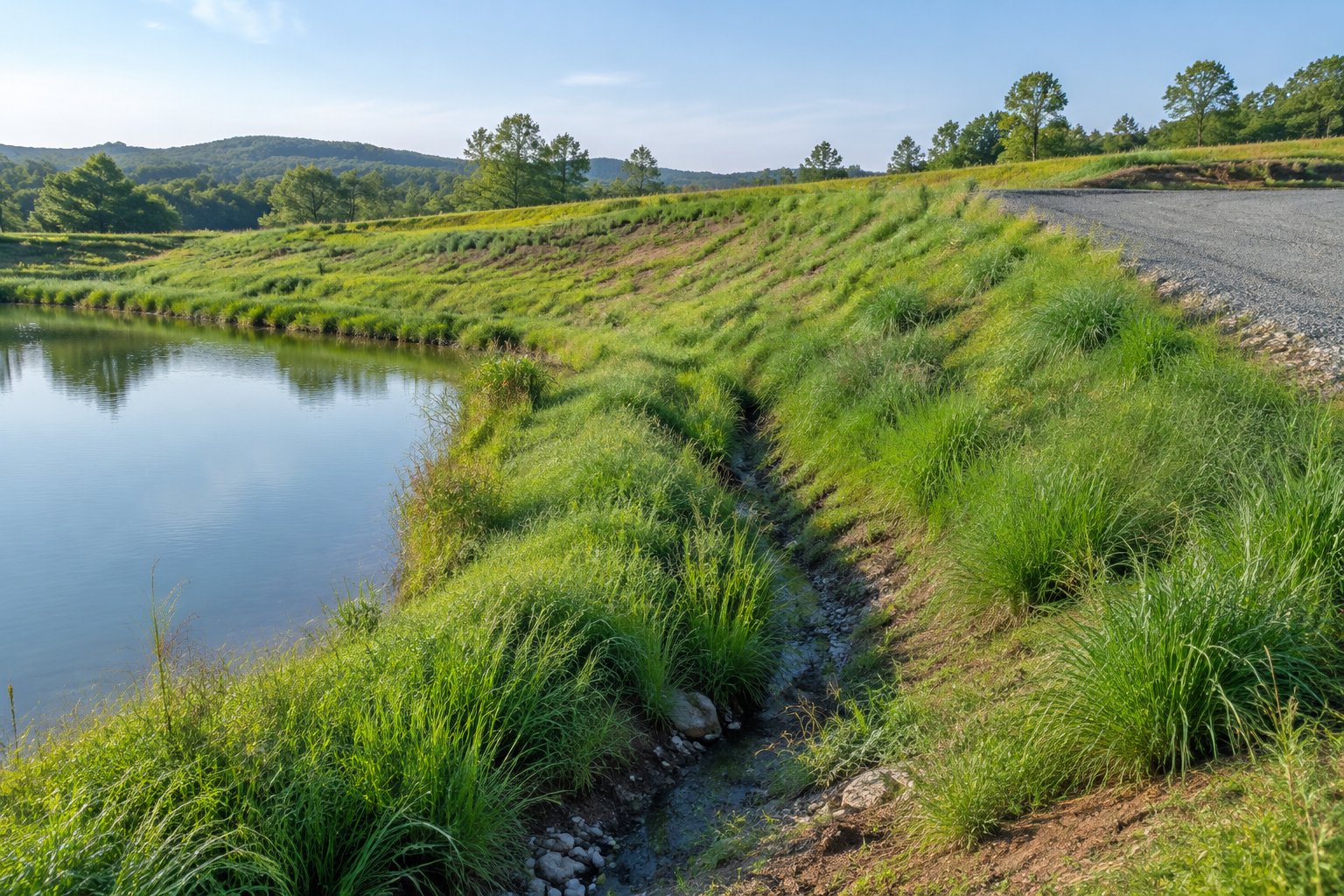
- Dry, rocky or thin uplands: sideoats grama and little bluestem
- Deeper soils with fair moisture: Indiangrass with little bluestem
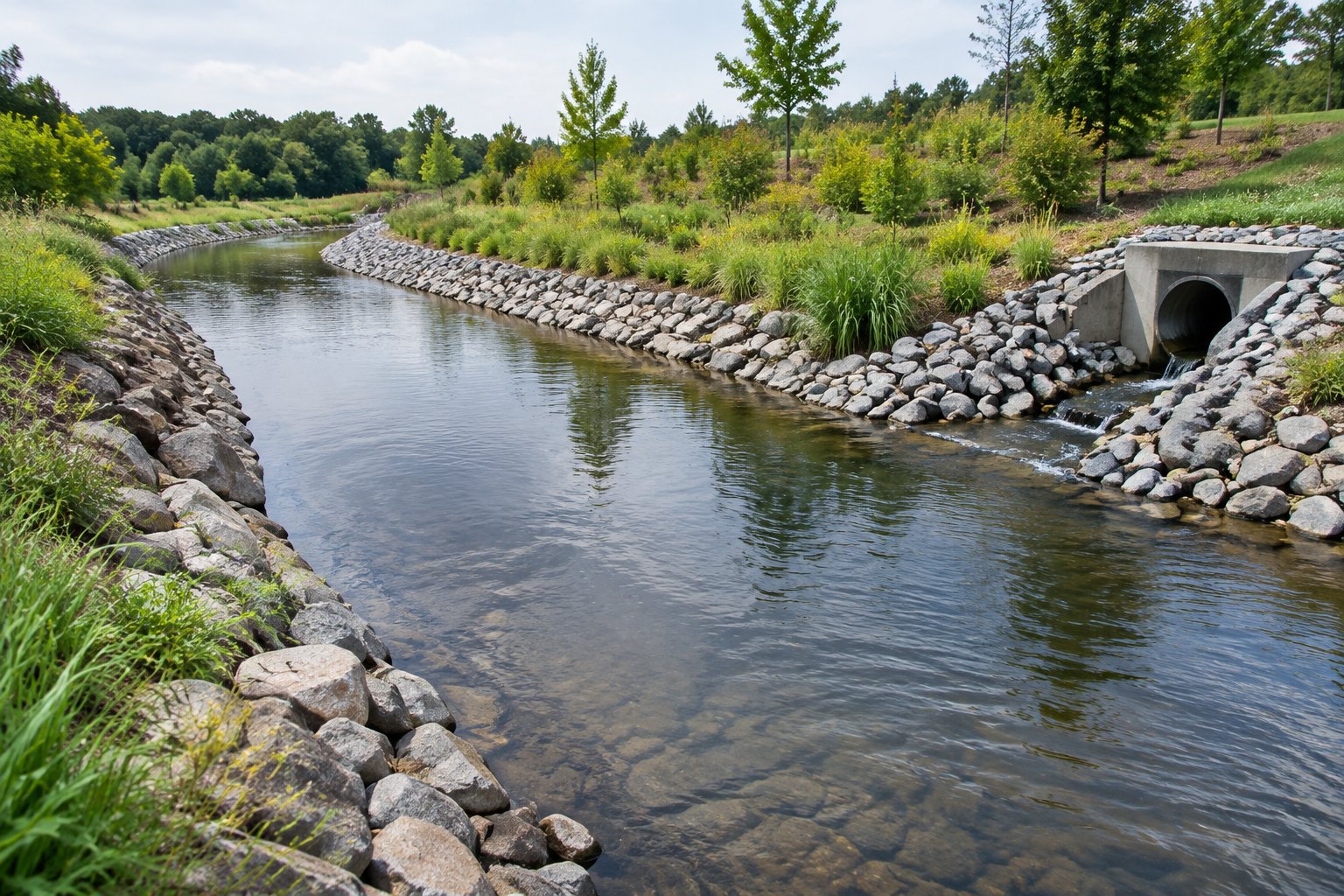
- Wet swales, bottoms and lower banks: switchgrass and eastern gamagrass
- Mowed, sunny edges in drier regions: buffalograss
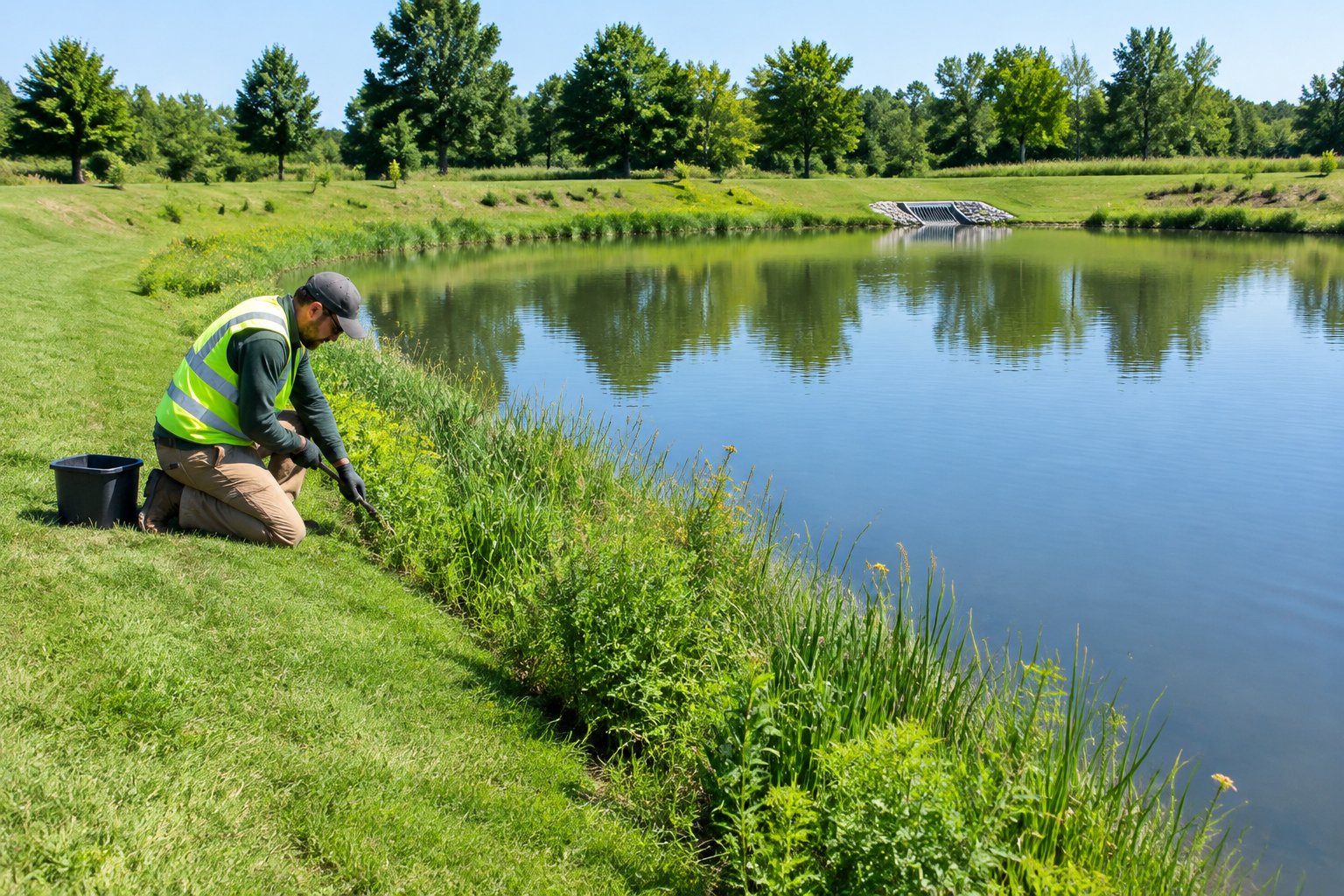
- Shaded drainage edges: inland sea oats
Use seed from a source adapted to your region wherever the spec allows, since local ecotypes are suited to the rainfall and temperature range they will face. On public work the engineer's plans or the agency specification usually name the mix, and our page on choosing native grass restoration contractors in Texas covers how site conditions feed into that decision.
Walk the site before ordering seed. Heavy bermudagrass or bahiagrass cover (both introduced species) will outcompete young natives, so it needs control before seeding. Native volunteers already growing on the edges are a good sign of what the soil will support. If you want a ballpark for the seeding itself, our hydroseeding pricing calculator gives a rough range for standard hydroseeding.
What Should Teams Expect From a Native Stand?
Natives are slower than turfgrass. In the first year much of their energy goes into roots, so a stand can look thin and weedy while it is developing properly underneath. Owners and inspectors sometimes read that as failure, so set expectations early and plan interim soil protection, such as hydraulic mulch over the seed, while the grasses fill in.
Plan for what the stand will look like in a few seasons, too. Tall species near buildings, signs and driveways become a sight-line and mowing problem, so keep the short species close to traffic and the tallgrasses on back areas, pond perimeters and open tracts. On roadside corridors, that zoning is usually built into the spec.
Planning a Native Mix for Your Next Project?
Native grass seeding is a core part of our work across Texas and Louisiana, on right of way, pipeline, solar, landfill and restoration projects, and we will help you match the species to every zone of the site. Contact Allied Hydromulch or call 281-482-8212 to talk through your plans.
Frequently Asked Questions
What is the state grass of Texas?
Sideoats grama (Bouteloua curtipendula). It is a common native perennial that grows well on gravelly hills and thin, rocky soils, and it appears in many Texas native seed mixes.
Is bahiagrass native to Texas?
No. Bahiagrass, like bermudagrass, is an introduced species. Both are widely planted for forage and cover but compete hard with young native stands.
Which native Texas grass stays short enough to mow?
Buffalograss. It grows about 4 to 6 inches tall and forms a dense sod in full sun, which suits mowed strips and open space in the drier half of the state.
Are there native grasses that stay green in winter?
Yes. Texas wintergrass is a native cool-season perennial that grows through the cooler months, so it can add winter green to a stand built mostly on warm-season species.