.svg)



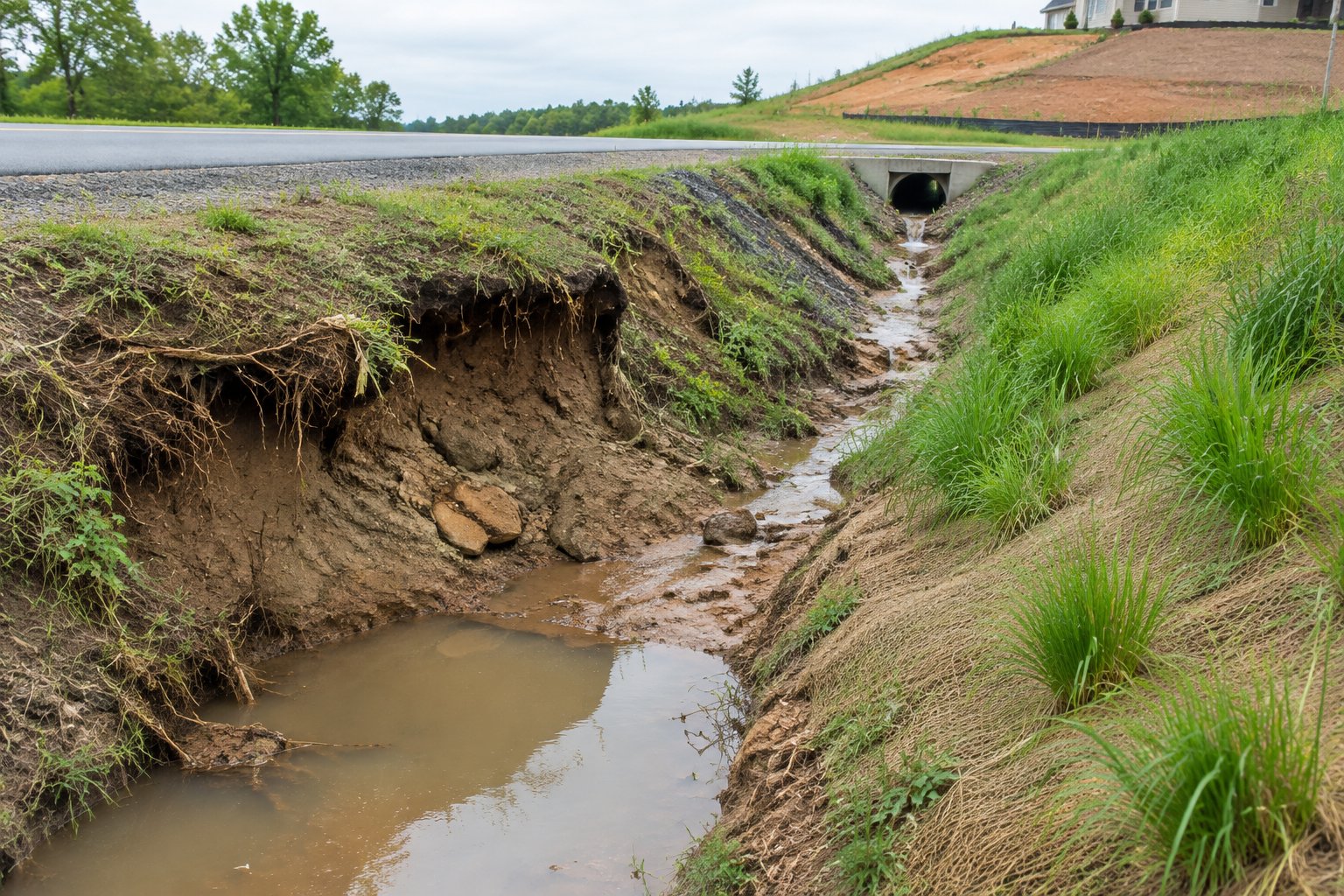
Highway work runs on deadlines that do not bend, and a freshly graded embankment is the part of the corridor most likely to blow one. Leave that slope bare, and the next storm strips topsoil into the ditch line, sediment migrates into drainage structures, and the stabilization clock under your permit runs out.
Roadside hydroseeding is the primary tool for getting permanent vegetative cover established quickly on Texas corridors, where clay-heavy 2:1 cuts and Gulf Coast rain can strip a slope in a single event.
At Allied Hydromulch TX, LLC, we have applied hydroseeding across highway corridors, embankments, and right-of-way areas in Texas and the Gulf South since 1990. In 2025 alone, 15 million square feet of mulch will be installed.
Our field team, comprising crew members with decades of site-specific experience, ensures that what follows reflects real application conditions.
This article discusses the components of a highway-class hydroseeding slurry. It compares this method to drill seeding and broadcast seeding on disturbed corridors.
It examines factors influencing reapplication risk on Texas slopes, how seed mix specifications and timelines affect infrastructure projects, and key considerations before awarding scope.
What Roadside Hydroseeding Puts Down on Highway-Class Sites
Highway-class roadside hydroseeding uses a precisely blended slurry applied at rates calculated to match the soil type, slope gradient, and seed specification called out in the contract. The materials in the tank determine whether germination holds through the first rain event or washes into the ditch line.
How the Hydroseeding Slurry Supports Coverage and Moisture Retention
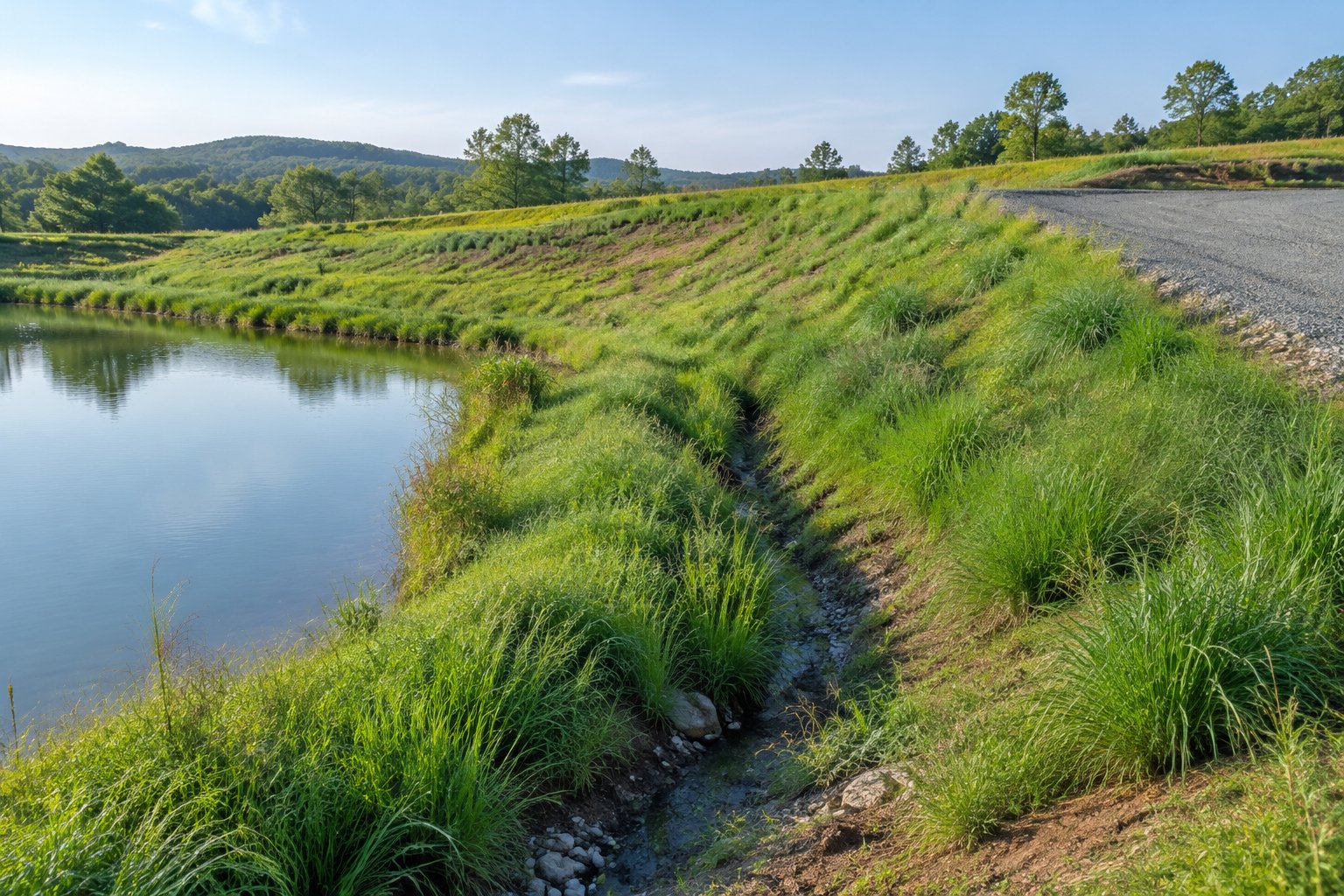
The hydroseeding slurry is a water-based mixture of seed, fiber mulch, fertilizer, soil amendments, and a binding agent. When sprayed onto prepared soil, the mulch fibers form a mat that locks moisture against the seed bed and shields it from direct sun exposure.
This is critical on Texas corridors where summer surface temperatures can climb past 130°F on bare, south-facing slopes. Wood fiber mulch is the primary material in most highway applications.
It absorbs several times its weight in water and creates consistent ground contact across uneven terrain. Paper mulch is lighter and less expensive, but it breaks down faster and provides less erosion resistance on slopes steeper than 3:1.
The fertilizer component is matched to the soil test results, providing the nitrogen, phosphorus, and potassium the specified seed mix needs to germinate and establish root mass within the first 14 days.
When Hydromulch Includes Tackifier, Fiber Mulch, or Soil Amendment
Not every corridor gets the same tank mix. The decision to add tackifier, upgrade to a heavier fiber mulch, or include a soil amendment depends on slope angle, soil chemistry, and rainfall exposure.
- Tackifier is added when the application area is on slopes steeper than 3:1, in wind-exposed corridors, or where the spec requires bonded coverage. It acts as a glue that holds the mulch mat to the soil surface until root establishment takes over.
- Wood fiber mulch at higher rates, 2,000 lbs per acre and up, is standard for TxDOT right-of-way work. Lower rates may pass on flat shoulders but fail on embankments.
- Soil amendments such as gypsum are included when the soil test reveals high salinity, extreme pH, or compaction that would prevent seed-to-soil contact.
As outlined in roadside revegetation quality control guidance, hydroseeding contracts often require tracking exact pounds of seed, fiber, and tackifier loaded per tank against the measured application area.
How Hydroseeders Handle Long Right-of-Way Runs and Embankments
Highway corridors are linear by nature. A single project can span miles of right-of-way with varying slope conditions at every station.
Hydroseeders mounted on trucks or trailers use hose reels and tower guns to reach 150 to 300 feet from the unit, covering wide swaths of embankment without repositioning heavy equipment onto unstable slopes.
On long runs, the crew stages water and material refill points along the corridor so the hydroseeder can reload without returning to a central yard.
This keeps production rates high and avoids the schedule drag that comes with mobilizing drill seeders or broadcast equipment across multiple access points. For embankments that exceed the reach of the tower gun, hose applications from the top of the slope allow the operator to apply material from stable ground.
The question contractors ask next is whether hydroseeding is the right choice compared to other seeding methods for the specific corridor conditions they are facing.
When This Method Fits Roadsides Better Than Other Seeding Methods
Roadside hydroseeding outperforms most alternative seeding methods on disturbed highway corridors where slope angles, tight schedules, and stormwater compliance overlap. The method is not always the best fit, and knowing where each approach works best prevents costly re-application.
Hydroseeding Versus Dry Seeding on Disturbed Corridors
Dry seeding, whether by broadcast spreader or hand application, deposits loose seed on the soil surface without any binding agent or moisture-retaining mulch layer. On a freshly graded highway embankment, that loose seed is vulnerable to wind displacement, sheet erosion, and poor germination caused by surface crusting.
Hydroseeding delivers seed inside a protective mulch mat that stays bonded to the soil. The slurry also distributes seed more evenly than a broadcast spreader can achieve on irregular terrain.
On corridors with exposed clay subgrade, the moisture-retention benefit alone can cut the gap between application and visible germination from weeks to days.
Where Drill Seeding or Broadcast Seeding Makes More Sense
Drill seeding places seed directly into the soil at a controlled depth. It produces excellent seed-to-soil contact and wastes very little seed.
On flat or gently sloping right-of-way shoulders and medians with stable, prepared soil, drill seeding can be more cost-effective per acre than hydroseeding, especially when the seed mix is expensive native grass.
Broadcast seeding is fast but lacks precision. It works on flat, sheltered areas where wind and runoff are minimal. On open highway embankments, broadcast seed loss rates can exceed 50%, making it a poor choice for corridor work where site coverage strategy matters.
Why Hand Seeding Is Limited to Small or Inaccessible Areas
Hand seeding is labor-intensive and inconsistent. It is reserved for small patches, tight areas around structures, or spots where equipment cannot reach.
The rate of coverage a hand seeder achieves in a full shift is a fraction of what a single hydroseeder pass covers in an hour. For TxDOT projects with 70% vegetative cover requirements within a specified timeline, relying on hand seeding at scale would be a schedule liability.
Once the seeding method is selected, the next critical factor is whether the application will hold on the actual slope conditions present along the corridor.
Slope Conditions, Soil Contact, and Hold on the Ground
Cut and fill slopes along Texas highway corridors are where roadside hydroseeding either proves its value or fails visibly. Slope angle, soil composition, and rain intensity together determine whether the applied mulch mat stays in place long enough for roots to anchor the surface.
How Cut and Fill Slopes Affect Method Selection
Cut slopes expose native subsoil or rock. They are often harder, less porous, and more prone to sheet erosion because the natural topsoil layer has been removed.
Fill slopes are constructed from imported or relocated material that may not be fully compacted, creating loose surfaces where seed and mulch can slide before bonding. On cuts steeper than 2:1, standard wood fiber hydroseeding alone may not hold through a heavy rain event.
The slurry needs a tackifier at minimum, and steeper angles push the spec toward bonded fiber matrix or Flexterra FGM. On fill slopes, the loose surface aids seed-to-soil contact, but the material instability increases the risk of rill erosion that channels water and strips mulch in concentrated flow paths.
When Bonded Fiber Matrix, Turf Reinforcement Mat, or Blankets Are Needed
Standard hydraulic mulch works well on slopes up to about 3:1. Beyond that threshold, the erosion control spec escalates:
- Bonded fiber matrix (BFM): Applied hydraulically, BFM forms a rigid, erosion-resistant mat that withstands higher shear stress than loose fiber mulch. It is the go-to upgrade for 2:1 slopes and areas with concentrated stormwater flow. Details on when bonded fiber matrix outperforms standard mulch are worth reviewing before specifying the application.
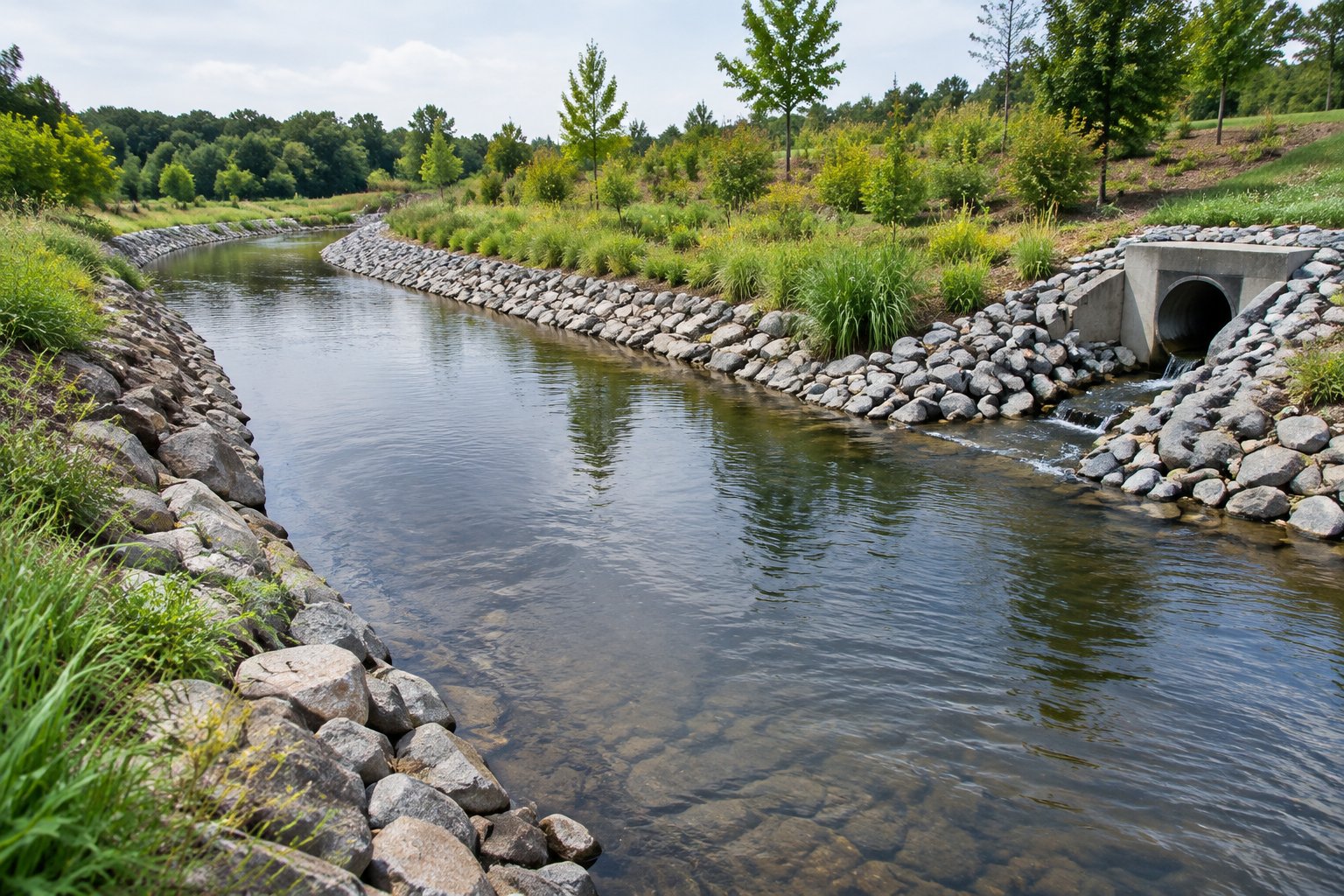
- Turf reinforcement mat (TRM): A permanent, three-dimensional mat installed mechanically and then hydroseeded over. TRMs are specified on slopes steeper than 1.5:1 or in drainage channels where flow velocity would tear through any spray-applied product.
- Erosion blankets: Straw or coconut fiber blankets stapled to the slope surface. They work on moderate slopes, 3:1 to 2:1, and provide physical protection while seed germinates beneath them.
For slopes that demand the highest-performance spray-applied product, Flexterra HP-FGM for severe slopes fills the gap between standard BFM and mechanical mat systems.
How Texas Soil and Rain Events Increase Re-Application Risk
Texas clay soils, particularly the expansive clays found across the Houston metro, Central Texas, and Gulf Coast corridors, create a unique problem. When dry, clay surfaces crack and crust, preventing water infiltration.
When saturated, the same soil becomes slick and unstable, and mulch that was bonded to the surface can delaminate in sheets. A single Gulf Coast thunderstorm dropping 2 to 3 inches in an hour on a freshly applied slope can cause rill erosion deep enough to require re-grading, not just re-seeding.
This is why cutting runoff risk on steep grades through proper product selection and application rate is not optional on Texas highway work. Re-application costs are real schedule and budget hits.
With slope protection addressed, the next question is which seed mixes meet TxDOT spec and how fast they will establish visible cover.
Seed Mix Specifications and Establishment Timelines
Seed mix selection on Texas highway projects is not a guess. It is driven by TxDOT district specifications, regional climate zones, and the specific microsite conditions along the corridor, including sun exposure, soil pH, and whether the area is a mowed shoulder or an unmaintained back slope.
How Seed Selection Changes by Region, Shoulder, and Median Conditions
TxDOT divides the state into vegetation regions, each with approved seed mixes tailored to local rainfall, temperature range, and soil type. A corridor in the Houston district will specify warm-season grasses such as bermudagrass and buffalograss.
A project near Dallas may include a blend with native sideoats grama and green sprangletop.
Cool-season species like perennial ryegrass are sometimes added as a temporary nurse crop to provide quick green cover while the permanent warm-season grasses establish. Shoulders and medians that receive regular mowing are typically seeded with turf-type grasses that tolerate frequent cutting.
Back slopes and areas outside the clear zone can be seeded with taller native mixes that require no mowing. As noted in roadside plant selection guidance, the use of native species on roadsides supports long-term sustainability and reduces maintenance costs for the department.
Specifying Kentucky bluegrass or other cool-season turf grasses as permanent cover in south Texas would be a costly mistake. Those species cannot survive sustained summer heat above 95°F without heavy irrigation, which right-of-way areas do not receive.
Typical Seed Germination Windows and Coverage Development
Germination timelines on Texas roadside projects vary by species and season:
- Bermudagrass: 7 to 14 days in warm soil, above 65°F. Full coverage in 4 to 6 weeks.
- Buffalograss: 14 to 21 days. Slower initial fill but extremely drought-tolerant once established.
- Native grass mixes (sideoats grama, switchgrass, indiangrass): 14 to 28 days for initial germination. Full establishment takes 2 to 3 months.
- Perennial ryegrass (temporary nurse crop): 5 to 10 days. Provides quick green cover but dies off in Texas summer heat.
Fall applications, September through November, in the Gulf Coast region benefit from lower evaporation rates and consistent soil moisture. Spring applications, March through May, work well statewide but require attention to irrigation or rainfall timing to prevent seedling desiccation during early summer heat.
How Seeding Rate, Mulch Rates, and Seed Distribution Affect Results
Seeding and mulch rates are specified per acre and must be tracked during application. Applying seed too thin produces patchy coverage, while excessive rates waste material and can weaken the stand.
- Hydroseeding mulch rate for highway work: 1,500 to 2,500 lbs of wood fiber mulch per acre, depending on slope and product type.
- Seed rate: Varies by mix. A common TxDOT warm-season blend runs 20 to 40 pounds of pure live seed per acre.
- Seed distribution: The hydroseeder tank must be agitated continuously. Without agitation, heavier seed settles, leading to uneven distribution.
Uniform seed distribution is required to meet the 70% vegetative cover threshold most TxDOT contracts specify. Once seed mix and rates are set, the remaining variables are site prep, permits, and contract scope.
Compliance, Site Prep, and Scope Review Before Award
Stormwater permit requirements on Texas highway projects drive the timeline for stabilization. Missing a vegetative stabilization deadline can result in a notice of violation, potential fines from TCEQ, and a hold on the broader construction permit.
Stormwater Permit Pressure on Public Infrastructure Work
TxDOT projects and most municipal highway work in Texas fall under the Construction General Permit (TXR150000). Disturbed areas must be stabilized within 14 days of final grading if no further work is planned. For slopes steeper than 3:1, the deadline is even tighter.
According to temporary erosion control BMPs guidance, vegetative stabilization is the first-line erosion control for construction sites. On highway corridors, the hydroseeding subcontractor's mobilization schedule directly affects whether the GC stays in permit compliance.
A crew unable to mobilize within the 14-day window after grading puts the project at risk. Preventing permit holds through erosion control becomes a scheduling priority.
Why a Soil Test and Surface Prep Matter Before Spraying
A soil test before hydroseeding identifies pH, nutrient deficiencies, salinity, and organic matter content. Without this data, the fertilizer and amendment package in the slurry is a guess.
On highway corridors, the exposed surface is often raw subgrade clay or caliche, and a soil test almost always reveals conditions that require amendment.
The soil surface should be scarified or trackwalked to create roughness for better slurry bond. Smooth, compacted surfaces cause the slurry to sheet off during the first rain. On fill slopes, removing large rocks and debris prevents bare spots where seed cannot contact soil.
What to Review in Schedule, Access, and Hydroseeding Cost Discussions
Before awarding a hydroseeding scope, the GC and project manager should confirm:
- Mobilization timeline: Can the crew be on site within the 14-day stabilization window?
- Access points: Are there enough entry points for the hydroseeder to reach all areas without crossing active traffic lanes?
- Water source: Is there an on-site water source, or will water be trucked in?
- Hydroseeding cost structure: Pricing depends on acreage, slope complexity, seed mix, and product type. A rough estimate from the online cost calculator helps frame the budget.
- Re-application terms: What triggers a re-application, and who bears the cost?
- Documentation: Does the sub provide application records that satisfy the SWPPP inspector?
Confirming these details upfront helps prevent scope gaps and project delays.
Frequently Asked Questions
What site conditions determine whether spray-on seeding will hold on a steep roadside slope without rilling or washouts?
Slope angle, soil type, and rainfall intensity are the main factors. On slopes steeper than 3:1 with exposed clay subgrade, standard hydraulic mulch alone is unlikely to survive heavy rain. Bonded fiber matrix or Flexterra FGM provides the shear resistance needed to prevent rill formation. Surface scarification before application also improves bond strength.
What is the typical installed cost per acre for roadside seeding and erosion control on DOT-style right-of-way work?
Installed cost varies by slope complexity, seed mix, product type, access, and water availability. Standard hydroseeding on flat to moderate slopes costs less per acre than BFM or Flexterra applications on steep embankments. The most accurate starting point is a project-specific estimate that accounts for actual site conditions.
How do you choose between standard mulch, bonded fiber matrix, and tackifier when traffic spray and stormwater are factors?
Standard mulch with tackifier works on slopes up to 3:1 with moderate rain exposure. Bonded fiber matrix is specified for steeper slopes, 2:1 and above, and areas subject to concentrated stormwater flow. In high-traffic corridors where vehicle spray can dislodge surface material, the rigid mat structure of BFM resists displacement better than loose fiber mulch.
What is the realistic germination timeline on roadside projects in Texas heat, and what triggers a re-application?
Bermudagrass typically germinates within 7 to 14 days in warm soil; native grass mixes take 14 to 28 days. Summer applications in temperatures above 100°F require consistent moisture to prevent seedling death. A re-application is triggered when a major rain event washes the mulch off the slope before root establishment, or when germination fails to meet the contract's vegetative cover percentage within the specified timeframe.
What are the main pros and cons of spray-applied seeding versus sod or drill seeding for highway and subdivision frontage work?
Spray-applied seeding covers large, irregular areas quickly and bonds mulch to slopes where sod installation would be impractical. Sod provides instant cover but costs significantly more per square foot and requires heavy irrigation. Drill seeding offers excellent seed placement on flat ground but cannot access steep slopes or irregular terrain efficiently.
What should you verify in reviews and submittals to confirm a hydroseeding contractor can meet spec and pass inspections?
Verify the contractor's experience on DOT-class projects, equipment capacity, familiarity with the specified seed mix and mulch product, and ability to provide application documentation. Confirm the mobilization timeline against the permit's stabilization deadline and ask for references from similar-scale highway work.
Getting Your Corridor Stabilized Without the Schedule Risk
Roadside hydroseeding on Texas highway corridors comes down to three things: the right product for the slope, the right seed mix for the region, and a crew that can mobilize before the permit clock runs out.
Allied Hydromulch TX, LLC has handled this work across Texas and the Gulf South since 1990. Call 281-482-8212 to speak with a superintendent about your corridor conditions, scope, timing, and product selection. Use the online cost estimator to get a starting number for your project and follow up when you are ready to discuss details.