.svg)


Technical Insight provided by Allied Hydromulch TX
Deciding between hydroseeding vs sod on a commercial project is not a preference call. Whether you are planning a large-scale site stabilization or sediment control, comparing hydroseeding vs sod and traditional seeding involves logistics, cost, and performance.
This choice affects site timelines, compliance documentation, and the success of establishing vegetative cover for long-term maintenance budgets. For general contractors and developers managing tens of thousands of square feet, the wrong choice creates rework and schedule delays. Commercial site vegetation requires careful consideration of the environment and the intended use of the land.
The critical factors are not the same ones that matter on a residential lot. At scale, the comparison shifts to mobilization speed, material cost per acre, slope performance, seed mix flexibility, and how each method holds up under Texas weather, heavy clay soils, and stormwater compliance pressure.
Allied Hydromulch TX has applied hydroseeding and erosion control solutions across Texas, Louisiana, Oklahoma, and New Mexico since 1990, installing 15 million square feet in 2025 alone.
That field experience shapes a practical perspective on when each method fits. Our field experts provide a contractor-focused view on achieving long-term site stability and uniform coverage.
What follows breaks down jobsite timelines, material performance, cost at scale, slope stability, project-type fit, and preparation factors that determine whether hydroseeding or sod is the right site coverage strategy for your next project.
How The Two Methods Change The Jobsite Timeline
Timeline decisions on commercial sites are rarely about visual appearance. They are about inspection windows, permit compliance, and keeping downstream trades on schedule. The difference between hydroseeding and sod comes down to whether you need an instant surface or whether a short germination window works within your project phasing.
Where Instant Surface Cover Matters
Sod installation delivers an immediate surface and creates instant turf coverage. Rolls of pre-grown grass sod are laid directly on prepared soil to close the timeline gap for high-traffic zones.
The labor and logistics of installing sod are significantly higher than other seeding methods, involving higher costs and the risk of transplant shock if site conditions are not ideal.
Why A 7 to 14 Day Germination Window Often Fits Commercial Schedules
On most commercial developments and industrial parks, site vegetation is not the last activity. It runs parallel to other work. Seed germination from professional hydroseeding typically begins within 7 to 14 days.
This spray-on grass seed method leads to full establishment in 4 to 6 weeks, depending on weather and irrigation. That window aligns well with the phasing on warehouse pads, parking infrastructure, and retention basin work. The site does not need to be green on day one. It needs to pass inspection on schedule.
Mobilization, Access, And Crew Coordination
A hydroseeding application often completes in a single mobilization. One truck, one crew, uniform coverage across the entire area. Sod requires coordination with sod farms, pallet deliveries, staging areas, and multi-person installation crews.
On large acreage with limited access points, that logistical footprint creates bottlenecks. Hydroseeding equipment accesses the same areas with fewer constraints.
Material Differences That Affect Field Performance
The physical makeup of each method drives how vegetation establishes, how roots develop, and how resilient the finished surface is under real site conditions.
Sprayed Slurry Versus Harvested Turf
The hydroseeding process applies a slurry of grass seed, mulch, fertilizer, and soil conditioners directly onto prepared soil. Unlike dry seeding or traditional seeding, which leaves seeds exposed to wind and birds, this slurry ensures consistent soil contact.
The bonded mulch layer and a specialized tackifier hold moisture and protect the seed during germination. Sod is harvested turf, cut from a sod farm with a thin soil layer and existing root structure. It arrives as a finished product, but that product was grown in different soil conditions than your project site.
Seed Mix Flexibility, Grass Variety, And Regional Specs
One of the strongest advantages of hydroseeding is seed mix customization. We can match warm-season grass varieties or even a cool-season grass mix to specific Texas soil profiles.
This flexibility allows us to use specific varieties like fescue or Kentucky bluegrass where the climate permits. Sod limits you to whatever grass variety the sod farm grows. On projects requiring native grass seeding or species that meet reclamation standards, sod is rarely an option.
Different types of sod may not be available in the specific native blends required by environmental permits.
Root Development, Soil Contact, And Transplant Risk
Hydroseeded grass develops its root system directly in your project's native soil from day one. That produces deeper, more integrated root development. Sod carries transplant shock risk. If the harvested turf's soil profile does not match your site's topsoil, root bonding can be slow or incomplete.
Shallow roots from poor soil contact lead to turf failure. This risk is higher for sodded areas compared to seeded areas, especially on slopes or during heavy rain events common along the Gulf Coast.
Cost Efficiency At Scale Without Sacrificing Coverage
Why Sod Logistics Escalates On Large Acreage
Sod cost does not scale linearly. When developers ask how much sod costs, they must consider delivery runs, pallet staging, labor crews, and installation time. A 5,000 to 10,000 square foot area might absorb those costs.
A 200,000 square foot commercial pad or a multi-acre industrial park makes sod prohibitively expensive. Sod pallets are heavy, perishable, and must be installed within 24 to 48 hours of harvest to avoid die-off.
What Drives Hydroseeding Cost On Commercial Sites
Hydroseeding cost on commercial sites is driven by site access, soil preparation requirements, and seed specification. Working with an experienced hydroseed contractor ensures the application is done correctly and efficiently.
The application itself is fast, allowing one crew to cover large areas in a single day. Material costs are a fraction of what sod pallets require for the same coverage area. This makes it the preferred choice for industrial parks and large infrastructure corridors.
Rework Risk, Waste, And Long-Term Maintenance Exposure
Failed sod installations generate expensive rework. Sections that do not bond must be pulled, disposed of, and replaced. Hydroseeding failures, while less common with proper application, can be addressed with targeted overseeding at minimal cost.
Long-term maintenance exposure also favors hydroseeding. Turf that grows from seed in native soil tends to be more drought-tolerant and requires less ongoing intervention.
Slope Stability, Washout Risk, And Compliance Pressure
Flat commercial pads are one scenario. Slopes, embankments, drainage channels, and retention ponds introduce an entirely different set of performance requirements.
Best For Slopes, Embankments, And Drainage Features
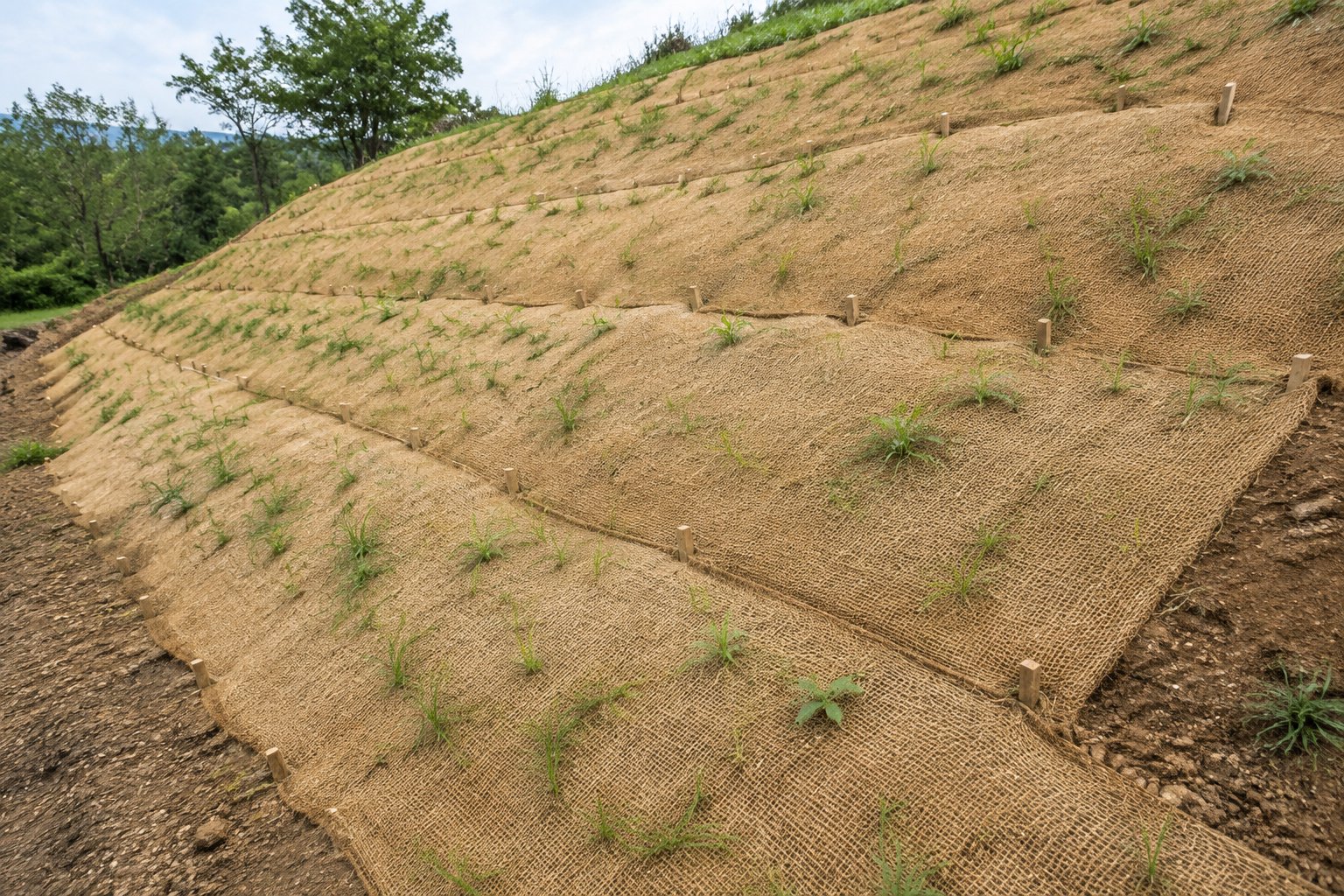
Hydroseeding is the standard for slopes and embankments across Texas highway and industrial projects. The sprayed slurry bonds to the soil surface, holds seed in place during rain events, and promotes uniform coverage on grades where sod installation is impractical or impossible. Laying sod on steep slopes requires mechanical anchoring, and seam failure is a constant risk.
How Hydraulic Mulch Supports Erosion Control
Hydraulic mulch and hydraulic soil stabilizers provide immediate soil erosion protection while vegetation establishes.
The mulch layer prevents sediment runoff, supports stormwater compliance requirements, and reduces the risk of permit violations during the critical weeks between soil disturbance and vegetative cover.
For demanding applications, products like Flexterra provide additional protection on steep slopes and disturbed soils.
When Sod Is Vulnerable To Seam Failure Or Poor Bonding
Sod on slopes is vulnerable to seam separation, especially during heavy rainfall before roots have fully bonded. Water channels between sod strips, lifting edges, and washing sediment downhill.
On Gulf Coast projects where tropical weather events can deliver several inches of rain in hours, that vulnerability creates compliance risk and costly remediation.
Choosing The Right Fit By Project Type
The right method depends on project type, site conditions, and what the specification requires. There is no universal answer, but clear patterns emerge.
Commercial Developments And Industrial Parks
Large commercial sites, warehouse developments, and industrial complexes are where a hydroseed application delivers the strongest value. Coverage speed, cost efficiency, and seed mix flexibility make it the standard approach.
Large-scale sodding operations are rarely as cost-effective in these environments. Projects for clients like Bechtel, Formosa Plastics, and Amazon rely on hydroseeding for exactly those reasons.
Roadside Work, TxDOT Corridors, And Reclamation Sites
TxDOT corridor work and environmental reclamation projects typically specify hydroseeding or drill seeding with regionally appropriate seed mixes. Sod is not a practical option for miles of highway embankment. Native grass and wildflower seeding meet both compliance requirements and long-term performance goals on these sites.
Preparation And Early Establishment Factors That Decide Success
Neither hydroseeding nor sod performs well without proper site preparation. The quality of grading, topsoil, and early-stage care determines whether coverage holds or fails.
Grading, Topsoil Condition, And Soil Preparation Standards
Successful establishment depends on rigorous site preparation. Key requirements include:
- Grading: Elimination of low spots to prevent pooling and potential washout.
- Soil Amendments: Integration of compost or fertilizers based on soil test results.
- Compaction Management: Ensuring topsoil is loose enough for root penetration but firm enough to prevent erosion.
- Soil-to-Seed Contact: Using mechanical rollers when necessary to ensure the slurry or sod bonds with the native profile.
Watering Schedule, Access To Irrigation, And Protection From Traffic
Both methods need consistent moisture during establishment. Hydroseeding typically requires regular watering for the first three weeks. Sod demands intensive irrigation for the first two weeks.
On commercial sites without permanent irrigation, temporary water access and a clear watering schedule must be part of the project plan. Protecting newly seeded or sodded areas from construction traffic is equally critical.
Reseeding, Overseeding, and Weed Resistance Considerations
Hydroseeded sites can be easily addressed with overseeding or reseeding if thin spots develop. Sod leaves less room for correction without full replacement. Weed resistance varies by grass variety and seed mix. A well-specified hydroseeding application using appropriate seed blends, combined with proper soil preparation, typically produces dense enough coverage to suppress early weed competition.
Site Selection FAQ
How does the timeline differ for inspections?
Sod provides instant surface cover for immediate inspection needs. Hydroseeding typically begins germinating within 7 to 14 days, which aligns with most commercial phasing for warehouse pads and infrastructure without creating schedule delays.
Which is better for Houston's heavy clay and steep slopes?
Hydroseeding with hydraulic mulch or Flexterra is generally superior for slopes and the heavy clay soils of the Gulf Coast. The slurry adapts to the native soil profile, whereas sod is vulnerable to seam failure and poor root bonding on grades.
How does cost scale on large commercial acreage?
Hydroseeding is significantly more cost-effective as acreage increases. While sod involves heavy logistics and perishable material, hydroseeding allows one crew to cover large areas in a single mobilization. Allied Hydromulch TX provides an online job price calculator for project-specific estimates.
Field Expertise in Erosion Control
Since 1990, Allied Hydromulch TX has provided technical expertise in site stabilization and erosion control across Texas, Louisiana, Oklahoma, and New Mexico.
With 35 years of field experience and 15 million square feet of installation in 2025 alone, our team specializes in meeting TxDOT specifications and stormwater compliance requirements for the most demanding commercial and industrial sites.
Use our online job price calculator for a project-specific estimate, or call 281-482-8212 to discuss your site requirements.