.svg)


A failed erosion control application on a sloped construction site doesn't just look bad—it can trigger a stormwater violation and put your entire project permit at risk. When managing hydroseeding in Houston, general contractors need solutions that stand up to Southeast Texas clay and unpredictable downpours.
Allied Hydromulch TX provides the institutional experience needed to keep the critical path clear. Since 1990, we have installed 15 million square feet of mulch in 2025 alone, with a 100% satisfaction rate across 60+ unique clients.
Why Houston Projects Turn To Hydraulic Mulch Instead Of Sod
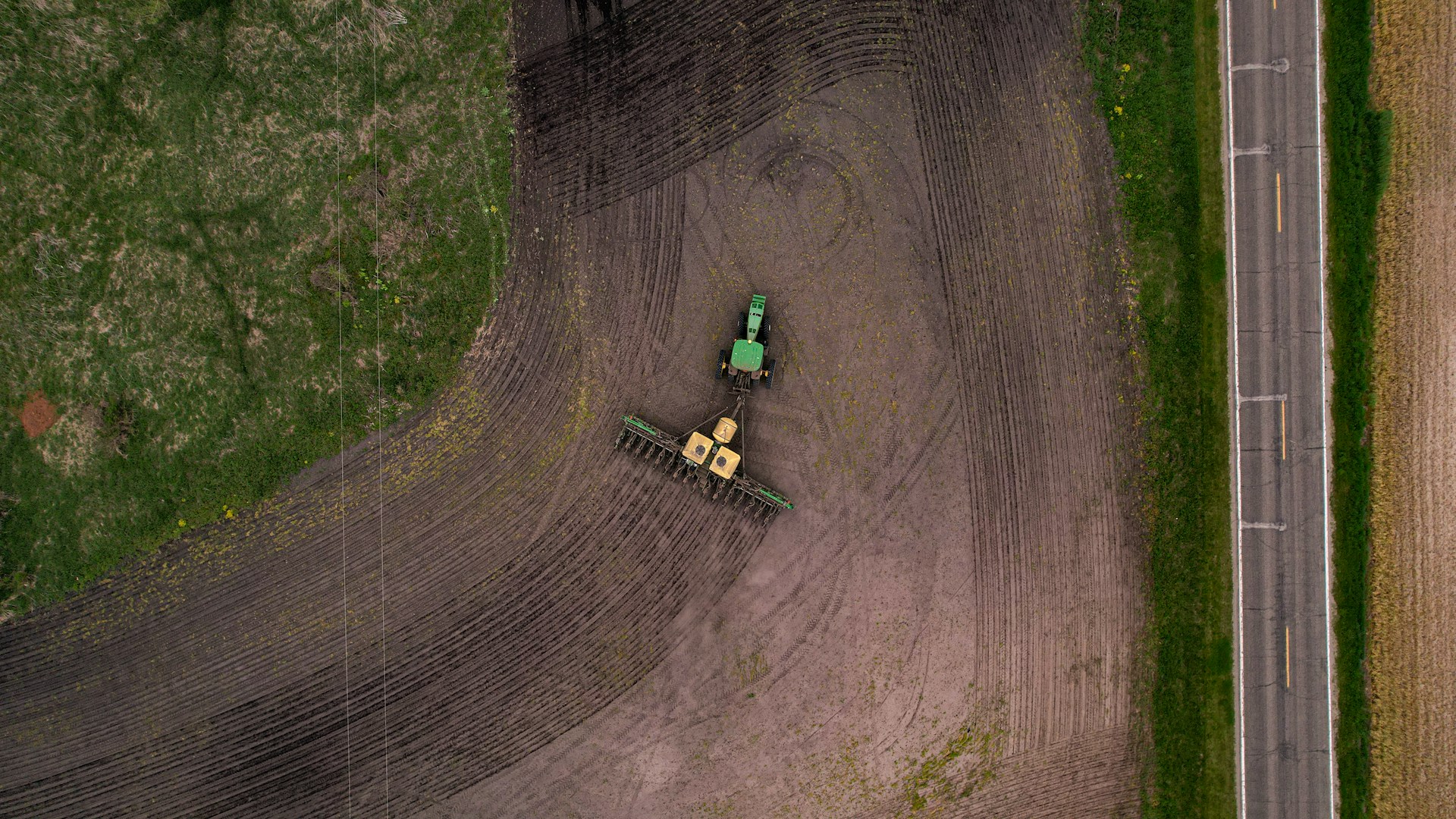
Sod creates logistical problems on large commercial and industrial sites. It is labor-intensive and expensive to scale across several acres. Hydromulching eliminates these issues by applying a slurry of seed, mulch, and soil conditioners in a single pressurized application.
Where Single-Visit Application Fits Fast-Moving Schedules
Most hydroseeding services complete the application in a single mobilization. A crew can cover multiple acres in one day, depending on site access. Sod requires pallets, staging areas, and immediate, heavy irrigation.
This difference in mobilization time helps projects hit permit milestones. For general contractors managing multiple trades, a single-visit application keeps the critical path clear and predictable.
How Germination Timing Compares To Other Methods
Germination typically begins within 7–14 days, with full turf density developing over 4–6 weeks. Sod provides instant coverage, but at a significantly higher material and labor cost.
Broadcast seeding is cheaper but produces inconsistent coverage and is highly vulnerable to washout. Hydroseeding sits in the middle: fast enough for compliance, uniform enough for inspection, and cost-effective for large landscapes.
Which Site Types See The Biggest Operational Advantage
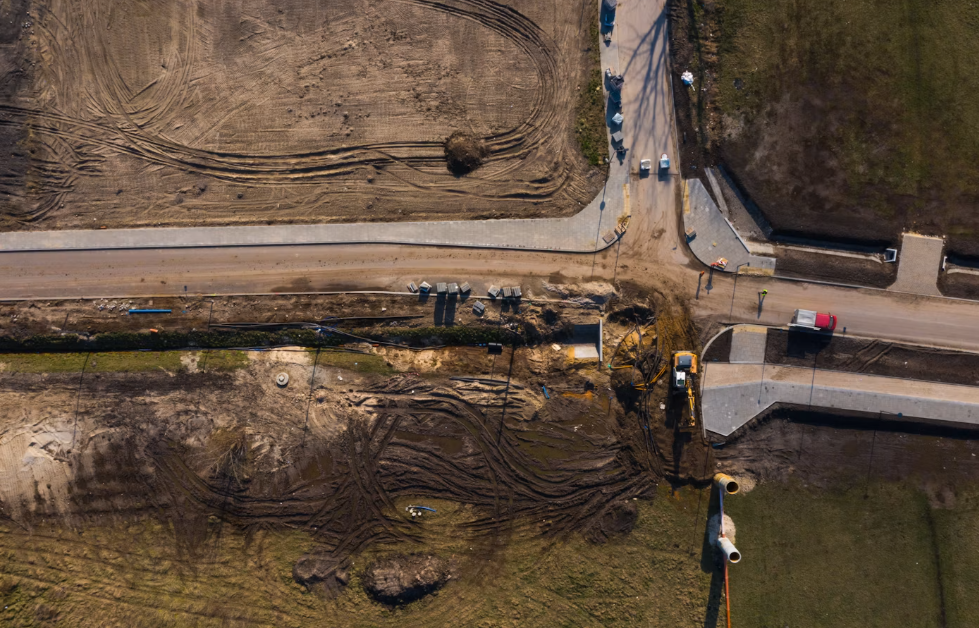
The biggest gains occur on warehouse pads, detention pond perimeters, and highway embankments. Industrial sites, where access restrictions limit labor-intensive methods, also benefit greatly.
Any site where disturbed acreage exceeds what a sod crew can install quickly is a candidate. The operational advantage is simple: less labor, fewer mobilizations, and faster stabilized coverage.
What Holds Or Fails On Gulf Coast Job Sites
Southeast Texas weather tests every erosion control application. What works on dry, sandy soil will often fail on a Houston clay slope during a summer storm.
Heavy Rainfall And Stormwater Compliance Pressure
Houston averages 50 inches of rain per year, with intense storms dropping several inches in hours. This volume of runoff creates immediate pressure on exposed soil.
Stormwater compliance requirements under TCEQ mean a failed application can result in permit holds and fines. Erosion prevention is a compliance requirement with significant financial consequences.
Clay Soils, Drainage Patterns, And Surface Crusting
Houston soils are predominantly heavy clay, which holds water and develops a hard crust when dry. This crust blocks seed-to-soil contact and prevents root penetration.
Without proper preparation, the hydroseeding slurry will sit on top of the clay and wash off. Slope stabilization on clay requires understanding how the soil behaves when its moisture levels change.
Slope Conditions That Need More Than Seed And Mulch
Slopes steeper than 3:1 demand more than a standard hydraulic mulch. Gravity and water velocity work against seed establishment on embankments and channel banks. These conditions require reinforced solutions like tackifiers or bonded fiber matrices.
Products like Flexterra physically hold soil and seed in place until permanent roots take over.
Getting The Seedbed Ready Before The Tank Arrives
The quality of the seedbed determines if the application performs. No amount of premium mulch compensates for a poorly prepared surface.
Soil Preparation That Improves Seed-To-Soil Contact
Compacted subgrades need to be scarified or tilled to break the crust. The goal is a seedbed that accepts moisture and allows for deep root penetration. Skipping this step is the most common reason for failure on Houston clay. Soil amendments may also be needed depending on the site's specific pH and chemistry.
When Irrigation Planning Changes Early Establishment
On sites without permanent irrigation, the schedule must align with seasonal rainfall patterns. In summer heat, exposed seed will not germinate without consistent moisture. Planning irrigation access before application directly affects success.
Ensuring water is available ensures the project hits that critical 7–14 day germination window.
Why Access, Grading, And Timing Matter To Coverage
Hydroseeding equipment requires stable truck access to the application area. Grading should direct water flow away from concentrated channels and toward sheet drainage. Coordinating weather windows with the crew produces the best results.
Applying before a predicted moderate rain can boost absorption, while heavy storms increase washout risk.
Matching The Application To The Site Risk
Every site presents different risk levels. Open, flat ground needs a different application than a steep slope above a stormwater outfall.
Standard Hydroseeding For Open Disturbed Ground
On flat sites, a standard hydroseeding application works well. The slurry provides adequate moisture retention and erosion resistance for most commercial lots. This is the most cost-effective approach for warehouse pads and subdivision common areas. It provides a reliable base for vegetation without unnecessary expense.
Where Flexterra And ProMatrix Fit Demanding Slopes
Flexterra is a high-performance medium designed for steep slopes where standard mulch will not hold. ProMatrix offers similar performance for sites requiring extended protection. Both products create an interlocking fiber matrix that resists hydraulic shear from runoff.
Using these products on detention pond embankments prevents the cycle of application failure.
How Houston Contractors Pair Vegetation With Sediment Controls
Hydroseeding alone does not satisfy every sediment control requirement. Pairing vegetation with physical controls creates a system that holds through construction activity.
Using Silt Fences Around Active Work Areas
Silt fence installation captures sediment before it leaves the site. They work with hydroseeding by containing loose material while the seed layer is most vulnerable. Proper maintenance of these fences is required for TCEQ compliance. They serve as a critical backup until the grass is fully established.
When Erosion Control Blankets Add Holding Power
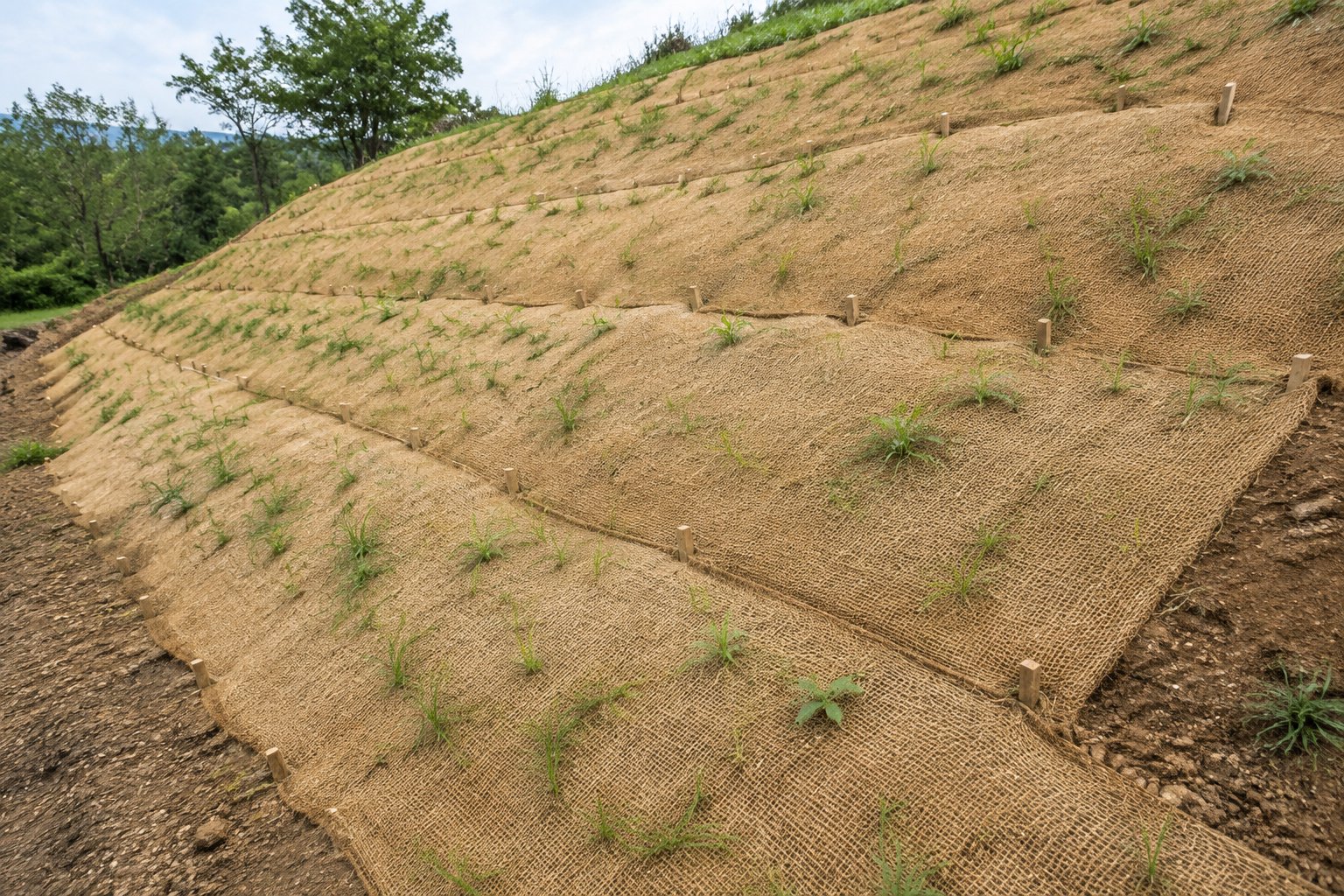
Erosion control blankets provide mechanical reinforcement in high-flow areas. They are typically installed on steep grades or drainage channels where runoff is concentrated. On projects with extended exposure periods, blankets significantly reduce the risk of seed loss.
They ensure the soil remains stable while the hydroseed matures.
How Revegetation Supports Closeout
Established vegetation is the permanent erosion control solution. Once grass reaches full establishment, it replaces temporary controls as the primary stabilization method. Healthy turf coverage demonstrates compliance and supports final project closeout.
Coordinating the application with the closeout timeline ensures the site is ready for final inspection.
Frequently Asked Questions
What does hydroseeding typically cost per acre in Houston?
Pricing varies based on site conditions, slope, and mulch products. Allied Hydromulch TX provides project-specific quotes tailored to your scope and site requirements.
How long does seed establishment usually take?
Germination begins within 7–14 days, with full establishment in 4–6 weeks. Success depends on maintaining moisture, especially during Houston's intense summer heat.
What site prep is required on clay soils?
Clay and compacted subgrades must be scarified to allow seed-to-soil contact. Proper grading is also essential to promote sheet drainage and prevent washouts.
Can hydroseeding be applied to steep embankments?
Standard applications work up to 3:1 slopes. Steeper embankments require reinforced products like Flexterra and often benefit from erosion control blankets.
Allied Hydromulch TX has handled hydroseeding and erosion control across the Gulf Coast since 1990. Call 281-482-8212 or request a project estimate online using our job price calculator to keep your site on schedule