.svg)



Steep slopes on active construction sites create a problem that standard erosion control methods struggle to solve. When grades exceed 3:1 and exposed soil faces Gulf Coast rainfall, conventional hydraulic mulch can wash away before seed has any chance to germinate. The window between application and the first major rain event is often measured in hours, not days.
That reality forces environmental compliance officers and civil engineers to look beyond standard products toward high-performance solutions like Flexterra.
Flexterra HP-FGM (High Performance-Flexible Growth Medium) fills a specific gap: immediate, high-performance erosion protection on severe slopes and disturbed soils where conventional hydraulic mulch cannot hold. It is not a substitute for standard hydromulch on routine sites. It is a premium product specified when site conditions demand more, and the cost of failure includes permit violations, rework, and project delays.
Allied Hydromulch TX has applied Flexterra across demanding civil infrastructure, industrial, and transportation projects throughout Texas and the Gulf Coast region since adding it to our erosion control service line.
The sections ahead break down where standard hydraulic mulch reaches its limits, how Flexterra creates immediate surface protection, what material components drive its performance, which site conditions justify the specification, and how to frame germination expectations when writing it into a project plan.
Where Standard Hydraulic Mulch Starts To Fall Short
Standard hydraulic mulch performs well on moderate grades and sites with predictable weather windows. The limits show up when slope angles increase, soils are freshly disturbed, and rainfall intensity outpaces the product's ability to stay bonded to the surface.
Steep Slopes And Disturbed Soils
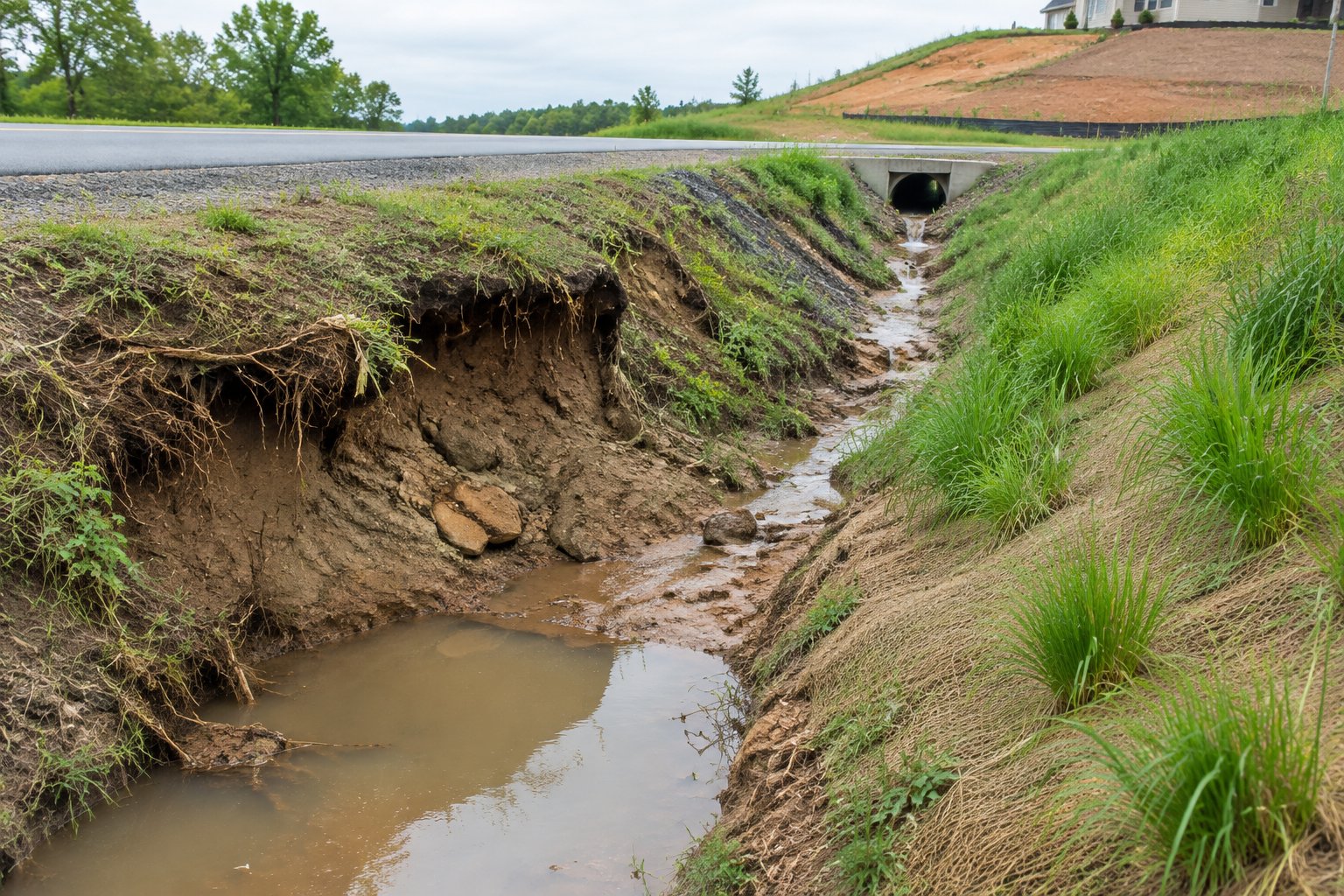
On slopes steeper than 3:1, gravity works against any surface-applied material. Standard hydraulic mulch relies on drying and light surface bonding to stay in place. Freshly graded soils, especially the expansive clays common across Texas, often lack the surface texture needed for conventional mulch to grip effectively.
The result: sheet erosion carries the mulch and seed downslope before germination can begin. Rework costs money, but the bigger issue is the risk of liquidated damages and lost time on a schedule-driven civil project.
Texas Gulf Coast Rainfall And Stormwater Risk
The Gulf Coast region regularly delivers high-intensity rain events with little warning. A two-inch rainfall on a newly mulched slope can overwhelm standard hydraulic mulch within the first 24 to 48 hours after application.
For sites operating under SWPPP requirements, TPDES stormwater permits, or TxDOT specifications, sediment leaving the site means potential violations. Compliance officers need an erosion control solution that performs from the moment it hits the ground, not one that needs favorable weather to cure.
Why Surface Protection Has To Hold Before Vegetation Establishes
Vegetation is the long-term erosion control solution. The problem is the gap between application day and the point where root systems stabilize the soil. Even with rapid germination, that gap is typically 7 to 14 days or more.
Standard hydraulic mulch can protect during this window on gentle slopes and moderate weather. On severe slopes facing heavy rain, it often cannot. The surface protection layer has to function independently of vegetation establishment until roots take over.
How Flexterra Creates Immediate Surface Protection
Flexterra HP-FGM is engineered to bond directly to soil on contact, forming a continuous protective layer that does not require a curing period to perform. That distinction matters on active construction sites where weather does not wait.
Flexible Growth Medium Versus Conventional Mulch Layers
A conventional hydraulic mulch sits on the soil surface and relies on drying to create modest adhesion. Flexterra HP-FGM uses both chemical and mechanical bonding to lock into the soil surface immediately upon application.
The material conforms to surface contours, fills micro-depressions, and creates continuous coverage that resists displacement. It is applied with standard Hydroseeding equipment, so mobilization is efficient and coverage is uniform.
No Curing Period And Soil Contact In Active Construction Conditions
One of the most operationally significant properties of Flexterra is the absence of a required curing period. Standard bonded fiber matrix products and hydraulic mulch often need 24 hours or more of dry conditions to set. Flexterra bonds to the soil immediately.
On active construction sites where grading, utility work, and other trades are running concurrently, that immediate effectiveness means erosion protection is in place the same day the slope is exposed.
The Flexible Erosion Resistant Blanket Effect
Once applied, Flexterra forms what functions as a flexible erosion-resistant blanket across the soil surface. Unlike rolled erosion control blankets that require manual installation, staking, and overlap management, Flexterra achieves continuous coverage hydraulically.
It conforms to irregular surfaces and adapts to varying slope angles. The matrix structure creates loft that retains moisture, protects seed, and resists shear forces from concentrated water flow.
Material Components That Matter In Performance
Flexterra HP-FGM is not a standard wood fiber mulch with added tackifier. Its performance comes from specific material components engineered to work together under severe conditions.
Virgin Wood Fibers And Interlocking Matrix Structure
The base of Flexterra HP-FGM is composed of 100% recycled, thermally refined virgin wood fibers. These fibers are processed under pressure to create a consistent, high-quality matrix. Crimped biodegradable interlocking fibers derived from regenerated cellulose add structural integrity. When applied, these fibers interlock to form a continuous matrix that resists displacement by water flow and wind.
Cross-Linked Biopolymers And Water Absorbents
Naturally derived cross-linked biopolymers provide the chemical bonding that locks the matrix to the soil surface. This bonding activates on contact, which is why no curing period is necessary.
Integrated water absorbents allow the material to hold moisture at levels far exceeding standard mulch. Sustained moisture at the soil surface supports accelerated plant growth and germination during the critical early establishment phase.
Phytosanitized Composition And Site Quality Considerations
All components of Flexterra HP-FGM are phytosanitized, meaning the manufacturing process eliminates weed seeds, pathogens, and other biological contaminants. On environmental restoration projects and compliance-sensitive sites, this matters.
Introducing contaminated mulch to a site can compromise native seed mixes, violate project specifications, and create long-term vegetation management problems. A clean, pre-packaged product eliminates that risk.
Best-Fit Applications For High-Demand Site Conditions
Flexterra HP-FGM is a premium product, and specifying it makes the most sense on sites where standard erosion control methods carry unacceptable risk of failure.
Highway Embankments And TxDOT-Oriented Work
Highway embankments often present steep grades, compacted or disturbed subsoils, and limited access for rolled blanket installation. Flexterra can be applied hydraulically from the roadway or shoulder, covering large embankment faces efficiently. For TxDOT projects with specific seed mix and erosion control requirements, the product's tested performance data supports specification submittals.
Drainage Channels, Retention Areas, And Compliance-Sensitive Slopes
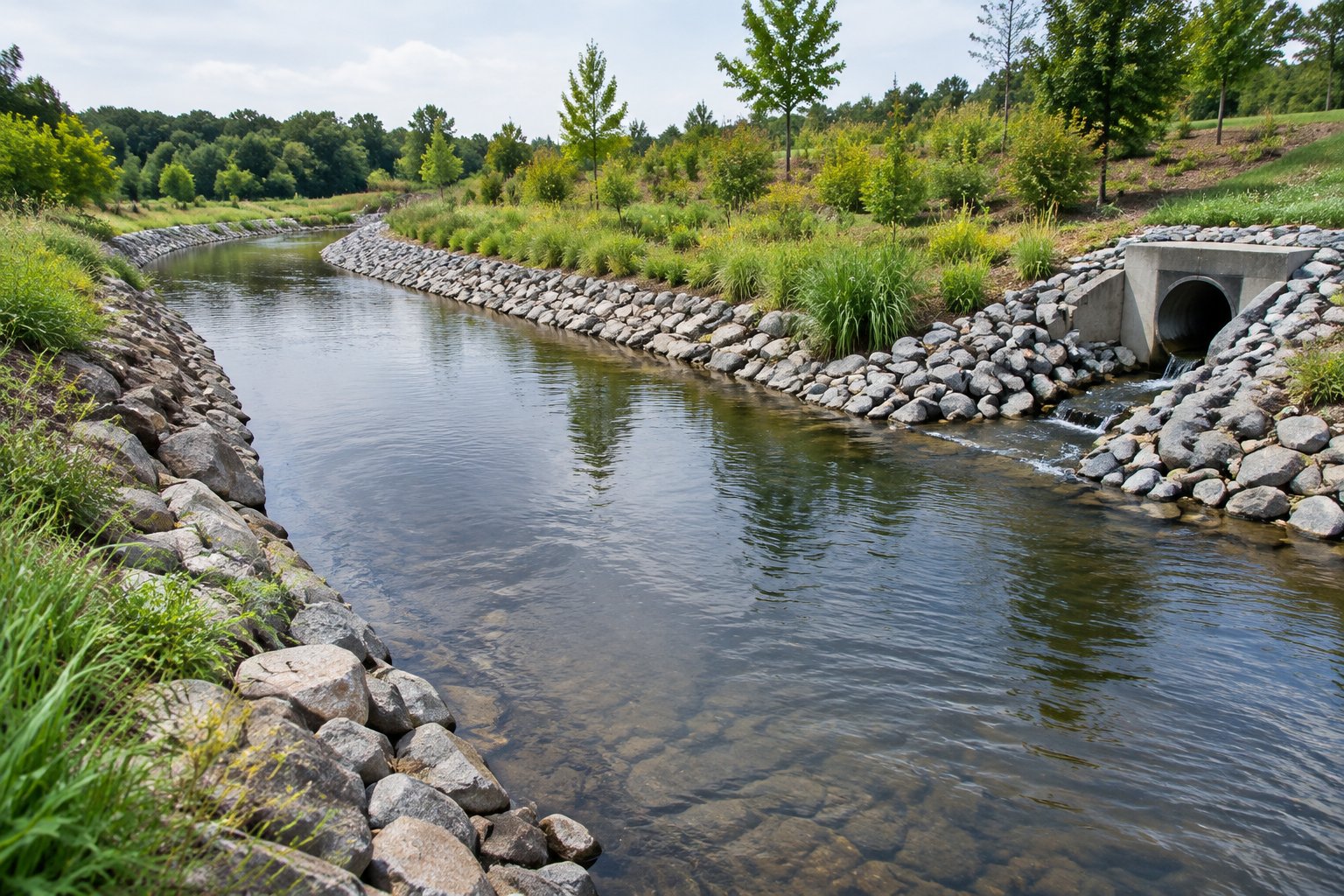
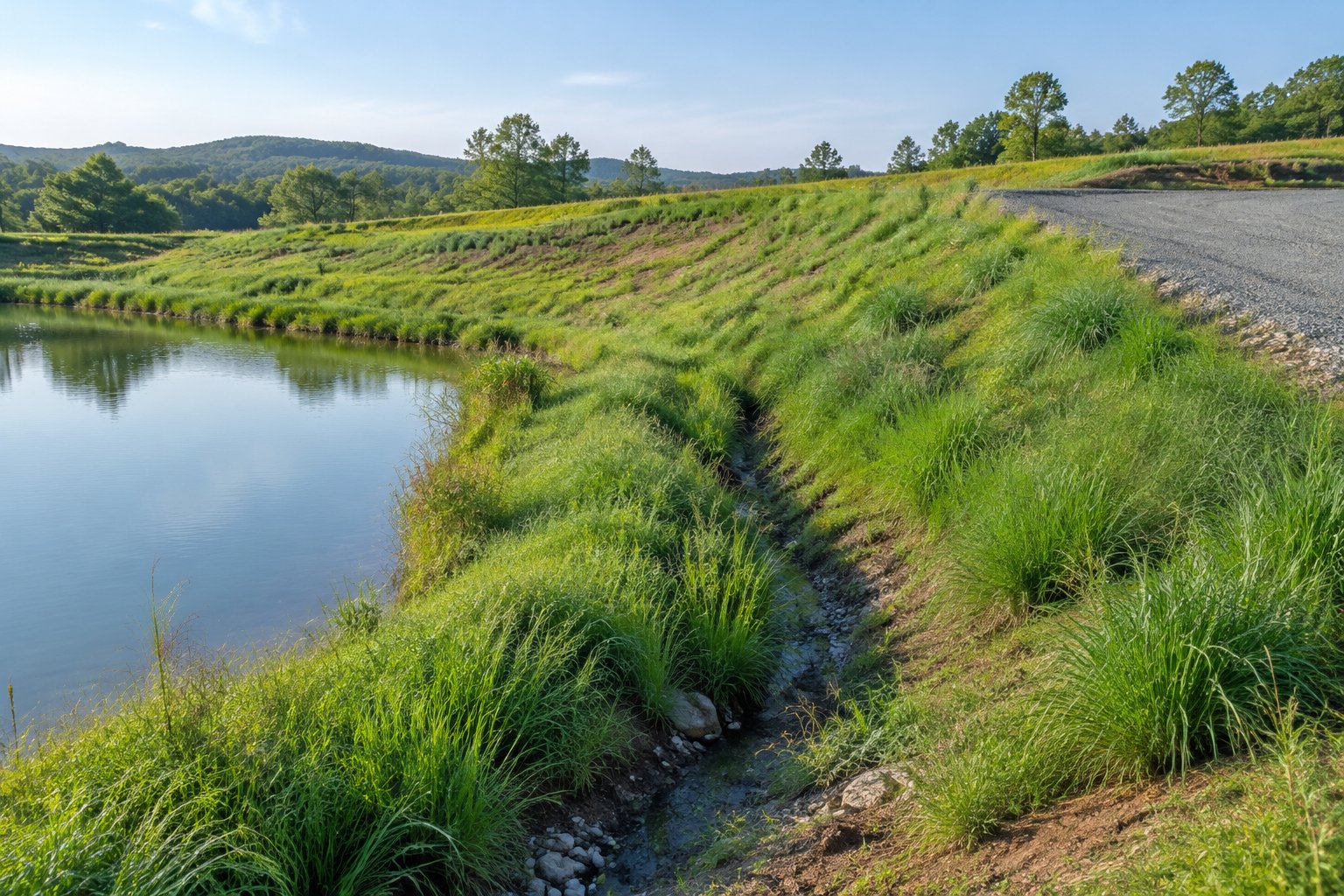
Drainage channels and retention pond slopes experience concentrated water flow that standard hydraulic mulch cannot withstand. These areas are also under close scrutiny during stormwater inspections. Flexterra's ability to resist shear forces from channelized flow makes it a strong fit for soil erosion control in these high-risk zones. The immediate bonding eliminates the vulnerability window that causes most inspection failures.
Industrial And Commercial Sites Exposed To Heavy Weather
Industrial sites along the Texas Gulf Coast and in the Corpus Christi corridor face a combination of severe weather, tight compliance timelines, and limited tolerance for rework. We have applied Flexterra on projects where a single failed erosion control application would have cascaded into permit holds and downstream schedule delays.
On sites like these, the premium material cost is minor compared to the cost of a stormwater violation or re-mobilization.
Specification Considerations Before You Call For It
Specifying Flexterra HP-FGM is not always the right call. The product earns its place on projects where the risk profile justifies premium material costs.
When Premium Protection Is Operationally Justified
Flexterra is justified on slopes steeper than 3:1, sites with a high probability of rain within 24 hours of application, drainage channels with concentrated flow, and any location where a failed application triggers regulatory consequences. On flatter sites with moderate weather windows, standard hydraulic mulch or bonded fiber matrix products deliver solid performance at lower material cost.
Matching product to site conditions is the foundation of a defensible specification.
How Germination Expectations Should Be Framed
Flexterra promotes accelerated plant growth by maintaining consistent moisture and protecting seed from displacement. Germination typically begins within 7 to 14 days, depending on weather and soil conditions. These timelines should never be written as guarantees in project specifications. The material creates optimal conditions for rapid germination, but weather and site variables still influence outcomes.
Matching Product Choice To Site Preparation And Seeding Strategy
Flexterra HP-FGM reduces the need for fine grading and extensive soil preparation, which is a genuine operational advantage on difficult sites.
That said, seed-to-soil contact still matters. The seeding strategy, including species selection, application rate, and any soil amendments, should be planned alongside the Flexterra specification. We work with project teams to align the seed mix with site conditions across Texas, Louisiana, Oklahoma, and New Mexico, making sure the growth medium and the seed are working toward the same result.
Allied Hydromulch TX has handled erosion control and hydroseeding across Texas and the Gulf Coast since 1990. To discuss whether Flexterra HP-FGM is the right specification for your site, call 281-482-8212 or request a project estimate online.
Technical Field Note: About Allied Hydromulch TX
Allied Hydromulch TX has provided professional erosion control and site stabilization services across Texas and the Gulf Coast for 35 years (since 1990). Our team maintains high-volume operational capacity, having installed 15 million square feet of material in 2025 alone.
Frequently Asked Questions
What does the HP-FGM designation mean on an erosion control submittal?
HP-FGM stands for High Performance-Flexible Growth Medium. It identifies a specific category of hydraulically applied erosion control product that exceeds the performance of standard hydraulic mulch and conventional bonded fiber matrix products.
The designation signals to the reviewing engineer that the specified product is designed for severe erosion control conditions, including steep slopes, concentrated flow areas, and sites requiring immediate surface protection without a curing period.
Which soils and slope grades call for a flexible growth medium instead of standard hydromulch?
Slopes steeper than 3:1 are the most common threshold where a flexible growth medium becomes the better specification. Disturbed soils with poor structure, freshly graded clay, and areas exposed to concentrated runoff also benefit from Flexterra's bonding and moisture retention properties.
On gentler grades with stable soils and predictable weather, standard hydraulic mulch applied through Hydroseeding typically performs well. The decision comes down to site-specific risk: how steep, how exposed, and how soon rain is expected.
What application rate is typically specified for high-performance FGM?
Flexterra HP-FGM is commonly specified at 3,500 pounds per acre for standard severe slope applications. Actual application rates may vary based on slope steepness, soil conditions, and project engineer requirements.
The rate should be confirmed against the manufacturer's product data sheet and the project's erosion control plan before finalizing the submittal. Over-application wastes material; under-application compromises performance.
How does this material perform under Texas rain events compared to conventional mulch on the same seed mix?
Flexterra's interlocking fiber matrix and immediate chemical bonding give it a significant advantage during high-intensity rain events common along the Gulf Coast. Where standard hydraulic mulch can wash from steep slopes during a two-inch rainfall within 48 hours of application, Flexterra maintains surface integrity and keeps seed in place.
The same seed mix will have a better chance of establishing under Flexterra because the seed stays where it was applied, moisture is retained at the soil surface, and the protective layer remains intact through repeated rain cycles.