A detention pond only does its job if the water leaves the way the engineer designed it to and the banks stay where they were built. Detention pond maintenance comes down to regular inspections, mowing and debris removal, keeping a healthy grass cover on the side slopes, repairing erosion early, and removing sediment before it eats into the pond's storage. Skip the vegetation and erosion pieces and the rest gets more expensive: bare banks wash into the pond, sediment fills the bottom, and the outlet clogs.
This guide is for the people who own the pond after the builder leaves: property managers, HOA boards, commercial owners, municipal public works crews and developers holding ponds through a long buildout. Most of the work is routine. The part that catches owners out is the ground cover, and that is the part Allied Hydromulch has been restoring on Texas and Louisiana sites since 1990.
Why Does a Detention Pond Need Ongoing Maintenance?
A dry detention pond holds stormwater for a set period (the EPA uses 24 hours as an example) so sediment can settle and peak flows downstream are reduced. Every storm that passes through leaves something behind: silt on the bottom, debris at the outlet, and fresh scour wherever water came in fast or the grass was thin.
None of that is visible on a sunny day. A pond can look tidy from the parking lot while the inflow pipe is undercutting the bank below it and a third of the forebay has filled with sediment. Problems compound, too. A bare patch on a side slope sheds soil into the pond with every rain, that soil adds to the sediment load, and the extra sediment shortens the time until the pond needs a costly cleanout.
Owners also carry responsibility on paper. Many developments record a maintenance obligation for their drainage facilities with the plat or the permit approval, and local drainage criteria spell out what the city or county expects. Check the documents for your property, because those requirements, not a general guide, are what an inspector will hold you to.
How Do You Keep Grass Healthy on Detention Pond Banks?
Vegetation is the cheapest protection a pond bank will ever have. Roots hold the soil, the leaves slow sheet flow and soften rainfall, and a dense stand keeps weeds and woody growth from taking over. Bare ground does the opposite, so the goal is continuous cover from the top of bank to the bottom.
Mow at the Right Height
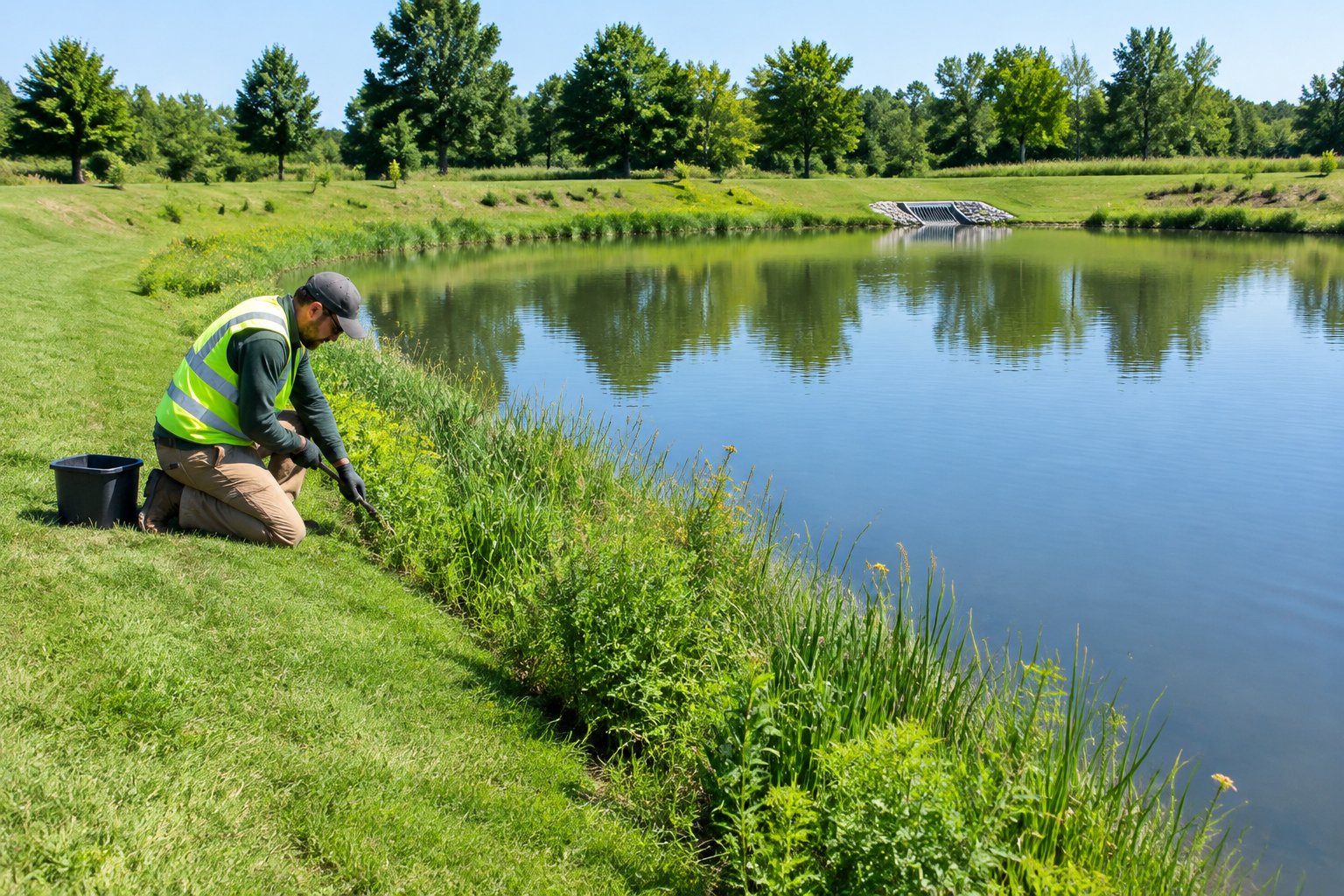
Mowing keeps woody plants and trees off the embankment, where their roots can weaken it, and keeps inspectors able to see the slopes. Scalping does more harm than skipping a cut, though. Taking grass too short on a slope weakens it, opens gaps for weeds and leaves soil exposed when the next storm arrives. Set the deck high enough that the stand stays thick, and avoid driving heavy mowers on saturated slopes, where they rut the bank.
Reseed Thin and Bare Areas Early
Shaded corners, ruts, wet toes of slope and the strip beside the inflow are where cover usually fails first. Small bare patches are easy to fix. Large ones grow every storm. Hydroseeding is a practical way to restore cover on pond banks because the slurry goes on evenly across slopes where dry seed would roll downhill, and the mulch and tackifier hold the seed in place while it germinates.
Choose the Right Seed for How the Pond Is Used
Ponds that sit inside a manicured property usually carry bermudagrass so they match the surrounding turf. Ponds on the edge of a development, along a corridor or in a municipal greenbelt are often better suited to native or low-maintenance mixes that need less mowing once they are established. Match the mix to the maintenance budget you actually have, not the one you wish you had.
How Do You Repair Erosion on a Detention Pond?
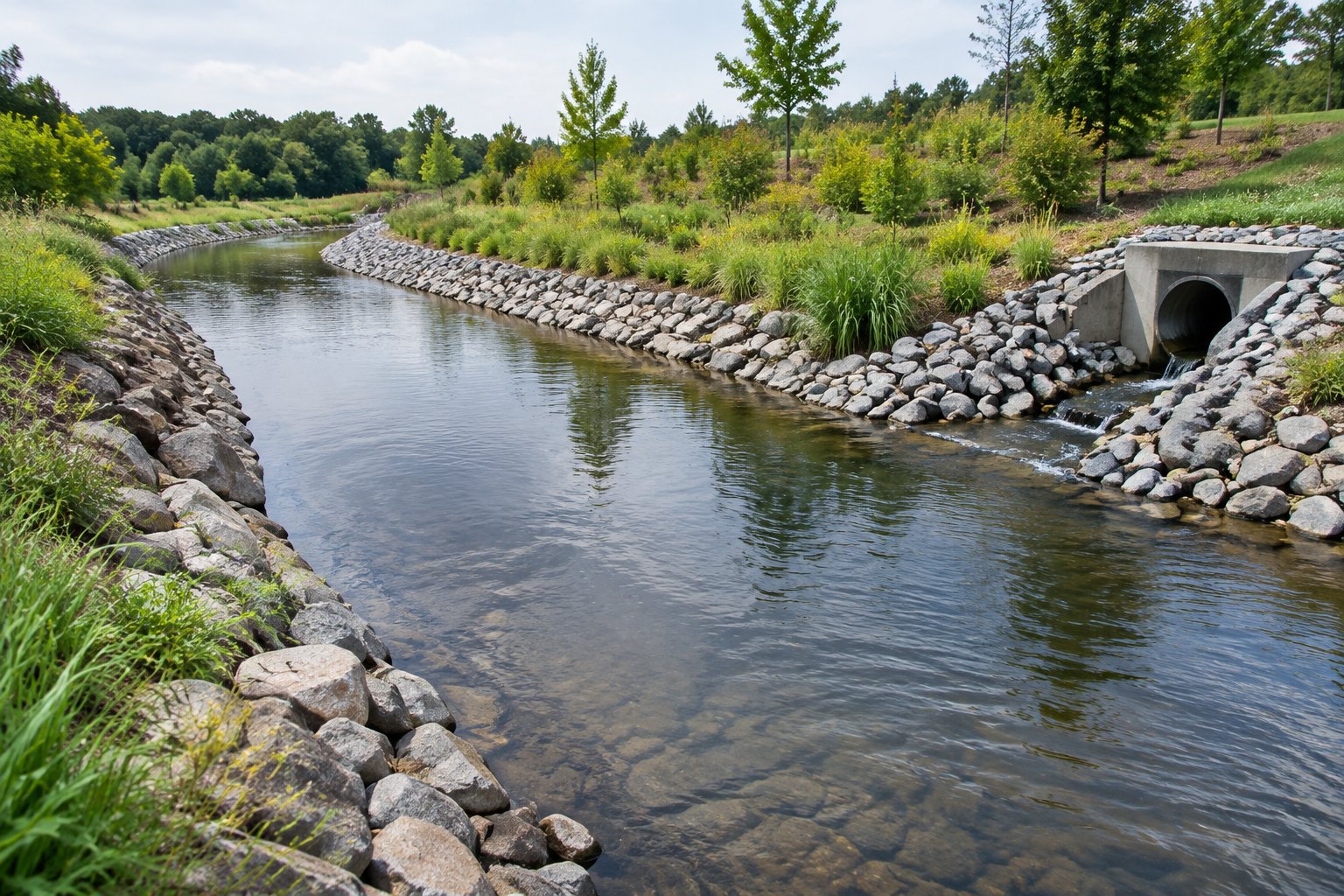
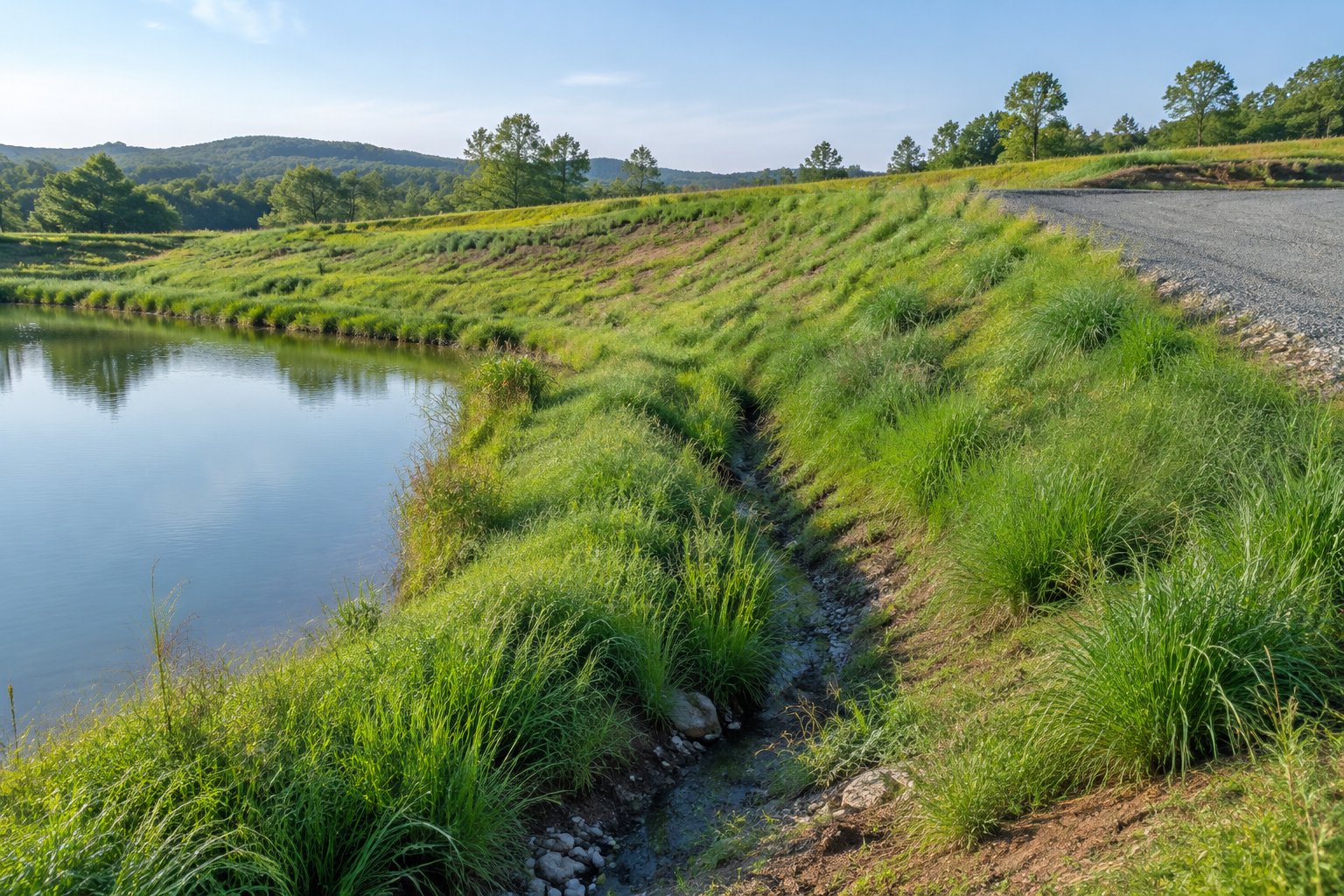
Erosion on a pond follows the water. You will usually find it at inlet pipes and flumes, at overflow and emergency spillways, along the waterline of ponds that hold a small pool, and in rills running down slopes from parking lots or yards above.
The repair depends on how bad it is:
- Thin cover and minor rilling: Fill the rills, loosen the surface and hydroseed with a well-tacked mulch.
- Steeper or repeatedly washed slopes: Regrade, then apply a higher-performance hydraulic product such as a bonded fiber matrix that bonds to the soil and resists runoff while the new seed establishes. Our post on bonded fiber matrix for slope stabilization explains where it outperforms standard mulch.
- Undercut banks, slumps and scour holes at structures: These may point to a drainage or design issue. Bring in the civil engineer before rebuilding, then restore cover once the shape is fixed.
Fix the cause as well as the symptom. If water is running down the bank from a downspout or curb cut, a reseeded slope will wash out again unless that flow is redirected. If you have an idea of the repair area, our pricing calculator gives a quick range for standard hydroseeding before you request a site visit.
Who Is Responsible for Detention Pond Maintenance?
During construction, the general contractor and the seeding contractor are responsible for getting the pond banks stabilized, which our guide to hydroseeding detention ponds before storms covers in detail. After turnover, responsibility usually passes to whoever owns the land: the HOA, the property owner or the municipality, depending on how the development was set up.
That handover is where many ponds start to slip. The new owner inherits a pond whose grass may still be young, and a maintenance budget that covers mowing but nothing else. The best time to set up the maintenance plan is before the keys change hands. Walk the pond together, note any thin areas, and agree on who reseeds them.
Most owners split the work. A grounds or pond maintenance crew handles mowing and debris on a routine contract, a specialist handles sediment removal when it is due, and an erosion control contractor is brought in to restore cover and repair eroded banks after storms or when the inspection notes start to pile up.
Restore Your Pond Banks Before the Next Storm Season
If your detention pond has bare slopes, washouts around the inflow or grass that never filled in after construction, our crews can get it covered again. We bring the same care to a single retail pond as to a string of ponds across a master-planned community, and we will tell you plainly whether the job needs seed and mulch, a heavier product or an engineer first. Contact Allied Hydromulch or call 281-482-8212 and send a few photos of the problem areas so we can talk through the fix.
Frequently Asked Questions
How often should a detention pond be inspected?
The EPA's baseline for dry ponds is an inspection twice a year, plus a yearly check of inlets and outlets. Add a walk-through after every major storm, and follow any schedule set by your city, county or recorded maintenance agreement.
Should detention pond slopes be mowed?
Yes, in most cases. Regular mowing keeps trees and woody plants off the embankment and keeps the slopes inspectable. Avoid cutting too short or mowing when the slopes are saturated.
When is the best time to reseed a detention pond?
Warm-season grasses such as bermudagrass establish best from late spring into summer when there is enough water. Banks damaged in fall or winter can be protected with temporary cover or hydromulch until spring.
Can hydroseed hold on a pond bank that floods?
On side slopes above normal water levels, a well-tacked hydroseed application usually holds once it sets. Areas that see frequent or fast-moving water, such as spillways and inflow points, need a heavier hydraulic product or a structural fix.