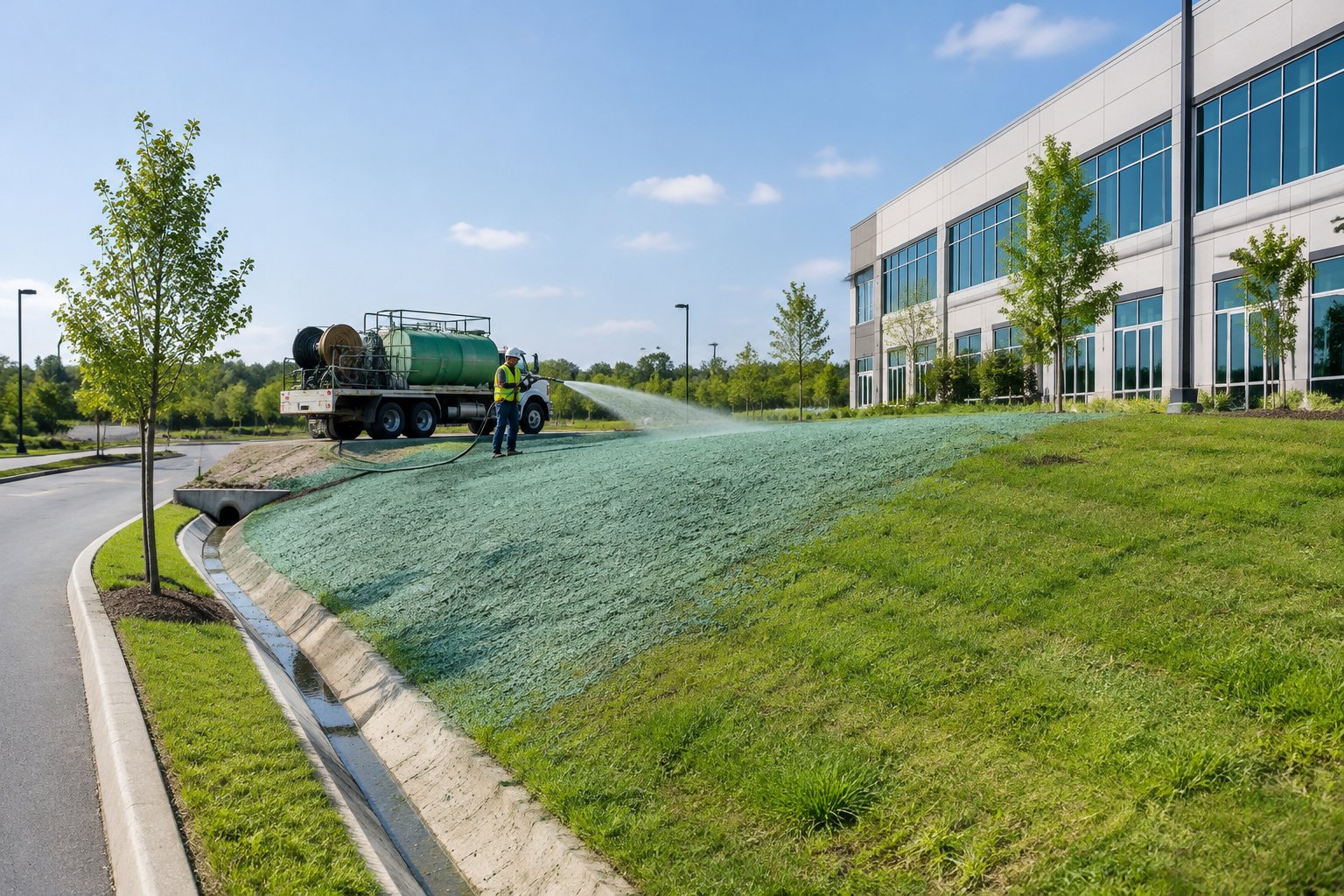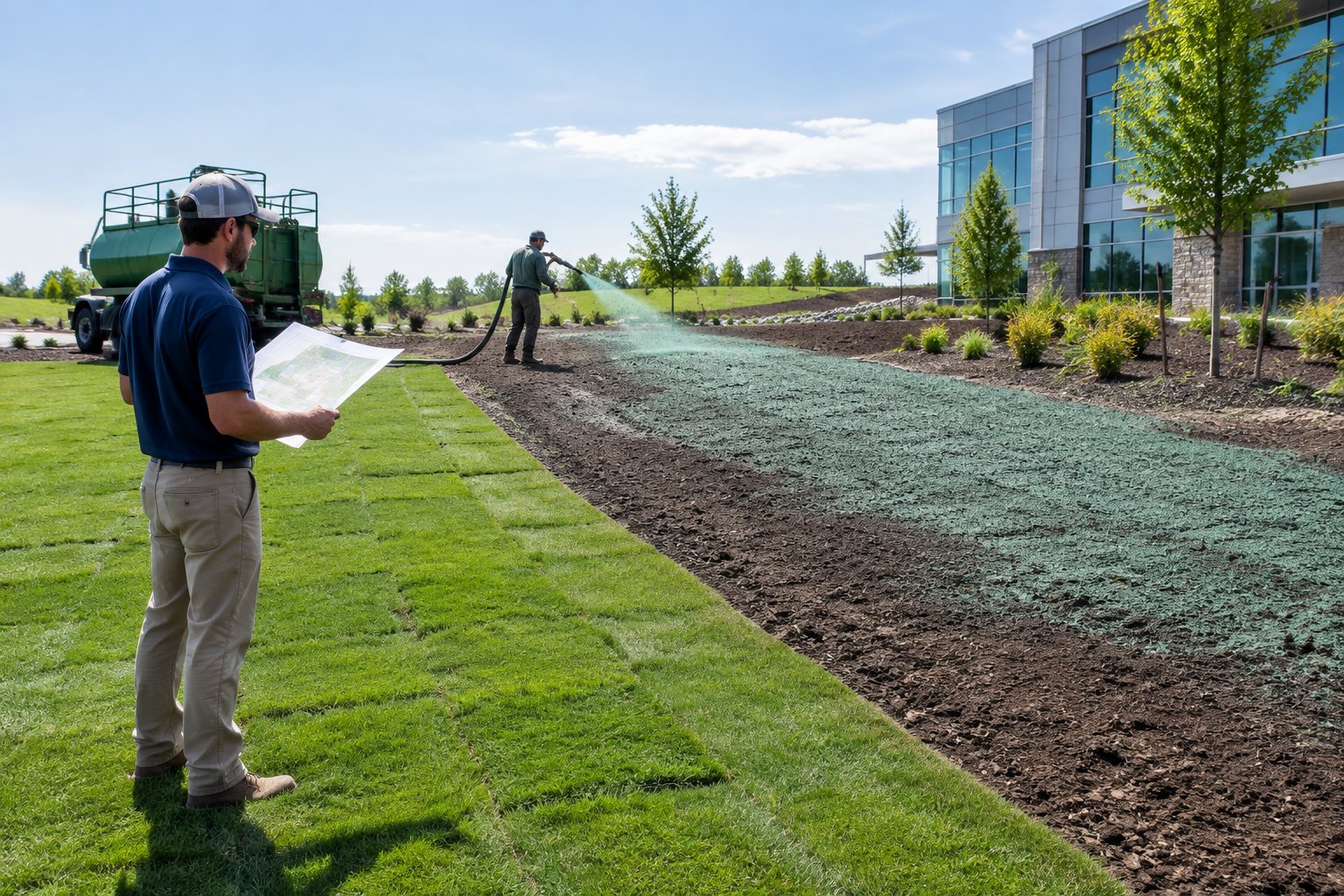
On most commercial projects the question is not hydroseed or sod for the whole site. It is which one goes where. Sod belongs on small, irrigated, high-visibility areas that have to look finished at turnover, such as the main entrance, building frontage and parking islands. Hydroseed belongs almost everywhere else: pads, lot perimeters, slopes, detention ponds and right of way, where the area is large, the ground may slope or carry water, and cost per acre matters. The split you choose then shapes your irrigation plan, your path to closeout and what the owner sees on handover day.
We compare the two methods on cost and coverage in choosing the right site coverage strategy. This guide works from the plan sheet instead, one area type at a time.
Which Areas Get Sod and Which Get Hydroseed?
Here is how the split usually falls on a commercial development. Your planting plan, the owner's expectations and any agency spec can change individual calls.
Entrances and Frontage: Where Sod Earns Its Cost
The entrance is where the owner, tenants and the public form their first impression, and often where the ribbon cutting happens. Sod gives that area a finished surface the day it goes down, and because these zones are small, the higher cost per square foot stays manageable.
The catch is water. Sod needs heavy watering right away and steady water until it roots into the soil underneath, so it works best where the permanent irrigation system is installed, tested and running before the pallets arrive. Schedule sod late in the job, after the heavy trades are gone, so it is not driven over or buried under construction debris in its first weeks.
Pads, Lots and Open Ground: Where Hydroseed Carries the Site
Pad perimeters, open lots and common areas make up most of the disturbed ground on a typical development. These areas rarely need an instant look, and they are often outside the irrigation zone. Hydroseeding covers them in a fraction of the time sod would take and puts protective mulch on the soil from the first day.
Ground that is graded but due for another phase is a separate case. Paying for sod or permanent seed there is wasted money. Temporary cover or mulch-only hydromulch holds it until the final work is done. If you want a rough number for the hydroseeded portion of your site, our hydroseeding pricing calculator gives a quick range for standard hydroseeding.
Slopes and Pond Banks: Why Sod Struggles There
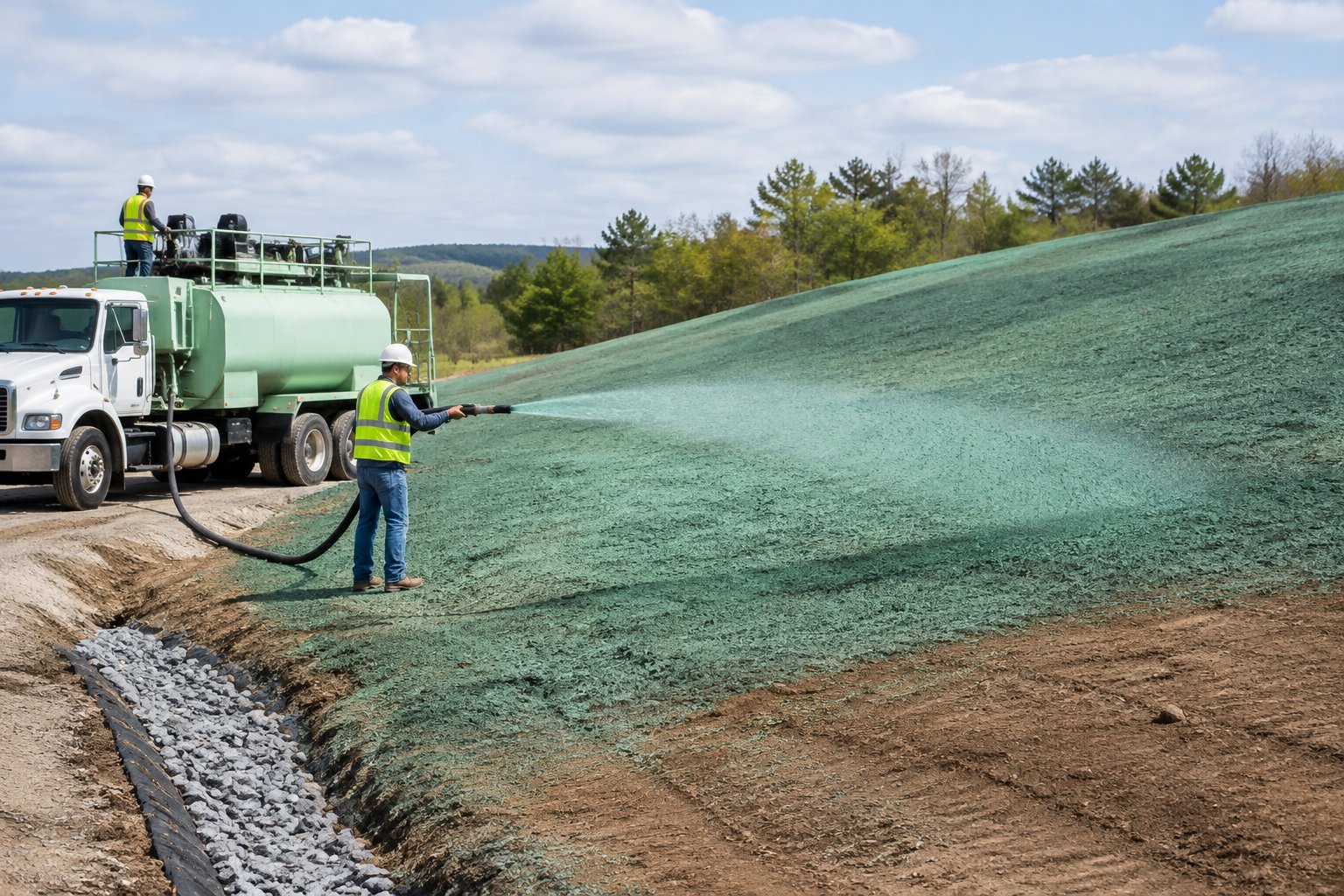
Sod on a slope is a set of separate pieces sitting on top of the soil until roots grow in. Runoff finds the seams, edges lift and pieces can slide, which is why sod on grades usually needs staking and still tends to need repairs after the first big storm. A hydraulic application conforms to the grade as one continuous layer, and steep faces or areas with concentrated flow can move up to bonded fiber matrix or Flexterra.
Detention and retention pond banks add rising and falling water to the slope problem. They also tend to be some of the last areas graded, right before closeout. Our guide to hydroseeding detention ponds to stabilize banks before storms covers how to sequence that work.
Right of Way and Corridors: Specs Usually Decide
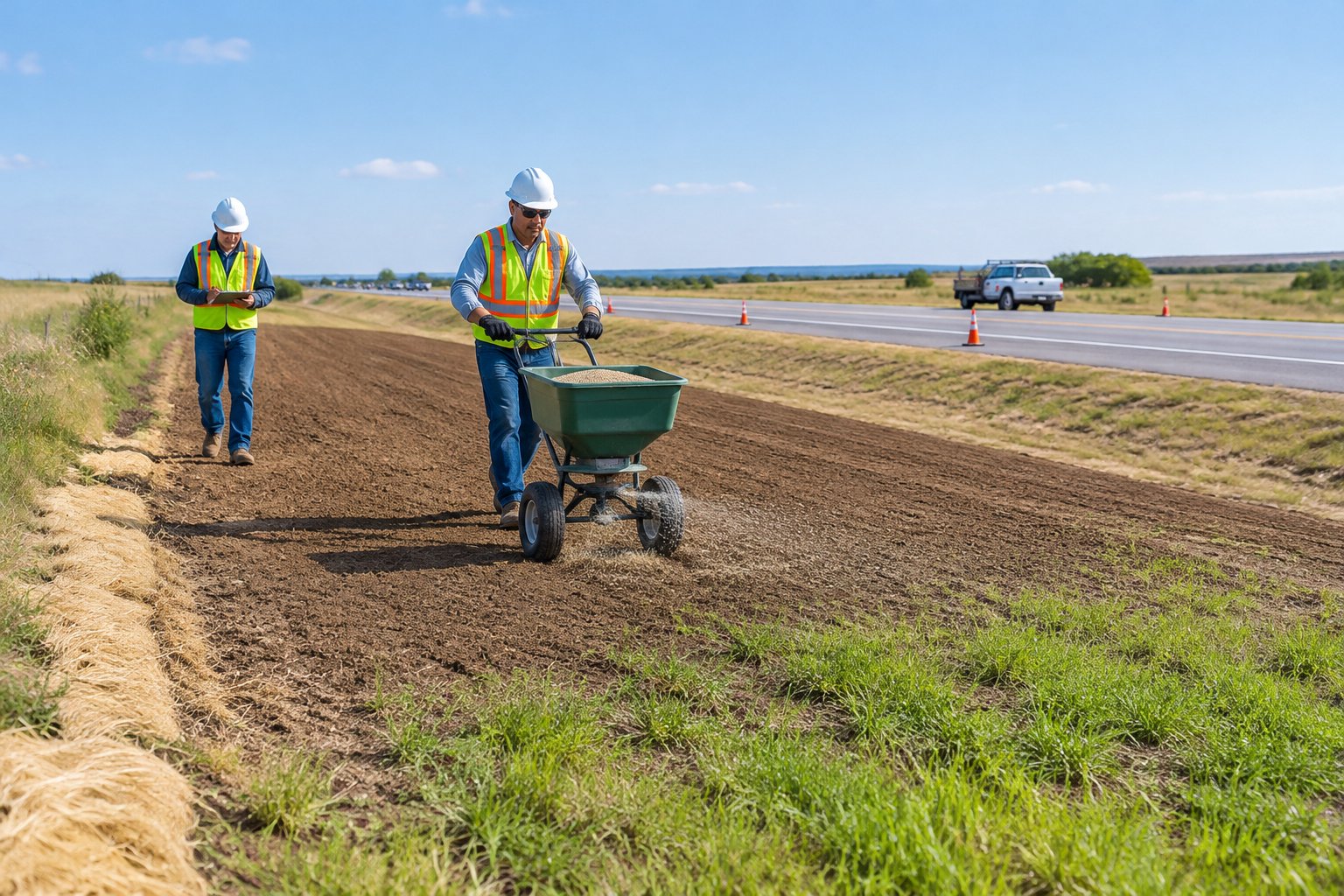
Roadside strips, utility easements and pipeline right of way are long, narrow and rarely irrigated. They often fall under a city, county or state seeding requirement that names the seed mix, and native or mixed warm-season blends are common. Those mixes are not something a sod farm can supply, so these areas are hydroseeded or drill seeded almost by default. The work is about getting a stand that meets the requirement and keeps the corridor stable, which our page on roadside hydroseeding for corridor stabilization covers in more detail.
How Does the Choice Affect Closeout?
Under a stormwater permit, final stabilization is about established vegetation, not a green surface. Sod that has not rooted and hydroseed that has just sprouted are in the same position: both need time before they count. Sod usually gets there faster on the small areas it covers, while large hydroseeded areas set the pace for the site as a whole.
That makes timing the main closeout lever. Seed the large areas as soon as they reach final grade, rather than waiting to do everything at the end, so the bulk of the site is filling in while the building finishes. Leave sod for the end, when irrigation is live and traffic has cleared. Phased seeding means more than one mobilization, but it is usually what keeps the Notice of Termination from being the last item holding up the job.
Who Waters, and for How Long?
Settle irrigation before deciding the split, because it often decides it for you. Inside the irrigation zone, sod and hydroseed can both be watered by the system once it is running. Outside it, sod is hard to keep alive, and hydroseeded areas need a water truck, temporary irrigation or reliable rain through germination.
In a Texas or Louisiana summer that is the biggest risk on the job. Write into the contract who is responsible for establishment water on each area, how often it will be checked and what happens if a dry spell hits. It is far cheaper to agree that up front than to argue about bare patches at the final walk.
What Does the Owner Expect at Turnover?
Owners tend to judge a site by its entrance and its frontage, which is one more reason sod goes there. For the rest of the site, agree on what "accepted" looks like before work starts. A hydroseeded area may still be filling in at handover, so the contract should say what level of cover is expected, who mows and maintains it until then, and whether touch-ups are part of the scope.
It also helps to hand the owner or their maintenance contractor a simple map showing which areas were sodded, which were seeded and with what mix. That avoids a native area being mowed like turf, or a newly seeded strip being treated with a weed product that harms the young grass.
Planning Coverage for a Site With Mixed Needs?
We work with general contractors, developers and municipalities across Texas and Louisiana on sites that need a mix of finished frontage and large seeded areas, and our commercial hydroseeding services cover the seeded side of that plan. If you are sorting out which areas get what, contact Allied Hydromulch or call 281-482-8212 and we will go through the plan sheet with you.
Frequently Asked Questions
Can sod be used on a detention pond bank?
It can, but it is a harder fit. Pieces can lift or slide on the slope before they root, and changing water levels add stress. Hydroseed, or a heavier hydraulic product on steep banks, is the more common choice.
Do we need irrigation installed before sod goes down?
In most cases, yes. Sod needs heavy watering right away and steady water until it roots, so having the system running before delivery protects the investment.
Which areas should be seeded first on a phased site?
Large areas that have reached final grade and will stay as vegetation. Seeding them early gives the stand time to establish while other work finishes.
Can hydroseeded areas be turned over before they fill in?
They can, if the contract spells out the expected cover, who maintains the area and how touch-ups are handled. Agreeing on that up front avoids disputes at handover.