.svg)


Hydromulching Houston job sites comes down to one question: can the application get done without creating another scheduling conflict?
Most commercial and industrial projects in the Houston metro already deal with tight timelines, clay-heavy soil, unpredictable rain, and multiple trades working the same footprint. Adding a vegetation step that drags out over multiple visits or requires re-application is a problem no GC wants to manage.
The single-visit hydromulch application exists specifically to solve that problem, putting seed, mulch, fertilizer, and soil conditioners on the ground in one pass so the site keeps moving. Allied Hydromulch TX, headquartered in Pinehurst, has been running these applications on Houston-area commercial sites since 1990.
With 15 million square feet installed in 2025 across 60+ unique projects, Allied maintains a 100% satisfaction rate by focusing on scale and speed. With 15 million square feet installed in 2025 across 60+ unique projects, Allied maintains a 100% satisfaction rate by focusing on scale and speed.
What follows covers why Houston projects pull hydromulching into the schedule early, what the application actually includes, where standard hydromulch works on its own versus where added erosion control is needed, and how to choose between hydroseeding, drill seeding, and broadcast methods for different site conditions.
Why Houston Projects Turn To Hydromulching Early
Disturbed soil sitting exposed in Houston's climate is a liability. Between Gulf Coast rain events and the region's expansive clay soils, unprotected ground erodes fast, generates sediment runoff, and puts stormwater compliance at risk. Getting hydromulching on the schedule early prevents those problems from compounding.
Warehouse Pads, Retail Sites, And Disturbed Ground
Large warehouse developments and retail sites along corridors like the Fort Bend Tollway often have acres of graded, exposed soil that need turf establishment before final inspection or certificate of occupancy. Sod is expensive and logistically complex at that scale.
Hydroseeding covers the same area in a fraction of the time and cost. A single crew can apply a slurry of seed, hydraulic mulch, fertilizer, and tackifier across a prepared pad in one mobilization, then move off-site, so other trades can continue.
Houston Clay Soils, Rain Events, And Schedule Pressure
Houston's clay soils hold water near the surface and shed it quickly during storms. That combination accelerates erosion on any unprotected grade. A 2-inch rain event on a freshly graded slope can move enough sediment to trigger a stormwater violation.
Hydromulching creates an immediate protective layer that holds soil in place while grass seed germinates, typically within 7–14 days under proper conditions. For project managers watching weather forecasts and permit deadlines, getting the application done early buys time and reduces risk.
What The Single-Visit Application Actually Covers
The value of hydromulch seeding is in the efficiency of the delivery. Everything the soil needs to germinate and stabilize arrives in a single slurry, applied in a single visit.
Seed, Mulch, Fertility, And Soil Contact In One Pass
The hydromulch slurry combines grass seed, wood fiber mulch or hydraulic mulch, fertilizer, soil conditioners, and a tackifier into one sprayable mixture. When applied, this slurry bonds directly to the soil surface.
The mulch layer retains moisture, the tackifier prevents the mix from washing off during rain, and the seed sits in direct contact with the soil. No separate seeding pass. No separate mulch application. No return trip for fertilizer.
For a 5-acre warehouse pad, that means one crew, one day, one mobilization. The site is ready for the next phase immediately.
Typical Germination Windows And Irrigation Expectations
Under normal Houston-area conditions, germination typically begins within 7–14 days. Full turf establishment generally develops in 4–6 weeks, depending on weather, temperature, and available moisture.
Sites with existing irrigation systems can supplement rainfall to keep the mulch layer moist and accelerate germination. Sites without irrigation rely on natural rainfall, which Houston usually provides, but timing matters. Spring and fall applications tend to produce the fastest results, while summer heat may require supplemental watering to keep the seed viable.
Where Standard Hydromulch Holds Up And Where It Needs Backup
Not every site condition responds the same way to a standard hydraulic mulch application. Knowing where it works well and where additional erosion control solutions are needed prevents rework.
Flat And Moderate Sites With Good Prep
On flat to moderately graded sites with properly prepared soil, standard hydromulch performs well. Warehouse pads, parking lot perimeters, commercial landscaping areas, and graded retention pond banks up to moderate slopes are all strong candidates. The mulch layer holds, moisture retention is adequate, and germination proceeds on schedule.
Slopes, Channels, And Areas That Need Added Protection
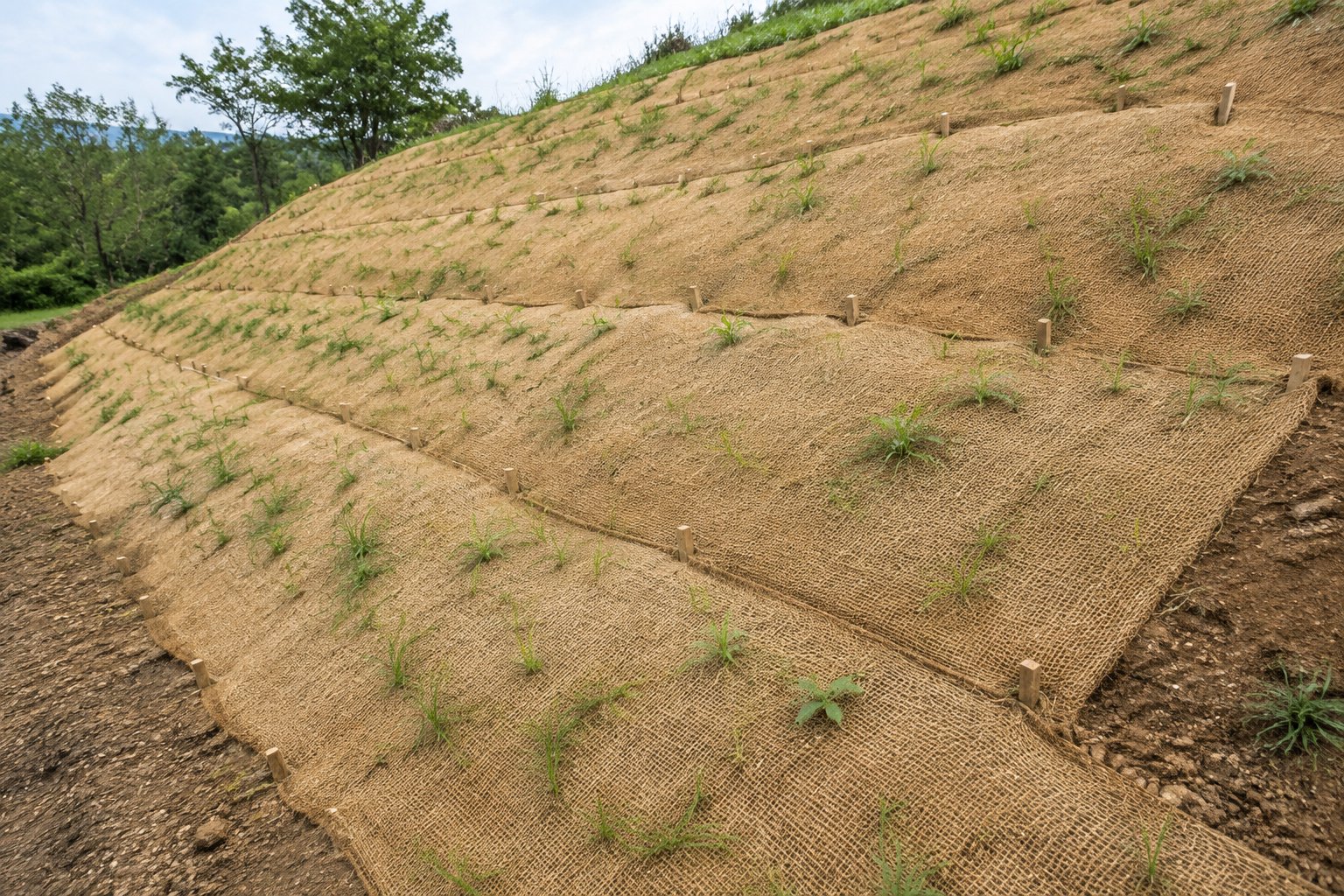
Steep slopes, drainage channels, outfall areas, and sites near waterways need more than standard hydraulic mulch. These areas face concentrated water flow during rain events that can wash a standard application off the surface before germination takes hold. Solutions include:
- Erosion blankets for channel bottoms and steep banks
- Flexterra, a premium flexible growth medium designed for demanding slope stabilization
- Flexterra, a premium flexible growth medium designed for demanding slope stabilization
- Hydraulic soil stabilizers are applied as a bonded fiber matrix for moderate slopes
- Silt fence or other sediment barriers at the toe of slopes for stormwater compliance
Our senior field team—including Ray, who has been with us since 1992, and Josh, since 2009—assesses every site to determine the right combination. Adding slope protection upfront is always cheaper than re-applying after a rain event strips the first application.
Choosing The Right Seeding Method For The Site
Hydroseeding is the most common method for commercial turf establishment in Houston, but it is not the only option. Site conditions, seed specifications, and long-term performance goals determine the right approach.
Seeding Method
Best Use Case
Germination Window
Soil Stabilization
Hydroseeding
Warehouse pads, retail sites, commercial turf
7–14 Days
High (Mulch + Tackifier)
Drill Seeding
Large acreage, TxDOT, infrastructure corridors
1–3 Weeks
Moderate (In-soil placement)
Broadcast Seeding
Low-budget, flat areas with minimal rain risk
Unpredictable
None
When Hydroseeding Beats Broadcast Seeding
Broadcast seeding drops seed on the surface without mulch, moisture retention, or tackifier. On Houston clay soils, broadcast seed often washes away in the first rain or dries out in the summer heat before germination.
Hydroseeding solves both problems by encasing the seed in a protective mulch matrix. For most commercial and construction sites, hydroseeding delivers more uniform coverage with less waste.
When Drill Seeding Or Native Grasses Make More Sense
For large acreage, infrastructure corridors, or reclamation projects, drill seeding places seed directly into the soil at a consistent depth. This improves seed-to-soil contact and reduces surface loss.
Drill seeding is particularly effective for native grass seeding on TxDOT projects or environmental restoration work where regionally adapted species need to establish deep root systems over time. Wildflower applications follow a similar logic for pollinator habitat projects and roadside beautification.
Planning Scope, Access, And Next Steps In Houston
Getting an accurate hydromulching estimate starts with giving the crew enough information to price the job right.
What A Contractor Should Have Ready Before Pricing
Before requesting a quote, have the following ready:
- Total area in square feet or acres
- Site grading status (rough grade, final grade, or ungraded)
- Slope angles and any known drainage patterns
- Seed mix requirements or specifications (TxDOT or owner-specified)
- Access points for truck-mounted equipment
- Any stormwater or environmental compliance requirements
These details prevent scope gaps and allow us to recommend the right combination of hydromulch, erosion control, and seed mix for the conditions.
Using The Online Calculator Before Final Scope Review
For a rough cost range before a detailed conversation, the online job price calculator at alliedhydromulch.com gives project managers a starting point based on area and basic site details.
From there, a call to 281-482-8212 connects directly with a team that has handled Houston-area commercial sites for over 35 years.
Frequently Asked Questions
What drives installed pricing for hydroseeding on Houston-area commercial sites?
Pricing depends on total area, slope conditions, seed mix specifications, required erosion control measures, and site access. Allied uses an online calculator to generate rough estimates, with final pricing confirmed after reviewing site-specific details. Per-square-foot rates are not published because variables change significantly between projects.
How do you estimate material and labor quantities for a Houston hydroseeding bid?
Material quantities are calculated based on total area, mulch application rate, and seed specification. Labor depends on site access, the number of equipment setups required, and whether additional erosion control products are part of the scope. A site visit or detailed site plan is the most reliable way to confirm quantities.
When is the best seeding window in Houston, given heat, clay soils, and storm risk?
Spring (March through May) and fall (September through November) are the strongest seeding windows in Houston. Summer applications can work with supplemental irrigation, but extreme heat slows germination. Winter seeding is possible with cool-season blends, though growth rates are slower.
Which seed mixes are commonly specified on Houston projects, including TxDOT-style requirements?
Common mixes include Bermuda grass for warm-season commercial turf, Bahia for low-maintenance areas, and TxDOT-specified native blends for highway and public infrastructure projects. The right mix depends on project type, soil conditions, and whether the specification calls for permanent or temporary cover.
What erosion control measures are typically paired with hydroseeding for Houston slopes and outfalls?
Slopes and outfall areas often require erosion blankets, Flexterra flexible growth medium, hydraulic soil stabilizers, or silt fence in addition to the hydromulch application. The specific combination depends on slope angle, expected water flow, and stormwater permit requirements.
What equipment and access requirements should a site meet for large-scale hydroseeding in Houston?
Truck-mounted hydromulch units need stable ground access within hose reach of the application area. For most commercial sites, that means a compacted road or pad capable of supporting a loaded truck.
Hose reach typically covers 200–300 feet from the truck. Sites with limited access may require multiple setup points or smaller equipment configurations.
Allied Hydromulch TX has handled hydroseeding and erosion control across Texas and the Gulf Coast since 1990. Under the leadership of President Greg, our team remains committed to the "right-first-time" approach that general contractors rely on to stay on schedule.
Whether you are managing a warehouse pad in Houston or an industrial site in Louisiana or Oklahoma, we bring the scale and expertise to get the job done. Use the online calculator for a rough estimate, or call 281-482-8212 to talk through your site