.svg)


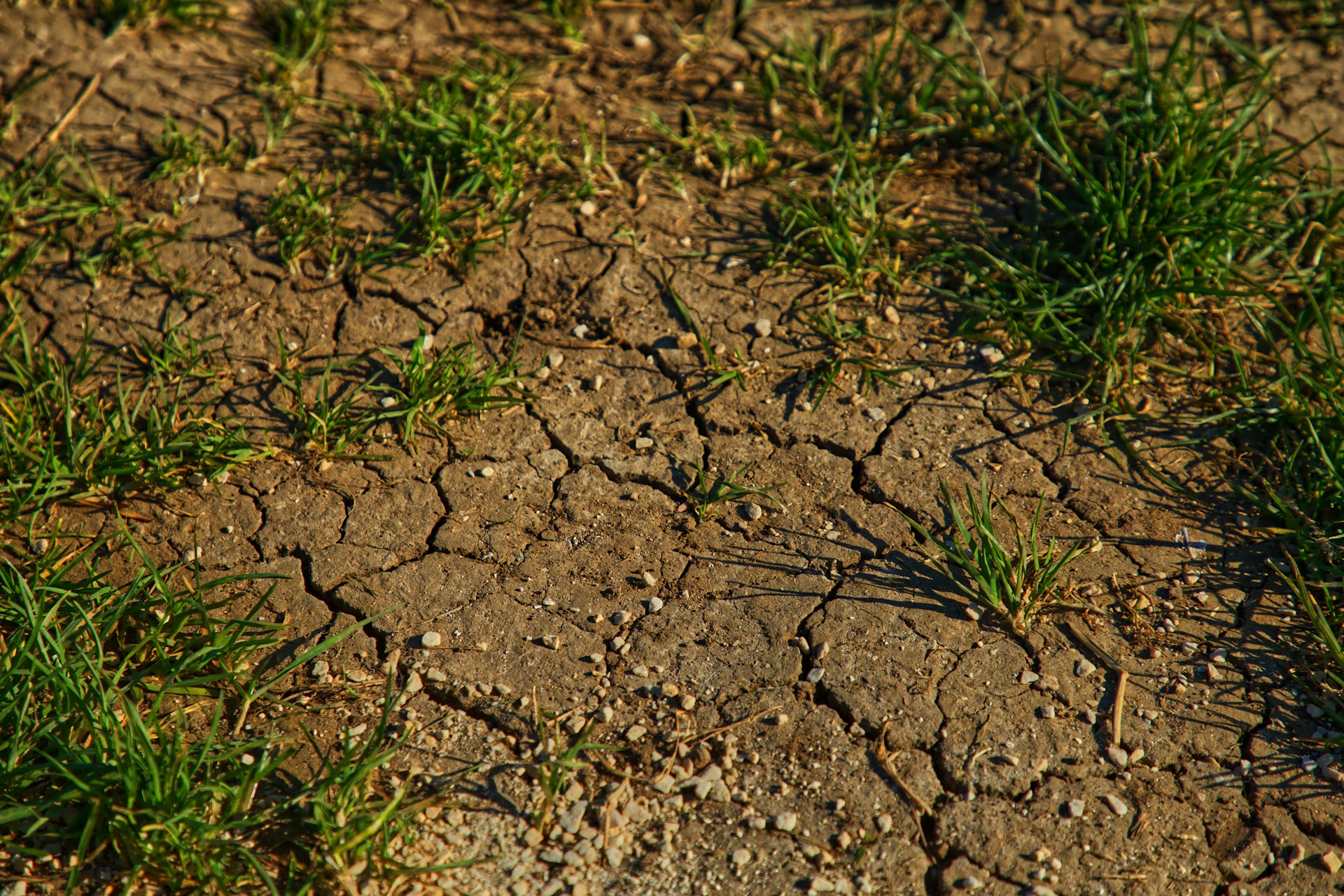
Erosion control in Houston is not optional. It is a requirement tied to permits, stormwater compliance, and the ability to keep a project moving forward without costly interruptions.
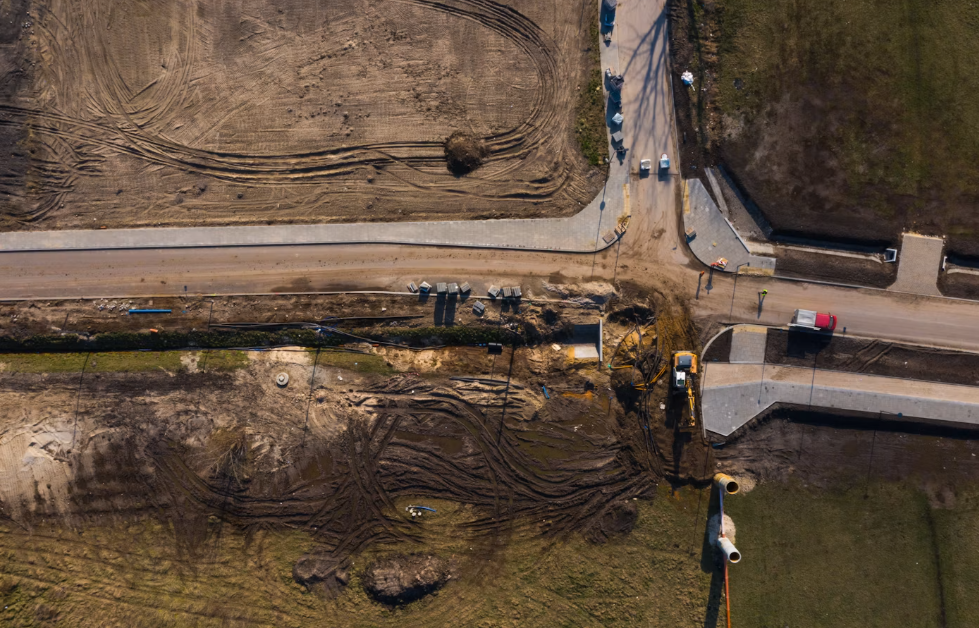
Exposed soil on a construction site in the Houston metro area faces a combination of heavy rainfall, expansive clay soils, and flat drainage patterns that accelerate sediment loss faster than most crews expect.
A single missed rain event on an unprotected slope can trigger a stormwater violation, a stop-work order, and weeks of schedule recovery. That is the reality for general contractors, developers, and civil construction firms operating across Harris County and the Gulf Coast region.
Allied Hydromulch TX has provided erosion control services across Houston and Southeast Texas since 1990, working directly with contractors on commercial developments, industrial facilities, highway projects, and drainage infrastructure. The approach covered here goes beyond product selection.
It addresses site sequencing, the right erosion control methods for Houston-specific conditions, and what separates a single-application success from a job that requires rework.
From SWPPP compliance and sediment control to hydraulic mulch, Flexterra, erosion control blankets, and slope stabilization systems, the sections ahead break down what Houston contractors need to know and what to demand from an erosion control partner.
Houston Sites Fail Fast When Soil Is Left Exposed
Houston's climate and soil profile create conditions that punish exposed ground quickly. Clay-heavy soils resist water absorption, flat terrain concentrates runoff into narrow flow paths, and rainfall intensity can overwhelm standard sediment controls within minutes. Projects that leave soil unprotected, even briefly, face compounding problems.
Heavy Rain, Clay Soils, and Runoff Pressure
Houston averages more than 50 inches of rainfall per year, with intense storms common from late spring through early fall. When rain hits exposed clay soil, the surface seals almost immediately. Water sheets across the site instead of soaking in.
Sediment picks up speed, overloads silt fencing, and exits the site boundary carrying soil into drainage channels and public infrastructure. The problem is not just volume. It is velocity. A 2-inch rain event on a bare 5-acre site can generate thousands of gallons of sediment-laden runoff in under an hour.
Why Delays Turn Into Compliance Problems
Every day that a disturbed site sits without adequate sediment control increases the risk of a SWPPP violation. In Harris County and surrounding jurisdictions, inspectors look for active erosion, failed perimeter controls, and missing stabilization on areas that have reached final grade. A delayed erosion control application does not just affect one trade.
It can cascade into permit holds, fines, and forced re-grading. For general contractors managing tight schedules, the cost of waiting is almost always higher than the cost of getting controls in place on the first pass.
The First Controls Usually Matter More Than The Final Seed
The initial erosion and sediment controls installed on a Houston site set the tone for everything that follows. Getting perimeter protection and slope stabilization right from the start prevents sediment from leaving the site, reduces the need for emergency repairs, and keeps inspections on track.
Perimeter Protection and Runoff Management
Silt fencing remains one of the most common first-line sediment controls on Houston construction sites. Installed along the downslope perimeter, it intercepts sheet flow and traps suspended sediment before it reaches storm drains, ditches, or adjacent properties. Proper installation matters.
Posts must be driven deep enough to resist Houston's saturated clay soils, and the fabric must be trenched into the ground to prevent undercutting. Inlet protection on storm drains, combined with sediment logs or wattles at low points, adds a secondary layer of defense that standard silt fencing alone cannot provide.
Slope Stabilization Before the Next Storm
On graded slopes, waiting for final seeding is a gamble. Temporary slope stabilization using geotextiles, erosion blankets, or hydraulic soil stabilizers can hold soil in place while construction continues elsewhere on the site.
The goal is to reduce surface erosion velocity and protect the soil structure so that permanent vegetation has a viable seedbed when the time comes.
For slopes steeper than 3:1, standard loose mulch is unlikely to hold through a Houston storm event. That is where engineered solutions, including bonded fiber matrices and anchored erosion control blankets, become the right call.
These are often required to meet TxDOT specifications and are critical for managing the expansive clay soils typical of the Gulf Coast region.
Where Hydraulic Application Fits The Job
Hydraulic application methods, including hydroseeding and hydromulch, deliver fast, uniform coverage across large disturbed areas. They are especially effective on Houston sites where the time between grading and the next rain event is short.
Hydroseeding and Hydromulch for Fast Coverage
Hydroseeding applies a slurry of seed, mulch, fertilizer, and soil conditioners directly to prepared soil in a single pass. The mulch layer retains moisture, protects the seed from washout, and promotes germination that typically begins within 7 to 14 days, with full establishment in 4 to 6 weeks, depending on soil conditions and weather.
The hydraulic application ensures superior seed-to-soil contact compared to traditional dry seeding, which is vital for quick stabilization.
For turf establishment on warehouse pads, commercial developments, and roadside projects across the Houston metro, hydromulch is one of the most efficient methods available. A single visit can cover acres of ground, keeping the broader project on schedule without return trips.
When Flexterra Makes More Sense on Demanding Slopes
Standard hydraulic mulch works well on moderate grades and flat sites. Steeper slopes and heavily disturbed soils require more. Flexterra is a high-performance flexible growth medium designed to bond to the soil surface, resist erosion under intense rainfall, and support vegetation establishment on grades where conventional mulch would wash away.
On Gulf Coast sites with clay soils and unpredictable storm patterns, Flexterra provides the hold that standard applications cannot. We apply it to projects where a single failure would mean rework, compliance issues, or both.
Blankets, Mats, and Other Hold-In-Place Systems
When soil must stay in place before, during, and after vegetation establishment, physical erosion control products provide a critical layer of protection. Houston's storm intensity makes product selection and proper installation non-negotiable.
Using Erosion Control Blankets on Slopes and Channels
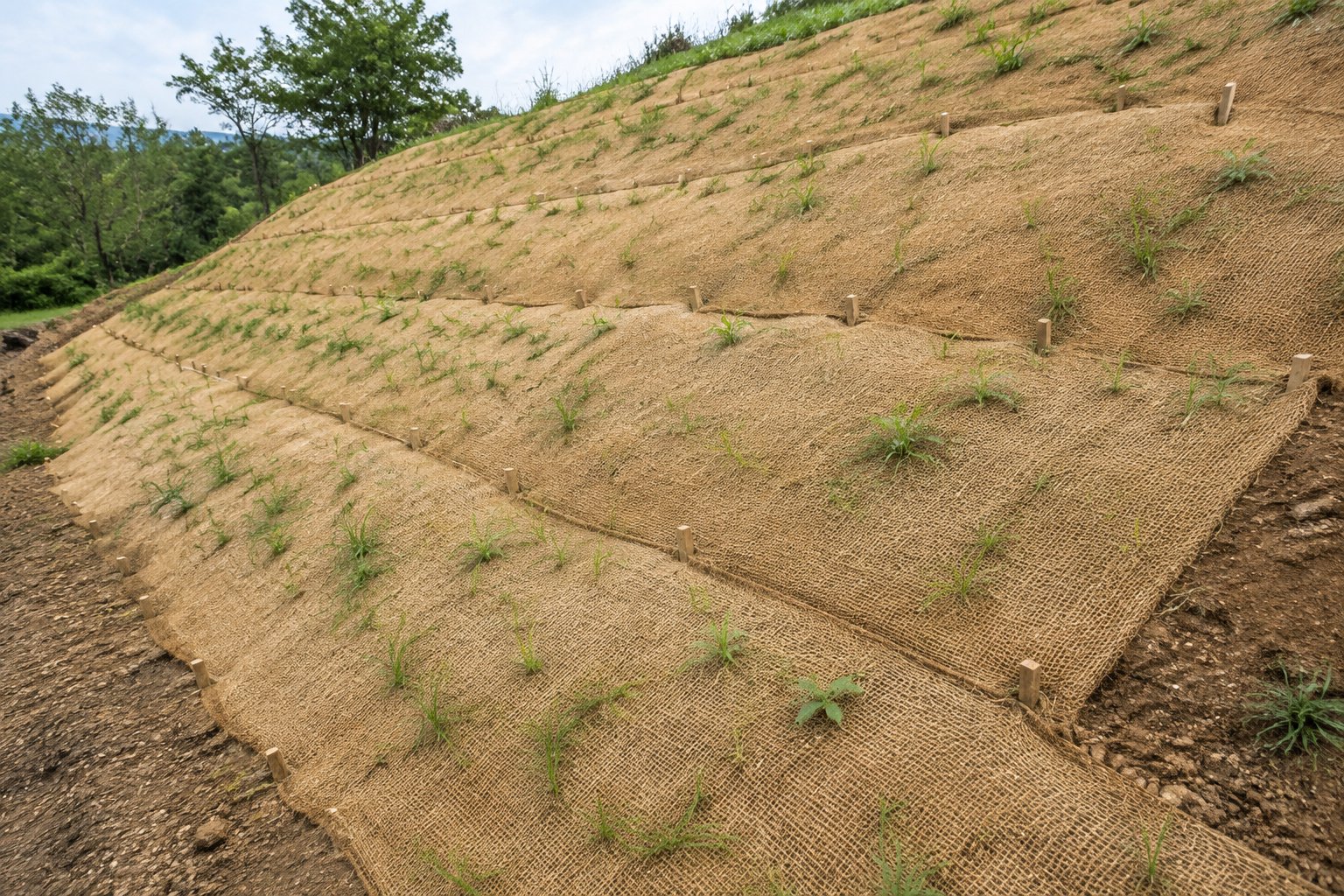
Erosion control blankets are rolled mats made from biodegradable or synthetic fibers. They cover exposed soil, absorb rainfall impact, slow surface water flow, and hold seed in place during germination. On slopes, blankets are staked at the top and trenched along the edges to prevent uplift. In drainage channels, they protect the soil bed from concentrated flow until vegetation roots anchor the surface.
For Houston soil erosion control projects, blanket selection depends on slope angle, expected flow velocity, and whether the application is temporary or permanent.
How Curlex and Geotextiles Support Tougher Conditions
Curlex products, made from curled wood fibers, offer higher resistance to water flow than standard straw blankets. They hold up better in Houston's heavy rain events and break down slowly enough to support full vegetation establishment. Geotextiles serve a different purpose.
These woven or nonwoven fabrics separate soil layers, reinforce slopes, and provide a stable base under riprap or other armoring systems. On retention ponds, drainage outfalls, and steep embankments across Harris County, geotextiles prevent soil migration while allowing water to pass through.
Choosing the right combination of blankets, mats, and geotextiles for the specific site conditions is what separates an installation that holds from one that fails in the first storm.
What Houston Contractors Need From An Erosion Control Partner
Erosion control on a Houston construction site is not just about the right product. It is about the right crew showing up at the right time, applying the solution correctly on the first visit, and providing the documentation to prove it.
Mobilization, Sequencing, and Site Coordination
General contractors and project managers need an erosion control subcontractor who can mobilize quickly when a phase of grading finishes or when a storm is forecast. Delays in mobilization create gaps in site protection that lead to violations.
The best partner coordinates with the project schedule, understands phased construction sequencing, and adjusts the plan as site conditions change.
With a senior field team that includes crew members with over 30 years of experience on Texas job sites, Allied Hydromulch TX brings the site knowledge to adapt on the ground without slowing the project down. In 2025 alone, we installed approximately 15 million square feet of mulch across more than 60 unique clients and maintained a 100% satisfaction rate.
Documentation, Inspections, and Right-First-Time Execution
SWPPP documentation, inspection-ready records, and compliance sign-off are part of every professional erosion control project in Houston. Your erosion control partner should provide clear records of what was installed, when, and where, tied to the specific sediment control measures required by the site plan.
A right-first-time approach eliminates rework, prevents re-mobilization costs, and keeps the project moving through inspection milestones without delays. That philosophy has been at the core of our work since 1990.
Frequently Asked Questions
What permits and stormwater requirements drive erosion and sediment control plans on Houston construction sites?
Most construction sites disturbing one acre or more in Houston require a TPDES Construction General Permit (TXR150000) and a site-specific SWPPP. The SWPPP identifies erosion risks, specifies controls, and outlines inspection schedules.
Harris County and the City of Houston ordinances may add additional requirements for sediment discharge near waterways and storm drain systems.
Which erosion control blankets and tackifiers hold up on steep slopes during Houston's heavy rain events?
Coir (coconut fiber) blankets and Curlex excelsior blankets outperform standard straw blankets on steep grades in high-rainfall areas. For the most demanding slopes, Flexterra or bonded fiber matrices applied hydraulically provide superior erosion resistance.
Tackifiers help bind loose mulch or seed to the surface, but they are not a substitute for blankets on slopes steeper than 3:1.
What fabric and stone size should be specified under riprap for channel and outfall protection in Harris County?
A nonwoven geotextile fabric is typically specified beneath riprap to prevent soil migration while allowing water drainage. Stone size depends on expected flow velocity and channel design. Harris County Flood Control District guidelines generally call for graded riprap with a median stone size appropriate for the design discharge. Always confirm the specification with the project engineer.
What are the fastest ways to stabilize a disturbed site when a Houston job is days away from an inspection?
Hydraulic mulch or hydromulch applied over seeded soil provides immediate surface protection and visible stabilization within hours. Erosion control blankets can be installed the same day on slopes and channels. For areas at final grade, native grass seeding combined with a protective mulch layer demonstrates active stabilization efforts to inspectors.
How do you choose between silt fence, wattles, check dams, and inlet protection for Houston-area drainage patterns?
The choice depends on the drainage area size, slope, flow concentration, and proximity to storm inlets. Silt fence works for sheet flow along perimeters. Wattles and sediment logs slow flow on slopes and in shallow swales.
Check dams control velocity in concentrated channels. Inlet protection catches sediment at storm drain entry points. Most Houston sites require a combination of all four, sequenced to match the site's drainage pattern.
What are the most common failure points seen on Houston erosion control installs, and how do you prevent them?
The most common failures are silt fence blowouts from improper trenching, blanket uplift from inadequate staking, and hydraulic mulch washout on slopes that needed a higher-performance product. Prevention starts with accurate site assessment, correct product selection for the slope and soil type, and proper installation by experienced crews.
Request a project estimate or use our online job price calculator for a cost range. You can also call Allied Hydromulch TX at 281-482-8212 to discuss your site requirements with a team that has handled erosion control across Houston for 35 years.
Since 1990, Allied Hydromulch TX has established itself as a leader in Texas erosion control, backed by 35 years of field-proven reliability and institutional knowledge. With a senior field team boasting decades of site-specific experience, we have a proven record of installing 15 million square feet in 2025 alone.
We provide the technical expertise and scale needed for complex industrial and commercial projects. Our commitment to a 'right-first-time' approach ensures that every application meets stringent environmental standards and stormwater compliance, maintaining a 100% satisfaction rate across more than 60 unique clients.