.svg)


Pricing hydroseeding on a commercial site involves more than acreage. Slope angle, soil type, seed mix, distance to the site, and schedule all move the hydroseeding cost per acre.
A flat 20-acre warehouse pad in Fort Bend County prices out differently than a 3-acre drainage channel with steep slopes along the Gulf Coast.
Allied Hydromulch TX, LLC has quoted and applied hydroseeding across Texas since 1990. We installed 15 million square feet of mulch in 2025 alone, and our senior crew carries over 30 years of field experience.
The number on each proposal we send reflects real production rates and material costs, not a rounded guess.
What Contractors Can Expect to Pay at Acre Scale
Commercial hydroseeding cost per acre usually falls within a broad range that depends on project specifics. Knowing the industry pricing bands helps project managers and estimators benchmark proposals and spot outliers.
What Places a Site High or Low in the Range
For flat or gently graded sites using a standard Bermuda or turf-type seed mix, hydroseeding sits at the low end of the commercial range. The cost climbs with native mixes, high-performance products, steep slopes, or limited access.
Erosion-sensitive sites that need hydraulic soil stabilizers or multiple application passes cost more per acre. Every site brings its own conditions, so a published number is only a starting point.
A warehouse pad in Dallas with full truck access is a different project than a pipeline corridor through East Texas clay with steep slopes and no staging area.
Why Larger Sites Usually Lower the Unit Price
Mobilization is a fixed cost. Moving equipment, crew, and materials to a site costs about the same for two acres or twenty. Larger projects spread that cost across more square footage, so the per-acre price drops.
Bulk orders of seed, mulch, and fertilizer also cost less per pound at higher volumes. A 40-acre solar farm in West Texas carries a lower hydroseeding price per acre than a half-acre retention pond, even with the same materials.
Production is more efficient too, because on open sites we make long, continuous passes.
When Per-Square-Foot Pricing Still Matters
Some projects are easier to price by the square foot. Drainage swales, retention pond banks, and roadside shoulders often use this method. At this scale, the square-foot rate still moves with access, slope, and materials, and small areas carry a higher effective rate than open acreage.
Quoting by square foot helps when only part of a larger site needs seeding. A 10-acre pad may only need 80,000 square feet of hydroseeding if just the slopes and detention areas are in scope.
Knowing how to convert between square feet and acres keeps budget estimates honest.
How to Convert Square Footage Into Acreage for Budgeting
One acre equals 43,560 square feet. Use that number to turn plan-set dimensions into acreage for hydroseeding quotes.
Simple Acreage Conversions for Common Site Sizes
Most commercial plans show disturbed area in square feet or linear feet. Divide the total square feet by 43,560 to find the acreage.
- 10,000 sq ft = about 0.23 acres
- 25,000 sq ft = about 0.57 acres
- 43,560 sq ft = exactly 1 acre
- 100,000 sq ft = about 2.3 acres
- 200,000 sq ft = about 4.6 acres
- 1,000,000 sq ft = about 23 acres
These conversions keep budget discussions on track. For example, 100,000 square feet of disturbed area equals just over two acres of hydroseeding.
How Partial Acres Affect Budget Assumptions
Partial-acre sites often create budget errors. A 0.4-acre job does not cost 40% of a one-acre price. Mobilization, setup, and cleanup take about the same time regardless of acreage. Material minimums also apply, because a hydroseeder tank holds a set volume.
On small sites, the per-acre cost usually runs higher than on larger scopes. That reflects the fixed costs of a mobilization-heavy service. When you compare proposals for small scopes, focus on the total project price.
Using a Hydroseeding Cost Calculator for a First-Pass Range
A hydroseeding cost calculator gives a rough estimate before a formal site visit or bid request. Enter estimated acreage and site type to get a planning range. This is not a contract price.
The calculator gives quick feedback on whether hydroseeding fits the budget. It cannot account for slope, soil amendments, access, or specific seed specs.
For an accurate price, we work through the details by phone or during a site walk.
What Moves the Number Up or Down on a Texas Job Site
Several site-specific factors affect the cost of hydroseeding. Each one can change the price, and they often work together.
Slope, Drainage, and Erosion Exposure
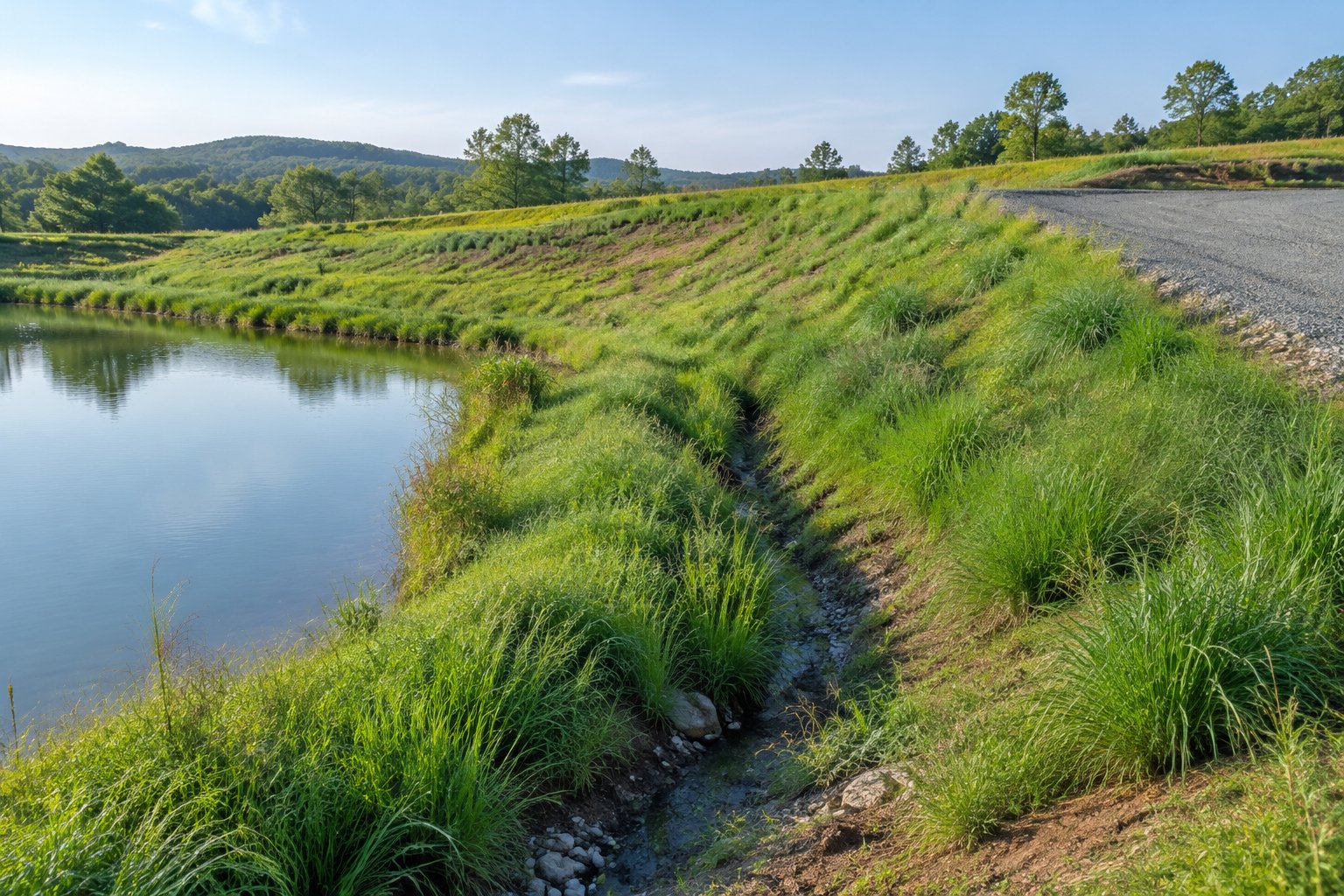
Steep slopes drive cost up after acreage. A 3:1 slope needs slower application, more material, and often a higher-performance product to hold mulch in place during rain. Slopes steeper than 2:1 may also need erosion blankets or tackifier.
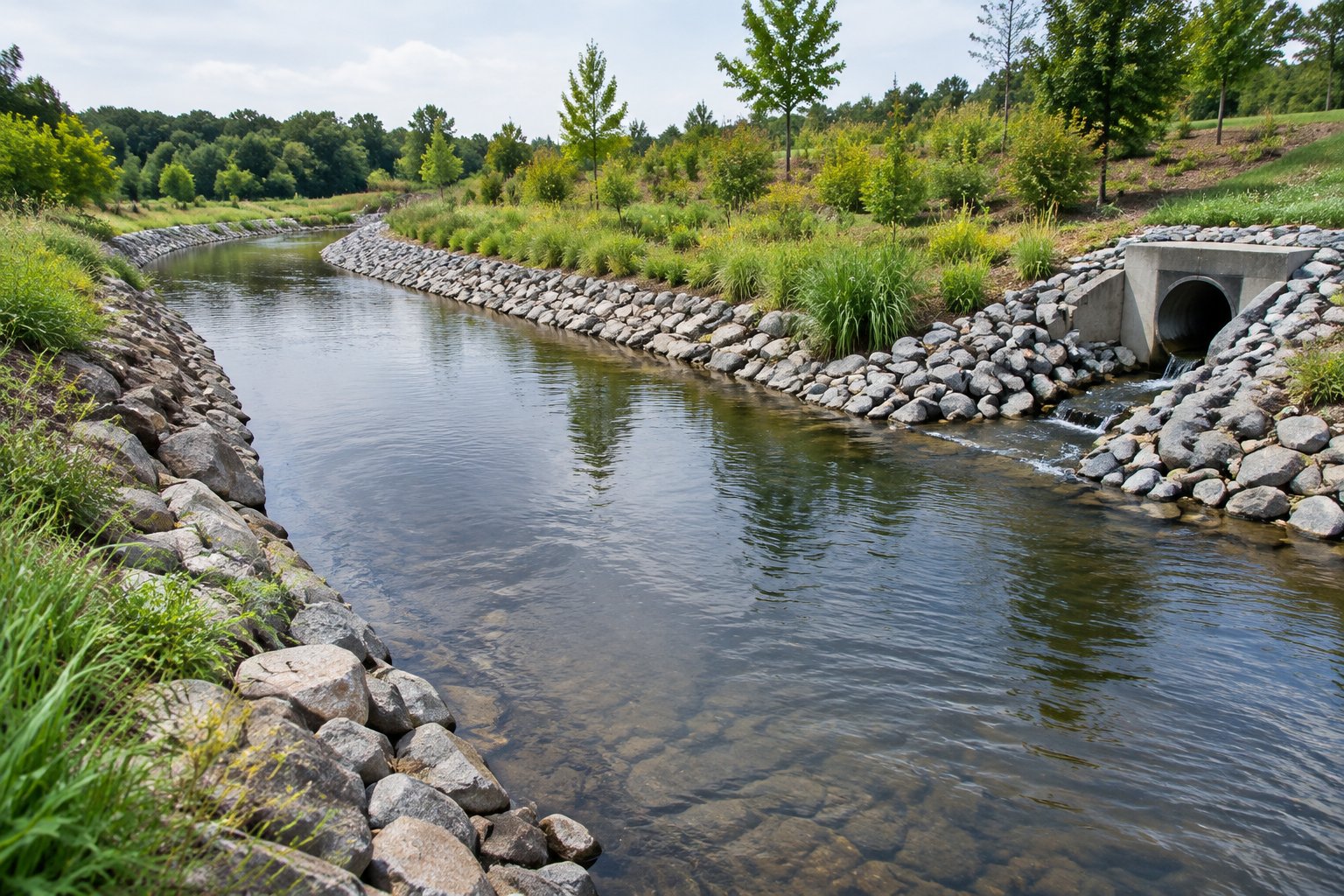
Drainage channels and retention ponds bring similar challenges. Water concentration zones need heavier mulch coverage.
Work near a soil erosion control area must meet permit requirements for sediment control. These add material, documentation, and sometimes a pre-application inspection, which raises cost.
Seed Mix, Seed Cost, and Material Upgrades
A standard Bermuda grass seed mix costs less than a native grass blend. Native seed can run two to five times more than common turf varieties.
Application rates vary between species. A native grass seeding scope for highway restoration carries a different material cost than a turf mix for a warehouse pad.
Material upgrades include hydraulic soil stabilizers, tackifiers, and premium mulch products. Each addition improves performance and adds to the per-acre price. Choosing the right materials for the soil and slope prevents costly reapplication.
Soil Conditions, Prep Work, and Access Constraints
Texas clay soils, especially around Houston and the Gulf Coast, affect prep work and germination.
Hard, compacted clay may need scarification or soil amendment before hydroseeding. Sites with debris, standing water, or ungraded fill need extra prep, which adds labor hours.
Access matters too. If we can park the hydroseeder within hose reach of every area, the job costs less.
Confined urban sites or long, narrow rights-of-way require more repositioning and time. Limited staging or soft ground that restricts equipment movement also adds cost.
Mobilization, Number of Visits, and Schedule Pressure
A single-visit application is the most cost-efficient. When scope, weather, or construction schedules force multiple mobilizations, each visit adds setup, travel, and crew costs. Two visits to a site far from the equipment yard raise the total price.
Rush scheduling also increases cost. If you need vegetation established before an inspection in a few days, the price may rise to meet the tight window. Planning hydroseeding into the schedule early helps avoid extra costs and keeps the project on track.
Call Allied Hydromulch at 281-482-8212 for a fast project estimate. You can also use the online job calculator for a quick cost range before your next budget meeting.
When Hydroseeding Delivers Better Value Than Sod or DIY
Hydroseeding and sod are not close in cost or logistics at commercial scale. The gap widens as project size grows.
Comparing Commercial Cost and Establishment Timelines
Sod installation on a commercial project carries a much higher per-acre cost than hydroseeding, once material, labor, delivery, and irrigation setup are counted. Hydroseeding the same acre usually costs a fraction of that.
As acreage climbs, sod demands more labor for each pallet, while hydroseeding scales with minimal crew increases.
Sod gives instant visual coverage but takes two to three weeks to root. Hydroseeding shows germination in 7 to 14 days, with full turf establishment in four to six weeks, depending on weather and irrigation.
For stormwater compliance, hydroseeding meets the requirement at a lower price.
- Sod has a higher upfront cost but provides instant coverage, with roots typically establishing within two to three weeks. Costs increase with every additional pallet, and installation requires pallet staging, forklift access, and irrigation.
- Hydroseeding has a lower upfront cost and becomes increasingly cost-effective as acreage grows. Seeds typically germinate within 7 to 14 days and establish in four to six weeks. The main logistical requirements are water access and room for the hydroseeding truck.
Where DIY Hydroseeding and Rental Equipment Fall Short
Renting a hydroseeder and using a site crew can look cost-effective. In practice, do-it-yourself (DIY) hydroseeding introduces risks that most commercial projects cannot absorb.
Rental units are usually smaller machines that need more tank loads and take longer per acre. An inexperienced operator may apply the slurry incorrectly.
The Natural Resources Conservation Service (NRCS) notes that hydroseeding is an equipment-intensive operation that requires trained operators and a reliable water supply.
On commercial jobs, a failed application leads to missed inspections or violations. The cost to reapply often exceeds the price of hiring a professional crew from the start.
Why Professional Application Protects Compliance and Closeout
On any site under a Texas Commission on Environmental Quality (TCEQ) stormwater permit, vegetation establishment is mandatory. Construction sites disturbing one acre or more need a Stormwater Pollution Prevention Plan (SW3P), and stabilized ground cover within the permit timeline is required for compliance.
We apply materials at the correct rate, document application details for the project file, and select seed mixes that meet Texas Department of Transportation (TxDOT) specification requirements for DOT-adjacent work.
That documentation supports closeout. When an inspector requests proof of erosion control measures, a professional application record provides clear answers.
Choosing the Right Seeding Approach for the Scope
Select the seeding method based on the site's needs. The wrong approach wastes time and materials.
When Standard Hydroseeding Fits the Project
Standard hydroseeding works well for most commercial sites that need quick turf establishment on prepared, moderately graded ground. Warehouse pads, commercial park perimeters, large commercial site restoration, and park development projects are all strong candidates.
The slurry of seed, mulch, fertilizer, and soil conditioners creates a moisture-retaining layer. That layer supports germination, which usually starts within 7 to 14 days.
If the site is flat, the soil is graded, and the seed spec calls for common turf varieties, standard hydroseeding is fast and cost-effective. Most of these sites need only one application visit.
When Native Grass Seeding or Drill Seeding Makes More Sense
Environmental restoration, highway right-of-way (ROW) revegetation, and reclamation projects often need native seed mixes that meet state or federal guidelines. Native grass seeding uses regionally adapted species with deeper roots and lower irrigation needs, which suits roadside corridor stabilization and post-industrial land recovery.
We use drill seeding when the site requires precise seed-to-soil contact at a controlled depth. Large acreages, infrastructure corridors, and erosion-prone areas with firm soils benefit from drill equipment, which places seed directly into the ground.
Germination usually starts within 1 to 3 weeks under good conditions. Drill seeding also reduces seed loss on windy or exposed sites.
When Erosion Control Measures Need to Be Added
Slopes steeper than 3:1, active drainage zones, and areas with concentrated water flow during rain need more than seed and mulch. We add hydraulic soil stabilizers, erosion blankets, or Flexterra flexible growth medium to hold soil in place while vegetation establishes.
On Gulf Coast projects, sudden heavy rainfall can wash out an unprotected application fast, so job site erosion control is essential. Budgeting for it upfront costs less than remobilizing after a washout, and it keeps the project compliant with TCEQ permit conditions.
Getting to a Defensible Project Number
A reliable hydroseeding estimate depends on accurate information. The more detail you provide, the more precise the estimate.
What to Have Ready Before You Request Pricing
Before you request pricing, gather the key details:
- Total square footage or acreage to be seeded
- Slope angles, and whether slopes are cut or fill
- Soil type (clay, sandy, rocky, or amended fill)
- Seed specification, if required by a general contractor, owner, or DOT spec
- Site access: can a truck and hydroseeder reach the application areas?
- Project schedule: when does vegetation need to be established for inspection or closeout?
- Whether erosion control products (blankets, stabilizers, bonded fiber matrix) are part of the scope
Having these ready speeds up the quote. Missing information, like slope angle or seed spec, can move a quote by 30% or more.
How a Site Visit Narrows a Rough Range
A calculator or phone estimate gives you a planning range. A site visit gives you a specific project price. During a site walk, we examine soil conditions, identify steep slope challenges, check water source availability, and plan equipment staging.
On Gulf Coast sites with expansive clay soils, a site visit often uncovers prep needs that photos and plans miss. The visit also clarifies whether the project is a single-visit application or requires phased mobilizations. That distinction can move the total price by hundreds or thousands of dollars.
Next Step for a Faster Estimate
Use the online pricing calculator to get a first-pass estimate based on acreage and site type. It helps with early budget planning.
When you are ready for a project-specific number, call 281-482-8212. A phone call with details on acreage, slope, soil, and schedule usually yields a precise range the same day. For complex sites, we schedule a site visit to finalize the number before you commit to a subcontract.
Frequently Asked Questions
What site factors drive per-acre pricing, like slope, access, and soil condition?
Slope angle is the biggest factor. Steeper slopes need more material, slower application, and premium products like Flexterra. Limited access adds time, and compacted Texas clay soils may need scarification. Sites with all three factors will price much higher than flat, accessible pads.
How do you estimate an accurate per-acre number from total square footage on a plan set?
Divide total square feet by 43,560 to get acreage. For irregular shapes, break the site into rectangles or triangles, calculate each, and add them together. This gives you a clear acreage figure for a hydroseeding quote.
Why does per-acre pricing change between a flat pad site and a long linear ROW or channel?
Flat pads allow continuous, efficient application with minimal equipment moves. Linear ROWs or channels require frequent repositioning and setup in tighter spaces, which increases labor and equipment time. This raises the effective cost per acre.
What is the typical cost difference between hydroseeding with standard seed mix versus native seed and erosion control additives?
Native seed mixes cost two to five times more per pound than standard turf varieties, and application rates are often higher. Adding erosion control products like hydraulic soil stabilizers or bonded fiber matrix increases material costs. A native seed scope with erosion control can cost 50% to 100% more per acre than a standard Bermuda application.
How does mobilization affect pricing when the job is a quarter acre, half acre, or multiple acres?
Mobilization is a fixed cost for crew travel, equipment transport, and site setup. On a quarter-acre job, that cost makes up a large part of the total price. On multi-acre projects, it is spread out. The per-acre rate is higher on sub-acre scopes.
When comparing erosion control options, what makes hydroseeding more cost-effective than sod or blanket on this site?
Hydroseeding applies faster and costs less per acre at scale. It does not require pallet staging or manual installation. Sod installation costs much more per acre, and erosion blankets, while useful on steep slopes, add material and labor costs. For most sites over one acre with moderate slopes, hydroseeding delivers compliant vegetation coverage at the lowest total project cost.
Getting Your Number and Your Next Move
Hydroseeding cost per acre depends on slope, soil, seed specification, access, and schedule. Knowing what affects pricing helps you evaluate bids and set realistic budgets.
Allied Hydromulch TX, LLC has completed this work across Texas and the Gulf South for over 35 years. For any project, whether a 2-acre pond bank or a 40-acre restoration, accurate inputs lead to accurate numbers.
Start with the online pricing calculator for an initial estimate, or call 281-482-8212 to discuss your site with a team experienced in every soil type and slope angle in Texas.