.svg)


Every rain event on an unprotected Houston slope or pad drives sediment into the storm system, raises the risk of a Texas Commission on Environmental Quality (TCEQ) violation, and threatens your closeout schedule. On an active site, that exposure grows by the day.
Hydroseeding in Houston, TX helps contractors address these problems at scale. The region's clay soils, heavy rainfall, and strict permits require more than a basic seed application.
Allied Hydromulch TX, LLC has served the Greater Houston area since April 1990. With 15 million square feet of mulch installed in 2025 and a senior crew with members on staff since 1992, we handle Houston-area commercial and civil projects where schedule and compliance matter.
Below is a breakdown of where hydroseeding fits on Houston commercial sites, what a proper scope covers, when you need more than standard hydromulch, and how to evaluate a crew before you commit.
Why Houston Sites Need More Than a Basic Seed Application
Houston's heavy clay, intense rainfall, and compliance requirements make simple broadcast seeding ineffective. The soil, weather, and regulations demand a method designed for local conditions.
Clay Soils, Surface Sealing, and Runoff Risk
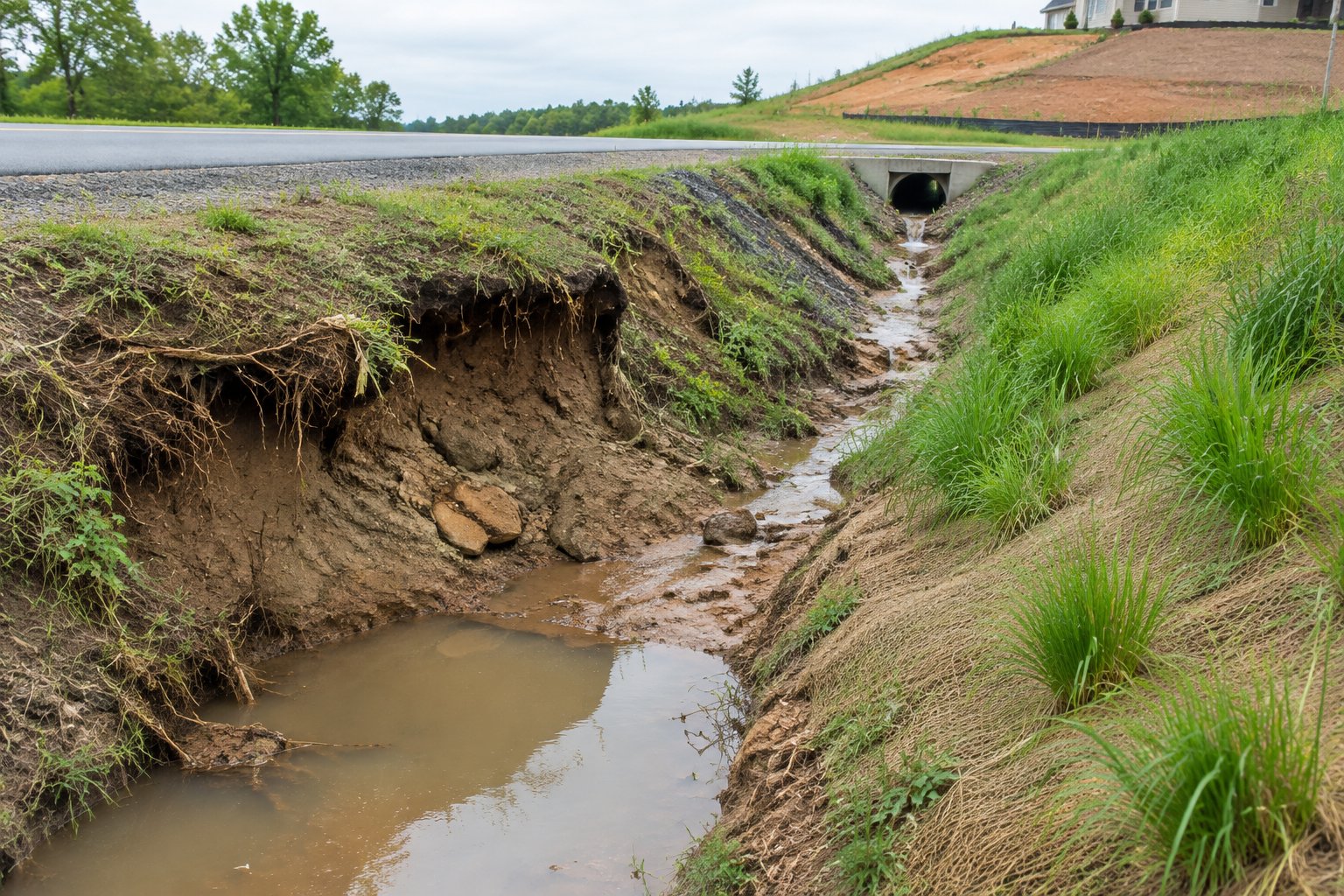
Most of Greater Houston sits on expansive clay that seals over after grading. Once sealed, water runs off instead of soaking in. Seed scattered on sealed clay washes away before it can sprout.
Hydroseeding addresses this by bonding seed and mulch to the soil surface. The mulch holds moisture against the clay and helps prevent runoff. On sites with select fill or reworked subgrade, soil preparation before slurry application often determines success.
Surface sealing also means erosion starts quickly on Houston sites. Without a mulch layer, even moderate rain can carve rills into freshly graded slopes in less than an hour.
Gulf Coast Rainfall and Washout Pressure
Houston averages about 50 inches of rain each year, with heavy bursts from May through October. A single storm can drop several inches in 30 minutes. That much water on bare soil causes immediate washout risk on slopes steeper than 4:1.
Standard dry seeding cannot survive these conditions. Hydraulic mulch creates a bonded layer that resists erosion and keeps seed in place during heavy rain. On steeper slopes or high-flow areas, products like bonded fiber matrix provide more holding power.
Rainfall patterns also shorten your application windows. A crew that cannot mobilize quickly or finishes in one visit leaves your site exposed longer, putting your permit at risk.
TCEQ and Active-Site Compliance Reality
Any Houston construction project disturbing one or more acres falls under the Texas Pollutant Discharge Elimination System (TPDES) Construction General Permit (TXR150000), managed by TCEQ.
The permit requires a Stormwater Pollution Prevention Plan (SWP3) and mandates stabilization of disturbed areas within 14 days of final grade.
Missing the 14-day window can trigger inspection findings and project holds. Hydroseeding helps meet the stabilization deadline at scale, as most applications are completed in a single visit and germination usually begins within 7 to 14 days.
Where Hydroseeding Fits on Houston Commercial Projects
Hydroseeding covers major site scenarios in Houston commercial and civil construction, including slopes, retention ponds, and pad closeout. Each type has different risks and requirements.
- Post-grading cut-and-fill slopes face a high risk of rill erosion and washout. Hydroseeding is the typical approach, with Flexterra used on steeper cuts.
- Drainage easements and retention areas must meet sediment discharge limits. These areas typically require hydroseeding, with erosion control blankets added in high-flow zones.
- Highway corridors and rights-of-way must comply with TxDOT seed specifications. Roadside hydroseeding with approved native seed mixes is the standard approach.
- Large commercial pads nearing project closeout are often under pressure to meet certificate-of-occupancy schedules. Single-visit hydroseeding provides an efficient solution for covering large areas at scale.
Post-Grading Bare Slopes and Embankments
Cut and fill slopes are the most erosion-prone features on Houston job sites. The Texas Department of Transportation (TxDOT) landscape guidance specifies that deep-rooted vegetation is the preferred long-term erosion solution.
Hydroseeding delivers this vegetation faster than most other methods at a lower cost.
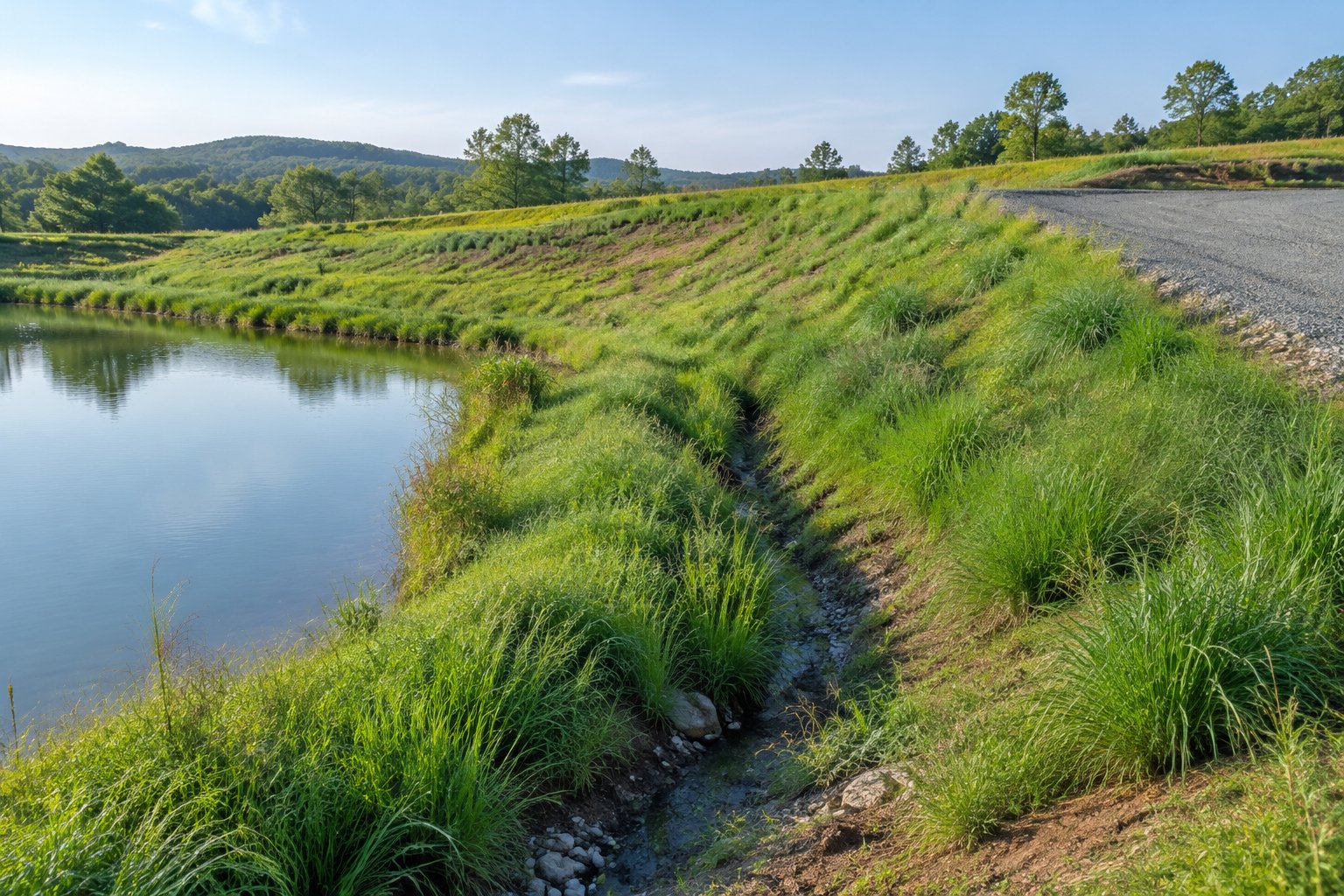
On slopes at 3:1 or steeper, the slurry's tackifier holds seed and mulch in place while roots develop. For steep cut slopes along freeways or flood-control channels, upgrading to a bonded fiber matrix like Flexterra may be necessary. Matching application to slope and soil type is key.
Drainage Easements, Channels, and Retention Areas
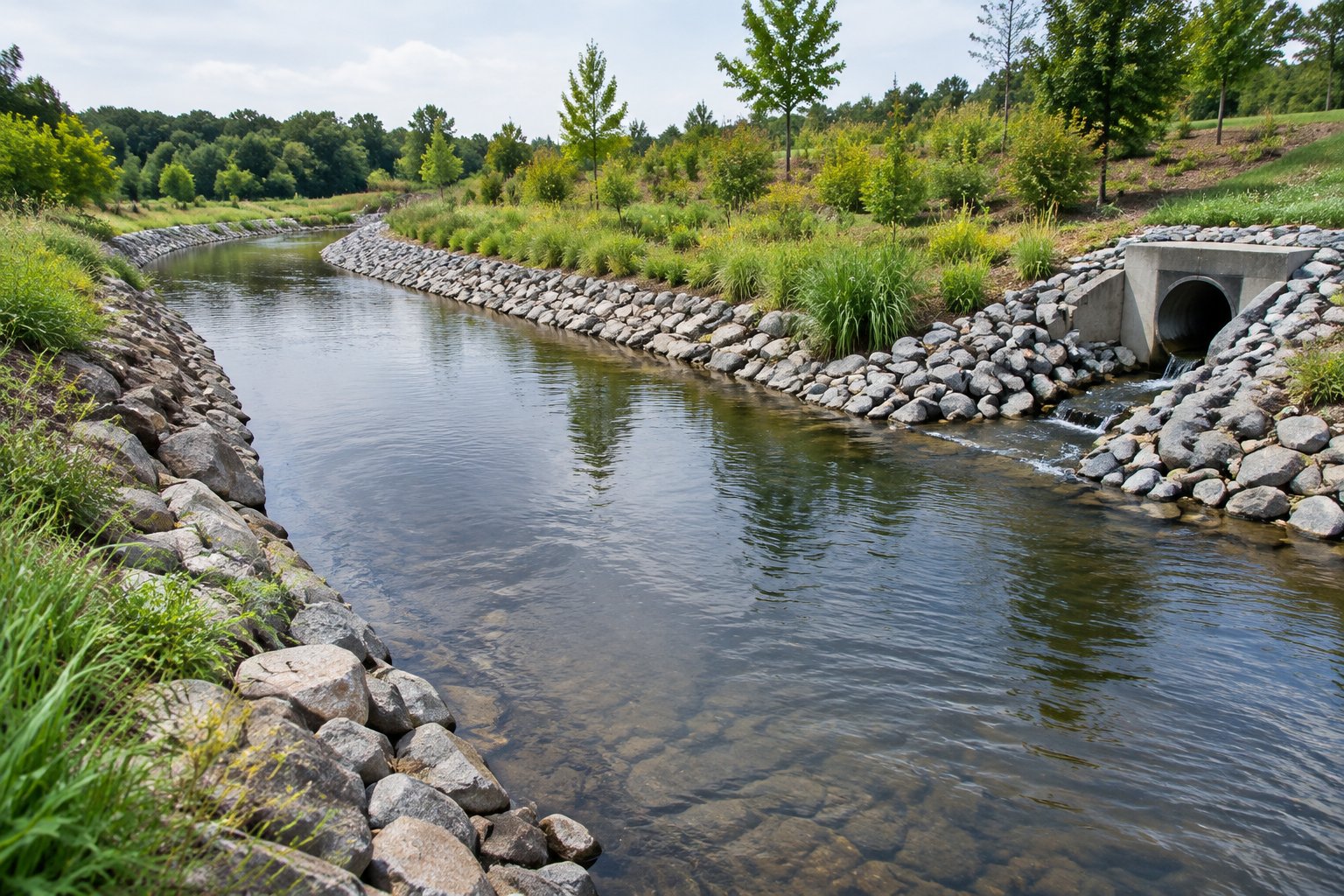
Drainage features carry concentrated flow and must meet strict sediment discharge limits. Bare soil in channels or around retention ponds increases stormwater violation risk.
Hydroseeding these areas establishes turf quickly enough to meet SWP3 timelines. Paired with erosion blankets in high-velocity zones, the vegetation locks sediment in place and reduces downstream runoff risk during establishment.
Highway Corridors and Right-of-Way Restoration
TxDOT corridor work in Southeast Texas requires compliance with state seed specifications and documentation for acceptance. Roadside hydroseeding handles long, narrow right-of-way strips efficiently because the spray equipment reaches areas that mechanical seeders cannot.
Medians, shoulders, and embankments along major corridors are typical scopes. Native grass seed mixes specified by TxDOT are applied hydraulically in one pass, reducing lane-closure time and mobilization cost.
Large Commercial Pad Sites and Closeout Work
Warehouse parks and commercial campuses often have large areas of disturbed ground at closeout. Hydroseeding large commercial sites is a cost-effective way to establish turf for final inspection and certificate of occupancy.
A crew with the right equipment can cover five to ten acres per day. This speed matters when you are counting days against a delivery schedule.
What a Houston Hydroseeding Scope Should Include
A complete scope covers soil prep, slurry design, and moisture management. Skipping any part can lead to rework.
Soil Preparation Before the Slurry Goes Down
On Houston clay sites, soil prep often determines success. Compacted or sealed surfaces need scarification or light disking to break the crust and allow roots to penetrate. Rough grading removes debris, large clods, and standing water.
Sites built on select fill or imported subgrade may need pH testing. Houston-area clays tend to be slightly alkaline, which affects fertilizer and seed choices. Crews that skip soil assessment risk failure and reapplication.
Seed, Mulch, Fertility, and Tackifier Selection
The slurry mix changes by project. Seed species, mulch type, fertilizer blend, and tackifier concentration all depend on site needs.
- Bermudagrass blends are standard for commercial turf in Houston's climate.
- Native grass mixes apply on TxDOT corridor or restoration projects.
- Hydraulic mulch (wood or paper fiber) suits flat to moderate slopes.
- Tackifier concentration increases on slopes steeper than 4:1.
- Starter fertilizer ratios adjust based on soil tests.
Fertility that does not match soil chemistry wastes money and delays germination. Seed that does not match the project specification fails inspection.
Irrigation Planning and Germination Expectations
Houston's humidity helps, but relying on rainfall during dry spells is risky. Germination usually begins within 7 to 14 days with proper moisture. Full establishment takes 4 to 6 weeks depending on season and irrigation.
Sites without permanent irrigation need temporary water trucks or portable sprinklers to keep the mulch moist during the first two weeks. Planning this before application avoids gaps that dry out the slurry and kill germination.
When Hydroseeding Alone Is Not Enough
Standard hydraulic mulch works on most sites, but some slopes, flow velocities, and vegetation goals need a different or layered approach.
Using Flexterra on Steep or Disturbed Slopes
On slopes steeper than 2:1 or on heavily disturbed soils, standard hydromulch does not provide enough erosion resistance. Flexterra bonded fiber matrix is a flexible growth medium that bonds to the soil and maintains protection under heavy rain.
Flexterra is applied hydraulically like standard hydromulch but forms a stronger, more durable barrier. It is the right choice for steep cut slopes on highway interchanges, pond embankments, and industrial pad perimeters.
Specifying bonded fiber matrix over standard mulch on these slopes prevents costly re-application after major storms.
Adding Erosion Control Blankets in High-Flow Areas
Concentrated flow zones, such as drainage channel bottoms, outfall aprons, and swale transitions, experience water velocities that exceed what hydraulic mulch can resist. Erosion control blankets (ECBs) provide physical reinforcement in these areas.
Crews stake or staple ECBs over seeded ground to hold soil in place while vegetation roots through the blanket.
On Houston clay sites, the blanket also reduces surface sealing from rain. Combining ECBs with hydroseeding on adjacent slopes creates a layered active job site erosion control approach that covers both sheet and channel erosion in one mobilization.
Choosing Drill Seeding for Long-Term Native Coverage
When your goal is lasting native vegetation, drill seeding places seed directly into the soil at a consistent depth and spacing. This method improves seed-to-soil contact and reduces waste from wind and water.
Drill seeding produces stronger stands of long-term native grass. It is common on large reclamation sites, solar farm land prep, and environmental mitigation areas in Southeast Texas.
Germination usually occurs within one to three weeks under proper conditions. Native grasses develop deep roots, making the stand drought-tolerant and low-maintenance.
Matching the right method to the site is important. Choosing a crew that can deliver at your required scale is equally critical.
How to Evaluate a Crew for Schedule, Scale, and Field Reliability
The difference between a hydroseeding vendor and a field-reliable subcontractor appears on application day, not during the bid. Evaluating regional experience, production capacity, and documentation practices before you sign a purchase order helps prevent schedule issues later.
Regional Experience Across Greater Houston and Southeast Texas
A crew with experience on Houston-area clay soils, Gulf Coast weather, and TCEQ-regulated sites brings important knowledge. Ask about completed projects in Fort Bend, Harris, Brazoria, and Montgomery counties.
Also ask about TxDOT corridor work and industrial sites. Field experience on large projects signals a contractor who operates at the scale and compliance level commercial and civil work require.
A senior field team that has stayed with the same company for years carries site-specific knowledge that reduces your risk.
Production Capacity, Mobilization, and Single-Visit Efficiency
Hydroseeding services at commercial scale need equipment that can cover large areas in a single mobilization. Ask what daily production rate the crew can maintain.
A contractor who can keep Houston sites on schedule with single-visit applications helps you avoid extra costs and schedule gaps.
- Can the crew cover your total acreage in one day?
- How quickly can they mobilize after you issue a notice to proceed?
- Do they carry backup equipment in case of mechanical issues?
- Will they coordinate directly with your site superintendent on access and staging?
These questions help you find a reliable subcontractor.
What to Clarify on Documentation, Site Access, and Follow-Through
For TCEQ-regulated work, you need documentation that proves when stabilization was applied and what materials were used. Make sure the contractor provides application records that align with your SWP3 documentation requirements.
Clarify site access requirements early: gate codes, haul road conditions, wet-weather restrictions, and any active work zones. A contractor who asks these questions during scoping is more likely to avoid rework on your project.
Next Steps for Pricing and Project Scoping
Hydroseeding pricing in Houston depends on site-specific variables. Getting an accurate number starts with understanding what drives cost on your project.
What Affects Cost on Houston Area Work
Several factors change the price per square foot. No two sites are identical, so published per-acre rates rarely match the final invoice.
- Total area in square feet or acres
- Slope ratio and whether Flexterra or erosion control blankets are needed
- Seed specification (common bermudagrass, native mix, or TxDOT spec)
- Soil condition and whether prep work is included or handled by the general contractor
- Site access including haul distance, gate restrictions, and staging area
- Mobilization distance from the Greater Houston area
A flat site with clean subgrade and standard bermudagrass is the most straightforward scope. A steep-slope project requiring bonded fiber matrix, native seed, and limited access will cost more per square foot due to higher material, labor, and risk.
When to Use the Online Estimator
For a rough cost range, the online pricing estimator at alliedhydromulch.com uses your basic site parameters to return a ballpark number. It is useful for budgeting during the bid phase or for comparing hydroseeding against other stabilization methods.
The estimator works best when you know your approximate acreage and general site conditions. It gives you a starting point, not a final quote.
When a Phone Call Speeds Up Scope Review
Complex sites or scopes that involve a mix of hydroseeding, Flexterra, erosion blankets, and drill seeding move faster with a direct conversation. A five-minute call covers slope ratios, seed specs, access constraints, and timeline quickly.
Phone scoping also lets you confirm mobilization windows, which matters when you are working against a tight stabilization deadline or closeout date.
Frequently Asked Questions
What Factors Drive Hydroseeding Pricing on Houston Commercial and Civil Sites?
Total square footage, slope steepness, seed specification, soil prep requirements, site access, and mobilization distance all affect cost. A flat pad with standard bermudagrass costs less per square foot than a steep slope requiring bonded fiber matrix and native seed. For an accurate number, we work from site-specific details rather than a generic per-acre rate.
What Is the Typical per Acre or per Square Foot Cost Range for Hydroseeding in Texas?
Pricing varies too much by site conditions to provide a single reliable number. The online pricing calculator provides a ballpark for budgeting once you input your acreage and basic site parameters. For a firm quote, a direct scope conversation covers the variables the calculator cannot.
When Is the Right Application Window in the Houston Area, and Is October Too Late on Most Projects?
Houston's warm-season grasses like bermudagrass establish best from April through September when soil temperatures stay above 65 degrees. October applications can still germinate, but growth slows as temperatures drop, and establishment may not reach full density before winter dormancy. Cool-season overseeding or native grass mixes may work better for late-fall projects.
How Fast Should You Expect Germination and Initial Coverage in Houston Conditions After Application?
Germination usually begins within seven to fourteen days under proper moisture and temperature. Full turf establishment usually develops in four to six weeks. Summer heat and humidity in Houston can speed up germination, but consistent moisture during the first two weeks is critical to avoid drying out the mulch layer.
What Prep Work Is Required Before Hydroseeding on Clay Subgrades, Select Fill, or Disturbed Right-of-Way Soils?
Clay subgrades and compacted select fill need scarification or light disking to break surface seals and allow root penetration. Debris removal, rough grading, and pH testing are standard steps. Skipping soil prep on Houston clay often causes germination failure and extra cost.
Does Hydroseeding Hold on Slopes and Drainage Features, and When Do You Need Bonded Fiber Matrix for Erosion Control?
Standard hydraulic mulch with tackifier holds well on slopes up to about 3:1 under normal rainfall conditions. Slopes steeper than 2:1, or sites with concentrated flow and heavy rain, usually require bonded fiber matrix like Flexterra or erosion control blankets to prevent washout before vegetation establishes.
Get Your Houston Project Scoped and Priced
Hydroseeding in Houston depends on matching the right method, the right seed, and the right crew to your site's soil, slope, and compliance needs.
Use the online job price calculator for a rough cost range. For a detailed scope and pricing, call 281-482-8212 to discuss your site with a team experienced in Houston-area projects.