.svg)


Exposed soil on a Louisiana construction site does not wait for anyone. Heavy rainfall, saturated clay, and tight inspection windows turn a minor seeding delay into a stormwater violation that holds up your entire project.
For contractors and developers working across the Gulf South, hydroseeding in Louisiana is often the fastest path to compliant vegetation coverage on disturbed ground.
Allied Hydromulch TX, LLC has been solving these problems since 1990, with 35 years of field experience across Texas, Louisiana, Oklahoma, and New Mexico. In 2025 alone, we installed roughly 15 million square feet of hydromulch on projects ranging from liquefied natural gas (LNG) facilities to highway corridors.
That multi-state reach means Louisiana jobs get the same senior field team and proven application methods we use on major Gulf Coast industrial and commercial sites.
Keep reading to learn why standard seeding methods fail on Louisiana soils, how a hydromulch slurry protects seed and soil from the first rain event, and which stabilization methods match specific site conditions.
By the end, you will be able to scope your Louisiana project with confidence and know exactly what to ask for when requesting a quote.
What Louisiana Rain and Clay Do to Bare Seed
Louisiana's combination of intense rainfall, heavy soils, and regulatory pressure makes broadcast seeding unreliable for most commercial and municipal projects. Sites that look fine on a dry Tuesday can wash out completely by Thursday afternoon.
Heavy Rainfall, Humidity, and Inspection Timing
Annual rainfall across much of Louisiana exceeds 60 inches. Some parishes along the Gulf Coast see more than that. Rain events are not evenly distributed. They arrive in bursts that dump two or three inches in a few hours.
That intensity creates a narrow window between final grading and the first erosion event. If seed is not anchored and protected before rain hits, it moves. Once sediment leaves a site, the permit clock resets, inspections stall, and the general contractor (GC) absorbs the schedule hit.
Humidity also affects seed storage and application timing. High moisture in the air can cause clumping in dry seed, making broadcast spreaders less consistent. A hydraulically applied slurry eliminates that variable entirely.
Clay-Heavy Soils, Slow Drainage, and Seed Washout Risk
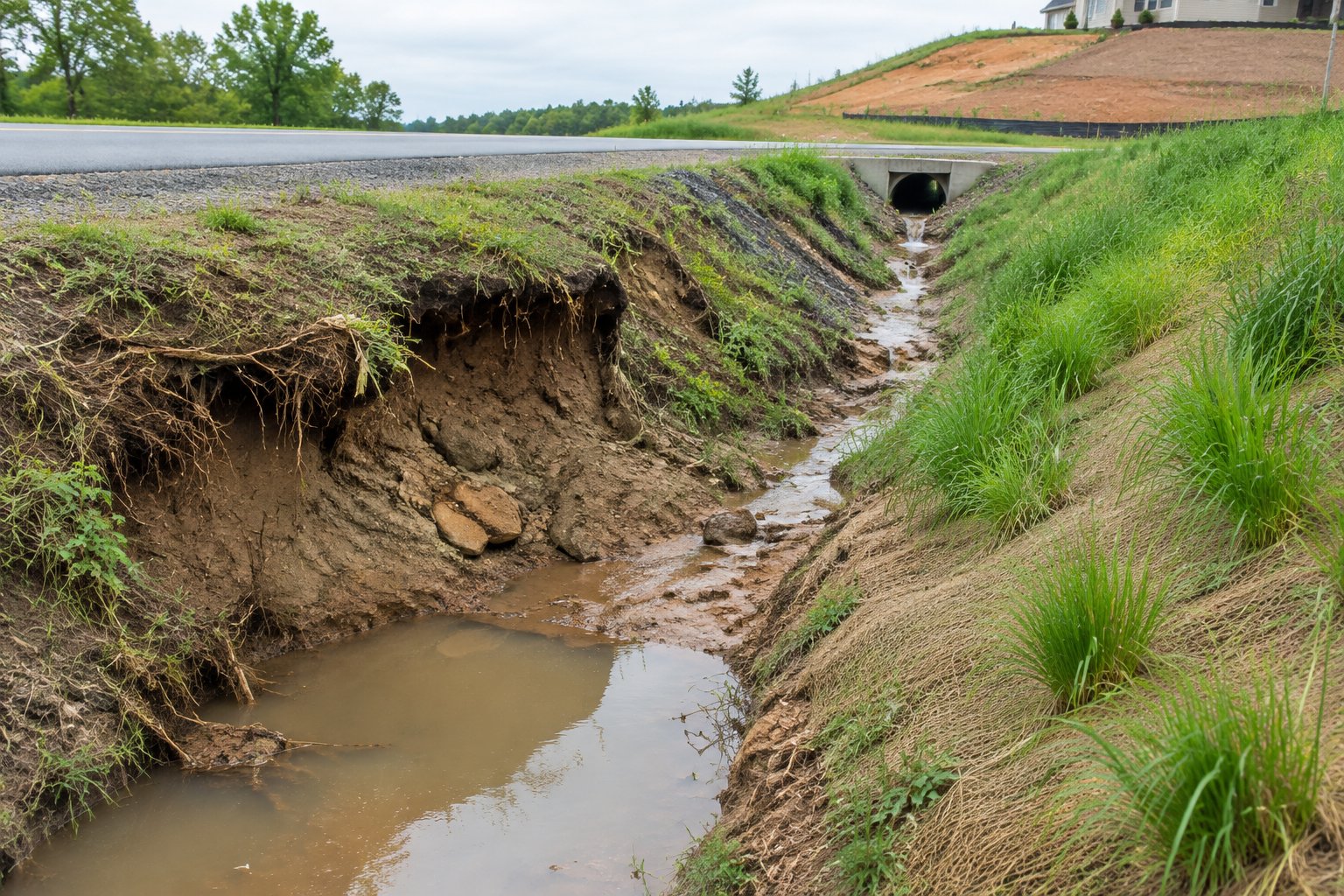
Much of Louisiana sits on alluvial clay or heavy silt-clay blends. These soils drain slowly, pond water on the surface, and form a hard crust when they dry. Broadcast seed sitting on top of crusted clay has almost no chance of establishing roots before the next storm carries it off-site.
Hydroseeding addresses this directly. The mulch layer in the slurry holds seed in place against the soil surface, retains moisture during dry spells, and prevents the crust from locking out germination.
On sites with expansive clay, as we handle across Texas erosion control projects, the mulch barrier is often the difference between one application and three.
Slow drainage also means standing water collects in low spots. Seed that washes into those depressions creates bare patches on slopes and over-dense clumps in swales. Neither of these passes inspection.
Commercial and Municipal Scopes That Need Fast Cover
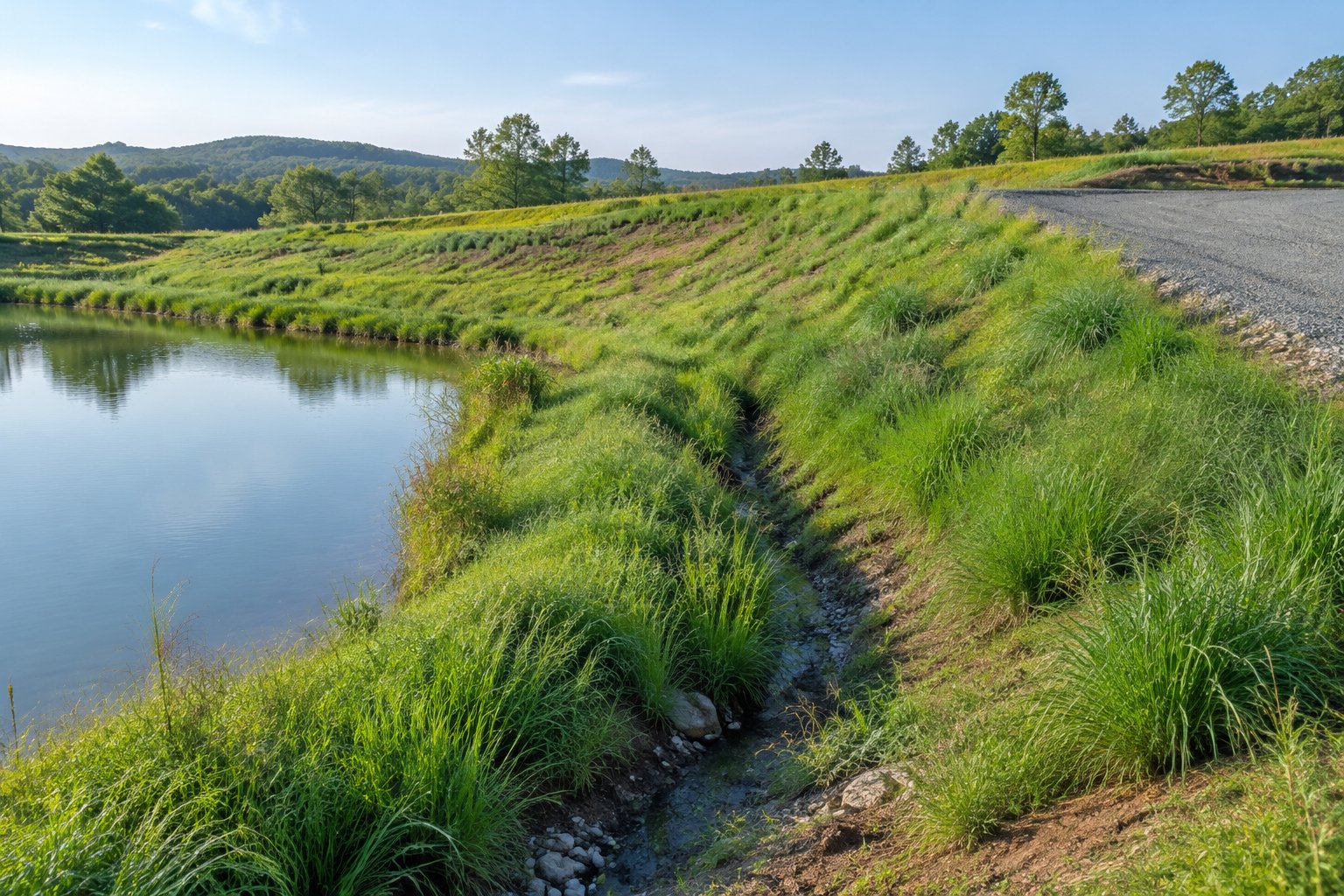
Commercial pads, roadway shoulders, retention pond banks, and pipeline corridors all share the same problem in Louisiana: large areas of disturbed soil that need vegetation before the next compliance deadline. Hydroseeding covers those areas in a single mobilization, with germination typically beginning within 7 to 14 days under proper conditions.
Municipal parks, levee maintenance zones, and stormwater infrastructure projects also benefit. The speed of application keeps public works schedules on track without the labor intensity of hand-seeding or the per-square-foot cost of sod. Knowing what goes into the slurry itself helps explain why it performs where other methods do not.
How Hydroseeding Works on Disturbed Ground
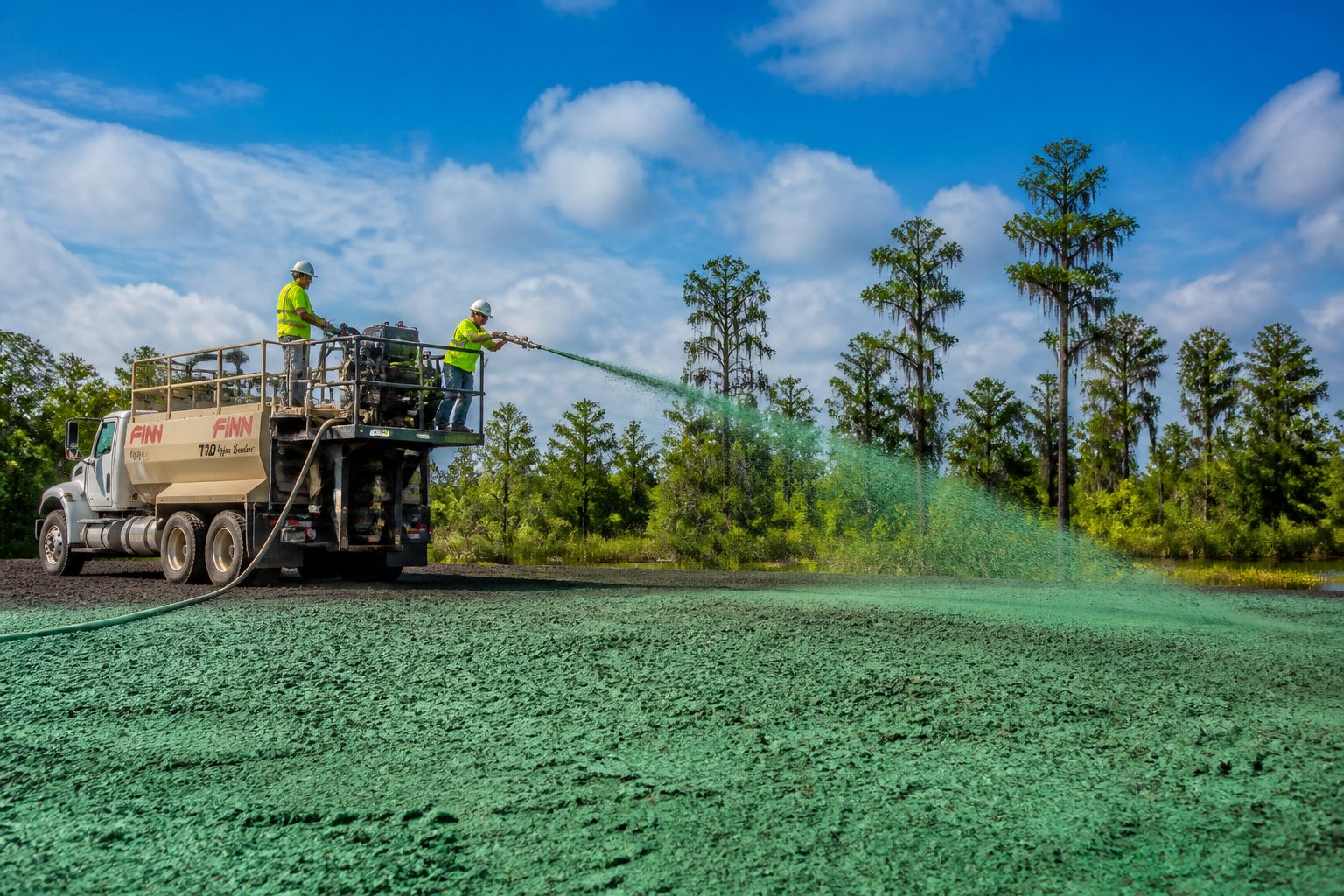
Hydroseeding applies a precisely mixed slurry to bare soil using truck-mounted equipment, creating a bonded protective layer that holds seed in place from the moment it hits the ground.
What Goes Into a Hydromulch Slurry
The slurry is not just seed and water. Every load combines four core components mixed in a tank and sprayed under pressure through a hose or cannon:
- Seed blend: selected for the specific site, soil type, and project spec
- Mulch fiber: wood, paper, or a blended fiber that covers and insulates the seed
- Fertilizer: starter nutrients matched to soil test results or project requirements
- Soil conditioners and tackifier: binding agents that glue the slurry to the ground
Each component plays a role. Remove the tackifier, and the slurry slides off slopes. Skip the fertilizer, and germination stalls. The mix ratios change based on site conditions, which is why off-the-shelf hydroseeding kits rarely perform on commercial-scale work.
The Role of Tackifier, Mulch, and Moisture Retention
Tackifier is the ingredient most often overlooked by crews unfamiliar with Gulf South conditions. It bonds the mulch matrix to the soil surface so that a two-inch rainfall event does not strip the application off a 3:1 slope.
The mulch layer serves two purposes. First, it holds moisture against the seed, extending the window between irrigation or rain events. Second, it moderates soil temperature. Louisiana's summer surface temps can exceed 140°F on bare clay. That heat kills unprotected seed before it ever germinates.
On steep cut slopes and embankments like those common along Texas highway corridors, the combination of tackifier and mulch fiber is what keeps the application intact through the first critical rain cycle.
Typical Germination Windows and Establishment Expectations
Germination timing depends on seed species, soil moisture, and temperature. For warm-season grasses commonly specified in Louisiana, expect visible germination typically within 7 to 14 days when soil temps stay above 65°F.
Full turf establishment generally develops over 4 to 6 weeks. Cool-season overseeding jobs move faster in fall and early spring but may need supplemental irrigation if rainfall is inconsistent.
Native grass mixes follow a longer timeline: typically 2 to 4 weeks for initial germination and 2 to 3 months for full establishment. Those timelines are not guarantees. They depend on weather, irrigation access, and whether the site was properly graded before application. Choosing the right seed mix for the job is the next critical decision.
Seed Mix Selection for Louisiana Project Types
The seed blend determines whether a site passes inspection in four weeks or needs rework in eight. Matching the mix to site conditions, traffic expectations, and spec requirements prevents the most common hydroseeding failures.
Custom Seed Blends for Slopes, Corridors, and Closeout Work
Slopes and corridors need aggressive root establishment. Fast-germinating nurse grasses like annual ryegrass are often blended with permanent warm-season species to provide quick cover while the long-term turf develops.
For project closeout, the mix has to match whatever the engineer specified. Substituting a different cultivar or skipping a required species can trigger a failed inspection even if the site looks green. We see this frequently on jobs where the applicator did not verify the seed spec against the project plans before loading the tank.
Custom blends also account for soil pH and salinity. Coastal Louisiana sites near brackish water may require salt-tolerant varieties that a standard commercial mix would not include.
Native Grasses, Roadside Mixes, and Erosion Control Seed
Louisiana Department of Transportation and Development (DOTD) projects typically specify native grass seed mixes based on the region and roadway classification. Native species like big bluestem, Indiangrass, and eastern gamagrass establish deep root systems that stabilize shoulders and medians for the long term.
Roadside mixes often include a temporary cover crop to pass the initial inspection while natives fill in over the following season. The USDA Natural Resources Conservation Service (NRCS) provides conservation seeding guidance that many Louisiana specs reference.
Getting the seeding rate right matters: over-applying native seed during hydroseeding can actually reduce establishment quality and increase costs, not improve them.
Shade Conditions, Traffic Needs, and Specialty Mixes
Not every Louisiana site is open and sun-drenched. Pipeline corridors through bottomland hardwoods, shaded retention areas behind commercial buildings, and north-facing slopes all demand shade-tolerant seed selections.
Athletic fields and high-traffic areas call for turf-type bermuda or zoysia grass blends engineered for wear resistance. These mixes cost more per pound but reduce long-term maintenance and reseeding cycles.
Specialty mixes also include wildflower blends for pollinator habitat or beautification requirements. Regardless of species, the seed selection drives the mulch rate, fertilizer load, and expected establishment timeline. Once the seed mix is locked in, the next question is whether hydroseeding alone provides enough stabilization for the site.
Choosing the Right Stabilization Method by Site Condition
Hydroseeding is not always a standalone solution. Slope angle, drainage flow, and soil type determine whether you need additional erosion control products layered into the application.
- Flat sites through a 4:1 grade with sheet flow can typically be treated with hydroseeding alone, provided the correct tackifier is used.
- Moderate slopes with manageable water flow generally require hydroseeding combined with an erosion control blanket.
- Large areas where blanket installation would be too slow can be treated with hydroseeding and a hydraulic soil stabilizer.
- Slopes steeper than 3:1 may require Flexterra flexible growth medium for stronger erosion protection.
- Swales, bioswales, and high-velocity channels typically need a bonded fiber matrix or Flexterra combined with an erosion-control seed mix.
When Hydroseeding Alone Is Sufficient
Flat to gently sloped sites with stable subgrade and no concentrated water flow are strong candidates for hydroseeding without additional stabilization. Parking lot perimeters, commercial pad surrounds, and open field areas at grades below 4:1 typically perform well with a single hydromulch application.
The key test is simple: will rainfall sheet-flow across the surface, or will it concentrate into channels?
If the answer is sheet flow, standard hydroseeding with proper tackifier handles the job. On projects where we have applied hydromulch to large commercial sites across Texas, flat-grade applications routinely establish full coverage within 4 to 6 weeks.
When Blankets, Hydraulic Soil Stabilizers, or Flexterra Make Sense
Slopes steeper than 3:1, areas with concentrated flow, and sites where the first rain event could cause permit-threatening sediment discharge need more than seed and mulch. The options break down by severity:
- Erosion control blankets: Straw, coconut, or synthetic mats pinned over hydroseeded surfaces. Best for moderate slopes and channels where flow velocity is manageable.
- Hydraulic soil stabilizers: Sprayed-on products that bond soil particles and resist rain impact. Useful on large areas where blanket installation would be too slow or labor-intensive.
- Flexterra flexible growth medium (FGM): A premium product for steep slope protection where standard mulch would slide or wash away. Applied hydraulically and bonds to the surface immediately.
One critical sequencing note: when combining hydroseeding with blankets, seed the soil first, then install the blanket on top. Seeding on top of a blanket lifts the seed away from soil contact and reduces germination rates significantly.
Drainage Swales, Bioswales, Wetland Edges, and Steeper Slopes
Concentrated flow areas are where most erosion control failures happen. Drainage swales and bioswales carry water at velocity, scouring unprotected seed beds and undercutting blankets that were not properly stapled.
For these applications, we typically combine a Flexterra for drainage swales application with an erosion control seed mix selected for rapid root establishment. The matrix holds the surface while roots anchor the soil from below.
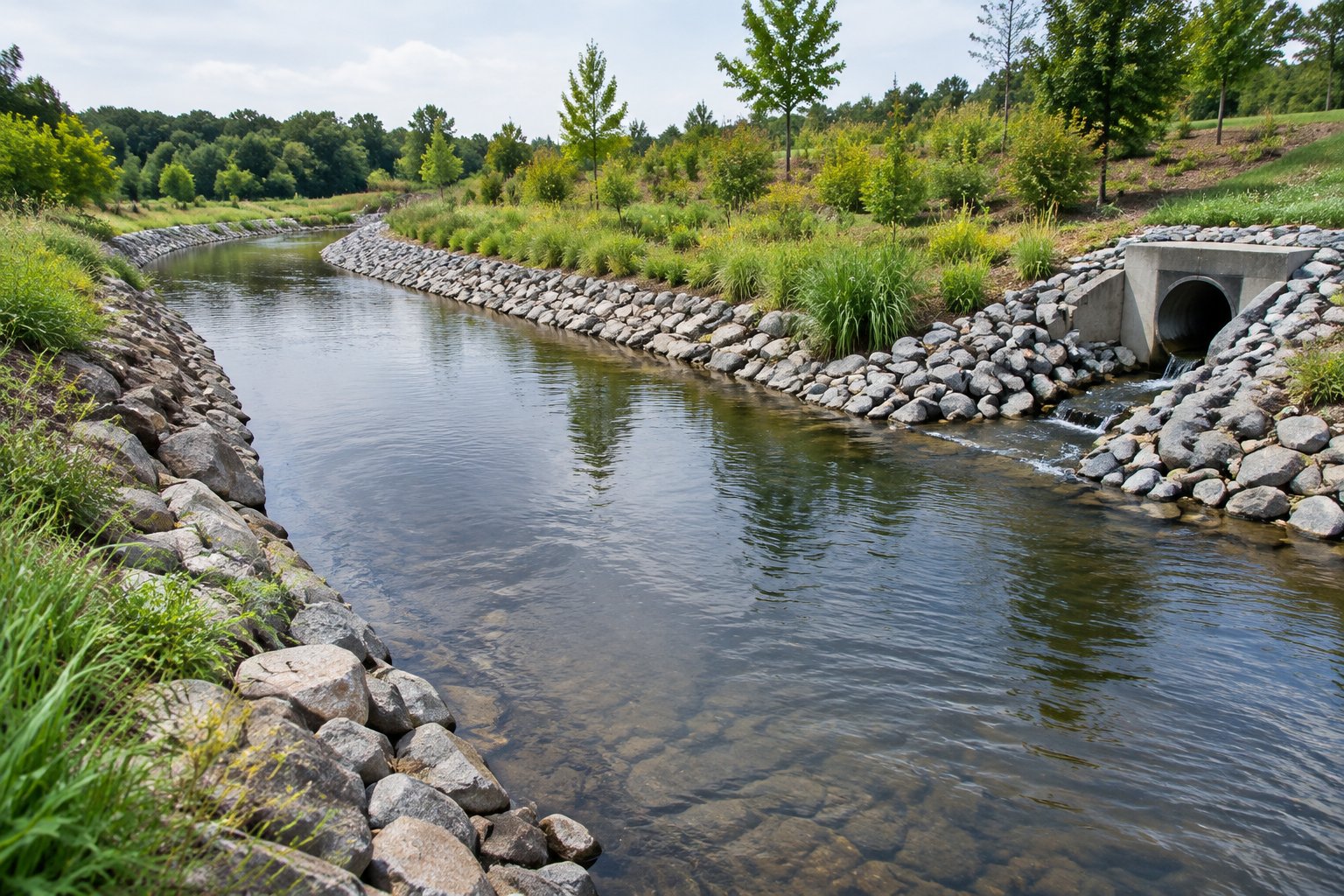
Wetland edges and retention pond sidewalls in Louisiana present additional challenges. Fluctuating water levels, saturated soils, and regulatory restrictions on fertilizer runoff near waterways all affect product selection.
These sites often require specialized slope stabilization that accounts for both vegetation and structural reinforcement. Understanding how these methods affect project cost and scheduling helps close the gap between specs and budget.
Cost, Scheduling, and Mobilization Realities
Hydroseeding costs less per square foot than sod on virtually every commercial project. The savings increase with site size. The real question is what variables move the number and how to get an accurate estimate fast.
Why Large-Area Hydroseeding Often Beats the Cost to Install Sod
Sod requires harvesting, trucking, staging, and hand-installing pallet by pallet. On a five-acre commercial pad, the labor and material cost for sod can run several times higher than a hydromulch application that covers the same area in a single day.
Hydroseeding also eliminates sod's logistics problem. There is no spoilage from pallets sitting in Louisiana heat. There is no crew of 15 laying rolls.
There is no irrigation emergency if the sod does not get watered within 24 hours. For large construction sites, parks, and roadway shoulders, the cost difference makes hydroseeding the default specification.
What Moves Hydroseeding Cost Up or Down
No two Louisiana sites price the same. The variables that affect your per-acre cost include:
- Total acreage: Larger sites lower the per-unit cost because mobilization and setup are fixed
- Slope and access: Steep grades and limited equipment access increase application time
- Seed mix specification: Native grass or specialty blends cost more per pound than standard turf mixes
- Soil condition and prep: Sites needing grading, amendment, or debris removal add pre-application costs
- Number of applications: Some specs require a two-pass approach for establishment on difficult soils
- Mobilization distance: Louisiana projects staged from a Texas base factor in travel and crew logistics
The hydroseeding cost estimator gives you a rough cost range based on acreage and site type. It is not a binding quote. It narrows the conversation before a phone call.
How to Scope a Site for a Faster Estimate
The faster you provide site details, the faster the estimate comes back. Before calling, have these ready:
- Total disturbed area in square feet or acres
- Slope ratios (2:1, 3:1, 4:1, or flat)
- Required seed species or project spec sheet
- Site access constraints (gate width, road conditions, water source availability)
- Target completion or inspection date
A complete scope eliminates back-and-forth and lets the crew price the job accurately on the first pass. That efficiency matters when your project timeline does not have room for rework or rebidding.
Keeping Louisiana Projects Moving Toward Closeout
Erosion control is not finished when the slurry hits the ground. Documentation, regional field knowledge, and rework prevention are what actually get a site through final inspection and off your open-items list.
Documentation, Compliance, and Rework Prevention
Louisiana stormwater permits require proof that erosion controls were installed and are functioning. That means application records, seed mix certifications, and site photos tied to specific dates and areas.
A crew that does not document its work creates a compliance gap for the GC. When an inspector asks for proof of seeding on a specific phase, the answer needs to be a dated record, not a verbal assurance. Proper documentation also protects against disputes if a re-seed is triggered by weather rather than application failure.
Rework is the most expensive outcome in hydroseeding. It doubles the material cost. It delays the schedule. It often triggers additional inspection cycles. The right application, done once and documented thoroughly, is always cheaper than a callback.
Regional Gulf South Experience and Multi-State Coordination
Louisiana projects often involve contractors based in Texas, Mississippi, or other Gulf South states. Coordinating a hydroseeding subcontractor across state lines adds scheduling complexity, especially when the crew needs to mobilize equipment, water trucks, and seed supplies from a distant base.
Working with a contractor experienced in Gulf Coast runoff patterns reduces the learning curve. We already know what tackifier rates hold on Louisiana clay. We know which seed species perform in coastal humidity and how to sequence applications around the region's unpredictable storm cycles.
That regional knowledge is especially valuable on industrial and energy corridor projects where environmental compliance documentation must meet both state and federal standards.
Getting Your Louisiana Quote Started
Getting a Louisiana hydroseeding project quoted should not take more effort than a single phone call. Have your site acreage, slope conditions, and spec requirements ready.
Allied Hydromulch TX, LLC has served contractors across Texas and the Gulf South since 1990. Call 281-482-8212 for a fast project estimate, or use the job cost estimator to get a rough cost range before you call. When the forecast turns, we move fast to get your Louisiana site covered.
Frequently Asked Questions
What Does Hydroseeding Typically Cost per Acre on Louisiana Commercial Sites?
Per-acre cost varies based on seed mix, slope, access, and total acreage. Hydroseeding consistently costs a fraction of sod installation at commercial scale. Use the online pricing calculator for a preliminary range, then call 281-482-8212 to confirm with site-specific details.
When Is the Most Reliable Window to Seed Warm-Season Grasses in Louisiana for Fast Establishment?
Late spring through early summer (April through June) gives the best germination results for warm-season species like bermuda and bahia. Soil temperatures above 65°F are the trigger. Fall seedings using cool-season nurse grasses can also work for temporary stabilization ahead of spring permanent establishment.
What Are the Most Common Failure Points With Hydroseeding on Louisiana Clay and High-Rainfall Sites?
The top three: insufficient tackifier on slopes, seed applied to unprepared or crusted soil, and skipped starter fertilizer. Each one leads to washout, bare patches, or stalled germination that requires a costly reapplication.
How Does Hydroseeding Perform on Louisiana Drainage Swales, Slopes, and Detention Pond Sidewalls Compared to Blanket-Only Installs?
Hydroseeding combined with an erosion control blanket or Flexterra outperforms blanket-only installations because it places seed in direct soil contact beneath the protective layer. Blankets alone protect the surface but do not establish vegetation. The combination approach delivers both immediate erosion protection and long-term root stabilization.
What Site Prep and Grading Tolerances Are Required Before Hydroseeding a New Pad or Roadway Shoulder in Louisiana?
The surface should be graded to final contour with loose soil or a lightly scarified top layer. Remove debris, rocks larger than two inches, and any standing water. Smooth, consistent grade without ruts or tire tracks gives the slurry even contact and prevents seed from pooling in low spots.
Can a Crew Realistically Hydroseed In-House, and What Equipment, Water Supply, and Calibration Issues Usually Cause Rework?
In-house hydroseeding is possible but rarely cost-effective on commercial sites. Common rework causes include inconsistent agitation, the wrong nozzle for the mulch type, inadequate water volume for the tank mix, and seed or fertilizer rates that are not calibrated to the equipment's output. A specialized contractor eliminates those variables.