.svg)


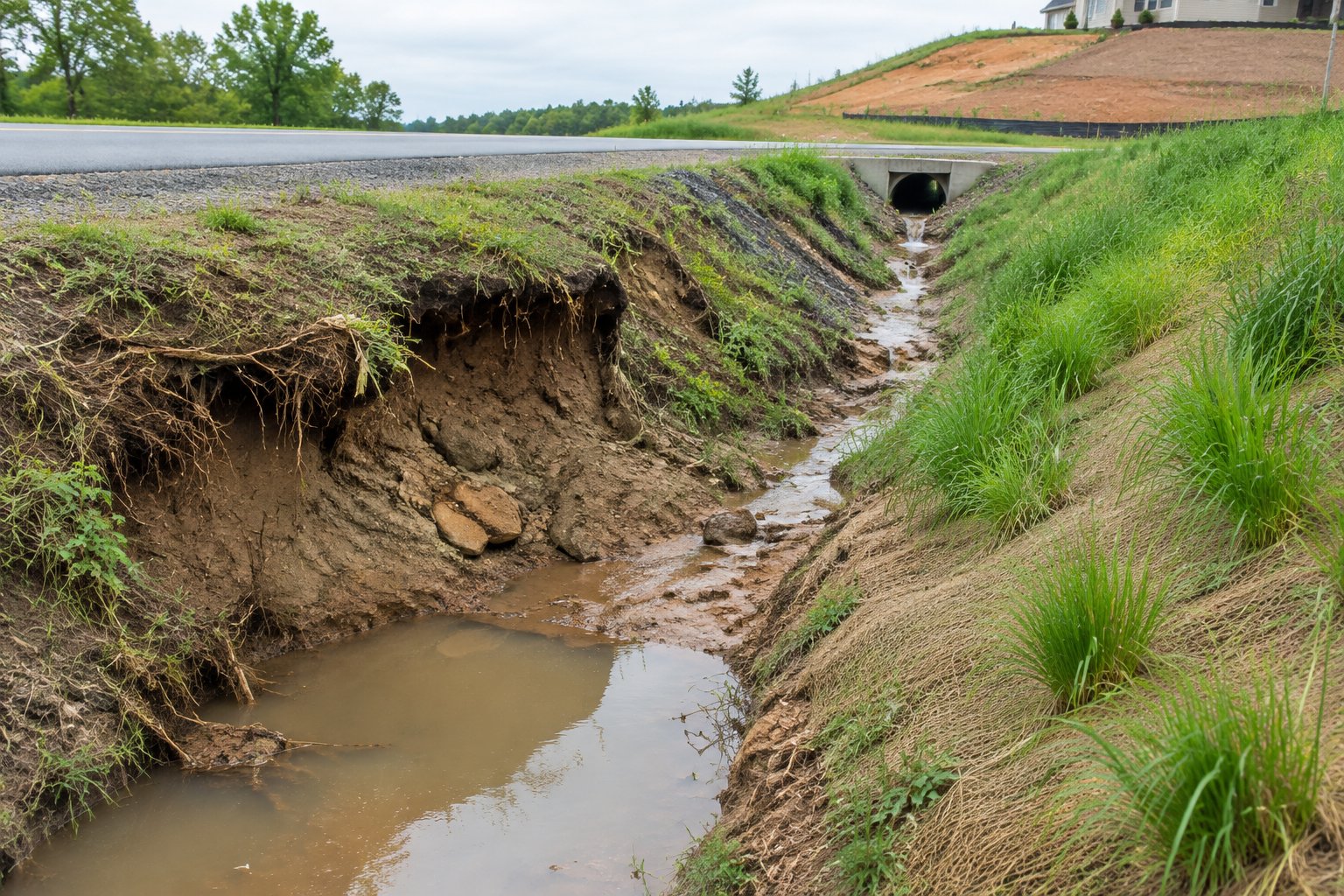
Bare slopes on a retention pond can shed sediment into the basin after just two rain events without vegetative cover. This sediment can cause a stormwater inspection failure, a Texas Commission on Environmental Quality (TCEQ) notice, or a permit hold that stalls the project.
General contractors and civil teams working on commercial developments, warehouse pads, or municipal infrastructure in Texas and the Gulf South must establish vegetation quickly on pond banks. Fast, uniform growth is essential between final grading and site closeout.
We stabilize pond slopes, drainage channels, and stormwater outfall zones across Texas, Louisiana, Oklahoma, and New Mexico. With 15 million square feet of mulch installed in 2025 and a senior crew with over 30 years of experience, we handle complex pond geometry and high-erosion embankments as standard work.
Sediment loss often starts on pond slopes. Hydraulic mulch protects seed during Gulf Coast downpours. Sometimes hydroseeding needs to be paired with erosion blankets or bonded fiber matrix. Seed mix selection also affects long-term pond stabilization.
Why Pond Banks Create Fast Erosion and Permit Risk
Freshly graded pond banks erode quickly. Steep slopes, concentrated inflow, and changing water levels strip unprotected soil within days of rain.
Permit risk follows immediately. A Stormwater Pollution Prevention Plan (SWPPP) showing bare soil around a retention basin signals a problem to inspectors.
Stabilizing exposed pond perimeters is not just best practice. Most Texas and Gulf South municipal stormwater ordinances require it.
Temporary erosion control measures help, but permanent seeding and vegetation are required to close out the site.
Where Sediment Loss Starts on Pond Slopes and Inflow Zones
The highest erosion rates on a retention pond occur at three spots: the upper rim where water enters, the side slopes between the top of bank and waterline, and the inflow and outfall channel transitions.
Each zone concentrates water energy on bare soil. On side slopes graded at 3:1 or steeper, rain on unprotected clay-heavy soil creates rill erosion in one storm.
Texas expansive clays swell when wet and crack when dry. This cycle speeds up soil loss as conditions change.
Inflow zones also erode quickly. Stormwater enters through pipes or channels at high speed, scouring unprotected areas.
Without soil coverage, sediment enters the pond before it can function as designed, reducing capacity, and runoff risk around structures grows around the basin.
How Bare Earthwork Affects Stormwater Compliance in Texas and the Gulf South
The TCEQ Construction General Permit (TXR150000) requires final stabilization of all disturbed areas, including retention pond banks. Final stabilization means uniform perennial vegetative cover with at least 70 percent density.
Until that threshold is met, the permit stays open. Municipal stormwater programs in Houston, Dallas, San Antonio, Austin, and Gulf Coast areas often have extra requirements.
Some require photos of vegetation within certain periods after final grading. Missing these deadlines can trigger a reinspection or a stop-work order.
The Texas Department of Transportation (TxDOT) construction best management practices require erosion control devices and practices to minimize sediment loss from exposed soil during construction and stabilization.
On a retention pond, hydroseeding for retention ponds often provides the fastest path to compliance.
How Hydraulic Application Protects Seed During Establishment
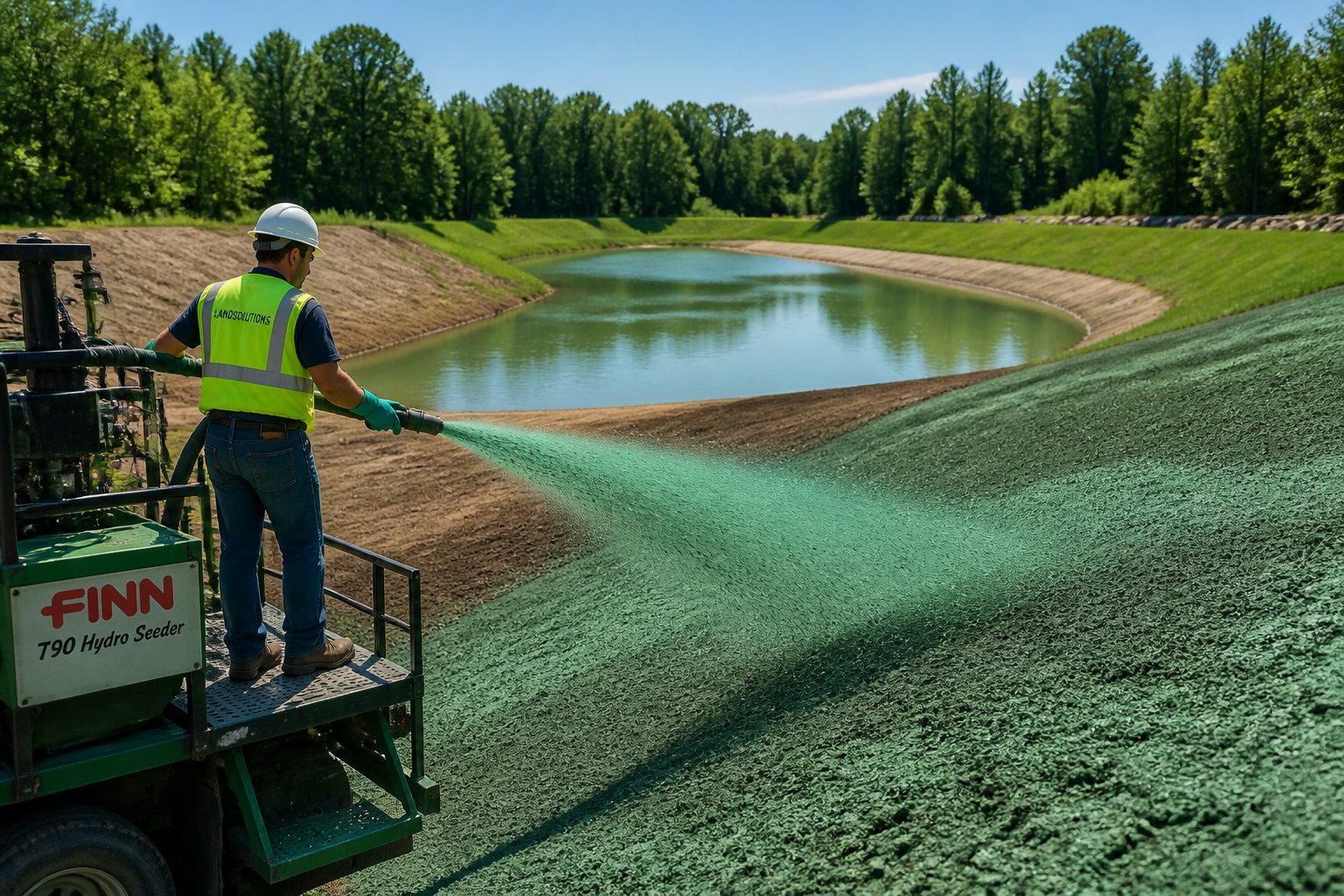
Hydroseeding applies seed, mulch, fertilizer, and soil amendments in one hydraulic spray that bonds to the soil surface. This protective mulch shields seed from washout during the critical 7 to 14-day germination period.
The method is faster than hand-broadcasting and more cost-effective than sod, especially on irregular pond grades. One mobilization can cover the entire pond perimeter, side slopes, and channel transitions.
What Goes into a Hydroseed Application
Every hydroseed slurry has four main components, each with a specific role:
- Seed: Chosen for soil type, slope, and permit needs. Turf blends provide fast cover; native mixes support long-term stabilization.
- Hydraulic mulch: Wood fiber, cellulose, or a blend forms a mat over the seed. It holds moisture and reduces surface temperature.
- Tackifier: This binding agent glues the mulch mat to the soil. It is critical on slopes where rain and gravity can strip the application.
- Slow-release fertilizer and soil amendments: These provide nutrients during germination and early root growth.
The ratio and product choice change with site conditions. A pond bank in Harris County clay needs a different mulch and tackifier rate than sandy loam in East Texas.
Getting the mix right the first time prevents costly reseeding.
How Hydraulic Mulch and Tackifier Help Hold Seed in Place
On a 3:1 or 4:1 pond slope, gravity pulls water and loose material downhill during each rain. Hydraulic mulch creates a fibrous mat that absorbs rainfall impact.
The tackifier locks the mat to the ground so it does not slide or peel. This combination is especially important on Gulf Coast projects.
Houston and Corpus Christi can see two to four inches of rain in one event during spring and summer. Without a bonded mulch layer, seed applied by broadcast or drill methods will concentrate in low spots and leave upper slopes bare.
Along the Gulf Coast, we adjust tackifier concentration based on slope angle and the 10-day weather forecast. This site-specific approach helps avoid rework on Texas sites by getting the first application right.
When Hydroseeding Works Best on Retention Pond Slopes
Hydroseeding works best when the grade is prepared, the soil has structure, and the application happens before long dry spells or heavy rain. Slope, drainage patterns, and soil type determine if standard hydraulic mulch is enough or if extra erosion control is needed.
Slope Gradient, Runoff Patterns, and Soil Conditions
Most retention ponds have 4:1 to 3:1 side slopes. At those gradients, a properly applied hydroseed slurry with tackifier holds through moderate rain and supports germination within 7 to 14 days.
Slopes steeper than 3:1 face higher runoff stress and usually need extra protection. Runoff patterns matter as much as slope angle.
A pond bank receiving concentrated flow from a parking lot or building pad erodes faster than an isolated slope with only sheet flow. Identifying high-energy zones during site assessment lets us adjust mulch weight or add erosion blankets as needed.
Soil type also matters. Sandy soils drain quickly and may need more mulch to keep moisture for germination. Clay soils hold water but crack when dry, creating channels that speed up erosion in the next rain.
Why Clay-Heavy Soils and Heavy Rain Change the Seeding Plan
Texas clay soils, especially those in the Houston metro, Fort Bend County, and the Gulf Coast, create challenges on pond slopes. When saturated, these soils become slick, so mulch adhesion drops and seed can move downhill along the clay surface.
The solution is not to double the seed rate. The International Erosion Control Association (IECA) notes that doubling native seed rates can cause more competition and weaker stands. Instead, use higher-performance mulch and stronger tackifier rates.
On clay-heavy sites, rototilling the top two to three inches before application breaks the surface seal and improves seed-to-soil contact. This prep step adds time but reduces the risk of reseeding after a major storm.
When slopes are steeper than 3:1, or the site is in a high-rainfall zone, pairing hydroseeding with erosion blankets or bonded fiber matrix is the next step.
When to Pair Seeding with Blankets or Bonded Fiber Matrix
Standard hydraulic mulch works for most pond slopes at 3:1 or gentler. Steeper embankments, concentrated flow channels, and high-velocity inflow zones need physical reinforcement to keep soil and seed in place until roots establish.
- Pond side slopes from 4:1 to 3:1 can typically be protected with hydroseeding and a tackifier.
- Slopes steeper than 3:1 generally require hydroseeding combined with an erosion control blanket.
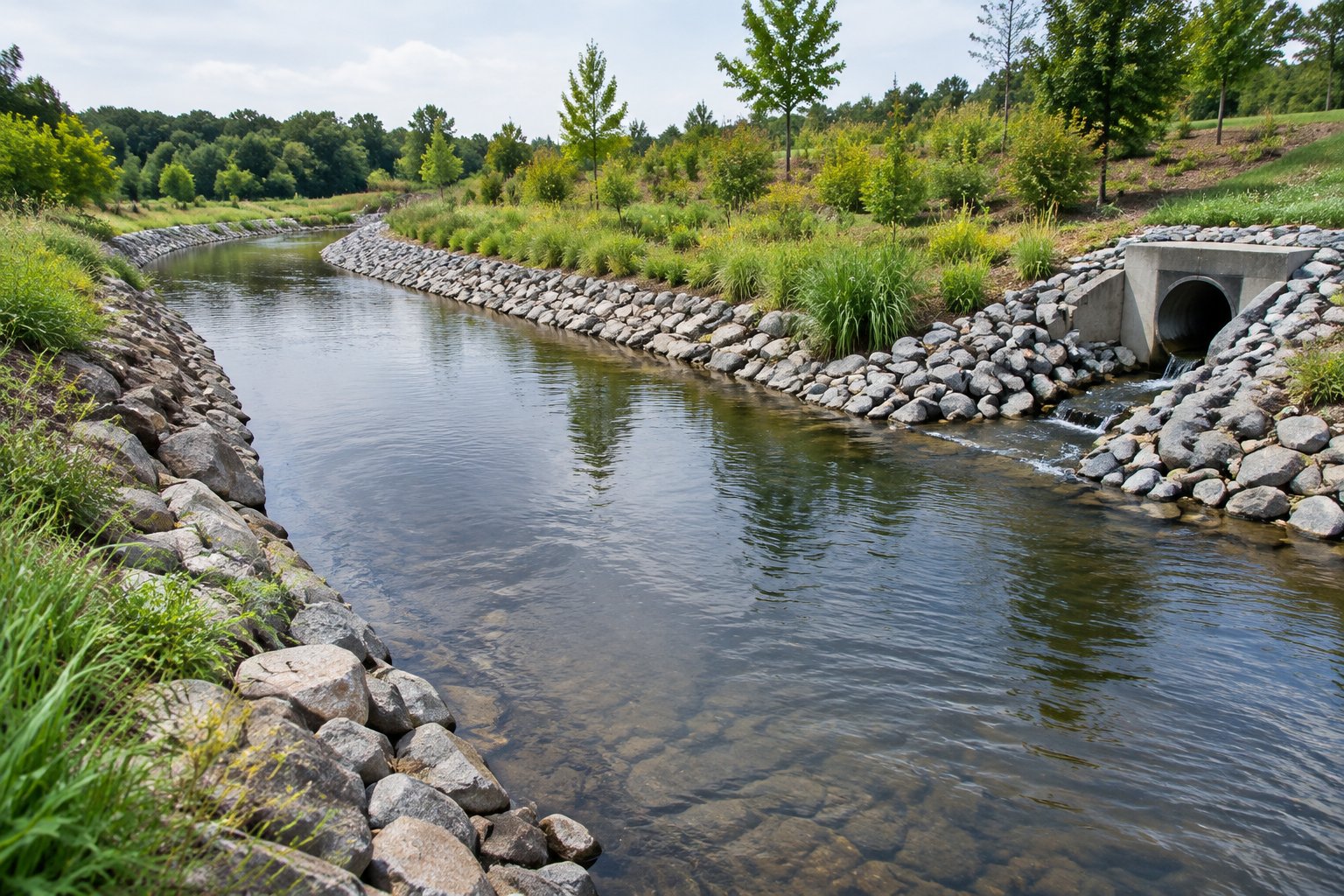
- Inflow and outfall channels should be seeded and lined with an erosion control blanket or protected with a bonded fiber matrix (BFM).
- Irregular slopes, areas near structures, and slopes as steep as 1.5:1 may require a bonded fiber matrix, such as BFM or MBFM.
Using Erosion Control Blankets on Steeper Embankments and Channels
Erosion control blankets (ECBs) are rolled, biodegradable mats pinned over seeded slopes. They shield the soil from rain and concentrated flow.
On retention pond projects, ECBs are used for:
- Side slopes steeper than 3:1 where hydraulic mulch alone is not enough
- Inflow and outfall channel linings with high water velocity
- Pond rim transitions where sheet flow concentrates before entering the basin
- Emergency spillway channels at steep angles
ECBs work with a temporary erosion control seed mix applied underneath. As the blanket breaks down over 12 to 24 months, the root system takes over stabilization.
Proper staple spacing and ground contact are key. A blanket that lifts off the soil during wind or flow can worsen erosion.
For Texas steep slope stabilization, ECBs paired with hydroseeding provide a visible, documentable erosion control measure on the day the seed goes down.
Where Bonded Fiber Matrix and Mechanically Bonded Fiber Matrix Fit
Bonded fiber matrix (BFM) and mechanically bonded fiber matrix (MBFM) offer hydraulically applied alternatives to rolled blankets. We spray them on like standard hydromulch, but they cure into a dense, interlocking fiber mat that resists higher shear stresses.
BFM works well on slopes up to 1.5:1 and in areas where rolled blankets are hard to install due to access, irregular shapes, or nearby structures like risers and outlet pipes.
Around retention ponds, BFM protects transition zones between flat grades and steep banks where blankets are tough to anchor. A continuous bonded fiber matrix outperforms standard mulch in these areas because it forms a continuous mat instead of sitting loosely on the surface.
MBFM improves performance further with crimped, interlocking fibers that create a stronger erosion barrier. On Gulf Coast projects where storms can bring six or more inches of rain overnight, MBFM on steep pond banks provides extra protection.
Choosing the right product depends on slope, flow, and budget. The seed mix underneath also plays a key role in long-term results.
Choosing Seed Mixes for Long-Term Pond Stabilization
The seed mix affects whether a pond bank needs frequent mowing or stays stable for years with little maintenance. The right blend depends on permit requirements, maintenance access, and whether the vegetation serves as temporary cover or permanent stabilization.
Standard Grass Versus Native Seed Mix for Permanent Coverage
Standard turf grass blends like Bermuda, Bahia, or warm-season mixes germinate quickly and create dense cover in four to six weeks. They are often chosen for fast soil coverage when closing out a stormwater permit. The trade-off is ongoing maintenance, including mowing, fertilizing, and irrigation.
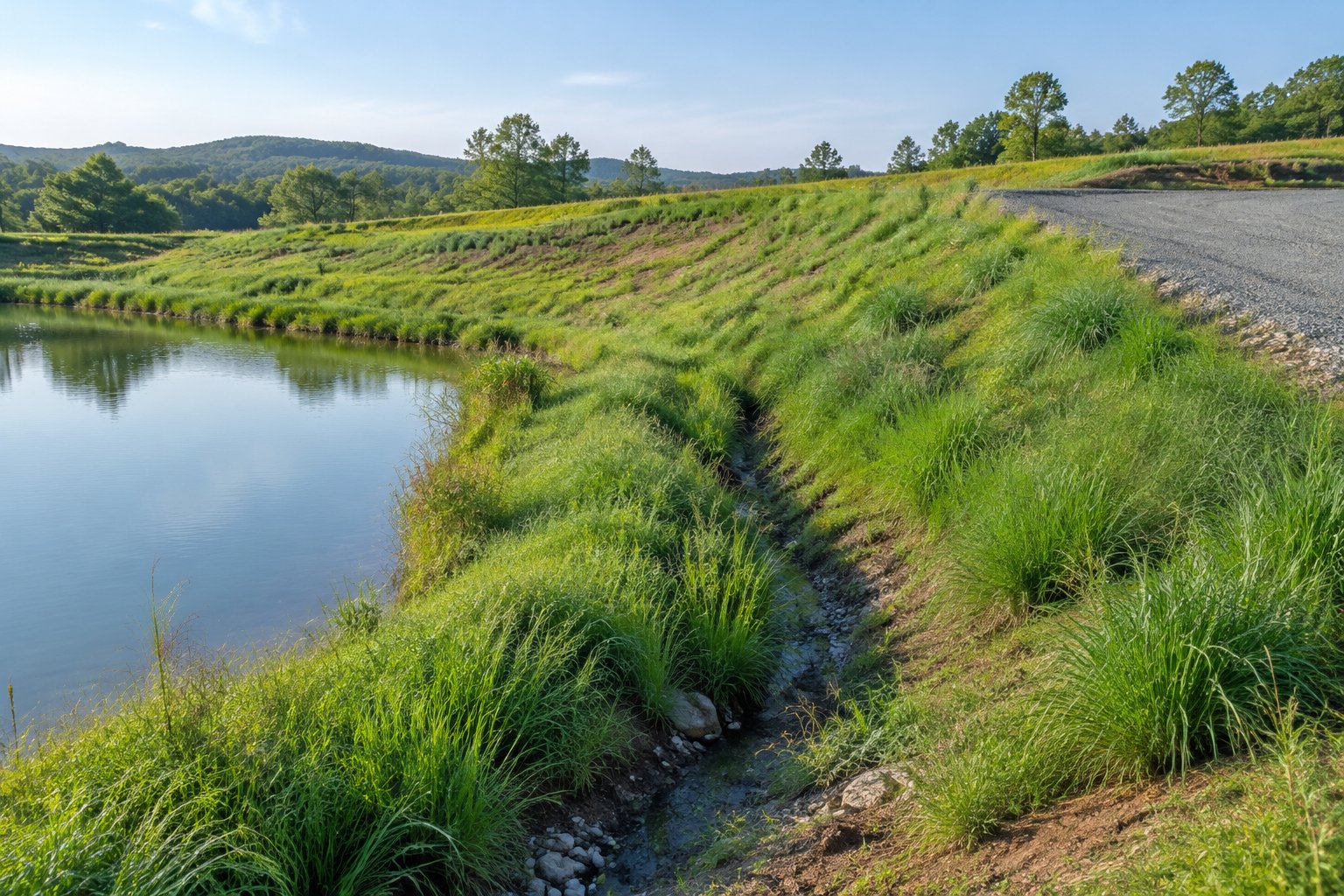
Native seed mixes take two to three months to establish but develop deep roots that anchor pond banks more effectively over time.
Native grasses tolerate drought, adapt to local weather, and require minimal care once established. For native grass commercial restoration, patience up front leads to lower long-term costs.
On many Texas retention pond projects, we use a split approach: fast-germinating temporary cover on upper banks for quick inspection, and a native perennial mix on lower slopes and buffer zones for lasting stability.
How Meadow and Landscaping Seed Mixes Differ from Compliance-Driven Seeding
Meadow seed mixes and landscaping blends include wildflowers, ornamental grasses, and pollinator-friendly species. They create a natural look and support biodiversity. Some municipal park districts and communities in the Houston and Austin areas now specify these mixes for visible pond banks in public spaces.
Compliance-driven seeding focuses on uniform perennial cover at 70 percent density or higher, documented for the SWPPP file. Species selection follows TxDOT or TCEQ specifications. Appearance is not the priority.
This difference affects both budgeting and timeline. A meadow or wildflower mix may need a full growing season for full coverage, while a compliance turf blend reaches the 70 percent mark in weeks.
TxDOT vegetation specifications outline material and installation requirements that compliance-driven mixes are designed to meet. Knowing where the project falls on this spectrum shapes both the seed order and the inspection schedule.
Keeping the Pond Schedule Moving from Grade to Cover
Hydroseeding a retention pond usually happens in one mobilization. Germination starts within 7 to 14 days, and visible turf develops in four to six weeks under typical Texas growing-season conditions.
This timeline allows the general contractor (GC) to schedule the final SWPPP inspection and close out the stormwater permit before the pond delays the project.
What to Expect on Timing, Germination, and Follow-Up
On application day, we spray prepared slopes, channel transitions, and flat areas around risers and outlet structures. Drying time is two to four hours. Light rain after spraying helps the process.
Germination timing depends on season and irrigation:
- Spring and early fall (optimal): Germination within 7 to 10 days. Full cover in four to five weeks.
- Summer (high heat): Germination may take 10 to 14 days. Supplemental irrigation helps speed up growth.
- Late fall and winter: Dormant seeding is possible, with germination starting when soil warms in spring.
A follow-up visit at 14 to 21 days checks germination density and spots any washout zones that need touch-up. Most pond projects only need one application and one follow-up check.
How Hydroseeding Compares with Sodding on Irregular Pond Slopes
Sodding a pond bank costs more, requires more labor, and is hard to do on irregular grades. Sod rolls do not fit well around curves, riser bases, or transitions between steep slopes and flat shelves. Gaps between rolls can cause erosion.
Hydroseeding eliminates these gaps. The slurry covers every contour, including pipe penetrations, outlet structures, and access ramps, leaving no bare spots. Hydroseeding usually costs less per square foot than sod, especially when considering labor for cutting and fitting sod on slopes.
When a pond is behind schedule and rain is coming, hydroseeding offers faster mobilization. We can spray a full basin perimeter in one day.
A sod crew on the same area may need three to five days plus time for irrigation setup. The online pricing calculator provides a quick cost estimate based on square footage.
Frequently Asked Questions
What Seed Mix and Mulch Spec Holds on Steep Pond Side Slopes Through Texas Rain Events?
A Bermuda or Bahia blend with bonded fiber matrix or Flexterra flexible growth medium holds on slopes up to 1.5:1 through heavy Gulf Coast rain. The mulch should match the slope angle and expected shear stress. On 3:1 slopes, standard wood fiber mulch with tackifier is usually enough. Steeper grades need Flexterra erosion control products or MBFM.
How Do You Keep Hydroseed from Washing out at the Waterline and Along Inflow and Outfall Channels?
Inflow and outfall channels face concentrated flow, so they need erosion control blankets pinned over the seeded surface. At the waterline, we use a higher tackifier rate and heavier mulch to create a strong bond against wave action and changing water levels. Proper staple patterns on blankets prevent them from lifting during storms.
What Is the Typical Square Foot Price Range to Hydroseed a Retention Basin, Including Slope Prep and Tackifier?
Pricing depends on total square footage, slope, seed mix, and site access. Use the retention pond estimator for a rough estimate based on your acreage and conditions. Final pricing needs a site visit to assess soil prep, product selection, and mobilization distance.
How Fast Can You Mobilize and Spray When a Pond Is Behind Schedule and Rain Is in the Forecast?
On most Texas and Gulf South projects, we can mobilize within a few days of a confirmed scope. Application on a standard retention pond takes one day. The slurry needs two to four hours of dry time before rain, so we plan the spray ahead of the forecast.
What Erosion Control Steps Should Be Done Before Spraying to Meet SWPPP and Stormwater Inspection Requirements?
Before hydroseeding, the site should have a silt fence or sediment controls around the pond, grading finished to final design elevations, and any required erosion blankets installed on steep slopes or channels. We document these steps in the SWPPP log.
The hydroseed application then serves as the job site erosion control measure that moves the permit toward closeout.
How Do You Coordinate Hydroseeding Around Risers, Outlet Structures, and Maintenance Access Without Creating Bare Zones?
The spray nozzle on a hydroseed truck reaches around structures, pipe penetrations, and access ramps without leaving gaps. We manually direct the slurry into tight areas the main pass cannot reach.
This prevents bare zones that sod installation often leaves around risers and outlets. Proper coverage in these areas is critical because they concentrate water flow and can cause erosion.
Get Your Pond Slopes Stabilized Before the Next Inspection
Retention pond stabilization depends on three things: the right application method for the slope, the right seed mix for the permit, and the right timing to avoid rain and inspection delays. Hydroseeding accomplishes all three in one mobilization, at a lower cost than sod, and works on the irregular grades found on pond banks.
Allied Hydromulch TX, LLC has stabilized retention pond slopes, drainage channels, and stormwater infrastructure across Texas and the Gulf South since 1990.
Call 281-482-8212 for a project quote, or use the online cost range tool to plan a budget before calling. With an inspection on the calendar, we can get your pond banks covered quickly.