On most commercial and municipal jobs the ditches are the last thing graded and the first thing to wash out. A roadside ditch along a new subdivision entrance or a lot ditch behind a retail pad carries every drop that falls on the ground around it, and it carries it in a narrow strip. Ditch erosion control works when the lining matches the flow the ditch will see before grass is established, the inlet, outlet and transitions are protected, and someone inspects and repairs the ditch after every significant rain until closeout. Most ditch failures trace back to one of those three being skipped.
This article focuses on what goes wrong in roadside and lot ditches and how to keep them stable through to final inspection. For a full comparison of lining methods and how to choose between them, see our guide to selecting the right stabilization method for drainage channels.
Why Are Ditches Harder to Stabilize Than Pads?
A flat pad sees rain falling on it. A ditch sees rain falling on it plus all the runoff from the road, the lot and the slopes draining into it. That flow is concentrated, it moves faster and it keeps moving for longer after the storm passes. Seed and mulch that would hold for weeks on a pad can be stripped from a ditch invert in one afternoon.
Timing makes it worse. Ditches are usually cut late, after paving or building pads are in, so they get seeded on a compressed schedule. The paving crew, the utility crew and the irrigation installer may all cross the ditch after it is seeded. And on Gulf Coast jobs, the ditch often gets its first real test from a tropical system before the grass has rooted.
What Fails in a Roadside or Lot Ditch, and Why?
Walk enough ditches at closeout and the same problems show up again and again. Here is what we see most often and what is usually behind it.
The Lining Was Too Light
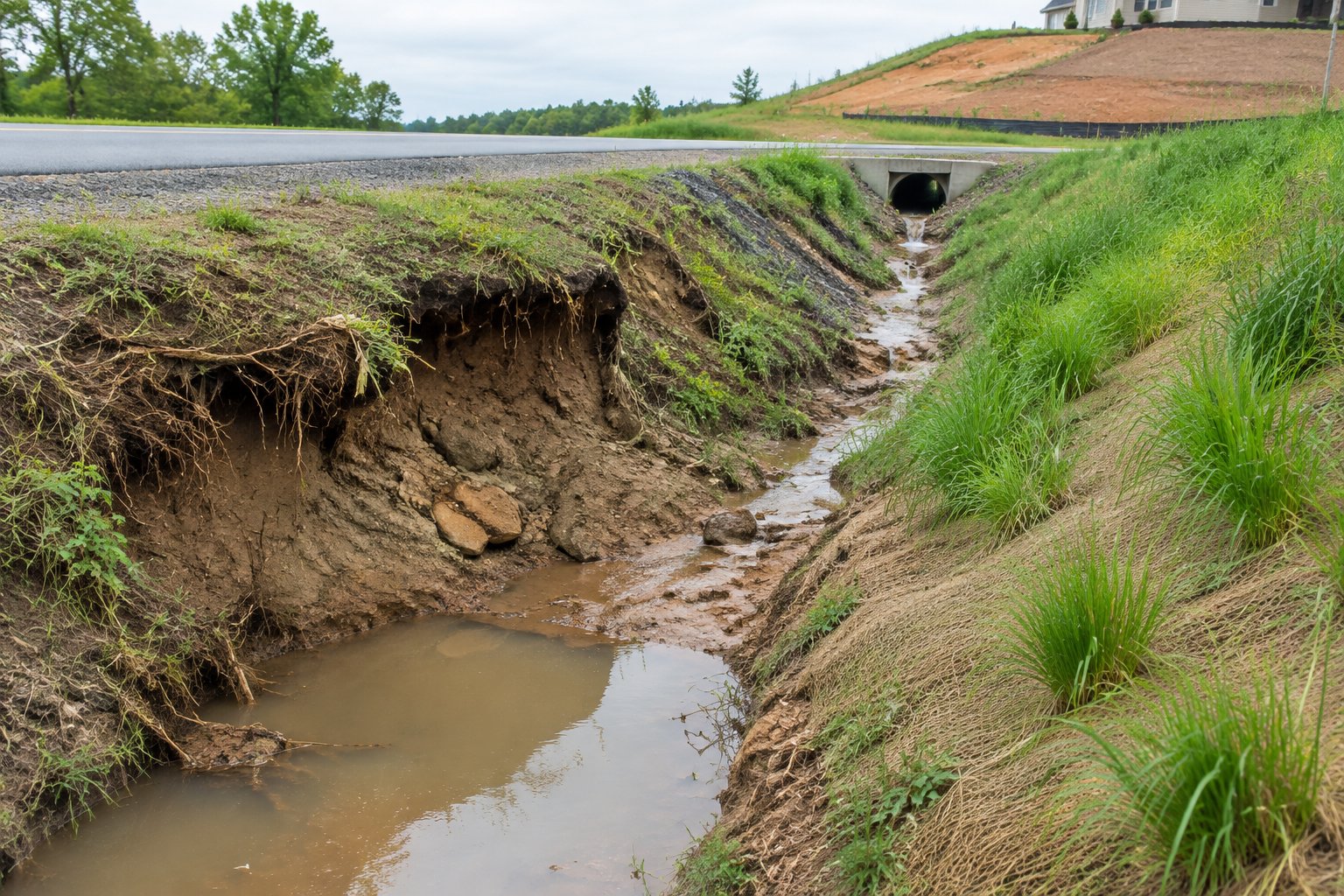
The most common failure is simple: the ditch got the same tackified hydromulch as the pad next to it. That can hold in a shallow, flat swale with a small drainage area. In a roadside ditch carrying runoff from pavement it often will not. Spray-applied products step up from tackified mulch to bonded fiber matrix to Flexterra HP-FGM, and beyond that come blankets, turf reinforcement mats and rock. The channels post linked above covers the selection; the field lesson is to treat the invert and the side slopes as different zones and size the invert for the flow.
Transitions and Outlets Were Left Unprotected
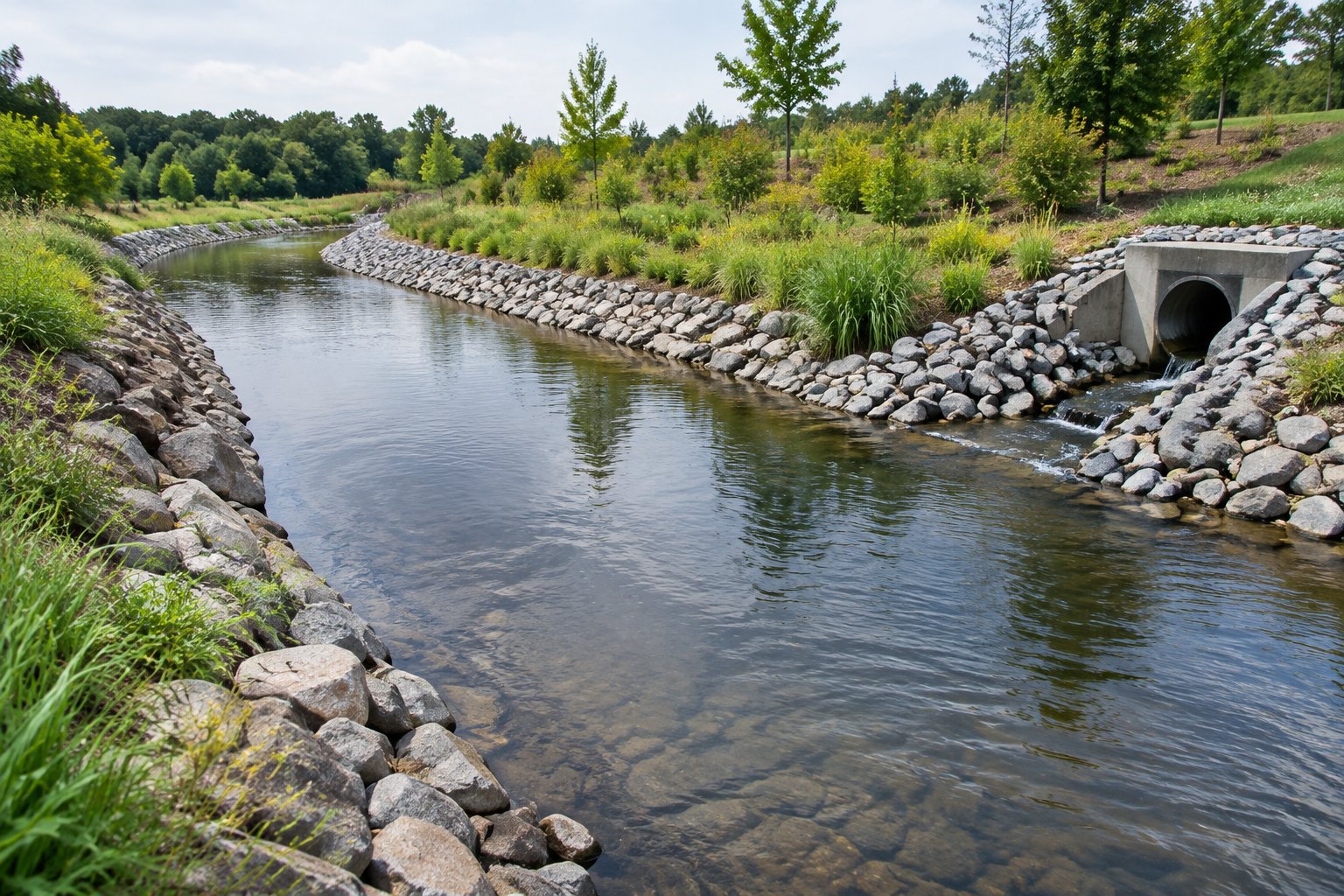
Water finds the seams. Where a blanket meets a sprayed area, where a lined ditch meets an unlined one, at the culvert inlet and outlet, and where a driveway crossing pinches the channel, flow speeds up and gets underneath the lining. Tie edges together, overlap blankets downstream like shingles, trench in the upstream ends and protect every outlet before you seed around it.
Silt Fence Ended Up in the Flow Path
Silt fence placed across a ditch is a common inspection finding. Under concentrated flow it either fails or pushes water out of the channel and around the fence, cutting a new path. Perimeter controls belong along the ditch edges, not across the invert. Our explainer on what silt fence does on active sites covers correct placement.
The Ditch Was Never Given Time to Establish
Ditches get driven through, regraded for a utility tie-in or seeded the week before a forecast storm. Every one of those resets the clock. Phase the work so the ditch is seeded once the crossings and utility work are finished, keep equipment out afterward and, where possible, avoid seeding right ahead of a forecast tropical system.
How Should Roadside Ditches Be Handled on Corridor Work?
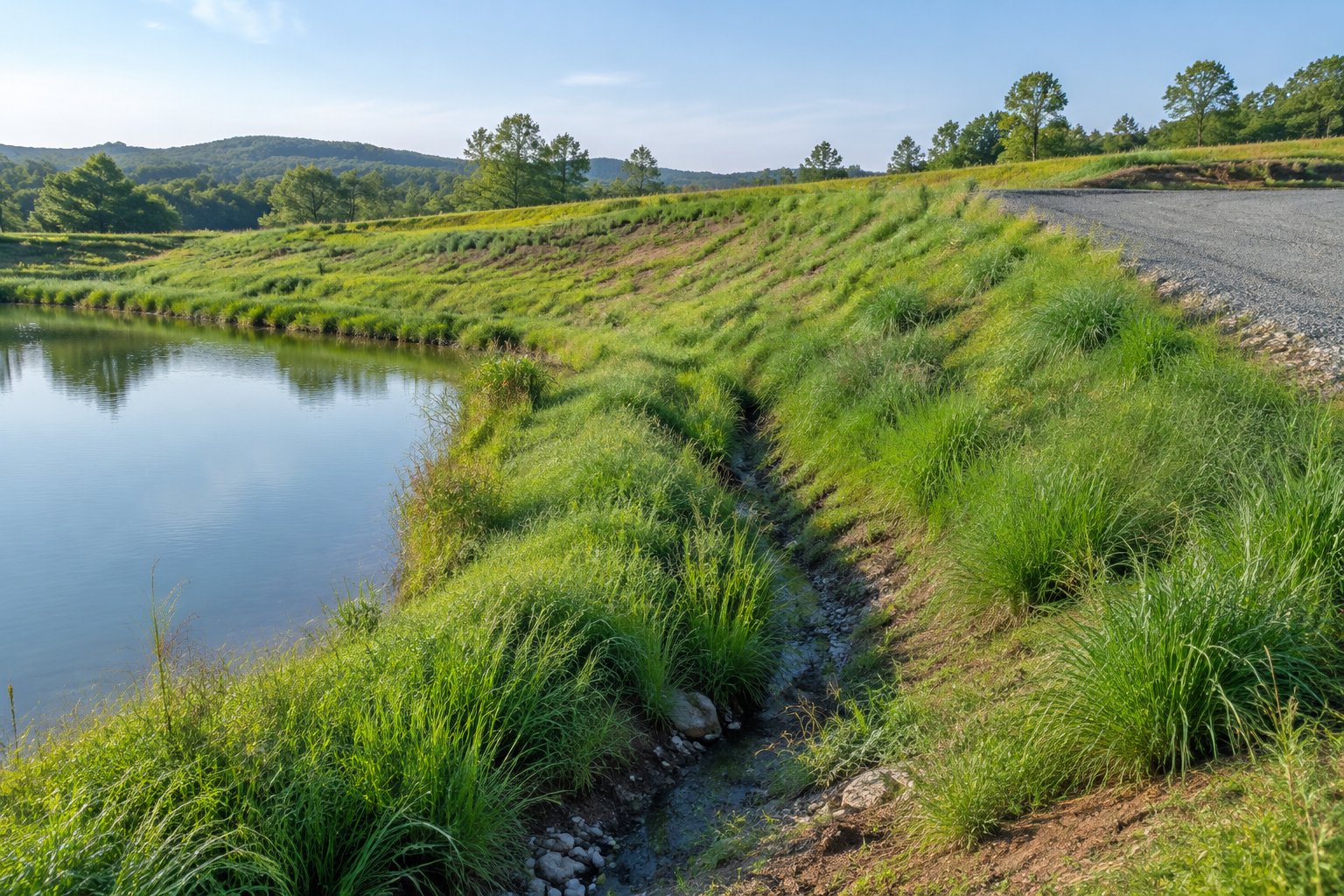
Roadside ditches on municipal and TxDOT work usually come with a specified seed mix and a defined lining in the plans. Follow the spec on the mix and lining, and pay attention to the shoulders and backslopes as well as the invert, since runoff from the pavement edge is what feeds the ditch. Long corridors are usually seeded in phases behind the grading. Our guide to roadside hydroseeding for faster corridor stabilization covers how that phasing works on public road jobs.
Lot ditches on commercial sites are often less defined. If the plans only say "seed and mulch," look at the drainage area and grade before accepting that. A ditch draining a large parking field may need a heavier product in the invert even if the plan does not call for one, and it is cheaper to raise that with the engineer before seeding than after the first washout. For a quick budget figure on the standard hydroseeding portion, our pricing calculator gives a rough range.
How Do You Maintain Ditches from Seeding to Closeout?
A seeded ditch is not finished until the grass is carrying the flow. Plan the maintenance as part of the scope rather than an afterthought.
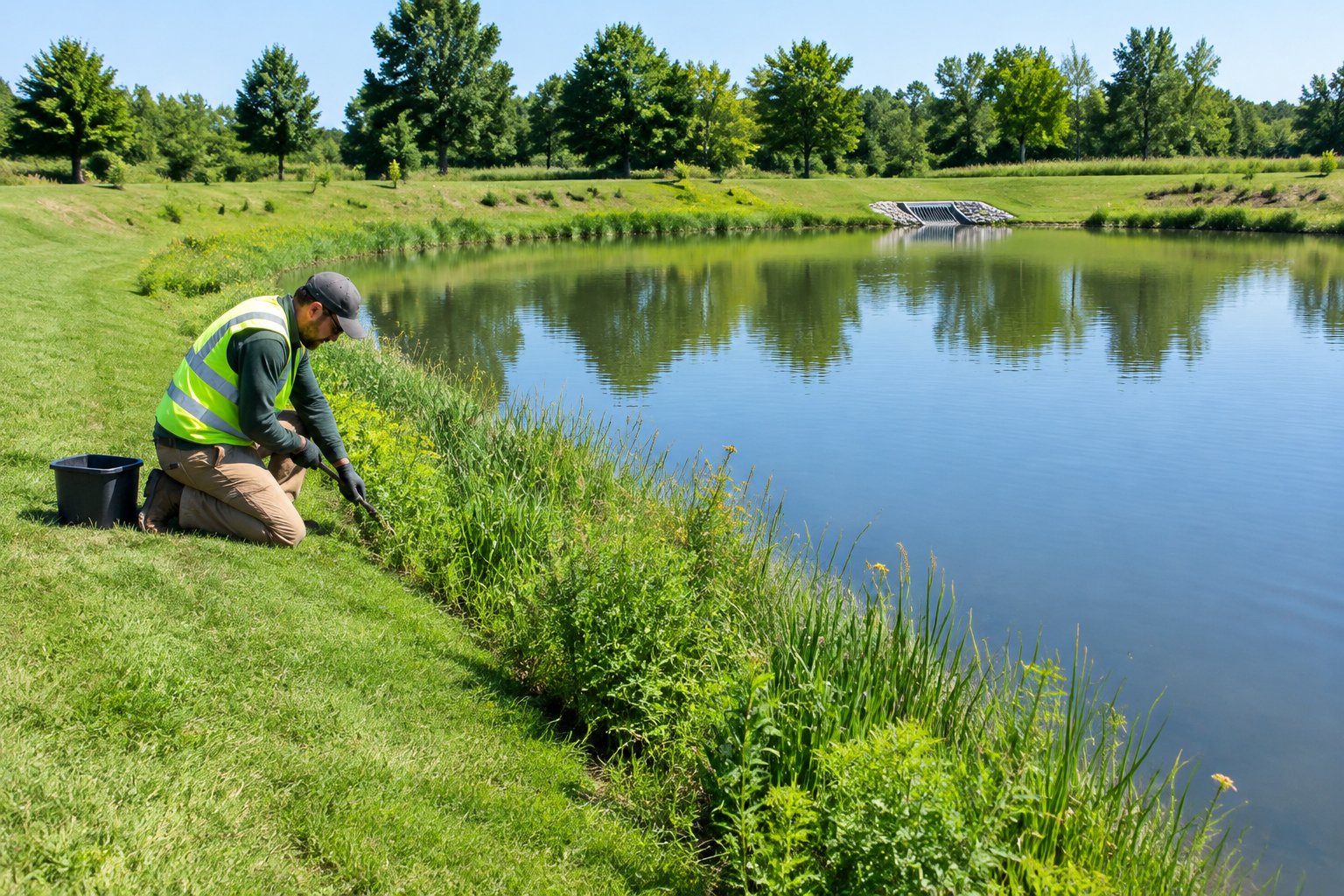
- Inspect after every significant rain and on the schedule the SWP3 requires. Look for scour at transitions, lifted blanket edges, bare patches, undercut outlets and sediment buildup.
- Repair small failures right away. A bare spot the size of a truck door becomes a gully after two more storms. Fill, reseed and recover it before the next rain.
- Keep the ditch clear. Remove sediment and debris from the invert and culverts so water stays in the channel and does not spill onto the shoulder.
- Keep traffic out. Flag or fence finished ditch sections and tell every trade on site.
- Water through establishment if rain does not cooperate, and agree in writing who provides it.
- Document at the end. Photograph stabilized ditch sections with dates for the closeout file.
Remove temporary controls such as check dams and fiber rolls only when the plan directs and the vegetation has taken over. Pulling them early on a ditch that is still thin is one of the easier ways to fail a final inspection.
Get Your Ditches Lined Right Before Closeout
Allied Hydromulch provides soil erosion control for ditches, slopes and channels on commercial and municipal jobs across Texas and Louisiana. Our crews apply everything from tackified hydromulch to bonded fiber matrix and Flexterra, and we come back for repairs when a storm finds a weak spot. Get in touch with our team or call 281-482-8212 to talk through your ditches.
Frequently Asked Questions
Why does my ditch keep washing out after we reseed it?
Usually the lining is too light for the flow, or a headcut or unprotected outlet is undermining it. Reseeding with the same product repeats the failure. Fix the cause, then reline the invert with a heavier product.
Should silt fence go across a drainage ditch?
No. Silt fence across concentrated flow tends to fail or push water around it. Run perimeter controls along the ditch edges and use controls designed for channel flow inside the ditch.
Who maintains a seeded ditch before final acceptance?
That depends on the contract. On most jobs the operator or general contractor stays responsible until final stabilization. Settle who inspects, repairs and waters in the subcontract.
Can hydroseeding alone stabilize a roadside ditch?
On shallow, low-flow ditches it often can. Where flow is concentrated, pair the seed with a heavier hydraulic product or a blanket in the invert and use standard hydroseeding on the side slopes.