.svg)


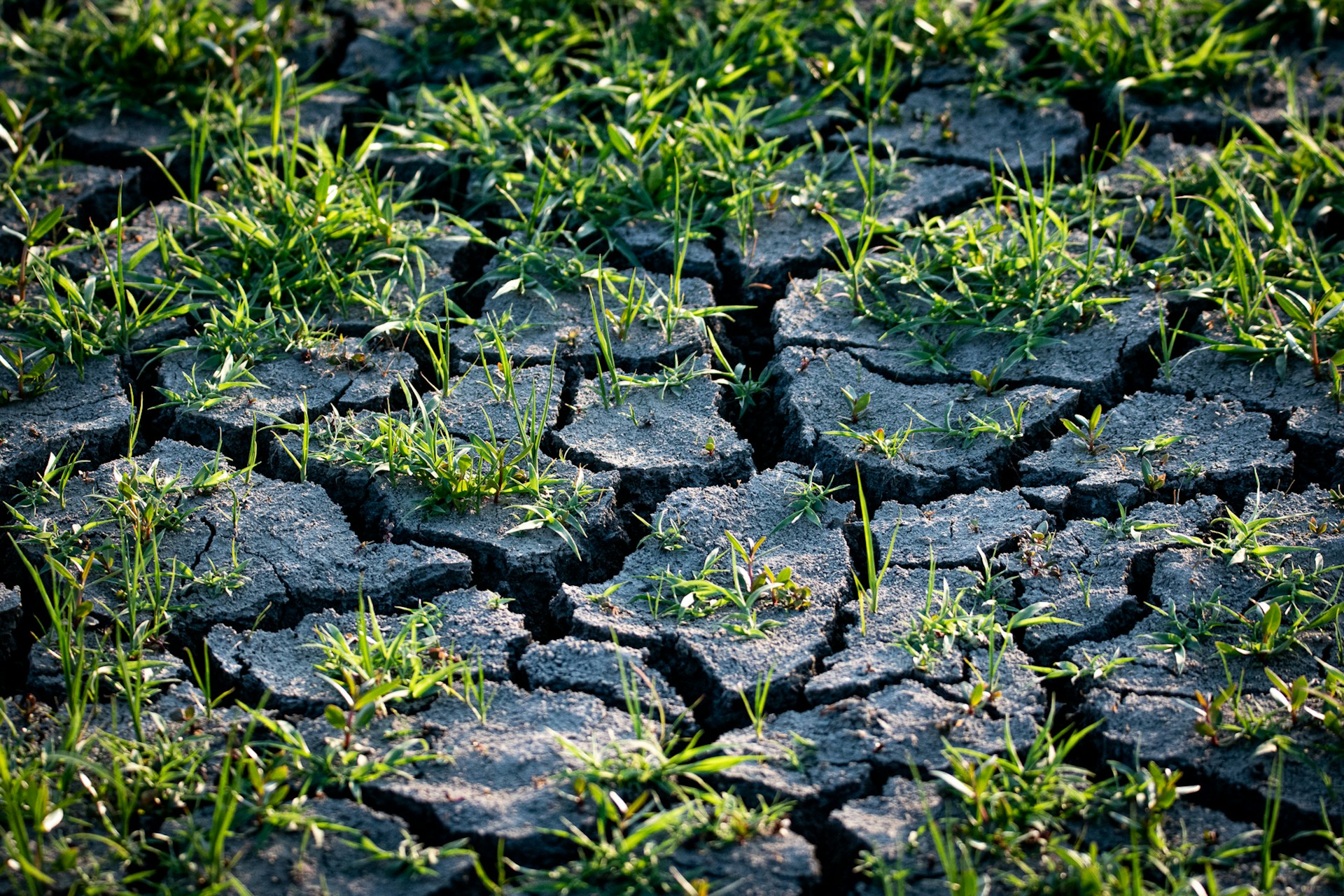
Erosion control in Texas is not a checkbox item. It is a schedule-critical scope element that, when mishandled, cascades into stormwater violations, permit holds, and costly rework across an entire project timeline.
Every active job site in the state faces a unique combination of soil types, slope conditions, and weather patterns that can turn a graded pad or cut slope into a sediment source within a single rain event.
What am I cool? From Houston metro warehouse developments to LNG plant infrastructure along the Gulf Coast and TxDOT highway corridors through Central Texas, the demand for reliable erosion prevention and soil erosion management is constant.
The difference between a site that passes inspection and one that triggers a Notice of Violation often comes down to who installed the BMPs, what products were specified, and whether the work was done right the first time.
Allied Hydromulch TX, operating since 1990 across Texas, Louisiana, Oklahoma, and New Mexico, has installed approximately 15 million square feet of mulch in 2025 alone, serving more than 60 unique clients with a 100% satisfaction rate.
What follows is a field-level breakdown of why Texas sites lose soil so fast, how erosion control and sediment control work together to protect permits and schedules, which methods match which ground conditions, and what contractors should expect from a professional erosion control partner on active job sites across the state.
Why Texas Sites Lose Soil So Quickly
Texas soil conditions and weather patterns create some of the most aggressive erosion environments in the country. Clay-heavy soils across the Gulf Coast, sandy loams in East Texas, and thin soils over limestone in the Hill Country each respond differently to disturbance, but all share one trait: once protective cover is removed, soil loss accelerates fast.
Rainfall, Wind, And Disturbed Ground
Intense rain events are the primary driver of soil erosion on Texas construction sites. Gulf Coast projects routinely face tropical weather systems and high-volume downpours that can deliver several inches of rain in under an hour.
Wind compounds the problem on open, flat sites, particularly across West Texas and along highway corridors where graded surfaces sit exposed for weeks or months. Disturbed ground, stripped of vegetation and compacted by equipment, has almost zero capacity to absorb or slow runoff.
Slopes, Clay Soils, And Drainage Patterns
Slopes associated with embankments and drainage channels are the areas most susceptible to erosion. TxDOT design guidelines recommend slopes no steeper than 3:1 where practical, with 6:1 preferred.
Clay soils across the Houston metro and Gulf Coast region are cohesive when dry but become slick and highly erodible when saturated. Drainage patterns shift during grading, concentrating flow in areas that were not natural low points, creating new erosion pathways on every active site.
Where Problems Show Up First
Problems typically appear at cut and fill slope faces, around drainage channel transitions, at the toe of embankments, and anywhere concentrated runoff crosses bare soil. Unprotected storm drain inlets and temporary drainage swales are common failure points. These are the locations where a single heavy rain can move enough sediment off-site to trigger a stormwater compliance issue.
The First Priority Is Keeping Sediment Out Of Runoff
Preventing soil from leaving the site is the regulatory and practical priority on every Texas construction project. Erosion control and sediment control are two distinct strategies that must work together to meet TPDES General Permit TXR150000 requirements and keep a project moving without permit interruptions.
How Erosion Control And Sediment Control Work Together
Erosion control measures stop soil from being dislodged in the first place. Sediment control catches what erosion control misses. Hydraulic mulch on a slope face is an erosion control measure. A silt fence at the base of that slope is a sediment control measure.
A Stormwater Pollution Prevention Plan (SWP3) requires both, layered across the site based on topography, drainage, and construction phasing. Relying on sediment control alone is like putting a filter on a firehose; the volume overwhelms the system.
BMPs That Support Pollution Prevention
Best management practices for pollution prevention on Texas sites include stabilizing disturbed areas as quickly as possible, diverting clean water around exposed soil, and maintaining all controls throughout construction.
Effective BMPs include hydraulic soil stabilizers, erosion blankets, fiber rolls, compost berms, and temporary seeding. Each BMP is selected based on soil type, slope, expected flow, and how long the area will remain exposed.
Inlet Protection Around Storm Drains And Low Points
Storm drain inlets and low points on a site are the last line of defense before sediment leaves the property. Inlet protection devices, including filter fabric, gravel bags, and manufactured drop inlet guards, must be installed before any grading begins and maintained through final stabilization. A plugged or failed inlet protection device during a rain event can result in a direct discharge violation.
Matching The Method To The Ground Conditions
The right erosion control product depends on the soil, the slope, the expected water velocity, and how long the area needs protection. A flat pad adjacent to a warehouse foundation needs a different solution than a 2:1 highway embankment or a drainage channel carrying concentrated flow.
Hydraulic Mulch And Other Spray-Applied Stabilization
Hydraulic mulch application is the most efficient method for stabilizing large areas of disturbed soil quickly. A slurry of cellulose mulch, tackifier, seed, and soil conditioners is sprayed across prepared ground, forming a protective mat that retains moisture and resists rain impact.
TxDOT maintains an approved materials list for cellulose fiber mulches, with application rates that vary by soil type and slope. For demanding conditions on steep slopes and highly erodible soils, Flexterra, a premium flexible growth medium, provides superior erosion resistance where standard hydraulic mulch would not hold.
Erosion Blankets, Curlex, And Surface Protection
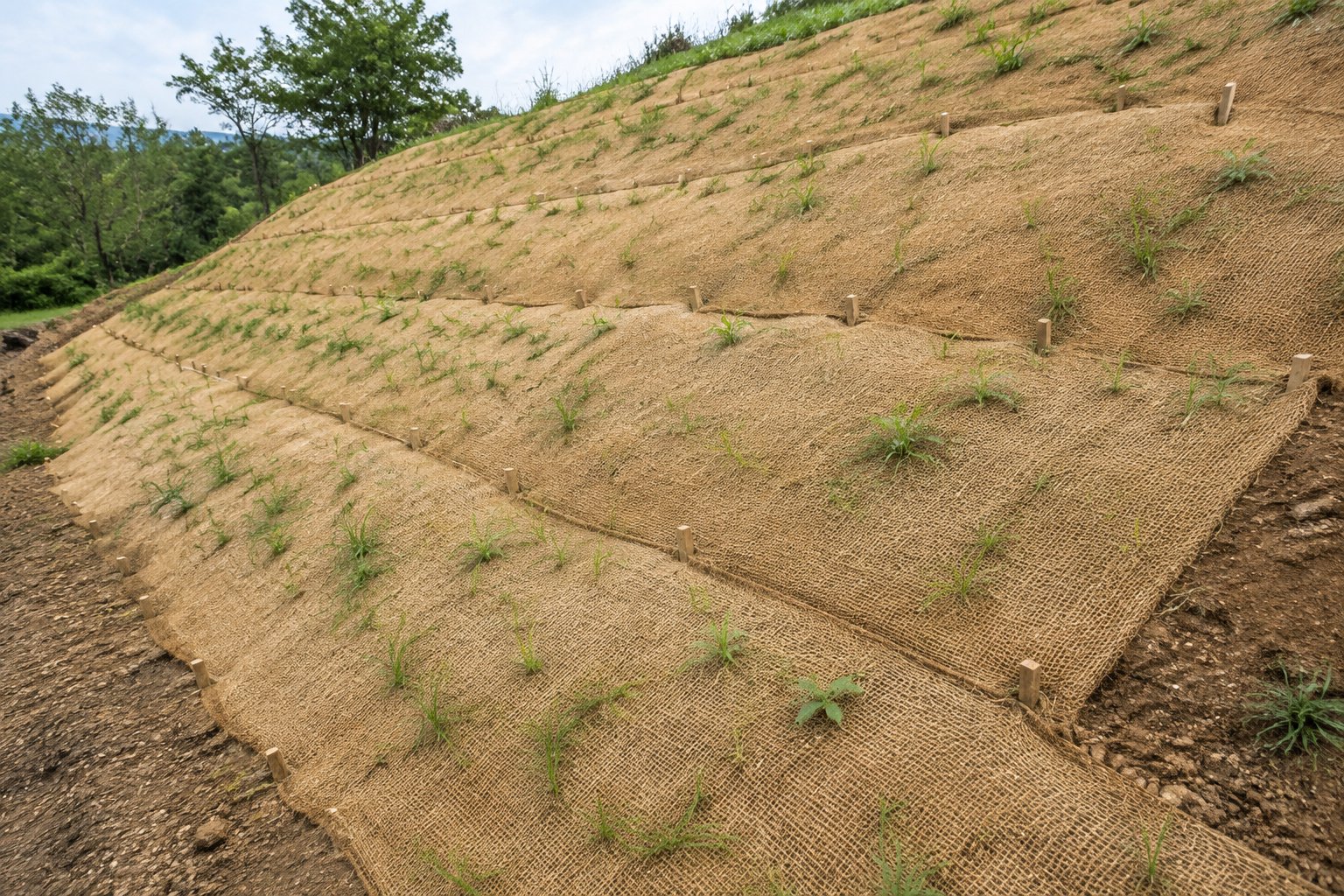
Erosion blankets and rolled erosion control products like Curlex provide physical surface protection on slopes and channels. TxDOT's approved materials list categorizes these products by soil type compatibility and shear stress resistance.
Organic and composite blankets support vegetation establishment on moderate slopes. Synthetic blankets and turf reinforcement mats are specified for steeper grades and channels with frequent flow, where long-term reinforcement of the root zone is needed.
Riprap And Channel Protection For Concentrated Flow
Where water velocity exceeds what vegetation or blankets can handle, riprap and engineered channel lining become necessary.
Drainage channels, pipe outfalls, and areas receiving concentrated runoff from pavement surfaces often require rock armor or grouted riprap to prevent scour. These are permanent or semi-permanent installations sized to the design flow of the channel.
Vegetation Establishment Is The Long-Term Fix
No erosion control blanket or hydraulic stabilizer is a permanent solution on its own. Established vegetation, with a root system anchoring the soil, is the only reliable long-term erosion control for disturbed sites across Texas.
Seeding For Fast Cover On Disturbed Sites
Hydroseeding delivers the fastest path to vegetative cover on construction sites. Germination typically begins within 7 to 14 days, with full establishment developing in 4 to 6 weeks, depending on weather and irrigation.
That timeline matters when inspectors are looking for 70% vegetative cover as a condition of final stabilization. A single-visit application covers large areas efficiently, keeping the project on schedule.
Native Grass For Roadside And Reclamation Work
Native grass seeding uses regionally appropriate species that thrive in Texas soil and climate conditions without heavy irrigation. TxDOT specifies seed mixes by district for urban and rural conditions.
Establishment takes 2 to 3 months, but the result is a drought-tolerant, deep-rooted stand that stabilizes slopes and drainage areas for years. Environmental restoration projects, highway right-of-ways, and reclamation sites across Houston, Corpus Christi, and the Gulf Coast rely on native grass for durable, low-maintenance cover.
Vegetative Cover That Holds After The First Storm
The test of any seeding application is whether it survives the first significant rain event. Proper soil preparation, appropriate seed selection for the region, and a protective mulch layer all contribute to establishment success. A failed seeding means remobilization, reapplication, and schedule delay. Getting the application right the first time eliminates that risk.
Project Logistics By Site Type
Different project types present distinct regulatory and physical challenges. We adapt our BMP mix based on the specific footprint, whether it is a concentrated industrial site or a linear highway corridor.
Commercial, Industrial, And Energy Infrastructure
Large-scale developments like the Amazon Fort Bend Tollway facility or Formosa Plastics require massive stabilization coverage on tight schedules.
In Houston and the Gulf Coast, this means managing high-volume runoff on flat, clay-heavy sites where sediment transport happens quickly. We provide the high-capacity application and compliance documentation needed for industrial-scale closeouts.
TxDOT and Highway Corridors
Linear projects across the DFW, San Antonio, and Corpus Christi corridors require strict adherence to TxDOT Item 506 specifications. We select BMPs from the Approved Materials List based on district-specific seed mixes and slope ratios. Efficient mobilization is critical here to stabilize long stretches of embankments and medians immediately after grading.
Drainage and Retention Systems
Retention ponds and drainage channels require solutions rated for specific shear stress and water velocity. We install engineered channel linings and stabilized bank protection that hold during heavy rain events, preventing scour and protecting downstream water quality.
What Contractors Should Expect From A Texas Erosion Control Partner
Choosing an erosion control subcontractor is a schedule decision as much as a cost decision. A missed mobilization or a failed application creates downstream problems that affect every trade on the site.
Fast Mobilization And Right-First-Time Installation
The ability to mobilize quickly after a grading phase completes, or ahead of a forecasted rain event, is non-negotiable. We have maintained a 100% satisfaction rate across more than 60 clients in 2025 by building our operations around a right-first-time approach. One application, done correctly, that performs as intended. No callbacks. No rework.
Construction Entrances, Street Sweeping, And Site Housekeeping
Erosion control extends beyond slopes and channels. Construction entrances, stabilized with rock pads, prevent sediment tracking onto public roads. Street sweeping keeps adjacent streets clean and avoids municipal complaints. These pollution prevention BMPs are part of every SWP3 and are often the first items inspectors check during a site visit.
Documentation, Maintenance, And Schedule Protection
A professional erosion control partner provides more than installation. We provide inspection-ready documentation, scheduled BMP maintenance, and responsive repairs after storm events to protect your project's permit status.
For industrial and energy projects in Corpus Christi and along the Gulf Coast, we ensure the compliance documentation required for environmental sign-off is ready before the next construction phase begins.
Frequently Asked Questions
What permits or regulatory requirements apply to erosion and sediment control on Texas construction sites?
Construction sites disturbing one acre or more in Texas must obtain coverage under the TPDES General Permit TXR150000 and develop a Stormwater Pollution Prevention Plan (SWP3). The SWP3 must be prepared before construction begins and must detail all erosion and sediment control BMPs, inspection schedules, and maintenance procedures for the site.
Which TxDOT standard details should a contractor follow for slope protection and temporary seeding?
TxDOT provides standard details and specifications under Item 506 for temporary erosion, sedimentation, and environmental controls.
Contractors should reference the TxDOT Approved Materials List for hydromulch, rolled erosion control products, and channel liners, selecting products approved for the specific soil type and slope ratio on their project.
What documentation is typically required to close out erosion control compliance on a commercial or industrial project?
Closeout typically requires evidence of final stabilization, meaning 70% or greater vegetative cover on all disturbed areas. Inspection logs, BMP maintenance records, rain event documentation, and photographs of stabilized conditions are standard requirements. Industrial sites may also require third-party environmental sign-off before permit termination.
How do you select and install erosion control logs or wattles to meet inspection requirements?
Logs and wattles must be placed along contour lines and around perimeters to intercept sheet flow. Proper installation requires trenching the bottom edge, staking at specified intervals, and overlapping ends. We ensure sediment levels never exceed half the log height to maintain compliance during municipal or DOT inspections.
Which native plant species are best for Texas stabilization?
We use district-specific mixes, often including buffalograss, sideoats grama, and green sprangletop for upland slopes. For drainage areas and swales, species like Gulf muhly and switchgrass provide the deeper root systems needed for high-moisture conditions. All species are selected based on the regional soil profile and expected rainfall.