

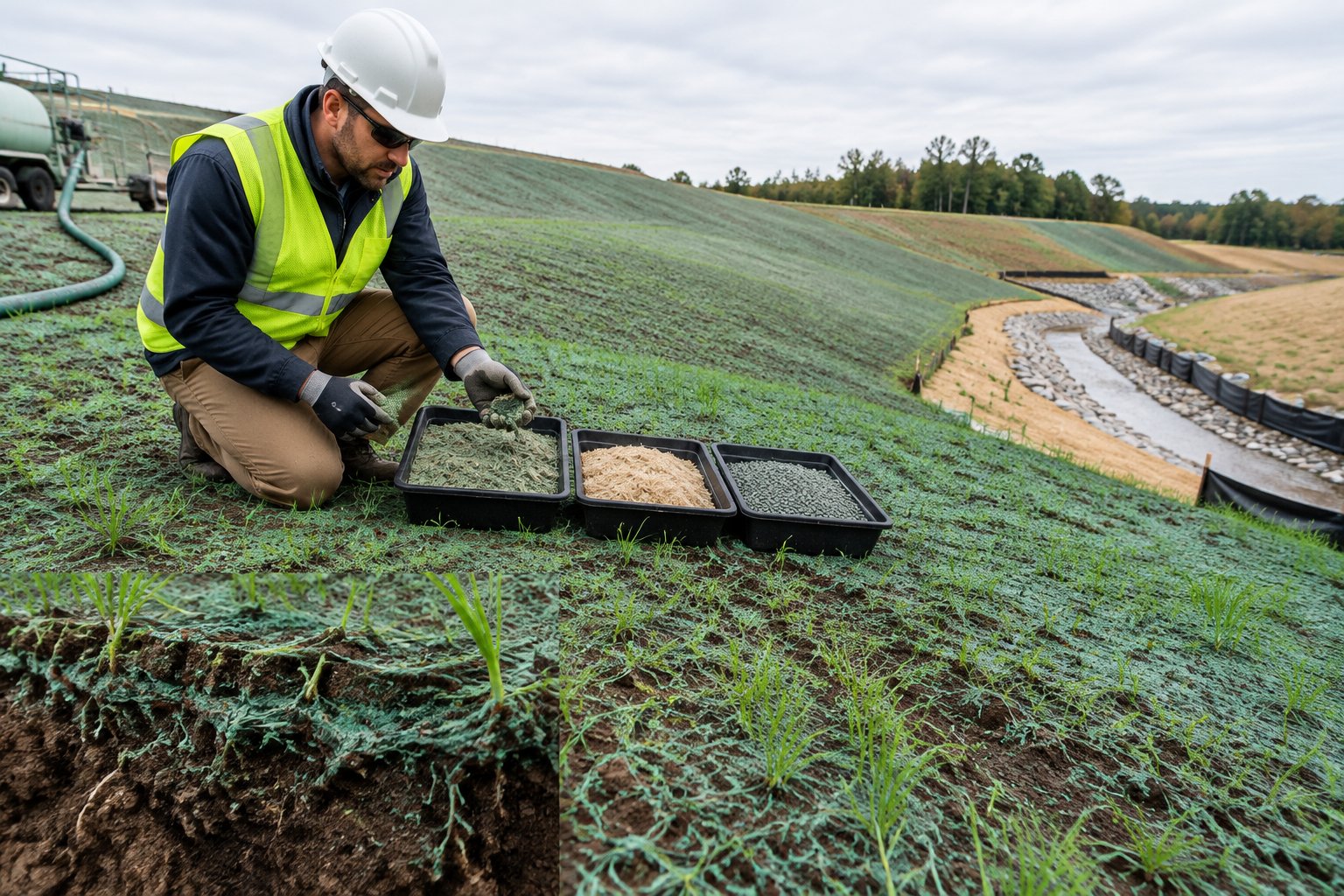
The first hard rain after seeding is the real test of a slurry, and the tackifier is the part being tested. A hydroseed tackifier is the binder in the slurry that glues fiber mulch and seed to each other and to the soil surface, so the application stays in place through wind and rain until roots take over. The usual choices are plant-based binders such as guar and psyllium, synthetic polyacrylamide (PAM), and mulches that come with the binder already blended in. Which one fits, and how much goes in, comes from the manufacturer's guidance and the project spec, adjusted for the slope and exposure of each area. On ground that faces concentrated flow, no amount of extra tackifier replaces a heavier product.
What Does a Tackifier Actually Do?
Without a binder, fiber mulch is loose material lying on the ground. Rain can float it into low spots and wind can lift it off exposed pads, taking the seed along. A tackifier hydrates in the tank, then dries on the surface into a film that ties the fibers together and anchors them to the top of the soil.
That bonded layer is what lets the mulch do its job. It holds moisture near the seed, softens raindrop impact and keeps the seed in contact with the ground during the weeks before the roots can hold anything. What it does not do is feed or water the seed. If the stand comes in thin because the site dried out, the binder is not the cause, and more binder is not the fix.
Which Tackifier Types Are Used on Commercial Sites?
There are four broad options. Each can work well when it matches the site, the mulch and the spec.
Guar-Based Binders
Guar is the binder most crews reach for on everyday commercial hydroseeding. It is plant based, works with paper and wood fiber, and is widely accepted in specs. Some manufacturers use modified or cross-linked guar in higher-performance mulches where a longer-lasting bond is needed. The main handling issue is that guar thickens almost as soon as it hits water, so dumping it in all at once causes clumps that can foul the pump and leave weak spots on the ground.
Psyllium-Based Binders
Psyllium comes from the husk of plantago seed. It forms a firm membrane once it dries and can rewet without losing its hold entirely. The thing to plan around is drying time. If the forecast shows rain soon after application, check the label's curing guidance before mobilizing, particularly during Gulf Coast storm season.
Polyacrylamide (PAM)
PAM is a synthetic polymer that binds fine soil particles together, and some products are sold as soil binders or used alongside plant-based tackifiers. Products vary in form and strength, and some specs restrict or exclude synthetic binders, particularly near water. Read the spec and the product label before choosing it.
Mulches With Binder Already Included
Many hydraulic mulches arrive with tackifier pre-blended, and bonded fiber matrix products carry their binder as part of the formula. That cuts loading steps and reduces mixing errors. It also limits field adjustment, so before adding extra tackifier to a pre-blended mulch, check what the bag already contains and what the manufacturer allows.
How Do You Decide How Much Tackifier to Use?
Start with two documents: the manufacturer's label or technical data sheet, and the project spec. The label sets the product's own dosing guidance, which often changes with slope, and the spec may name the accepted product and a required rate. Where they differ, the spec governs, and if it is unclear, ask the engineer before ordering material. On public work in particular, field substitutions are rarely accepted without written approval.
From there, think about the conditions on each area. Steeper ground, open pads exposed to wind and applications going down ahead of storm season all push toward the heavier end of what the label allows. Flat, sheltered ground does not need the same treatment. If the mulch already contains binder, account for that first so the total stays within the manufacturer's guidance. Overdosing wastes money and can make the slurry harder to pump without adding much hold.
Write the decision on the batch sheet for each zone, so every load in that area gets mixed the same way and the record is there if an inspector asks.
When Is More Tackifier the Wrong Answer?
Concentrated flow is the clearest case. Water running down a ditch, swale or outfall exerts far more force than rain falling on a slope, and standard hydraulic mulch, however well tacked, is not designed to resist it. Those areas usually call for erosion control blankets, an engineered hydraulic product such as Flexterra HP-FGM or bonded fiber matrix, or another measure from the erosion control plan.
Very steep faces are the second case. Once the slope is beyond what the mulch is rated for, a heavier product does the work and the tackifier question takes care of itself. Our guide to erosion control for steep slopes walks through how to choose between those methods.
How Do Mixing and Site Conditions Affect the Bond?
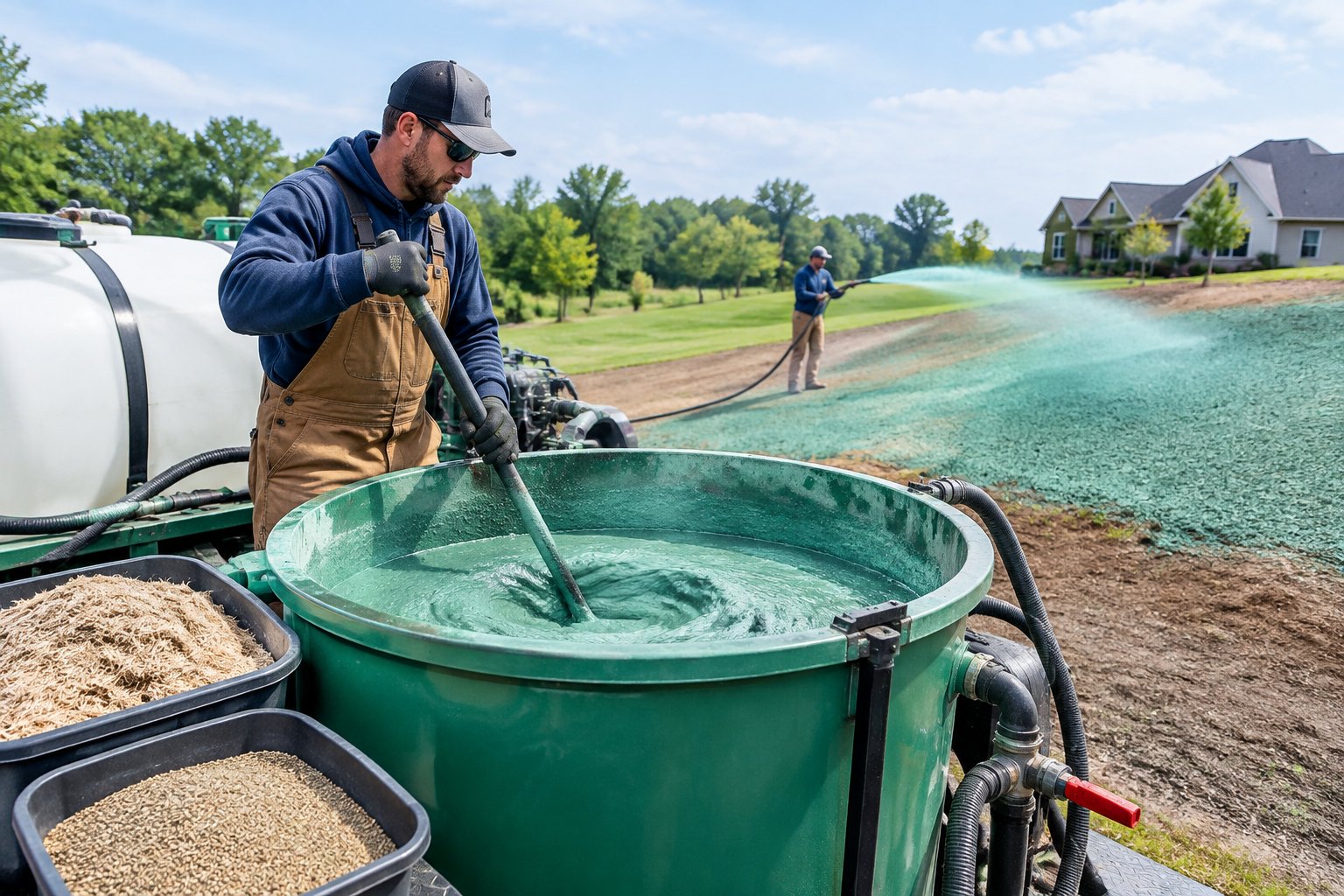
Even the right binder fails if it goes in wrong or goes on the wrong surface. Follow the equipment and product manufacturers on loading order. Many crews start the water and agitation first, get the fiber dispersed, and feed the binder in gradually rather than all at once. Heavier wood fiber and bonded products generally need mechanical agitation to stay mixed. Flush the lines after the job so cured binder does not set in the hose.
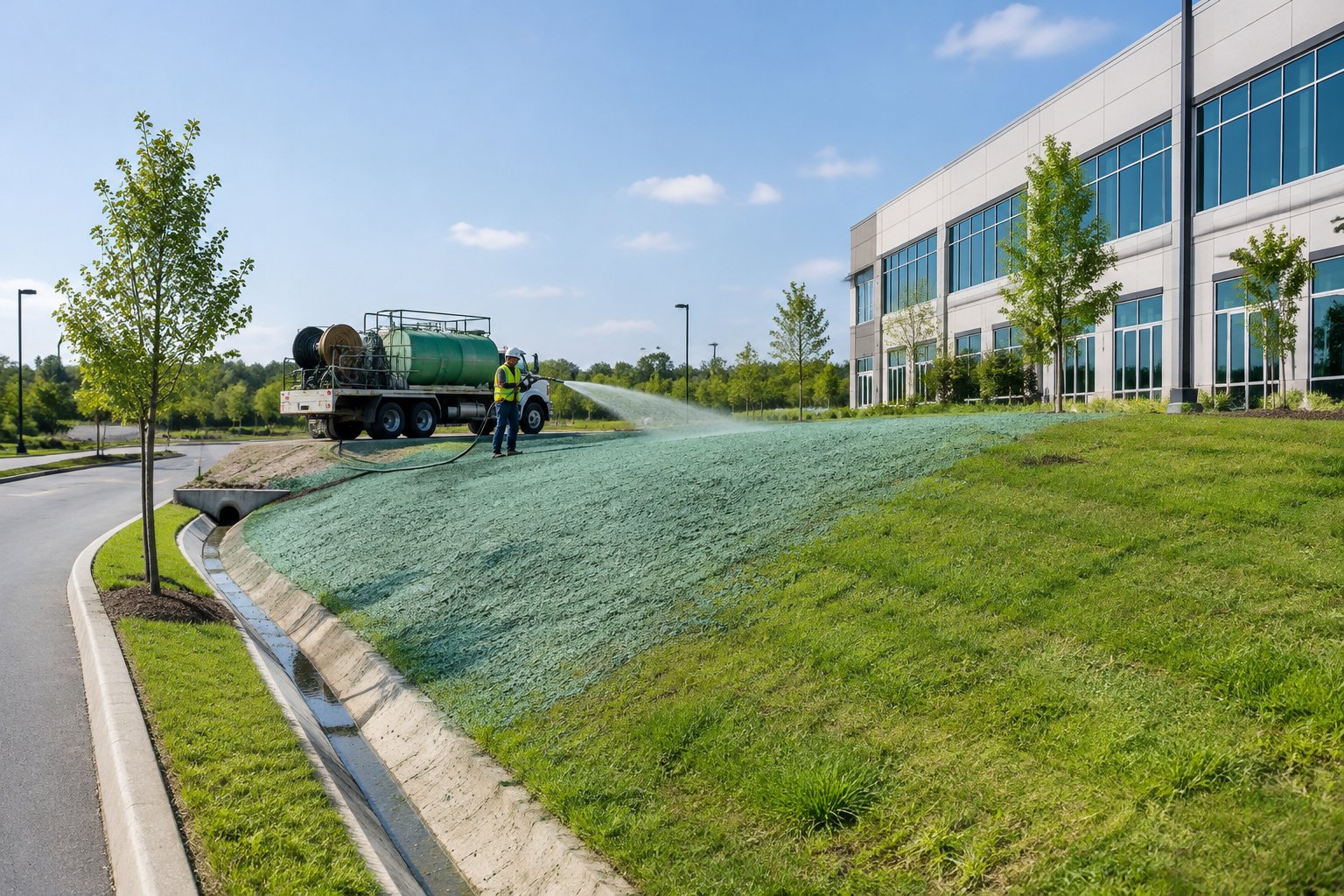
The surface matters just as much. Tackifier grips a rough, loose surface far better than crusted clay or slick, compacted fill, so light scarifying or track-walking before application helps. On slopes, spraying from more than one direction cuts down on thin spots. Then give it the curing time on the label before rain, and walk slopes and channels after the first big storm so any rills or bare patches get fixed early. For a quick, rough range on standard hydroseeding with a properly tacked application, our pricing calculator is a good starting point.
Need a Slurry That Stays Put Through Storm Season?
Our crews have been matching binders and mulches to slopes, soils and weather on erosion control projects across Texas and Louisiana since 1990. If you are working out what a slope, a pond bank or an exposed pad needs, contact Allied Hydromulch or call 281-482-8212 and we will talk through the spec and the site with you.
Frequently Asked Questions
Can you hydroseed without a tackifier?
You can spray slurry without one, but on most commercial ground the mulch and seed are likely to move before roots form. Some mulches already contain a binder, so check the bag before adding a separate one.
Is guar or PAM the better tackifier?
Neither is better everywhere. Guar is the common default on flat to moderate ground, while PAM is mainly used as a soil binder. The spec, the mulch and the site conditions decide which one fits.
How long does a tackifier need before it rains?
It depends on the product and the weather. Each label gives its own curing guidance, so check it and the forecast before scheduling the application.
Does a pre-blended mulch need extra tackifier on slopes?
Sometimes. Check how much binder the mulch already contains and what the manufacturer allows, then add only what the label and spec support.