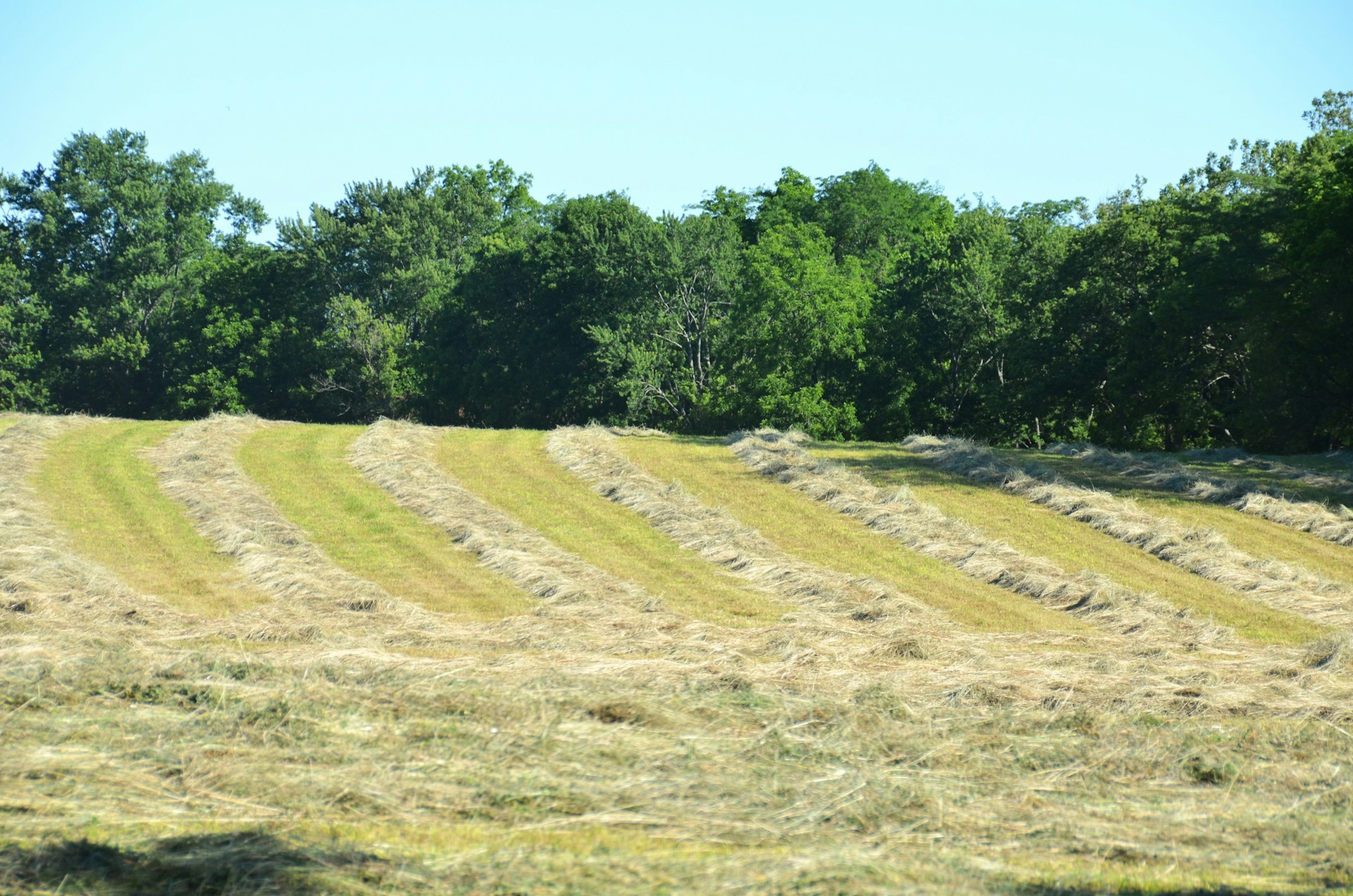
The right mulch for erosion control depends on three things: how steep the ground is, whether water concentrates on it, and how long it has to stay protected. Anchored straw is the low-cost option for flat, short-term areas. Wood fiber hydraulic mulch is the workhorse on most commercial pads, lots and moderate slopes. Bonded fiber matrix and Flexterra HP-FGM take over on steep or storm-exposed faces. Wood chips have their place too, but only where nobody plans to grow grass.
Picking wrong usually shows up after the first hard rain, as rills on a slope or a pile of straw against the silt fence. This guide compares the main mulch types the way a superintendent or engineer has to weigh them on a real job, and covers the details that decide whether the cover holds.
What Does Mulch Do on a Construction Site?
Mulch is a surface cover. It takes the hit from falling rain so raindrops do not knock soil loose, it slows sheet flow so water has time to soak in, and it holds moisture and seed against the ground while vegetation gets started. On most commercial work it is a bridge: it protects bare soil until grass roots can do the job.
That also sets its limits. Mulch does not catch sediment that is already moving, so perimeter controls such as silt fence and inlet protection still belong in the plan. It cannot fix compacted subgrade either. Water sheets off hard-packed ground faster, which puts more stress on whatever cover is sitting on top, so loosening the soil before mulching is part of the job.
How Do the Main Mulch Types Compare?
Five materials cover most of what you will see on Texas and Louisiana sites. Here is how they line up.
Straw Mulch
Straw is the cheapest way to cover a lot of ground quickly. It is light, so it has to be anchored, either by crimping it partly into the soil with equipment or by spraying a tackifier over it. Untacked straw on an open pad in Gulf Coast wind does not stay where you put it. Straw works best on flat to gentle grades with sheet flow, and the seed and fertilizer go on the prepared soil first with the straw over the top. Aim for even cover with a little soil still visible through it, since a heavy mat can shade out seedlings.
Wood Chips and Shredded Bark
Clearing crews often leave piles of ground wood behind, and it is tempting to spread it back out as erosion cover. It does hold up well against wind and traffic. The problem is grass. Seed struggles to push through a thick woody layer, and wood mixed into the soil pulls nitrogen away from young roots as it decomposes. Keep it to tree protection zones, walking paths and areas that will not be seeded.
Hydraulic Mulch: Paper, Wood Fiber and Blends
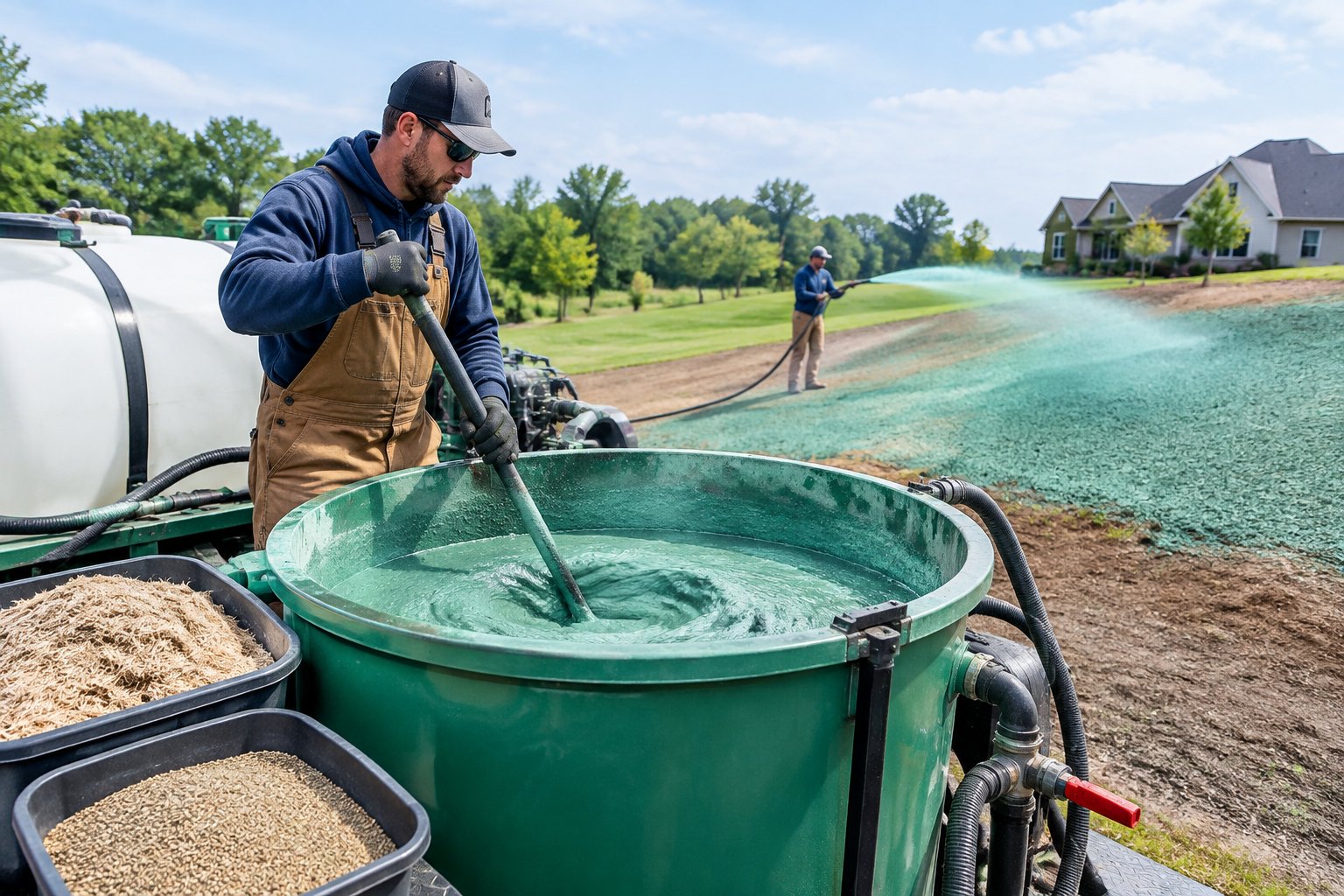
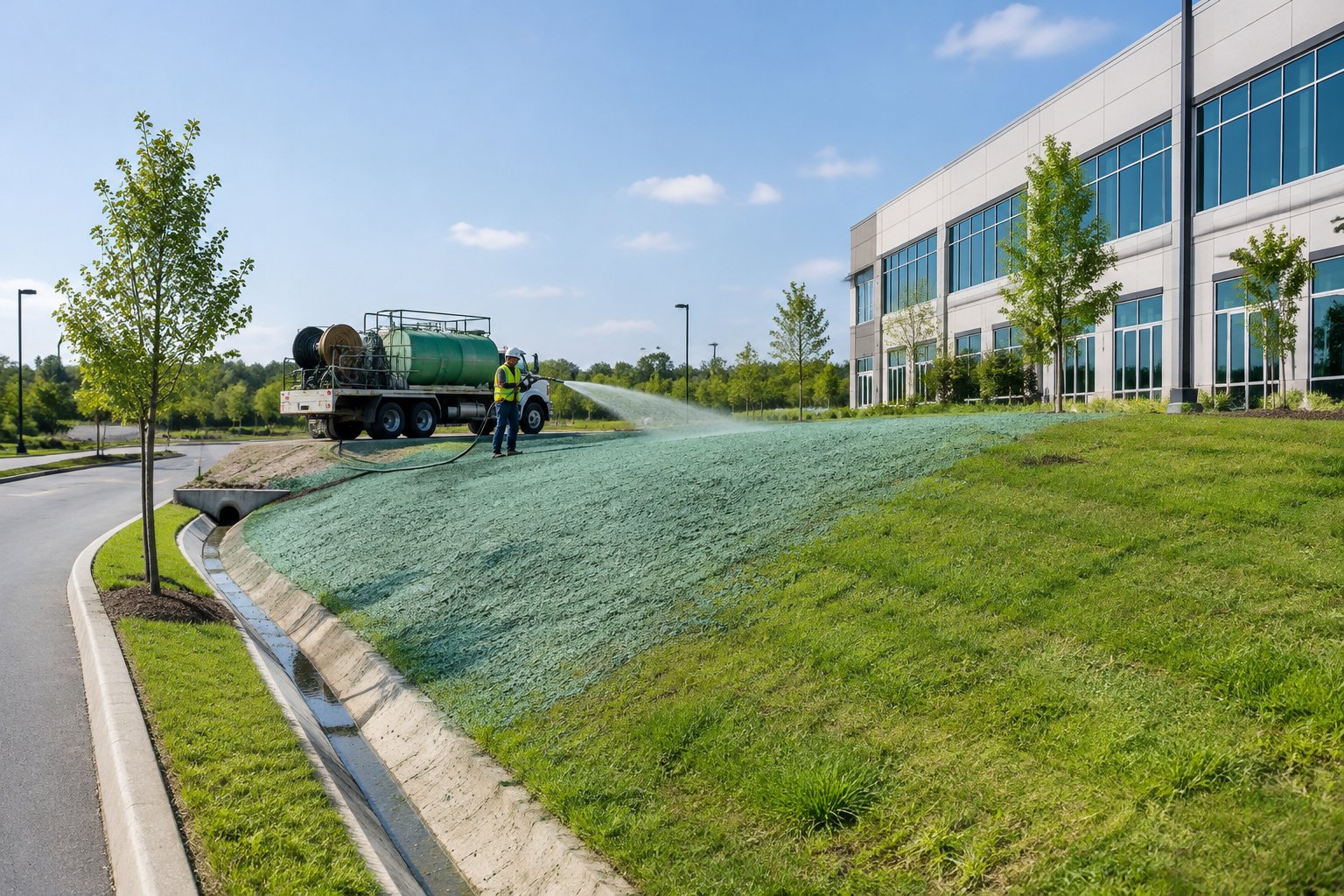
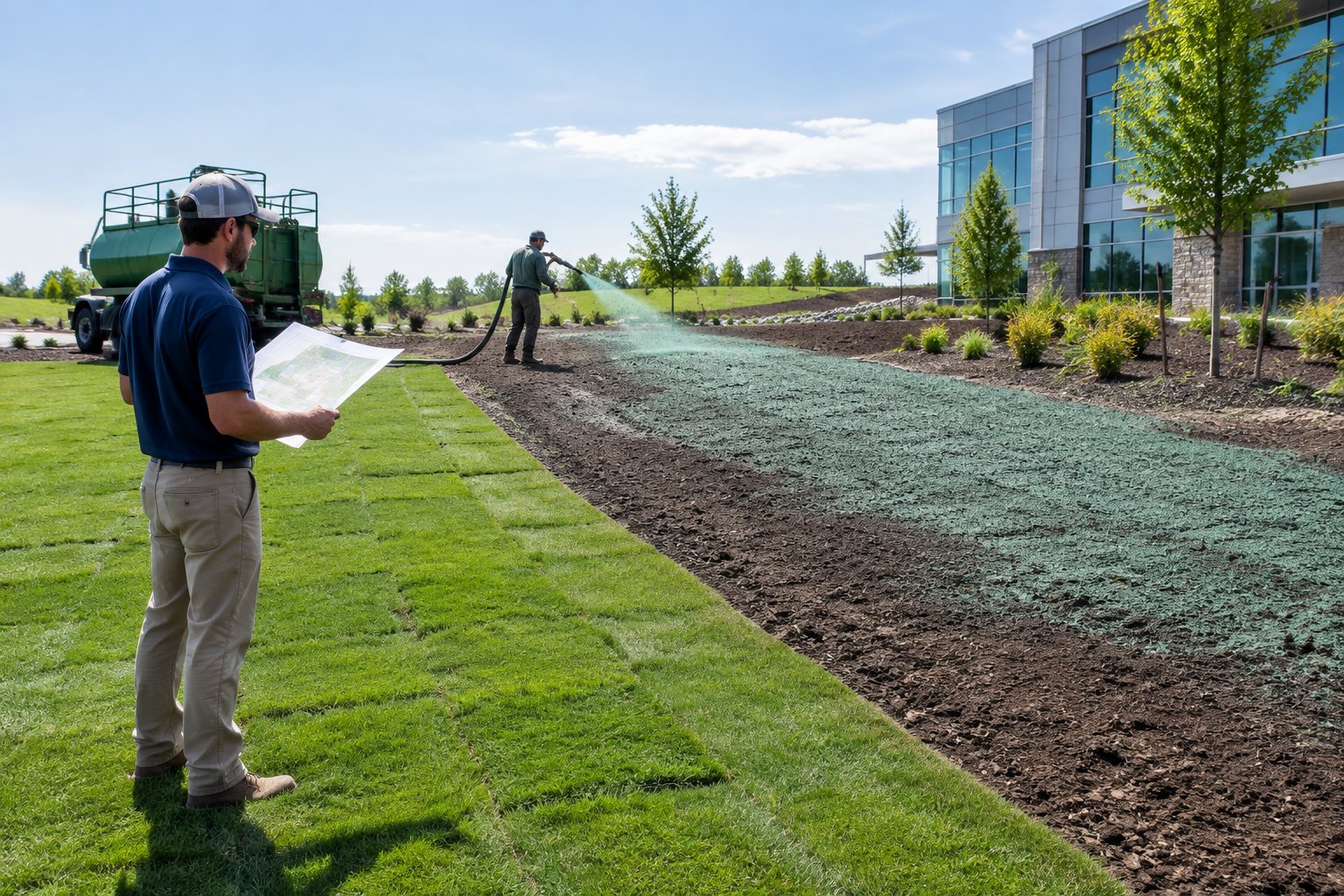
Hydraulic mulch is fiber sprayed as a slurry from a truck, usually together with seed and fertilizer, and it dries into a mat that holds both in place. Paper mulch is the lighter, shorter-lived version and suits flat ground. Wood fiber holds water longer and forms a tougher mat, so it is the usual pick for commercial pads and moderate slopes. Blends sit in between on cost and performance. The big field advantage is reach: a hose or tower cannon covers irregular areas, edges next to structures and long runs without anyone walking the slope with rolls. If you are deciding between seeding and a mulch-first approach, our breakdown of hydroseed vs. hydromulch for Texas construction sites explains when each one makes sense.
BFM and Flexterra for High-Risk Slopes
When a slope is too steep or too long for standard hydraulic mulch, bonded products are the next step up. Bonded fiber matrix forms a continuous layer that resists raindrop impact once it cures, and we cover where it fits in our post on bonded fiber matrix for slope stabilization. Flexterra HP-FGM is a higher-performance flexible growth medium for severe slopes and highly erodible soils, explained in faster slope protection with Flexterra. Both are installed at the manufacturer's specified rates.
How Do You Match Mulch to Slope, Flow and Schedule?
Start with the ground, then the water, then the calendar.
- Slope steepness and length. Loose mulch belongs on flatter grades. As slopes get steeper or longer, runoff picks up speed and strips light cover from the bottom half first, which points toward tackified wood fiber, then bonded products.
- Where water concentrates. Swales, ditches and outfalls carry moving water that will scour any mulch. Those areas usually need rolled blankets, turf reinforcement or hard armor sized for the flow.
- How long the cover has to last. A stockpile that will be reworked next month needs something cheap and quick. A slope that has to carry the site to final stabilization needs cover that lasts until the grass is established.
- Weather exposure. Summer highs in the 90s and above dry the surface fast, and tropical systems can drop several inches of rain in an afternoon. Material that holds moisture and stays bonded through a storm earns its cost on exposed ground.
- Access. Blowers and spray trucks need a way in. Hydraulic application from the hose can reach slopes that are unsafe for a crew to walk.
Most projects end up with more than one product, matched zone by zone. For a quick ballpark on standard hydroseeding before you finalize the scope, try our online pricing calculator.
Why Does Erosion Control Mulch Fail?
When mulch lets go, the cause is usually one of a handful of things we see again and again:
- Applied too thin, so bare spots open up and erode first
- No tackifier or anchoring on straw, or too little tackifier in the slurry for the slope
- Water running onto the slope from above that nobody diverted before mulching
- Compacted soil underneath that sheds water instead of absorbing it
- A storm before a bonded product had its dry window to cure
- Equipment or foot traffic across the mulched area
Prevention is mostly about following the spec rate, prepping the ground and watching the forecast. After significant rain, walk the mulched areas and look for rills under the cover, straw washed into piles and thin patches on the upper slope. Re-spray or re-cover those spots right away. A small bare patch grows quickly once flow finds it.
Where Does Mulch Stop and Other Controls Take Over?
Mulch protects the surface while vegetation establishes, and that is its whole job. Sediment controls catch soil that has already moved, so an erosion and sediment control plan needs both. Channels with real velocity need rated linings or armor. And mulch on its own does not close out a permit: under the Texas construction general permit, final stabilization is measured by established perennial vegetation, so the mulch has to be paired with seed and carried through to a grass stand. Our crews have been providing erosion control services across Texas and Louisiana since 1990, and the best results come from treating mulch as one part of that bigger plan.
Talk Through Your Mulch Spec with Our Crew
If you have pads, slopes or idle areas that need cover before the next storm, we can help you match the product to each zone and get it on the ground on schedule. Contact Allied Hydromulch or call 281-482-8212 to talk through slope, soil and timing on your site.
Frequently Asked Questions
Is straw or hydraulic mulch better on a commercial site?
Straw is cheaper up front and fine on flat, sheltered ground when it is properly anchored. Hydraulic mulch costs more but sprays seed and cover in one pass, holds better on slopes and in wind, and usually means fewer repairs, so it is the more common choice on commercial work.
How thick should erosion control mulch be?
Follow the rate in the project spec, the SWP3 or the manufacturer's guidance. The goal is even, complete coverage. Too thin leaves bare soil exposed, and too heavy can block light and smother seedlings.
Can mulch go down without seed?
Yes. Mulch on its own is a common way to cover idle areas or stockpiles between phases. Just remember it is temporary, so those areas will still need seeding before closeout.
What happens if it rains right after mulching?
Light rain usually helps a tacked application settle. A heavy storm before the mulch sets or a bonded product cures can move it, especially on slopes, so check the forecast before application and inspect afterward.