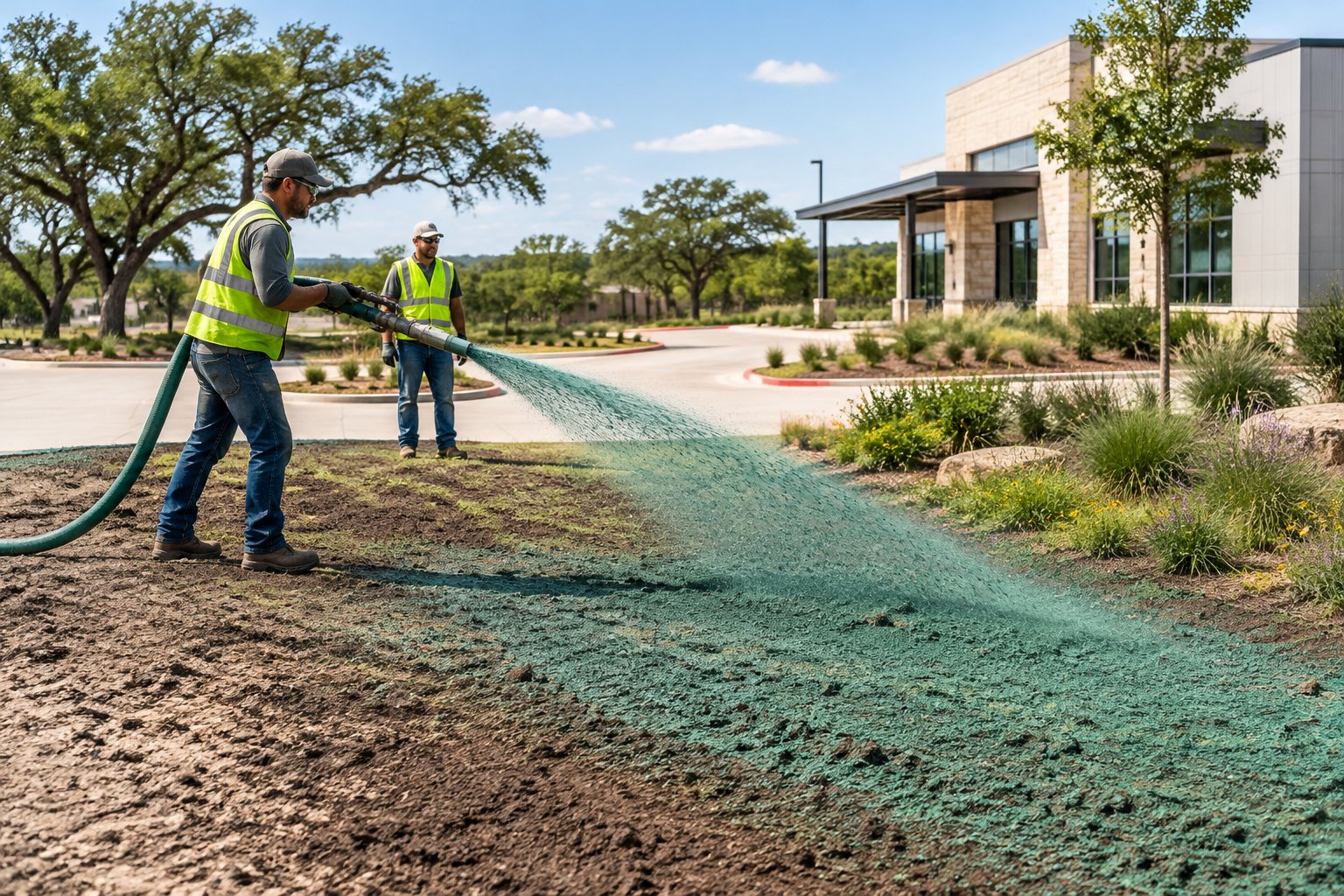
A wildflower area at a business park entrance or along a county road can look spectacular in April, or it can look like bare dirt and weeds. The difference usually comes down to three decisions made months earlier. Hydroseeding wildflowers works well on commercial entrances, right of way and municipal ground when the seed mix suits the region, the seed goes down in fall for most Texas species, and the mulch layer is light enough to let small seed see the sun. Get those right and the planting holds soil, needs little mowing and comes back on its own.
Wildflower seeding is one of the services we install alongside our commercial hydroseeding services, usually on projects where the owner or the agency wants low-maintenance cover with some color. This guide is for the people writing the scope: what changes when the seed is wildflowers instead of turf, and how to set expectations with the client before anyone sprays.
Where Do Wildflower Plantings Make Sense on Commercial Work?
Wildflowers earn their place on ground that is seen often but mowed rarely. The common ones on our jobs:
- Commercial entrances and frontage, where a developer wants a planted look without the irrigation and mowing bill of turf.
- Right of way and road shoulders, where cities, counties and TxDOT want cover that tolerates long gaps between mowing cycles.
- Municipal parks, trails and detention areas, where pollinator habitat is part of the brief.
- Restoration tracts and buffers on pipeline, solar and other large projects.
On TxDOT work the mix is often written for you. The 2024 Item 164 specification includes a flower seeding mix table (Table 5) with regional mixes that are applied along with the permanent rural or urban grass mix, so the flowers ride on top of a grass stand rather than replacing it. Municipal specs frequently follow the same logic.
Which Wildflower Seed Mix Fits the Site?
Pick the mix for the region, the soil and how quickly the client needs to see color. Almost every commercial wildflower mix should also carry native bunchgrass, because grass roots do most of the soil holding while the flowers come and go through the seasons.
Matching Species to Region and Soil
Bluebonnets want full sun and good drainage, so they do best on the well-drained soils of Central Texas and the Hill Country and struggle on wet, heavy Gulf Coast clay. Indian blanket handles heat, sand and dry ground. Coreopsis tolerates a wide range of soils. On slow-draining coastal and Louisiana sites, lean the mix toward species that put up with wet feet, and check the spec before substituting anything.
Pairing Flowers with Native Grass
Bunchgrasses such as little bluestem and sideoats grama leave room between plants for flowers to grow. Aggressive sod-forming grasses do the opposite and will crowd a wildflower stand out within a couple of seasons. If the site is mostly about grass with flowers as an accent, our guide to native grass seeding for Texas site restoration covers the grass side in more detail.
Why Does Fall Seeding Matter for Texas Wildflowers?
Many Texas wildflowers, bluebonnets included, germinate in fall, sit as low rosettes through winter and bloom in spring. TxDOT's own wildflower guidance says planting between September and the end of November gives the best results across most of the state, and Texas A&M AgriLife recommends September, October or early November, planting earlier the farther north the site is. Seed that goes down in spring often misses that cycle and may not bloom until the following year.
That timing collides with construction schedules. Final grading on a lot of commercial jobs wraps in summer, and nobody wants bare ground sitting until October. The usual answer is a temporary cover or a hydromulch application to hold the surface, followed by the wildflower and native grass mix in fall. Our post on the best time to hydroseed in Texas explains the seasonal windows for the grass side of the job. If you want a quick budget number for a phased approach like this, the Allied pricing calculator gives a rough range for standard hydroseeding before you ask for a firm quote.
How Does the Hydroseed Application Change for Wildflowers?
The equipment is the same, but three things change in the tank and on the ground.
Mulch rate. Many wildflower seeds are tiny and need light to germinate. AgriLife advises keeping seed only partly covered so it gets sun. A turf-rate blanket of mulch can bury it, so the crew runs a lighter mulch rate or applies seed and mulch in separate passes, depending on the slope and the spec.
Fertilizer. TxDOT's guidance allows a low-nitrogen fertilizer at planting if the soil is short on nutrients and warns that fertilizing an established planting pushes leaves at the expense of flowers. Nitrogen also feeds weeds, which are the main threat in year one. Many wildflower slurries go out with little or no fertilizer.
Seed handling. Wildflower seed varies wildly in size, from dust-fine to large and fluffy. Good agitation keeps the mix even from the first load to the last, so the entrance does not end up with all the coreopsis on one side.
Preparing the Seedbed
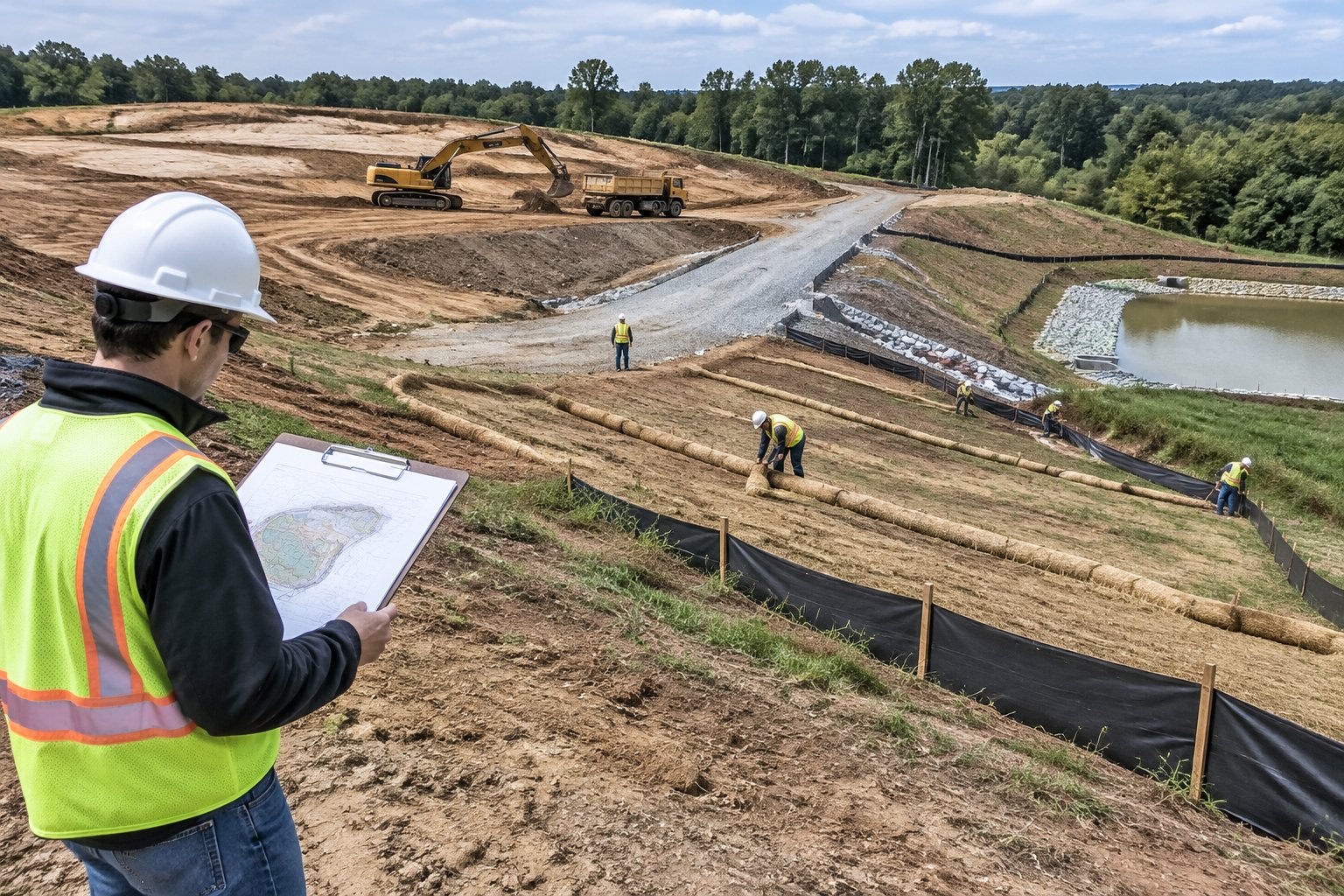
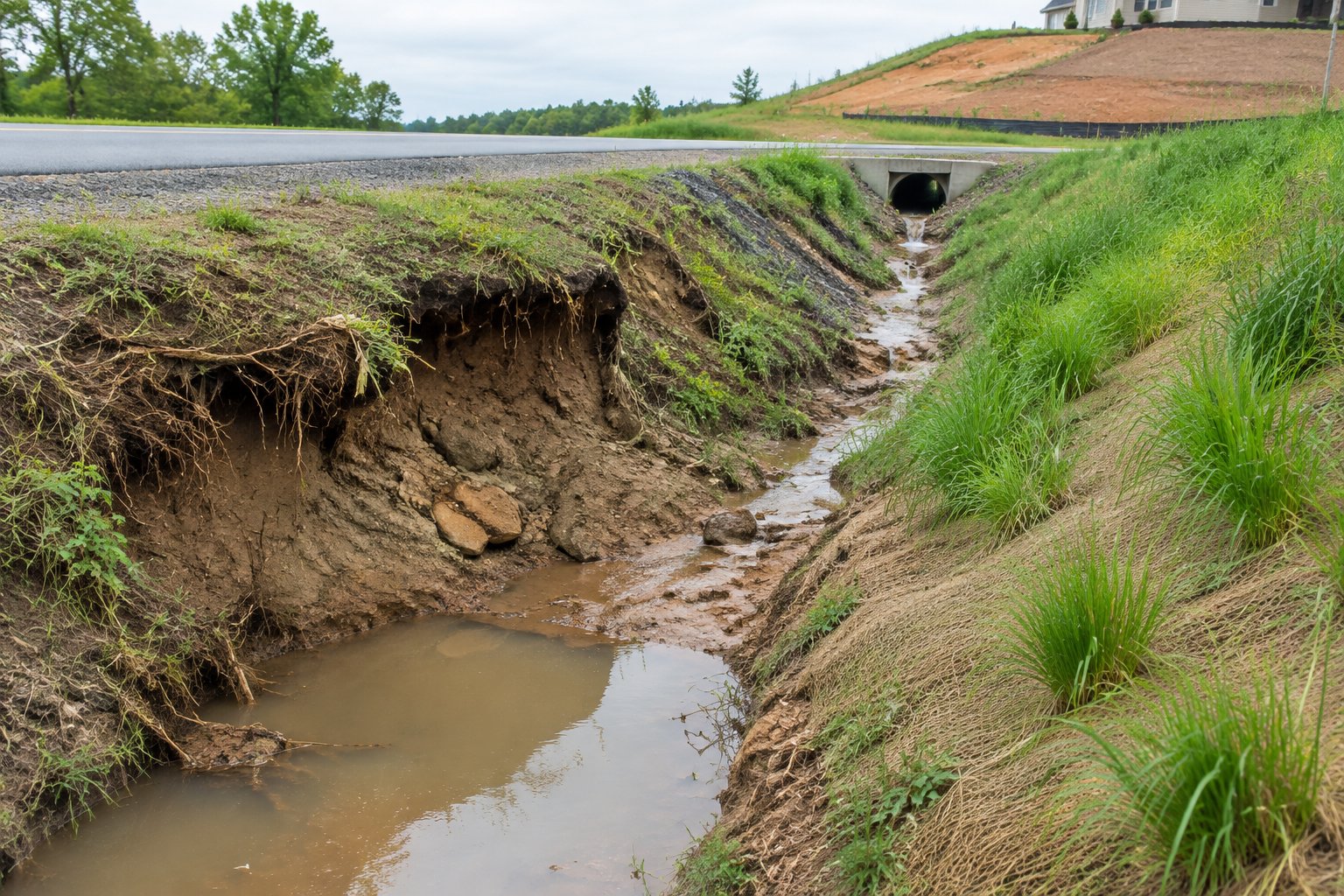
Seed-to-soil contact matters more than anything else in the prep. Clear existing turf and weeds first, because a wildflower slurry sprayed over established grass mostly lands on leaves. Loosen compacted pads so roots can get down, and fix low spots during final grading, since standing water drowns seedlings. On slopes and in ditches where a light mulch rate will not hold the soil, add native grass to the mix for earlier root cover and consider a stronger hydraulic product on the steepest sections.
What Should the Owner Expect in Year One?
Set expectations before seeding, because the first year of a wildflower planting looks rougher than most owners imagine.
- Fall and winter: a thin green haze of seedlings and low rosettes, with the mulch fading as it breaks down.
- First spring: annuals bloom; perennials may show only leaves.
- Seasons two and three: perennials and reseeded annuals build density, and the planting starts to look like a meadow.
Through summer the stand turns tan as annuals finish and drop seed. On visible frontage a mowed border strip makes the planting look managed during the off months. Watering during establishment matters as much as it does for turf, so agree on who provides it if fall rain is light.
Mowing Around Seed Set
Mowing timing decides whether the planting comes back. Hold off until flowers have finished and seed has dropped, usually early summer for spring bloomers. AgriLife notes that mowing too early removes the seed that refills next year's seed bank. Write the mowing window into the maintenance handoff so a crew on autopilot does not cut the entrance in May. If tall weeds threaten to shade out seedlings earlier on, a high mow that clears the rosettes can knock them back.
Plan Your Wildflower Installation with Our Team
We install wildflower and native grass seeding for developers, general contractors and public agencies across Texas and Louisiana, and we give a one-acre entrance the same attention as a long corridor. To talk through the mix, the timing and how to protect the ground until fall, contact Allied Hydromulch or call 281-482-8212.
Frequently Asked Questions
Can wildflowers be hydroseeded in spring?
They can, but many Texas species, including bluebonnets, may not bloom until the following year when seeded in spring. Fall is the preferred window. If the schedule forces a spring application, plan on warm-season grass doing the early work.
Do wildflowers alone control erosion?
Not well on their own. Annuals die back once they set seed, leaving gaps through summer. That is why commercial mixes carry native bunchgrass, which keeps roots in the soil year round.
Can we add wildflowers to an area that is already grassed?
It is difficult. Established turf blocks seed-to-soil contact and outcompetes seedlings, so the grass needs to be scalped or removed first. Bermudagrass in particular will overrun a wildflower stand.
How long before a wildflower area looks established?
Expect color the first spring from annuals and a fuller, meadow-like stand over two to three seasons as perennials mature. Weather and rainfall move that timeline in both directions.