.svg)


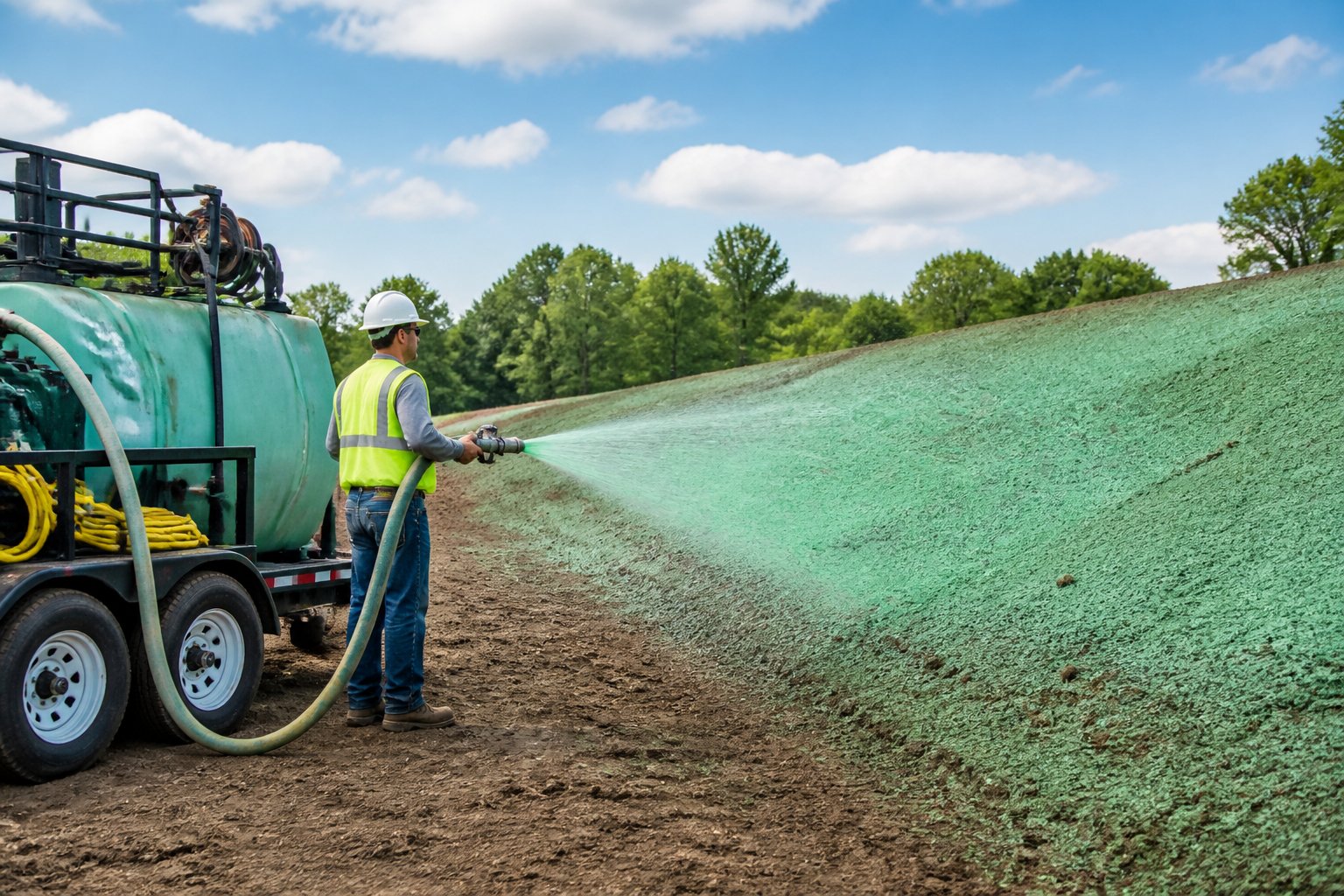
A grading contractor finishes final cut and fill in mid-July, and the stormwater permit clock is already running. Bare slopes sit exposed under Gulf Coast heat, and the next inspection is three weeks out. Picking the wrong week to seed can cost a full re-application, plus the schedule slip that comes with it.
The best time to hydroseed is not a date on a calendar. It is the window where soil temperature, moisture, and your compliance deadline line up. In Texas and across the southern United States, that window shifts by region, by seed mix, and by how much rain the site has taken in the past ten days.
Keep reading to learn how soil temperature drives seed germination more than the season. Which grass mixes fit each Texas planting window? How to protect erosion control timelines when the weather does not cooperate.
By the end, you will be able to set a defensible application date for your site and know what to expect from grass growth after the crew rolls off.
Plan Around Soil Temperature, Not the Calendar
Soil temperature at two to four inches deep tells you far more than the date. Seed germinates when the root zone hits its threshold, not when the calendar says spring.
Air temperature swings fast in Texas. Soil moves slowly. A warm February week does not mean the ground is ready. A cool October morning does not mean the window is closed. Crews that track soil temperature avoid the two most common failures: seeding too early into cold ground and seeding into a July soil profile with no water plan.
Soil Temperature Thresholds for Cool-Season and Warm-Season Seed
Warm-season grass seed needs soil around 65 to 70 degrees Fahrenheit and rising before germination is reliable. Cool-season seeds germinate at lower soil temperatures, roughly 50 to 65 degrees, and do best when the ground is cooling rather than heating.
That difference sets the whole schedule. Bermuda seeded into 55-degree soil sits and waits, exposed to rain and wind with no root structure. Fescue seeded into 85-degree soil often germinates and then burns off within two weeks.
Free soil temperature data is available through the Soil Climate Analysis Network maintained by the Natural Resources Conservation Service (NRCS). Regional stations give a better read than a national average for a Gulf Coast or West Texas site.
Why Air Temperature, Moisture, and Drainage Change the Schedule
Moisture levels matter as much as heat. A hydroseed mixture holds water in the mulch layer, but that layer still needs a soil profile underneath that will accept and hold moisture.
Texas clay soils complicate this. Heavy clay sheds water when it is dry and cracked, then holds it too long after a heavy rain event. Both conditions hurt seed-to-soil contact. Sandy Gulf Coast soils drain fast and dry out the mulch layer in a single hot afternoon without irrigation.
Watch these conditions before locking a date:
- Soil moisture at the surface: damp, not saturated, and not powder dry
- Drainage patterns: concentrated flow paths need protection before seed goes down
- Irrigation availability: no water source usually means waiting for a wetter window
- Rainfall forecast: a two-inch event 24 hours after application can move seed on steep grades
- Wind exposure: open, cleared sites lose surface moisture faster than shielded areas
Site Preparation Before the Hydroseeder Mobilizes
Seedbed prep decides half the outcome before the hydroseeder ever pulls onto the pad. NRCS guidance on seedbed preparation points to poor prep and weed competition as leading causes of seeding failure.
Topsoil should be spread and tracked or lightly scarified so the slurry can key into the surface. Slick, compacted subgrade sheds mulch and seed. On sites where equipment traffic sealed the surface, a light rip or disc pass makes a real difference in germination rate.
Starter fertilizer goes into the tank with the seed, mulch, and soil conditioners in most applications. That saves a mobilization and puts nutrients where the seedling roots will find them. Once prep is set, the next decision is which seed mix matches the window you are actually working in.
Match the Seed Mix to the Texas Growing Window
Seed mix and timing are one decision, not two. Choose the mix that fits the window you can realistically hit. Then build the schedule around that mix.
Texas spans multiple United States Department of Agriculture (USDA) hardiness zones and several distinct growing regions. A mix that performs in the Houston metro will underperform in the Panhandle. Specification writers for the Texas Department of Transportation (TxDOT) and municipal work often lock the mix by district, which sets your window for you.
Warm-Season Grasses for Late Spring and Early Summer
Warm-season grasses carry most commercial hydroseeding work across Texas and the Gulf South. Bermuda grass is the workhorse for construction site restoration because it germinates fast and spreads aggressively once established.
Common warm-season options and their fit:
- Bermuda grass: fastest establishment, handles heat and traffic, standard on commercial pads and corridors
- Bahia grass: performs on sandier, lower-fertility soils common along the coast
- Zoysia grass: slower to establish from seed, better suited to maintained areas than raw construction sites
- St. Augustine grass: typically installed as sod or plugs, not a practical hydroseed option
Late April through early July is the productive window for warm-season seed in most of Texas. Germination typically begins within 7 to 14 days when soil temperature and moisture hold steady.
Cool-Season and Transition-Zone Grasses for Fall Windows
Cool-season and transition zone grasses fill the gap when a project closes out in fall or winter. Tall fescue, fine fescue, Kentucky bluegrass, perennial ryegrass, and annual ryegrass all germinate in cooler soil.
Ryegrass is common as a temporary cover on Texas jobs. It comes up fast, holds soil through winter, and gives inspectors visible vegetative cover while the permanent mix waits for spring. Tall fescue holds better in North Texas than in the humid Gulf Coast, where summer heat and disease pressure thin it out.
Pairing a quick cool-season nurse crop with a permanent warm-season mix is a practical answer for fall completions. The ryegrass protects the surface. The Bermuda takes over when the soil warms.
Native Seed and Wildflower Timing for Long-Term Restoration
Native grass seeding and wildflowers run on a different clock. Native mixes germinate in roughly 2 to 4 weeks and take 2 to 3 months to establish, with deep root systems that stabilize soil long term.
Fall seeding suits many Texas native mixes because winter moisture and cold stratification improve emergence. TxDOT's native wildflower and grass programs follow similar seasonal logic on roadside work. For reclamation and corridor projects, native grass seeding for Texas site restoration is often specified over turf mixes for exactly that durability.
With the mix settled, the next question is which specific season on your calendar carries the least risk.
Seasonal Windows for Texas and the Gulf South
Each season carries a different risk profile in Texas. The trade-off is always between soil temperature, available moisture, and how much of the establishment period falls inside your compliance window.
Regional differences are real. The Houston metro and Corpus Christi hold heat and humidity longer than Dallas or Amarillo. A late-September seeding on the coast still has warm soil. The same date near Lubbock may already be marginal.
Early Spring Applications Before Summer Heat Arrives
Early spring works well for cool-season and transition-zone mixes, and for native seed already in the ground from a fall application. Soil is warming, spring rainfall reduces irrigation demand, and seedlings get roots down before summer stress.
The risk in early spring hydroseeding is a late cold snap. North and Central Texas can drop below freezing in March. Frost on newly emerged seedlings sets growth back, though the mulch layer offers some buffer.
For warm-season mixes, patience pays. Waiting two or three extra weeks for soil to reach the mid-60s usually produces a better stand than pushing an early date.
Late Spring Through Summer Applications With Irrigation Capacity
Late spring through midsummer is prime time for warm-season grass, but only with a water plan. Summer hydroseeding on a site with no irrigation and no rain in the forecast is a gamble.
Gulf Coast summers bring humidity and afternoon storms that help. They also bring heavy rainfall events that can rill a fresh slope before roots take hold. Hydraulic mulch and bonded products reduce that risk substantially on graded ground.
July and August applications on inland sites carry the highest failure rate of any window we see. Surface temperatures on bare clay can exceed air temperature by 20 degrees or more. This can cook seedlings within days of emergence.
Early Fall Applications for Cool-Season Establishment
Early fall is one of the most reliable windows across Texas. Soil is still warm from summer, air temperature is dropping, and evaporation slows down.
September into mid-October generally gives cool-season seeds enough time to establish before the first hard frost. Warm-season seeds put down in early fall may germinate but rarely mature enough to survive winter dormancy well.
This window also fits many construction closeouts. Projects wrapping up before year-end can get vegetation established and inspected without fighting summer heat or spring mud.
Winter and Dormant Seeding Limits on Active Construction Sites
Winter hydroseeding is limited but not off the table. Dormant seeding places seeds on prepared soil in cold conditions so they germinate when the ground warms in spring.
Dormant seeding is a stabilization strategy, not a growth strategy. The mulch layer and any erosion blanket do the erosion control work through winter. Grass growth comes later. Seed loss to wash-off and wildlife is a real factor to account for in the rate.
Frozen or saturated ground stops application entirely. On a site with an active stormwater permit, waiting on weather is not always an option. This makes the compliance plan the next thing to nail down.
Protect the Compliance Schedule During Establishment
Vegetation is a compliance deliverable, not just a finish item. Under the Texas Pollutant Discharge Elimination System (TPDES) Construction General Permit, disturbed areas need stabilization within set timeframes, and inspectors look for actual cover.
The gap between application day and established turf is where projects get exposed. That gap runs 4 to 6 weeks for standard hydroseeding under good conditions. It is longer for native mixes.
Build the 7 to 14 Day Germination Window Into the Project Schedule
Germination typically begins within 7 to 14 days for hydroseeded warm-season mixes in favorable conditions. Full establishment usually takes 4 to 6 weeks, depending on weather and irrigation.
Back that into your schedule. If the final inspection is set for October 1 and you need visible cover, application in late August gives room for weather delays. Application on September 20 does not.
Drill seeding runs a slightly different clock, with germination typically within 1 to 3 weeks and strong seed-to-soil contact on large acreage. On corridor and reclamation work, drill seeding for large-acreage restoration often outperforms broadcast methods.
Use Immediate Erosion Protection on Slopes and Drainage Areas
Slopes and drainage areas need protection the day the seed goes down, not the week the grass comes up. TxDOT guidance on surface protection for erosion prevention notes that mulch alone suits gentle grades. Additional materials are needed as slopes steepen.
Match the product to the grade and the flow:
- Flat to gentle grades: standard hydraulic mulch with seed and starter fertilizer
- Moderate slopes: hydraulic soil stabilizers with higher bonding strength
- Steep cut slopes and disturbed soils: Flexterra flexible growth medium (FGM)
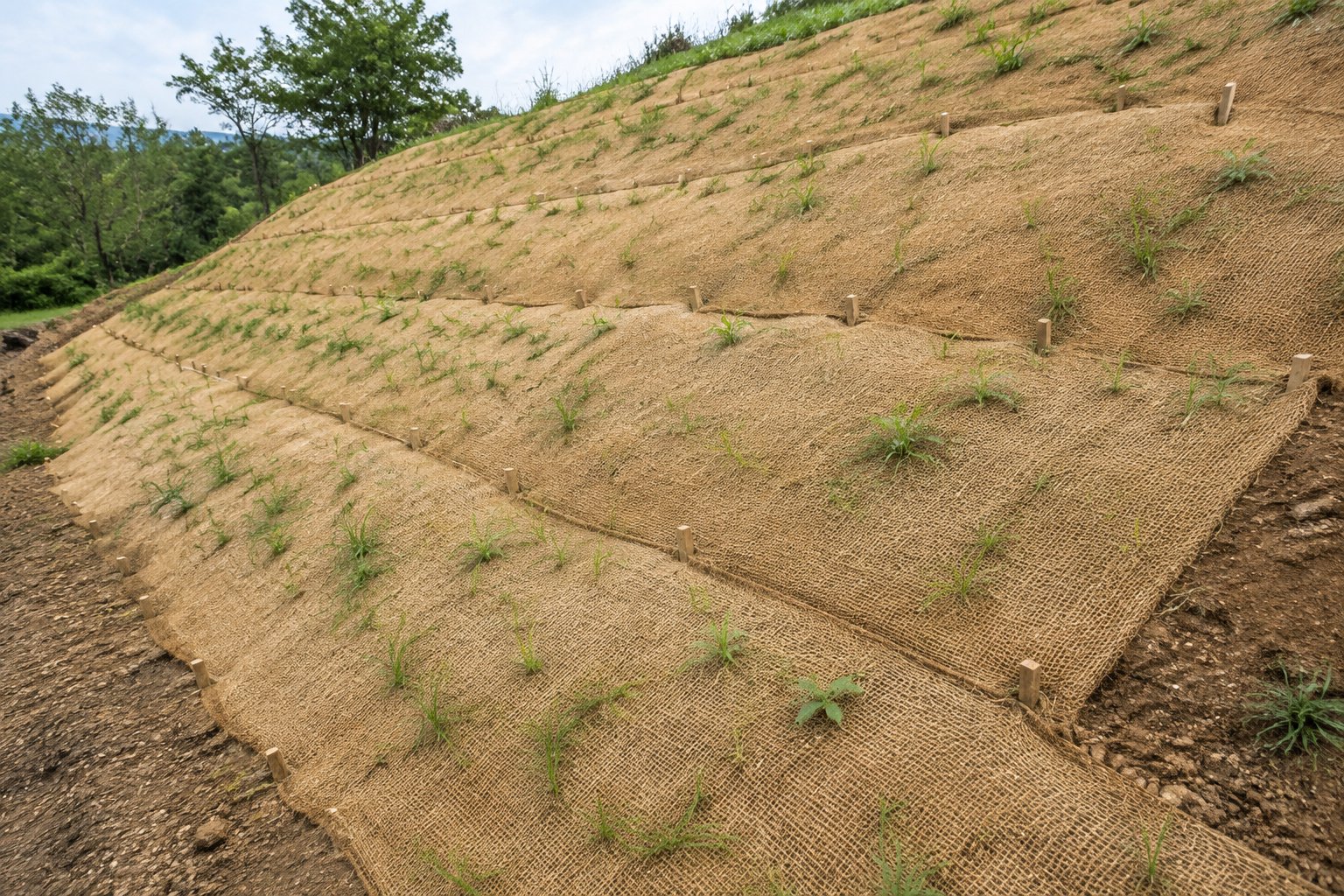
- Channels and concentrated flow: erosion blankets staked per manufacturer's spec
- Pond banks and wet margins: blanket plus seed mix suited to fluctuating water levels
Retention basins deserve extra attention because saturated margins and steep interior slopes fail differently than upland areas. Hydroseeding for retention ponds and permit timelines covers that scenario in detail.
Manage Heavy Rainfall, Heat, and Cold Snaps After Application
The first two weeks after application decide the outcome. A three-inch rain event on day two can strip an unbonded application off a 3:1 slope.
Bonded products change that math. They cure into a flexible layer that holds seeds in place through significant rainfall. This is why they show up on Gulf Coast slope work so often. Sites facing repeated storm exposure benefit from erosion control that holds under compliance pressure.
Heat and cold both slow germination without necessarily killing the seed. Light, frequent watering during a heat wave keeps the mulch layer damp. A cold snap usually just extends the timeline. Knowing which risks apply to your specific site is what turns a general seasonal rule into an actual application date.
Set the Application Date With a Site-Specific Plan
The right date comes from the site, not from a chart. Slope, soil type, access, irrigation, and permit deadline together determine the best time for hydroseeding on any given project.
Two sites 40 miles apart can need different dates. A shaded, clay-heavy pad with a water truck available holds a wider window than an open, sandy solar field with no water source.
When Hydroseeding Fits Better Than Traditional Seeding Methods
Hydroseeding beats traditional seeding methods when the coverage area, slope, or schedule makes broadcast seeding impractical. The slurry delivers seed, mulch, fertilizer, and soil conditioners in a single pass. This matters on multi-acre sites.
Traditional seeding methods still have a place. On flat, accessible ground with good soil and no erosion pressure, broadcast and drag can work. Once slopes exceed 4:1 or the site sits under a stormwater permit, hydraulic application is the practical choice.
Large commercial pads are where the difference shows most clearly. Hydroseeding for large commercial sites in Texas covers the coverage and cost dynamics at that scale.
Post-Application Watering, Fertilizing, and Mowing Milestones
Watering drives everything in the first three weeks. Keep the mulch layer damp, not soaked, with light applications more than once a day in hot weather.
Practical milestones after application:
- Days 1 to 14: frequent light watering, no traffic, watch for rill formation
- Days 14 to 28: reduce watering frequency, increase depth to push roots down
- Weeks 4 to 6: first mowing once the stand reaches roughly three inches, blades sharp
- Weeks 6 to 8: follow-up fertilizing if soil tests or specs call for it
- Ongoing: spot repair any thin areas before the next rain event
Solar sites and other large disturbed footprints often need staged watering because a single water truck cannot cover the acreage daily. Hydroseeding contractors for solar farms and site timing address those logistics.
Get a Timeline Review Before Mobilization
A quick timeline review before mobilization catches problems while they are still cheap to fix. Reviewing grading completion, seed spec, water availability, and inspection dates together usually shifts the date by a week or two. That shift is what prevents rework.
Cost also moves with timing and site conditions. The pricing calculator gives a rough range by area. Factors that change the number are broken down in the hydroseeding cost per acre in Texas.
With the date set and the mix specified, the last step is confirming the scope with a crew that has worked your soil type before.
Frequently Asked Questions
When Is the Best Season to Hydroseed in Texas?
For warm-season grasses like Bermuda, late April through early July is the strongest window in most of Texas. Early fall, roughly September into mid-October, works well for cool-season and transition-zone mixes. Soil temperature at the time of application matters more than the month.
Which Months Carry the Highest Risk of Failed Establishment?
Inland July and August applications fail most often because bare clay surfaces can run 20 degrees hotter than the air and cook seedlings within days. Seeding warm-season mixes into cold ground below the mid-60s runs the opposite risk, leaving seed exposed with no root structure. Matching the mix to the current soil temperature is what keeps a stand from failing.
Can Hydroseeding Be Done During Winter Weather?
Yes, through dormant seeding, as long as the ground is not frozen or saturated. The mulch and any erosion blanket provide immediate soil protection while seeds wait for spring soil temperatures. Expect germination in spring rather than within the usual 7- to 14-day window.
How Long Does Hydroseed Take to Germinate and Establish?
Germination typically begins within 7 to 14 days for standard hydroseeded mixes under favorable soil temperature and moisture. Full establishment usually takes 4 to 6 weeks, depending on weather and irrigation. Native grass mixes germinate in about 2 to 4 weeks and establish over 2 to 3 months.
How Often Should a Hydroseeded Area Be Watered After Application?
Water lightly and often for the first two weeks, sometimes twice a day in Texas summer heat, keeping the mulch layer damp. After germination, reduce frequency and water deeper to encourage root growth. Sites without irrigation should be scheduled during wetter seasonal windows.
Lock the Date, Protect the Schedule
The best time to hydroseed is the point where soil temperature, moisture, and your permit deadline overlap. Get those three lined up, and germination within 7 to 14 days becomes a reasonable expectation instead of a hope.
If your site is graded and the inspection date is on the calendar, the timing conversation is worth having now rather than after the first rain event. Allied Hydromulch TX, LLC has been applying hydroseeding and erosion control across Texas and the Gulf South since 1990. This includes roughly 15 million square feet of mulch installed in 2025 alone.
Call 281-482-8212 to talk through your site conditions and seeding window, or request a project estimate online to get a timeline scoped before mobilization.