Bare graded soil on a commercial site is a liability until something is growing on it. Rain carries it toward the storm drains, wind lifts it, and inspectors write it up. Hydroseeding is a planting method that sprays a water-based slurry of seed, fiber mulch, fertilizer and tackifier onto prepared soil in one pass, so the seed is protected and the surface is covered while vegetation establishes. In specs and bids you will also see it called hydraulic seeding or hydraulic mulch seeding.
It is the method of choice for large footprints: pads, slopes, ditches, pond banks and restoration phases where sod costs too much and dry seed is too risky. Allied Hydromulch has been hydroseeding commercial and municipal sites across Texas and Louisiana since 1990, and this guide covers what project managers, developers and engineers need to know when it shows up in a spec for the first time.
What Goes into a Hydroseeding Slurry?
A hydroseeding slurry has five working parts: seed, fiber mulch, tackifier, fertilizer and water. The proportions change with the soil, the slope, the season and what the area has to do after closeout.
Seed Chosen for the Site and the Spec
The seed blend is picked for the climate, the soil and the end use. On Texas and Louisiana commercial work, bermudagrass is the usual warm-season choice for permanent cover. Annual rye and other cool-season species carry sites through the cooler months as temporary cover, and native grass and wildflower mixes go on restoration areas, right of way and low-maintenance ground.
Very often the decision is already made for you. TxDOT, the city or the design engineer will name the seed mix and the seeding rate, and the slurry is built around that requirement.
Fiber Mulch and Tackifier
The mulch carries the seed and holds moisture against the soil. Wood fiber mulch holds water longer and stands up to rain better, so it is the standard pick for slopes and erosion control work. Paper mulch costs less and is fine on flat ground, though it can crust if it goes on too heavy.
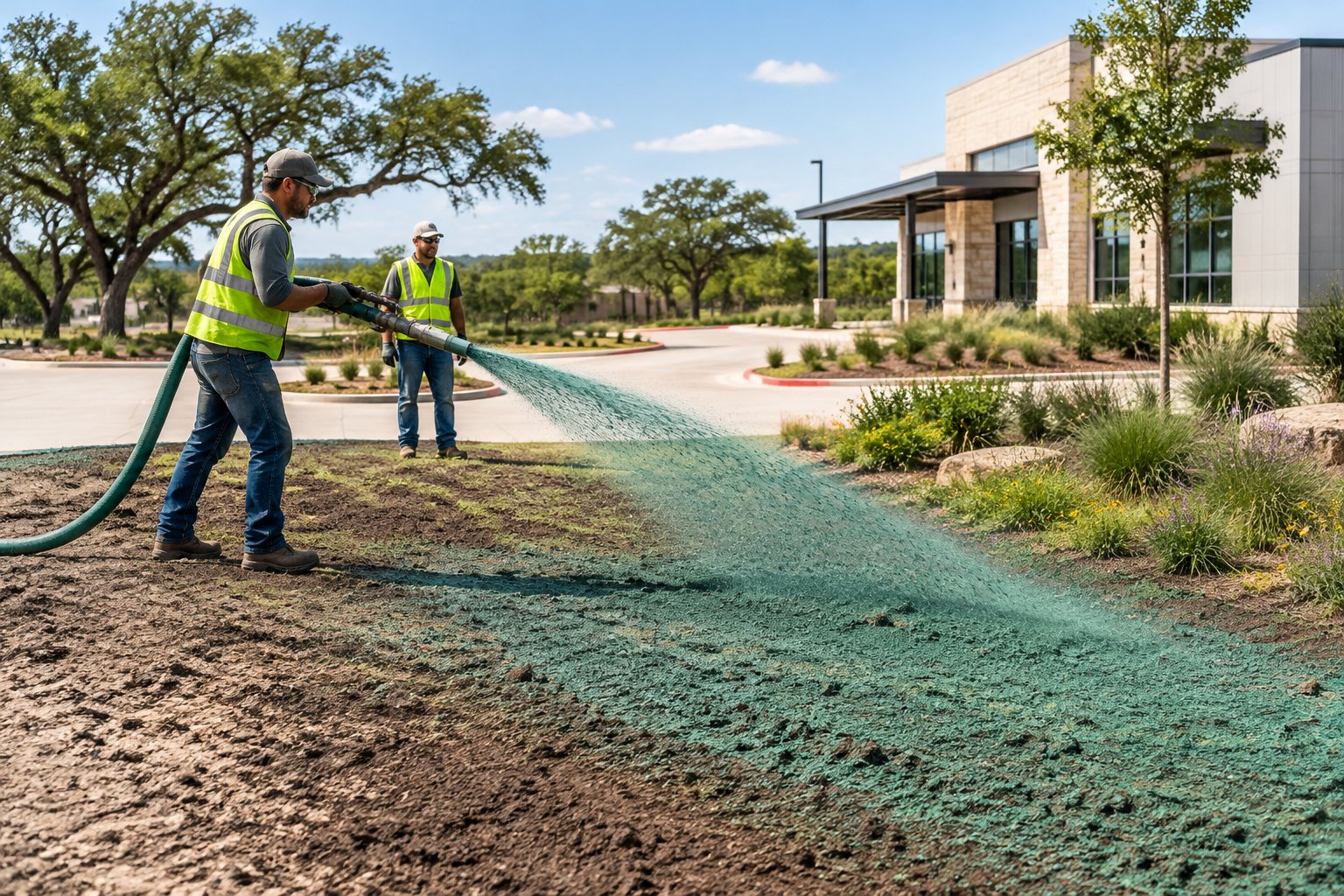
Tackifier is the binder. It locks the mulch and seed to the ground so the first rain does not wash the application downhill. The bright green color you see on a freshly seeded site is a marker dye that lets the operator check coverage as he sprays. The grass comes later.
Water, Fertilizer and Amendments
Water turns everything into a sprayable slurry. Starter fertilizer feeds the seedlings for their first few weeks, before their roots can pull much from the soil. Lime or other amendments go in when a soil test or the spec calls for them, which is common on cut and fill soils with very little organic matter left in them.
How Does Hydroseeding Work on a Job Site?
The work happens in three stages: prepare the ground, mix the slurry, then spray it at the designed rate. The prep and the mix design decide how well the application holds.
Preparing the Surface
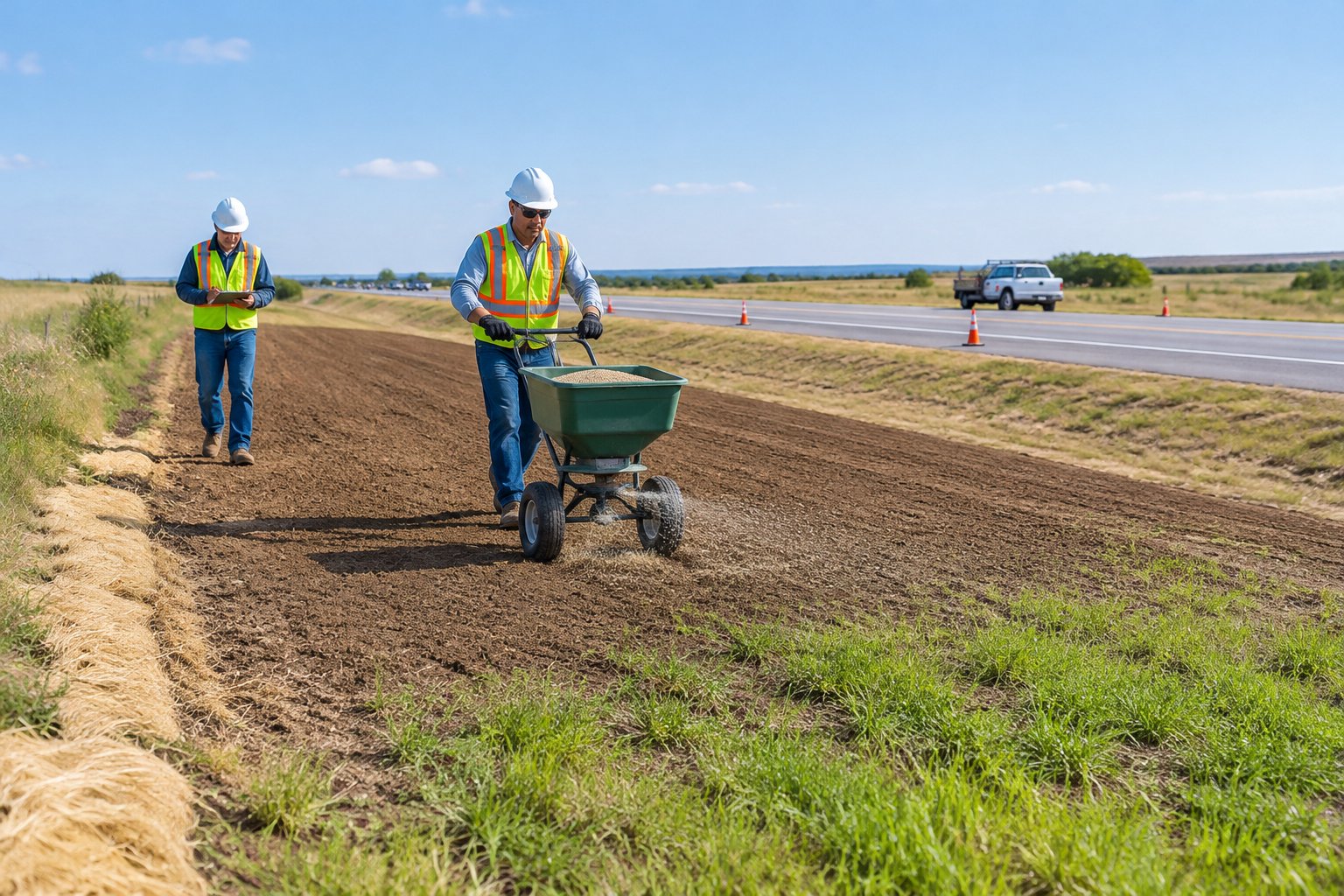
Every job starts with a look at the soil, the slope, the drainage and how the trucks will get in. Prep means clearing rock and debris, loosening compacted soil and roughening slopes so the slurry has something to grip. On some projects prep is a scope item in its own right. For Construction Masters in Alvin, TX, our crew harrowed the site before drill seeding it and finishing with a hydromulch cap.
Mixing and Spraying
A hydroseeder is a tank with an agitator, a pump and either a hose or a tower cannon. Materials go in a set order so every load carries the same amount of seed, mulch and tackifier. Our crews spray open ground from the tower and switch to the hose for slopes, edges and tight corners. The goal is even coverage at the specified rate, because thin spots dry out and heavy spots waste material and crust over. On slopes the slurry goes on in passes so it does not run.
Where Hydroseeding Fits on Commercial Sites
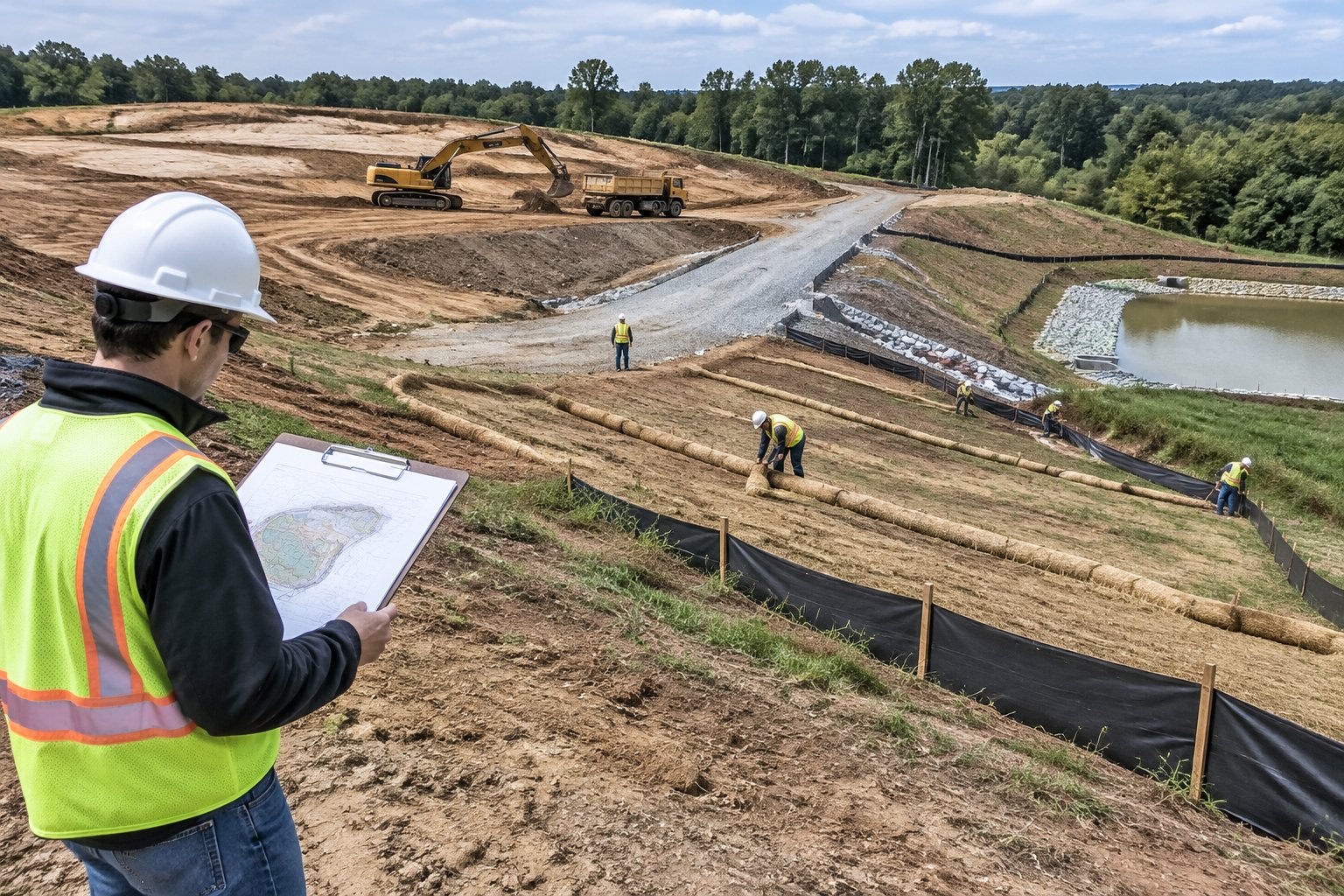
On commercial work, hydroseeding is used to establish permanent or temporary vegetation on disturbed ground and to protect the surface while the roots develop. You will see it on building pads, lot perimeters, ditches, embankments and pond banks, and large tracts are usually seeded in phases as grading finishes, so the seeding crew may mobilize several times. Our guide to establishing fast vegetation on large commercial sites in Texas covers how that phasing works on big projects.
Vegetated cover also matters for permit closeout. Under a SWP3, reaching final stabilization is what lets the operator file the Notice of Termination, and a well-established stand of grass is the most common way to get there. On steep cuts or areas that carry concentrated flow, standard mulch gives way to heavier hydraulic products such as bonded fiber matrix or Flexterra.
People also ask how hydroseeding differs from hydromulching. Hydroseeding is about growing vegetation, while hydromulching puts the protective mulch layer first and may or may not include seed. We break down when each one is the right call in hydroseed vs. hydromulch for Texas construction sites.
How Does It Compare with Broadcast Seeding and Sod?
Hydroseeding sits between dry seeding and sod on cost, and it gives the soil far more protection than dry seed does in the weeks before grass comes in.
In practice, broadcast seeding suits flat, low-risk ground away from drainage paths, and sod suits small, high-visibility areas such as an entrance that has to look finished at turnover. Everything else on a commercial site, from pads and slopes to ditches and right of way, is usually hydroseeded. Many projects use a mix of all three. Budget is shaped by area, slope, access, the seed spec, the mulch type and the number of mobilizations, and our pricing calculator will give you a quick ballpark for standard hydroseeding before you request a firm number.
What Should Project Teams Expect After Seeding?
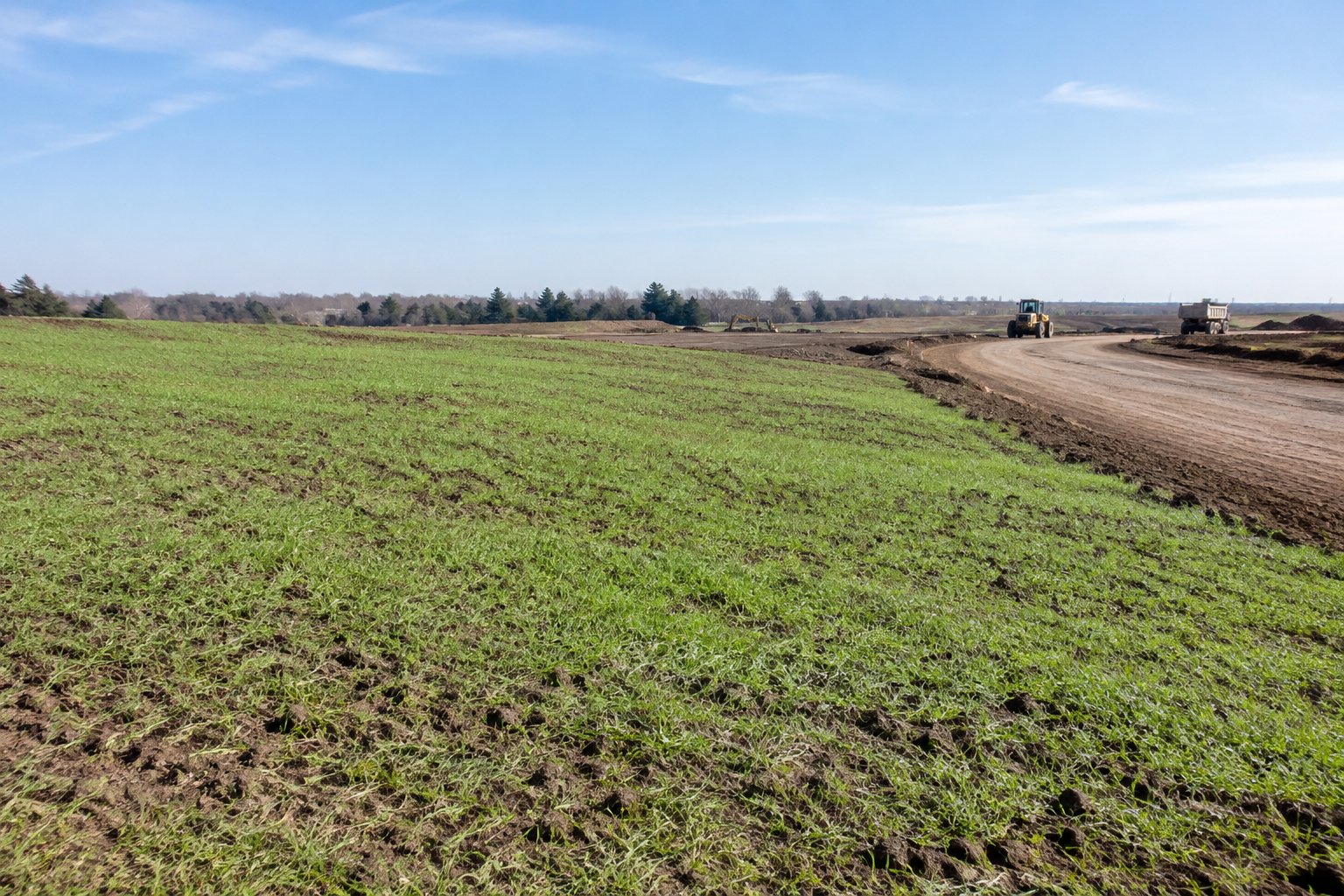
On day one you will see a green, dyed surface. With warm weather and steady moisture, seedlings usually appear within one to two weeks and the stand fills in over the following month or so. Native mixes are slower and can take a couple of months to look established. Weather, water and soil condition move these timelines in both directions.
The most important thing to settle before application is who keeps the seed watered. Once seed takes on water and sprouts, it can die quickly if the surface dries out, so somebody has to provide moisture through germination with irrigation, a water truck or reliable rain. Keep equipment and foot traffic off seeded areas, and walk the site for thin spots and rills so touch-ups happen early rather than at the final inspection.
Season matters as well. Texas summers in the 90s and above dry mulch out fast, expansive clays crust and shed water, and Gulf Coast storms can test a fresh application. Warm-season grasses do best from late spring into summer with enough water, and fall and winter work often calls for temporary cover first.
Get Your Site Seeded Right the First Time
Our team works with general contractors, developers and municipalities who need bare ground stabilized on schedule and without rework. We give every project the same attention whether it is a single pad or a multi-phase development. If you have a site that needs seeding, contact Allied Hydromulch or call 281-482-8212 and we will talk through the seed spec, the timing and the logistics with you.
Frequently Asked Questions
Is hydroseed a type of grass?
No. Hydroseeding is an application method. The seed in the slurry can be bermudagrass, rye, native grasses or wildflowers, chosen for the site and the spec.
What are the downsides of hydroseeding?
It takes several weeks to establish, it depends on steady moisture during germination, and it needs prepared soil and a suitable season. It also costs more than broadcast seeding, although the extra protection usually pays for itself on any ground that slopes or drains.
Will heavy rain wash hydroseed away?
A properly tacked application holds through moderate rain once it has set. A heavy storm soon after spraying can move it, particularly on slopes or in channels, which is why crews watch the forecast and use heavier products on high-risk areas.
When can a hydroseeded area be mowed?
Wait until the grass is about 3 to 4 inches tall, which is often four to six weeks after application, and take off no more than a third of the height in one pass.