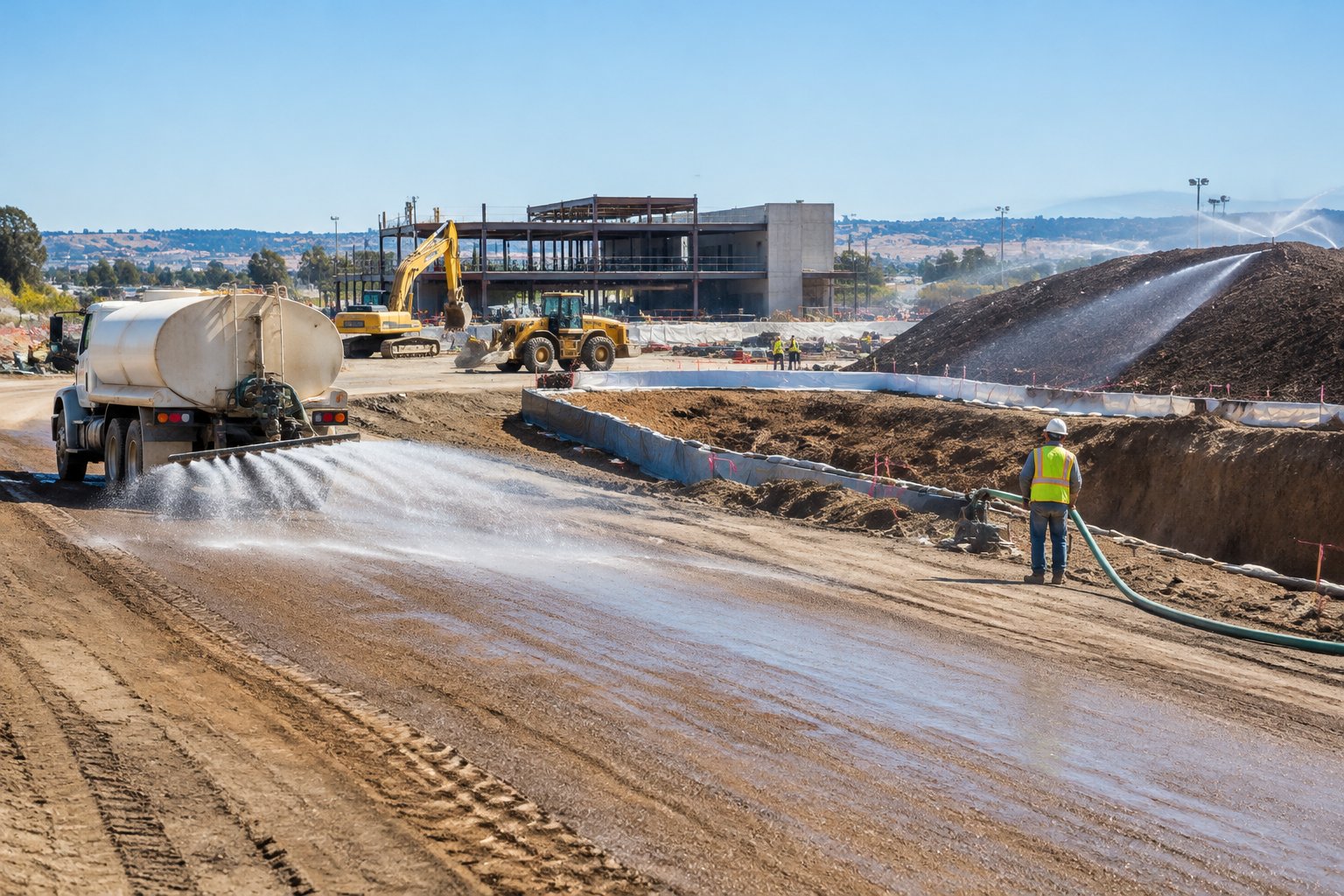
A graded site in a Texas August can throw up a dust cloud you see from the highway. That brings neighbor calls, a visit from the city and sometimes a stop on the work. The most effective dust control on a construction site matches the method to the zone: water trucks and suppressants on active haul roads, covers and handling limits on stockpiles, and hydromulch or temporary seeding on graded ground that will sit idle. Water buys you hours. A stabilized surface buys you weeks.
Most sites rely on the water truck for everything, which works on the haul road and wastes money on a pad nobody will touch for a month. This guide breaks the site into zones and covers what to use in each, plus the Texas rules that apply.
Which Dust Control Method Fits Each Part of the Site?
Ground that is still being driven on needs active suppression. Ground that has stopped being worked needs a lasting cover. Everything else is a variation on those two ideas.
Water Trucks on Active Haul Routes
Water trucks are the default on roads with steady traffic, and nothing else does the job as well for ground that is churned every day. The catch is evaporation. In Gulf Coast heat a haul road can go from damp to dusty in under an hour, so the truck is running all day. Watch for dust lifting under tires as the signal, and avoid soaking the surface, because the mud ends up on the street and the runoff ends up at your inlets. On TxDOT work, dust control by watering falls under Item 204, Sprinkling, so check how the contract pays for it.
Chemical Suppressants on Long-Term Traffic Areas
Soil binders, polymers and salts such as calcium chloride hold particles together much longer than plain water. They make sense on roads and pads that will stay in service for weeks or months and will not be regraded soon. Keep them off ground that is going to be seeded, and check the product label and project specification before applying anywhere near a ditch or waterway.
Stockpiles and Material Handling
Fine stockpiles are one of the biggest dust sources on a site. Tarp topsoil and fine material, keep dry loads covered in transit, slow trucks on unpaved roads and avoid dumping or mixing dry material in high wind. A stabilized construction exit cuts track-out onto public roads. Stockpiles that will sit for a while can be hydromulched instead of tarped, which ends the daily tarp maintenance.
How Do Hydromulch and Temporary Seeding Stop Dust on Idle Ground?
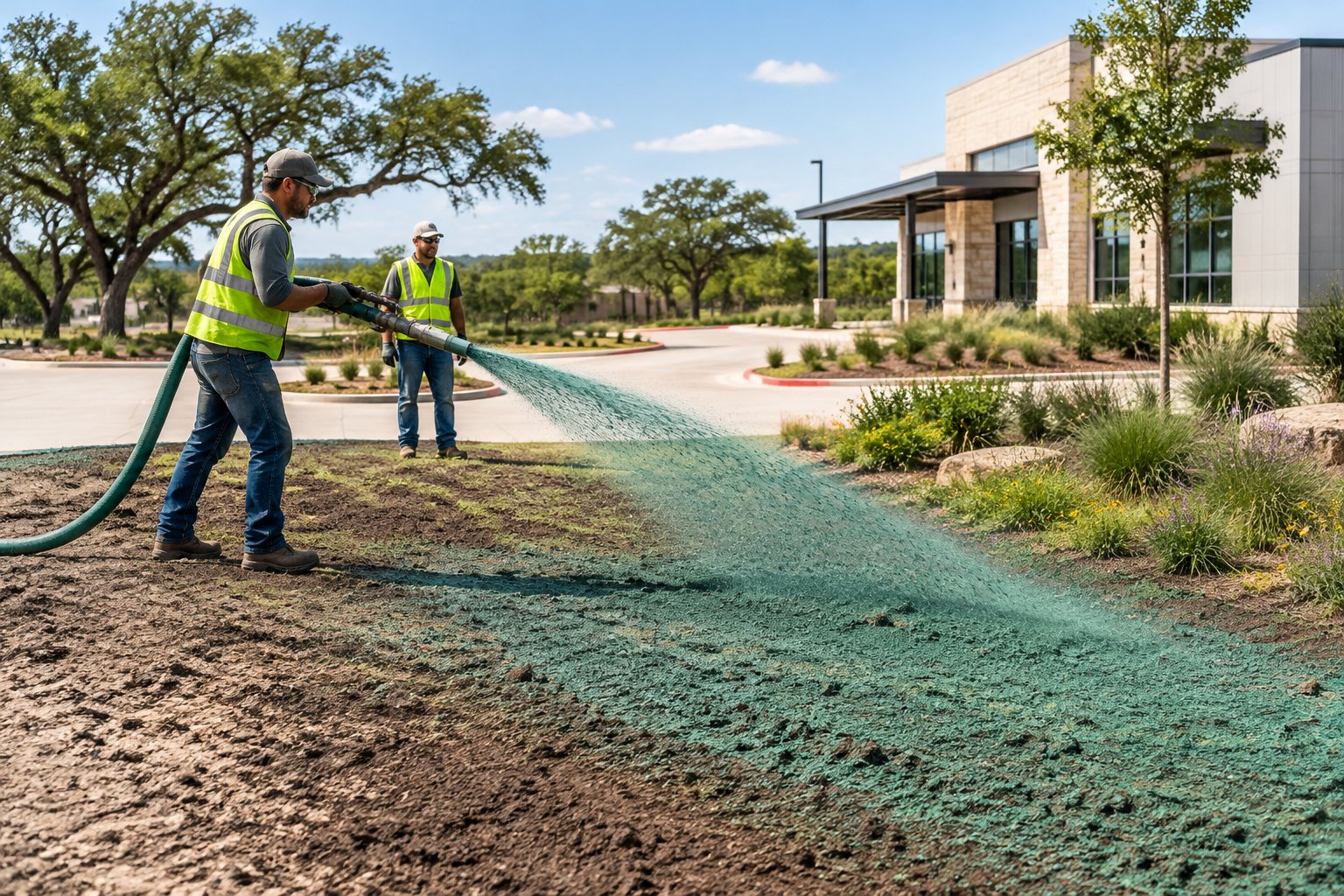
This is where most sites can save the most money. A building pad waiting on vertical work, a rough-graded lot, a berm or a topsoil pile does not need a water truck every afternoon. It needs a cover.
Hydraulic mulch is a slurry of fiber mulch, tackifier and water sprayed onto bare soil. Once it dries it forms a crust that holds the surface against wind and raindrop impact while still letting water soak in, so the same application controls dust and erosion. Our post on cutting erosion risk with hydromulching covers the erosion side in more detail.
Where ground will sit for more than a few weeks, add seed to the slurry for a temporary cover crop. Roots bind the soil and leaf cover breaks the wind at the surface, which lasts far longer than a mulch crust on its own. Cool-season covers such as annual rye work in fall and winter, and warm-season species suit late spring and summer. On large idle tracts, drill seeding followed by a hydromulch cap is another option. Our crews used that combination on a Texas ranch project.
Two things keep a stabilized area working. Keep traffic off it with fencing, flagging or clear site rules, because one dozer pass breaks the crust. And plan for moisture if seed is in the mix, because a seeded area that dries out stalls. After heavy rain, walk the stabilized areas and patch any washouts. If you want a rough number for covering idle pads this way, our pricing calculator gives a range for standard hydroseeding.
What Texas Rules Apply to Construction Dust?
Several layers can apply, and they come from different agencies.
- TCEQ nuisance rule. 30 TAC 101.4 applies statewide and prohibits discharging air contaminants in concentrations and durations that are or may tend to be injurious to or adversely affect human health or welfare, animal life, vegetation or property, or that interfere with the normal use and enjoyment of property. Dust drifting onto neighbors is the kind of problem it covers.
- TCEQ construction and demolition rule. 30 TAC 111.145 requires precautions such as water or suitable oil or chemicals for dust control during construction, demolition, road work and land clearing. It applies in specific areas only: the City of El Paso, Harris County inside Beltway 8 and a defined area of Nueces County. Outside El Paso it applies where the affected land is more than one acre; in El Paso it applies regardless of size.
- Contract specifications. TxDOT projects use Item 204, Sprinkling, for watering, and city or county contracts may add their own dust conditions.
- Local rules. Cities and counties can add nuisance ordinances or permit conditions.
Louisiana sites have their own state air rules and local requirements. Confirm the current official text for your location before finalizing a dust plan.
When the Dust Is Silica
Dust from cutting, grinding, drilling or crushing concrete, stone, brick and block is a different problem from windblown soil. OSHA's construction silica standard, 29 CFR 1926.1153, sets a permissible exposure limit of 50 micrograms per cubic meter as an 8-hour time-weighted average and requires controls at the tool, such as water feed on saws and vacuum shrouds on grinders. That work belongs in the safety plan with its own controls, separate from the haul road and pad strategy in this article.
How Should Dust Control Tie In with Stormwater Controls?
Dust control and stormwater compliance pull in the same direction when they are planned together and against each other when they are not. Overwatering sends sediment toward inlets and silt fence. Suppressants near drainage paths can raise permit questions. Stabilizing idle areas with hydromulch or temporary seeding does both jobs at once, cutting dust and reducing erosion under the SWP3. Our guide to keeping Texas sites inspection ready for stormwater compliance covers the stormwater paperwork.
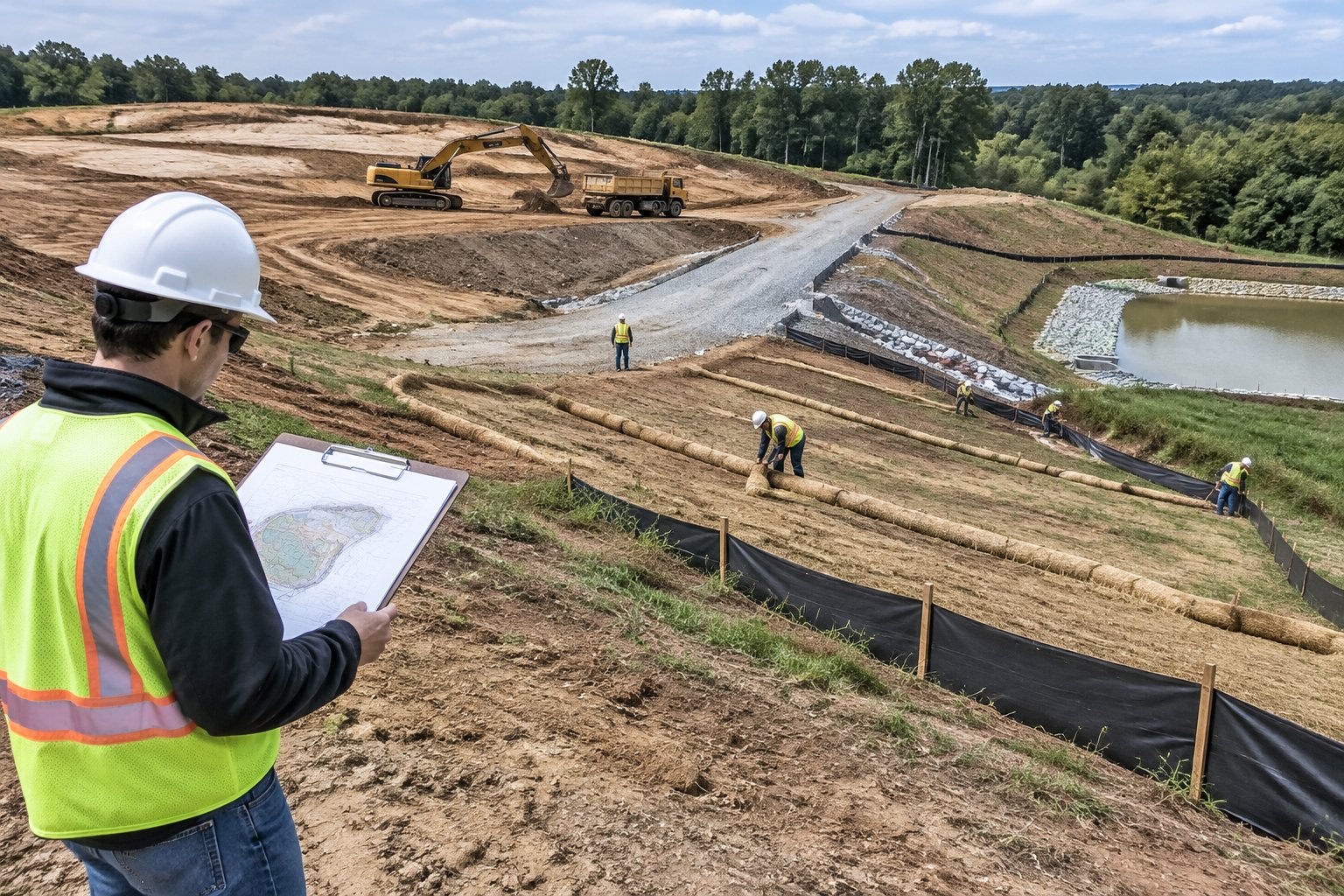
For the dust plan itself, map the haul roads, entrances, stockpiles and pads, mark nearby homes, schools and roads, and name who runs the water truck, who checks covers and who calls for stabilization when an area goes idle. Set simple triggers, such as a visible plume leaving the site or a wind speed at which dry material handling stops, and log each check.
Get Idle Ground Covered Before the Next Windy Week
Allied Hydromulch provides hydromulch, temporary seeding and soil erosion control for general contractors and developers across Texas and Louisiana, on sites large and small. If you have pads or lots that are costing you a water truck every day, get in touch with Allied Hydromulch or call 281-482-8212 and we will help you work out what to cover and when.
Frequently Asked Questions
How often should haul roads be watered?
As often as it takes to keep the surface damp, which in Texas summer heat can mean several passes a day. Watch for dust lifting under tires and avoid overwatering.
Is hydromulch or a chemical suppressant better for dust?
It depends on traffic. Suppressants suit roads and pads that stay in use. Hydromulch suits ground with no traffic, and it can carry seed for longer-term cover.
How long does hydromulch keep dust down?
It holds until it breaks down or is disturbed, which varies with the product, weather and traffic. Adding seed gives longer protection once roots take over.
Do TCEQ dust rules apply to every Texas construction site?
The general nuisance rule applies statewide. The specific construction and demolition rule, 30 TAC 111.145, applies only in parts of El Paso, Harris and Nueces counties.