The best grasses for erosion control are the ones matched to how water moves across each part of the site: low, sod-forming grass such as bermudagrass where water flows over the surface, deep-rooted natives where long-term slope strength matters, and fast cool-season annuals where cover is needed before permanent grass can grow. On most Texas and Louisiana projects that means more than one seed mix, and almost always a mulch or blanket layer on top until the roots take over.
Seed choice is half of the job. This guide works through the site one use case at a time, then explains how root structure and establishment speed decide which grass carries which area.
What Makes a Grass Good at Holding Soil?
Grass protects soil in three ways, and different species are strong at different ones.
- Leaf cover takes the force out of raindrops and slows sheet flow before it can pick up soil.
- Spreading stems (stolons above ground, rhizomes below) knit a continuous mat and fill bare spots without reseeding.
- Roots bind the soil below the surface. Fibrous roots near the top hold the surface layer, and deep roots tie that layer to the ground beneath.
Sod-formers such as bermudagrass and buffalograss are strongest on the first two: they make a dense, low carpet that lies flat when water runs over it. Bunchgrasses such as little bluestem and Indiangrass grow in clumps with bare soil between them, but over time they put down deeper roots. Good erosion mixes combine both habits so the surface and the subsoil are covered.
The other factor is speed. A grass that holds soil beautifully in year three does nothing for a slope in its first month, and the first month is when the storms do the damage.
Slopes and Embankments
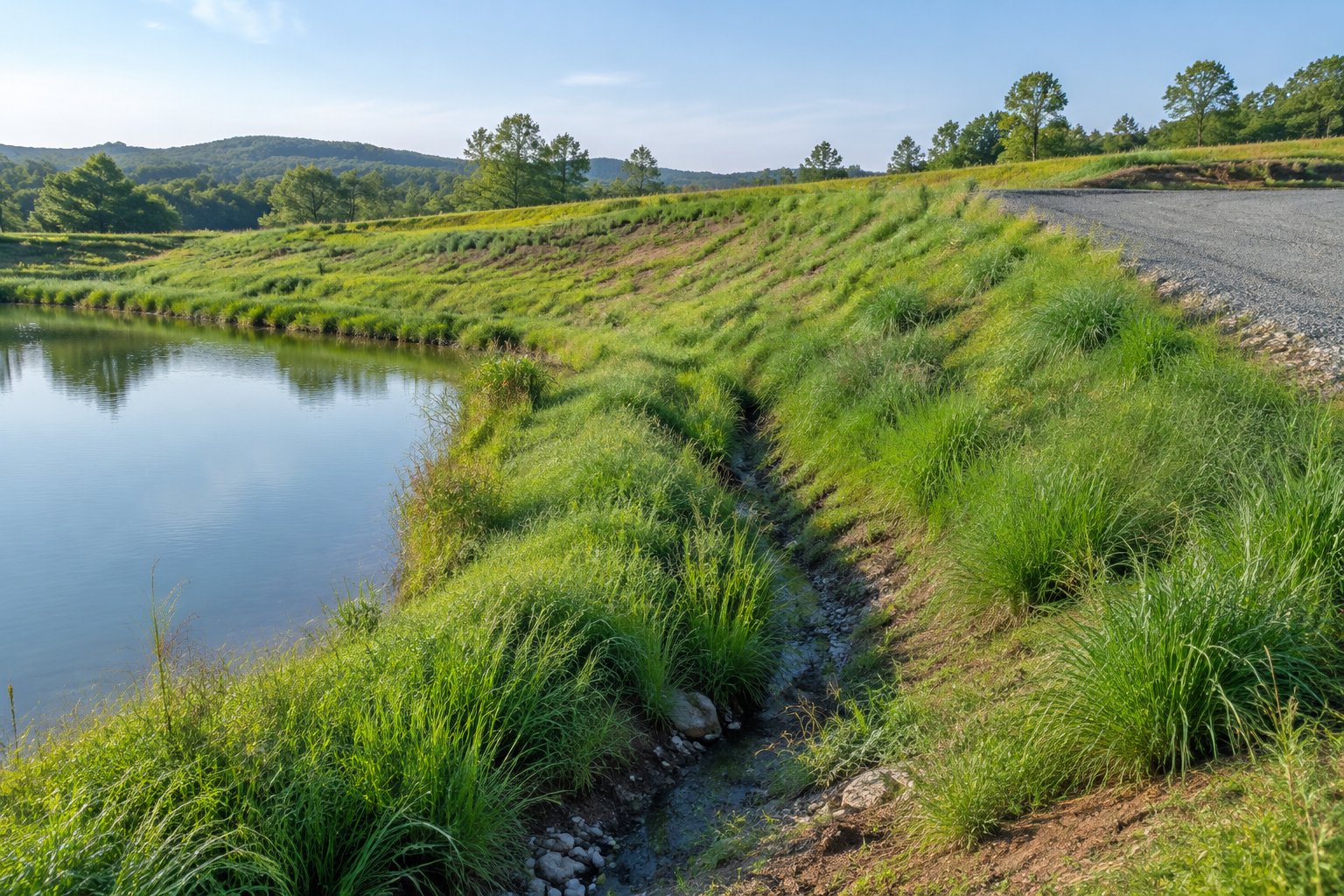
On a slope, raindrop impact and sheet flow are the main threats, and rills start fast once water concentrates. Bermudagrass is the common permanent choice on sunny slopes that will be mowed, because it spreads quickly and covers the surface. On slopes nobody will maintain, a native mix with deeper-rooted species such as switchgrass and little bluestem gives longer-term strength, usually with a faster companion species so the surface is not bare while the natives develop.
What holds the seed in place until then matters as much as the seed. Moderate grades usually get tacked hydraulic mulch, and steep or highly erodible slopes call for a heavier product such as bonded fiber matrix or Flexterra HP-FGM. Our guide to choosing the right erosion control method for steep slopes covers that decision by grade and soil.
Channels and Ditches
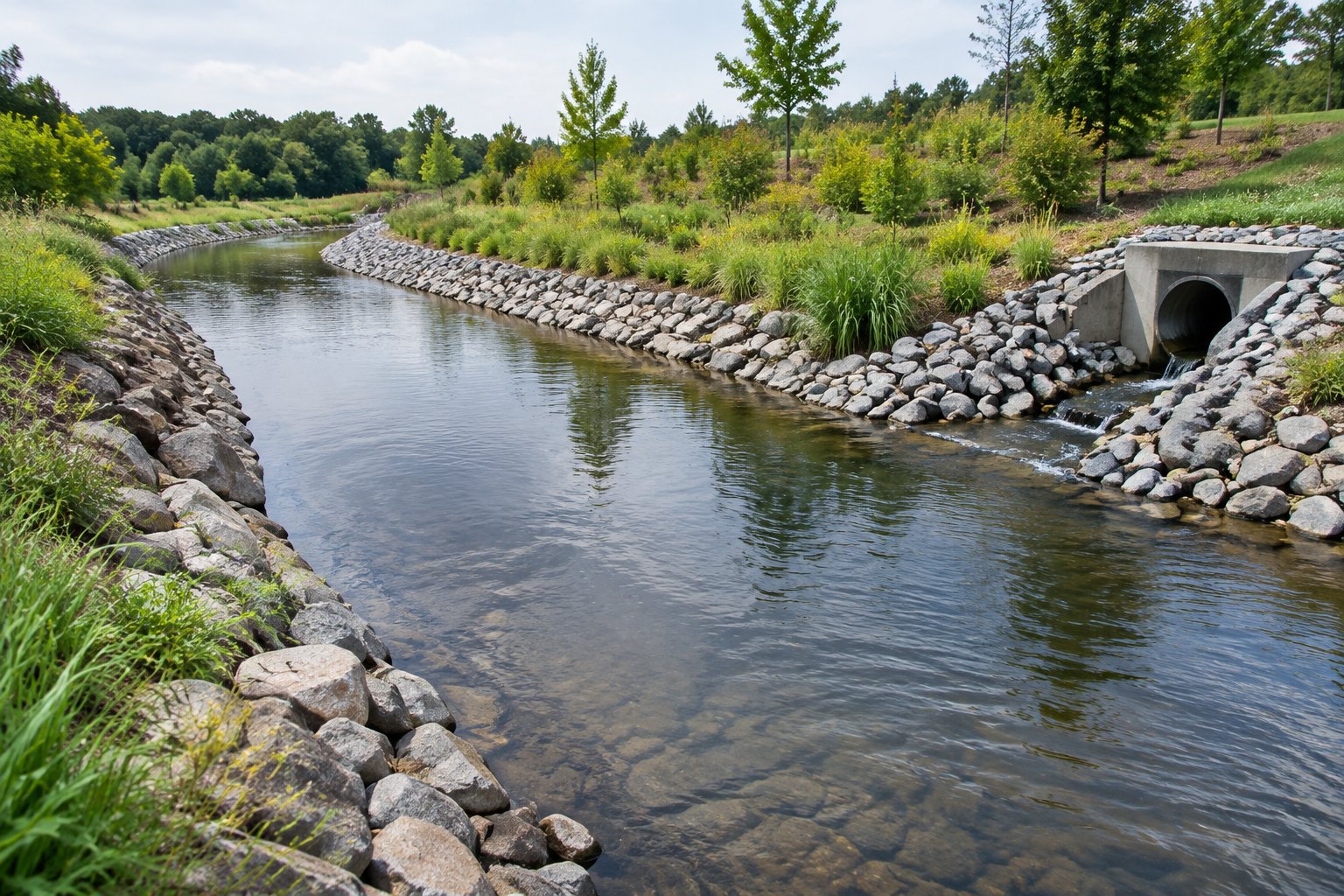
Concentrated flow is a different problem. Water running down a ditch bottom will strip seed and mulch that would sit happily on a slope. In the flow line, the best grass is low and dense and lies flat under water, which is why bermudagrass is so common in Texas ditches. Tall bunchgrasses can slow water on channel side slopes, but in the flow line they leave bare soil between clumps where scour starts.
Until the grass is established, many channels need more than sprayed mulch, such as erosion control blankets or turf reinforcement in high-velocity sections. Our post on stabilizing drainage channels explains how to pick the protection level.
Pond Banks
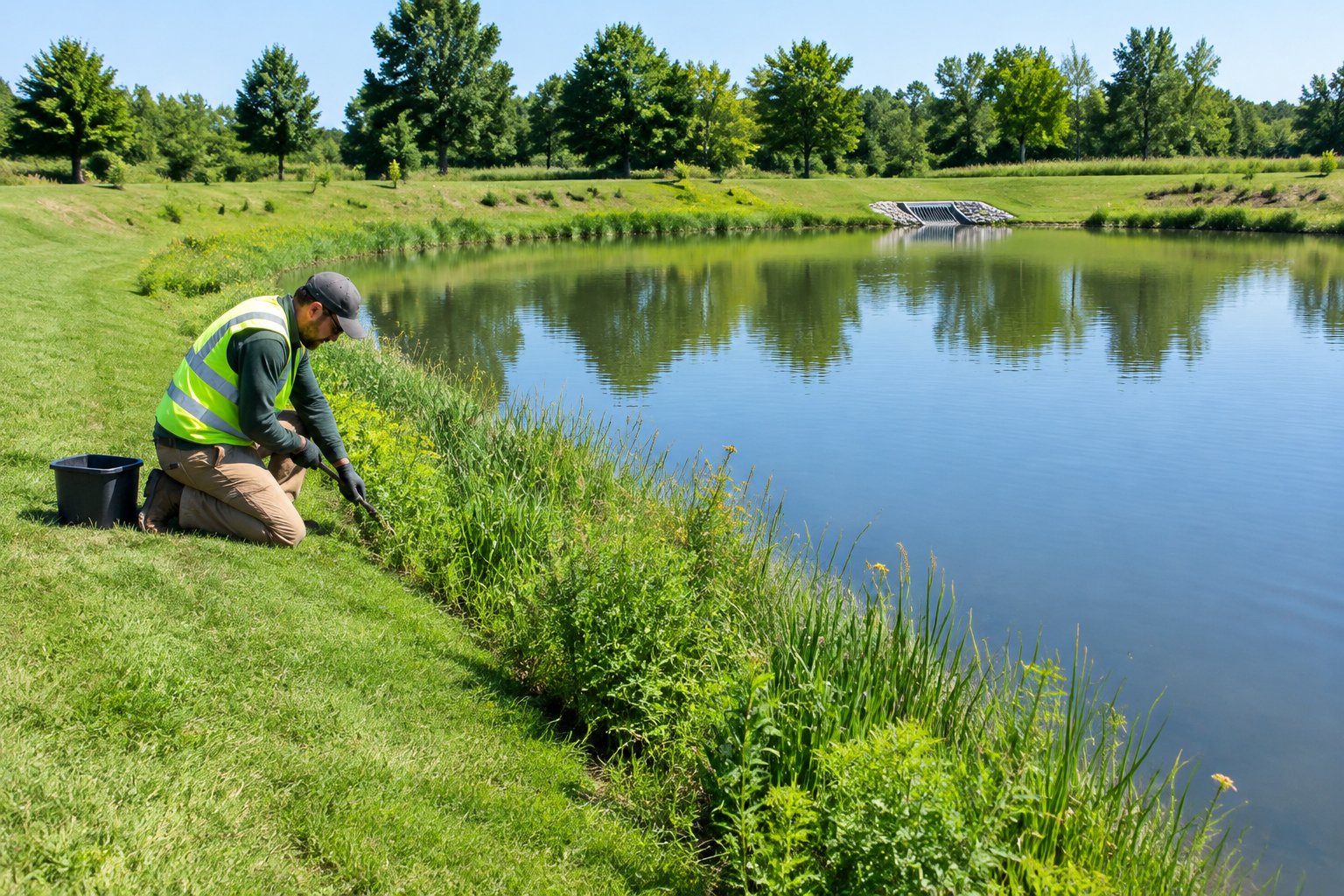
Treat a detention or retention pond bank as two zones. The upper bank drains between storms and behaves like a slope, so bermudagrass or an upland native mix fits there. The lower bank and waterline stay wet for long stretches after rain, so that band needs species that tolerate saturated soil, such as switchgrass, along with grass-like plants such as sedges where the spec includes them. Seeding the whole bank with one upland mix is a common reason for a bare ring at the water's edge. Our guide to hydroseeding detention ponds before storm season covers the timing pressure on these jobs.
Right of Way
Highway, pipeline and utility corridors need cover that holds soil, keeps sight lines open and needs little mowing. On public work the seed mix is usually set by TxDOT, the county or the engineer, and native-heavy mixes are common because they persist without maintenance. Those natives are slow in the first season, so a faster companion species and a mulch layer carry the corridor until they fill in. Pipeline corridors add access and landowner concerns, which we cover in managing pipeline right-of-way restoration.
Pads and Graded Acreage
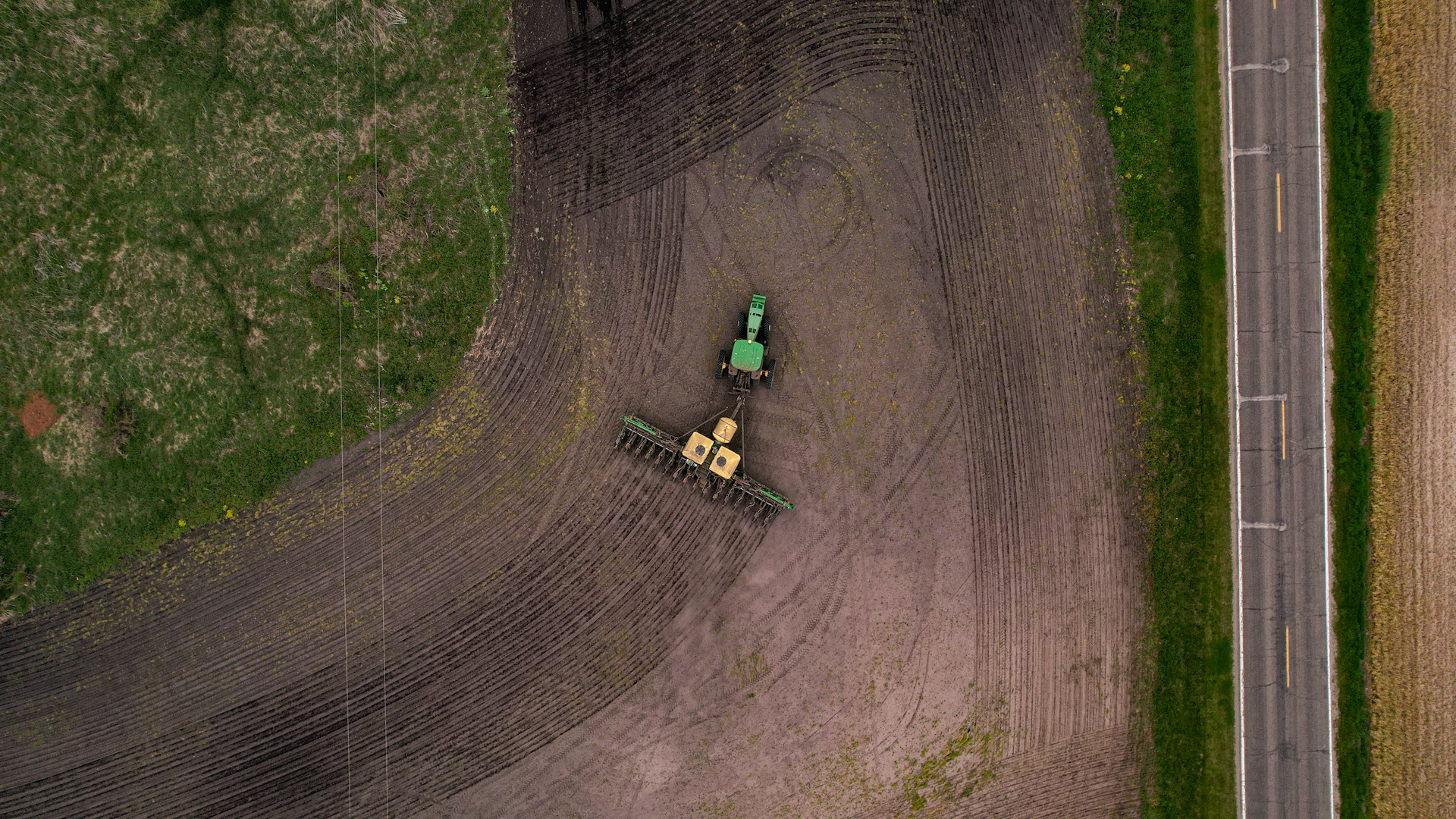
On a pad, the right grass depends on what happens next. A pad that will be built on in two months does not need a permanent stand. It needs cheap, fast cover, often an annual grass or even mulch alone, to keep sediment on site until construction starts. A pad that will sit for a year, or become permanent open space, deserves a perennial mix that will still be holding soil at final inspection. Ask the schedule question before you order seed and you avoid paying for a permanent stand that gets scraped off.
How Fast Does Each Type of Grass Protect the Soil?
Establishment speed decides how long the soil depends on mulch alone.
Cool-season annuals such as annual ryegrass and cereal rye come up quickly in cool weather, which makes them the standard temporary cover for fall and winter seeding. They die back in spring heat, so they buy time rather than finish the job.
Bermudagrass establishes quickly from seed once the soil is warm, and its spreading habit closes gaps within a season. It is the fastest route to permanent surface cover on most sunny Texas sites.
Native grasses are the slowest. In the first year much of their growth is underground, and a stand can look thin while the roots develop. The payoff is cover that persists for years with little input once established.
That spread is why so many erosion mixes blend species, and why the protection layer matters so much in the first weeks. If you need a ballpark before choosing a scope, our hydroseeding pricing calculator gives a quick range for standard hydroseeding.
What Happens After the Grass Is Seeded?
Inspect after every significant rain until the stand closes. Look for rills on slopes, mulch washed out of channels, sediment at the perimeter and bare rings at pond edges, and repair them early rather than at the final walk. Catching a small washout in week two costs far less than regrading a gully in month three.
Watch the grass mix, too. If the fast companion species is crowding out a slow native stand, or a bermuda ditch has a bare flow line, adjust before the next storm season rather than after the inspector notices.
Need Erosion Control That Holds Through the Next Storm?
Our crews seed and stabilize slopes, channels, pond banks, corridors and pads across Texas and Louisiana, and we match the seed and the protection layer to each area of the site rather than spraying one mix everywhere. Contact Allied Hydromulch or call 281-482-8212 and we will walk through your site with you.
Frequently Asked Questions
What grass should go in the bottom of a drainage ditch?
A low, dense, sod-forming grass that lies flat under flowing water. In much of Texas that is bermudagrass, often with a blanket or heavier hydraulic product until it establishes.
Are tall native grasses good for erosion control?
On slopes and open ground, yes, once established, because of their deep roots. They are slow to establish and grow in clumps, so they need a companion species and mulch early on, and they are a poor choice for the flow line of a channel.
What can I seed on a pad that will be built on in a few months?
Fast, inexpensive temporary cover, such as a cool-season annual in fall and winter, or a mulch-only application when the timeline is very short. A permanent stand is usually wasted on ground that will be disturbed again soon.
Why does grass fail at the edge of a pond?
Usually because the bank was seeded with one upland mix. The waterline stays saturated after rain, so it needs wet-tolerant species and often heavier protection than the upper bank.