.svg)


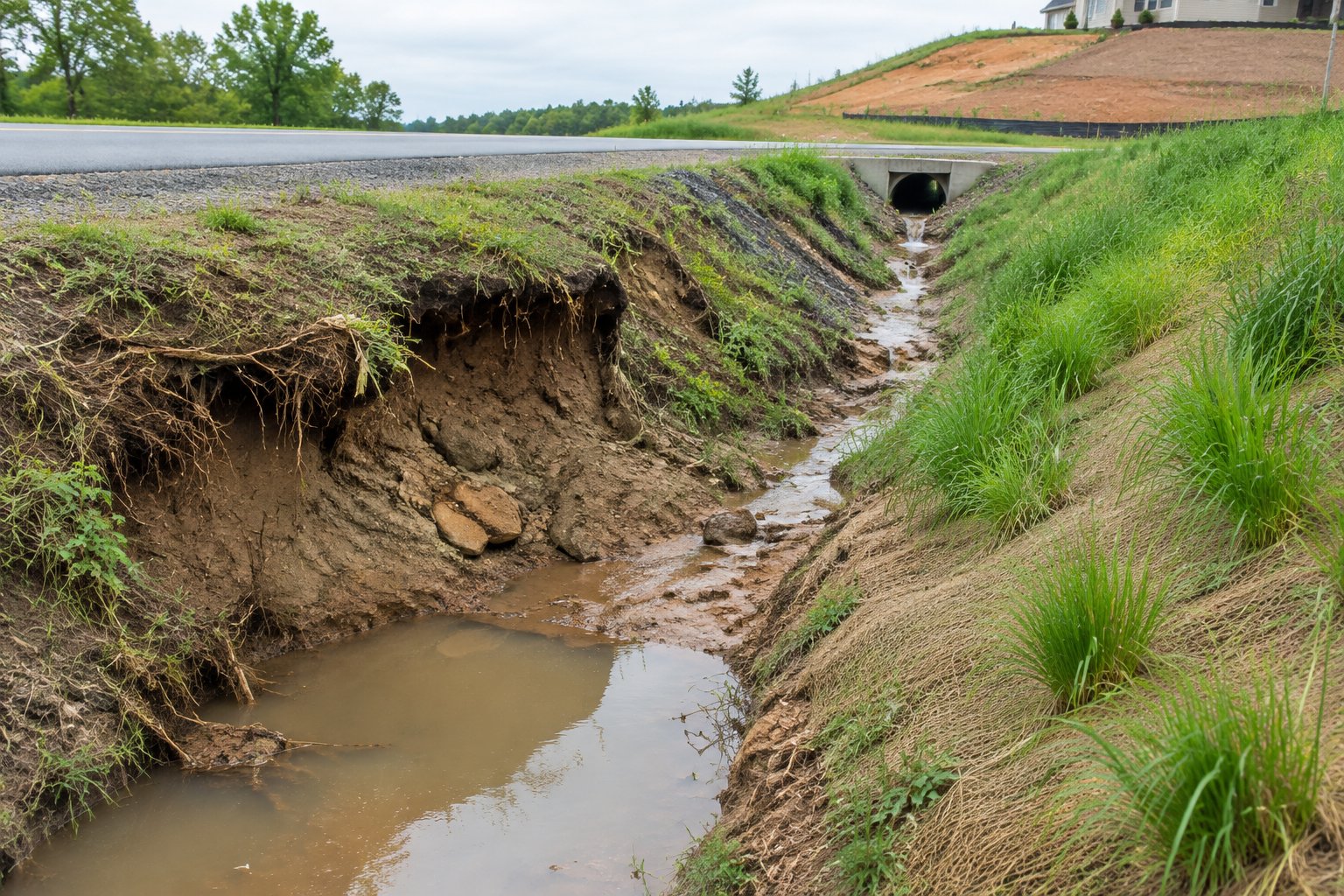
A freshly backfilled pipeline right-of-way is a long ribbon of bare, loose soil. It crosses slopes, ditches, creeks, and fence lines. One heavy rain event moves sediment off that corridor and into places nobody wants it: drainage channels, neighboring pasture, and stormwater discharge points. That is when the calls start, from the landowner, the inspector, or the operator's environmental lead.
Hydroseeding for pipeline restoration is the fastest practical way to get protective cover back on that disturbed ground.
Allied Hydromulch TX, LLC has worked on right-of-way corridors, industrial pads, and highway embankments across Texas, Louisiana, Oklahoma, and New Mexico since April 1990. In 2025 alone, our crews installed roughly 15 million square feet of mulch, much of it on long, linear, hard-to-access sites.
Keep reading to learn how hydraulic application speeds corridor closeout, how to read right-of-way conditions before seeding, and when native grass or drill seeding fits better. By the end, you will know which treatment your corridor needs and how to sequence it around your restoration schedule.
How Hydraulic Application Supports Faster Corridor Closeout
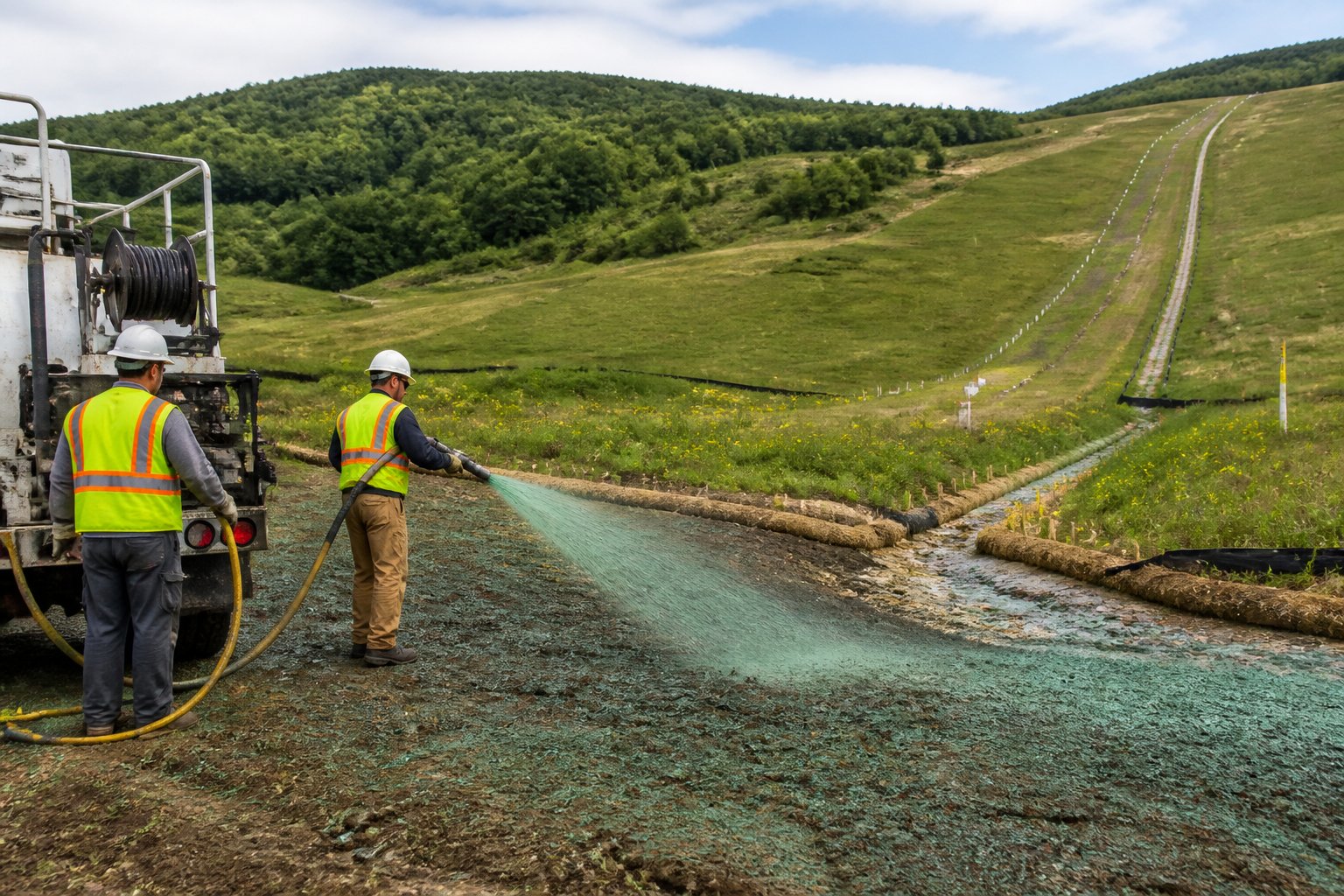
Hydroseeding puts seed, mulch, fertilizer, and tackifier on the ground in one pass. On a corridor that runs thousands of linear feet, that single-pass efficiency is what keeps restoration from becoming its own schedule problem.
Broadcast seeding leaves seeds sitting on the surface. Wind moves it, birds take it, and the first rain carries it downslope. A hydroseed slurry bonds seed to soil under a fiber blanket that holds moisture and stays put.
Corridor work also rewards mobility. Hydroseeding equipment can reach and cover ground from the travel lane or a shoulder, which limits repeat traffic over soil you just finished grading.
What a Hydroseed Slurry Delivers Across Irregular Terrain
Pipeline corridors are rarely flat or uniform. You get spoil ridges, ditch banks, equipment ruts, and short-cut slopes within a few hundred feet of each other.
A hydraulically sprayed slurry follows that terrain. The mix coats high spots, low spots, and rough surfaces evenly, which is difficult with dry broadcast methods.
A standard slurry carries these components:
- Seed: regionally appropriate mix matched to soil and season
- Mulch fiber: wood or wood-blend fiber that forms a protective mat
- Fertilizer: starter nutrition for early root development
- Tackifier: binder that holds fiber and seeds in place
- Soil conditioners: amendments selected for compacted or poor soils
That coverage is only useful if the seed survives the first two weeks in the field.
Why Hydromulch Helps Protect Seed During Early Establishment
Hydromulch does two jobs at once. It shields seeds from raindrop impact, and it holds moisture near the soil surface where germination happens.
On Gulf Coast clay, moisture retention matters in both directions. Clay sheds water fast during a downpour and then crusts hard under July heat. The fiber mat softens both extremes. Seeds stay damp longer, and the surface stays intact instead of sealing over or washing into the nearest ditch line.
Typical Germination Windows for Project Scheduling
For standard hydroseeding, germination typically begins within 7 to 14 days. Full turf establishment usually follows in 4 to 6 weeks, depending on rainfall, temperature, and soil conditions.
Native grass mixes move slower by design. Germination typically runs 2 to 4 weeks, with establishment closer to 2 to 3 months as deeper root systems develop.
Build those windows into your closeout calendar before you set an inspection date. Timing only works, though, if the ground was ready when the crew arrived.
Assessing Right-of-Way Conditions Before Seeding
Seed does not fix a drainage problem. Before any application, walk the corridor and note where water concentrates, where soil is compacted, and where slope makes vegetation alone insufficient.
That walk determines the treatment. Two segments of the same pipeline can need completely different specifications 500 feet apart.
Federal guidance on erosion and sediment control planning stresses limiting the area and duration of exposed erodible soil. On a linear project, that means stabilizing finished segments as you go. Not all at once at the end.
Slope Gradient, Runoff Paths, and Drainage Crossings
Gradient drives everything. Flat pasture crossings hold seed easily. Ditch banks, levee tie-ins, and cut slopes above 3:1 need more than standard hydromulch. Water paths matter just as much.
Where the corridor runs downhill for a long stretch, runoff gathers speed and concentrates into rills before vegetation ever takes hold. Mark every creek crossing, culvert outfall, and low-water area during assessment. Those points need protection installed first. Not last.
Compaction, Soil Disruption Depth, and Surface Preparation
Heavy equipment compacts trench spoil and travel lanes. Roots struggle to push through a hard pan, and water sits on the surface instead of soaking in.
Ripping, disking, or track walking across the slope opens the surface and creates a seedbed. In deep-disturbance areas, topsoil replacement makes a real difference in establishment speed.
Check for these conditions before the truck rolls:
- Surface crusting or standing water after rain
- Ruts running parallel to the slope instead of across it
- Rock, caliche, or subsoil brought up during backfill
- Uneven windrows left along the trench line
- Access constraints that limit hose reach from the travel lane
When Additional Soil Stabilization Is Necessary
Some segments need more than seed and mulch. Steep grades, long uninterrupted slope lengths, and clay soils that shed water fast all push toward a higher-performance product.
Bonded fiber matrix (BFM) and flexible growth medium products cure into a continuous mat that resists heavy rainfall while vegetation establishes. Our approach to bonded fiber matrix slope stabilization is built for exactly these conditions.
Once the ground is prepared and the treatment level is set, seed selection becomes the next real decision.
Selecting Native Vegetation for Long-Term Access and Recovery
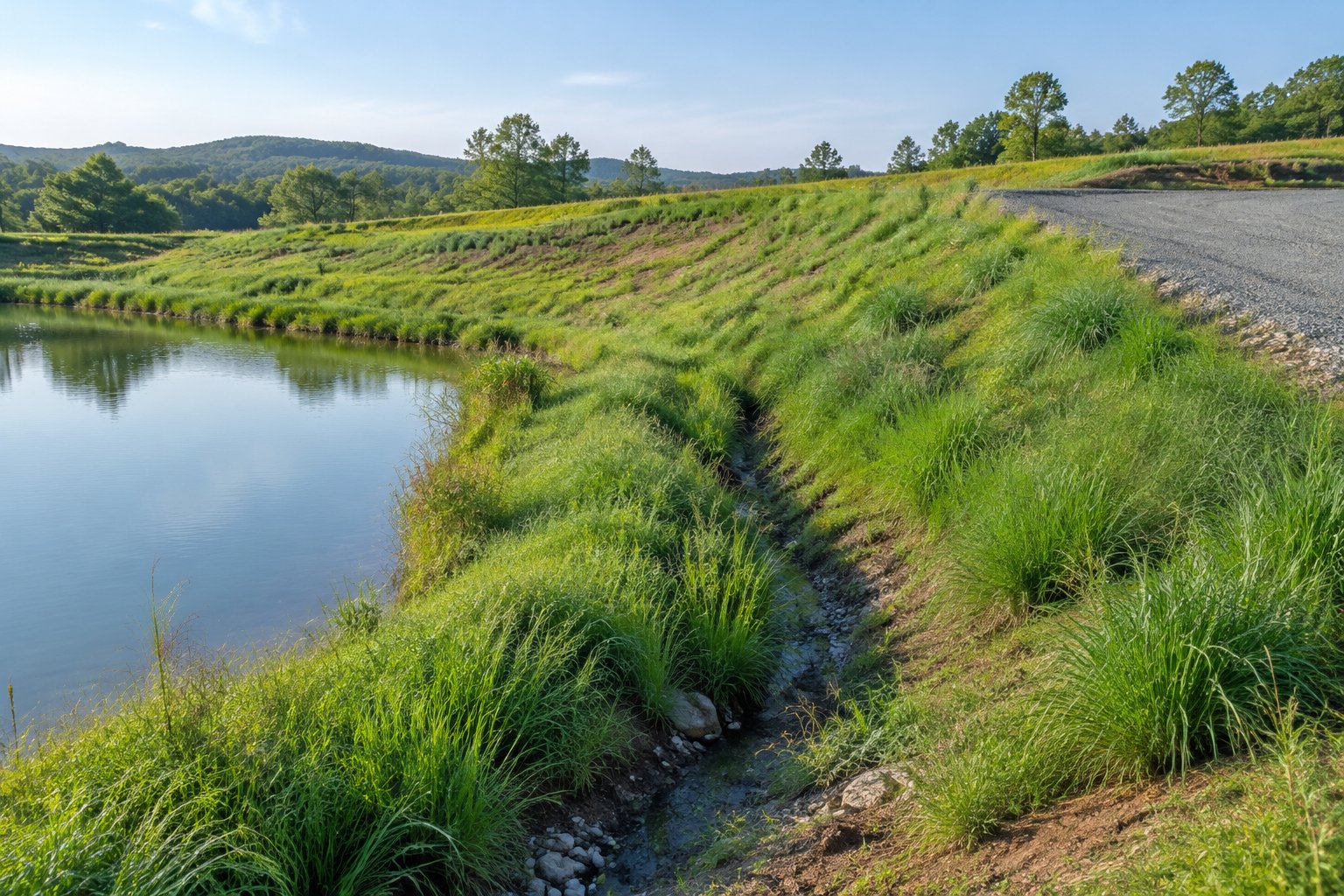
Native grasses are the practical long-term answer for pipeline corridors. They handle regional weather, need less irrigation, and hold soil with deep root systems after the crew is gone.
That last point matters most on rights-of-way. Nobody is going to irrigate or fertilize a corridor running through ranch land three counties from the nearest office.
According to the TxDOT roadside vegetation guidance, native grasses have adapted over thousands of years to Texas climates and soils, which gives them a clear advantage in right-of-way environments.
Matching Native Grass Mixes to Texas and Gulf South Conditions
Texas is not one seed zone. A mix that performs on Gulf Coast clay will underperform on West Texas caliche or Piney Woods sand.
Warm-season natives such as little bluestem, sideoats grama, and buffalograss anchor many Texas mixes. Coastal and Louisiana corridors often need species tolerant of high humidity and saturated soil.
Landowner agreements sometimes specify forage species or restrict certain grasses. Confirm those terms before ordering seed. Not after. Our work on native grass seeding for site restoration starts with that conversation.
When Drill Seeding Is a Better Fit for a Pipeline Segment
Drill seeding places seed directly into the soil at a set depth and spacing. On long, accessible, relatively flat corridor sections, that seed-to-soil contact produces strong, uniform stands with less seed waste.
Germination typically appears within 1 to 3 weeks under proper conditions. For large acreage tie-ins and staging areas, drill seeding for large acreage restoration often makes more sense than a hydraulic pass.
Use drill seeding where terrain allows equipment travel. Use hydroseeding where slopes, ditches, and rough ground rule that out. Many corridors need both.
Planning for Limited Mowing Access and Long-Term Maintenance
Most right-of-way corridors get little to no mowing. Species selection should assume that from day one.
Native mixes stay within a manageable height range, resist drought, and recover after grazing or brush control. They also support pollinators, which helps with projects with habitat commitments. Vegetation is only half of the protection plan for a corridor with high-risk segments.
Matching Erosion Protection to High-Risk Corridor Areas
Certain corridor locations fail first. Steep cut slopes, spoil piles, ditch crossings, and concentrated runoff paths need protection sized to the hydraulic force they will actually see. Standard hydraulic mulch handles moderate ground well. It does not hold on a 2:1 slope during a tropical rain event on the Gulf Coast.
Slopes, Spoil Piles, and Concentrated Runoff Areas
Spoil piles left along the trench are loose, unconsolidated, and often steep-sided. Rain cuts channels through them quickly. Concentrated flow areas need structural help. Vegetation alone cannot stop scour where water is already channelized at velocity.
Match the treatment to the condition:
- Flat to 4:1 slopes: standard hydroseeding with hydraulic mulch
- 3:1 slopes and disturbed clay: higher-tack mulch or BFM
- 2:1 and steeper cut slopes: Flexterra flexible growth medium
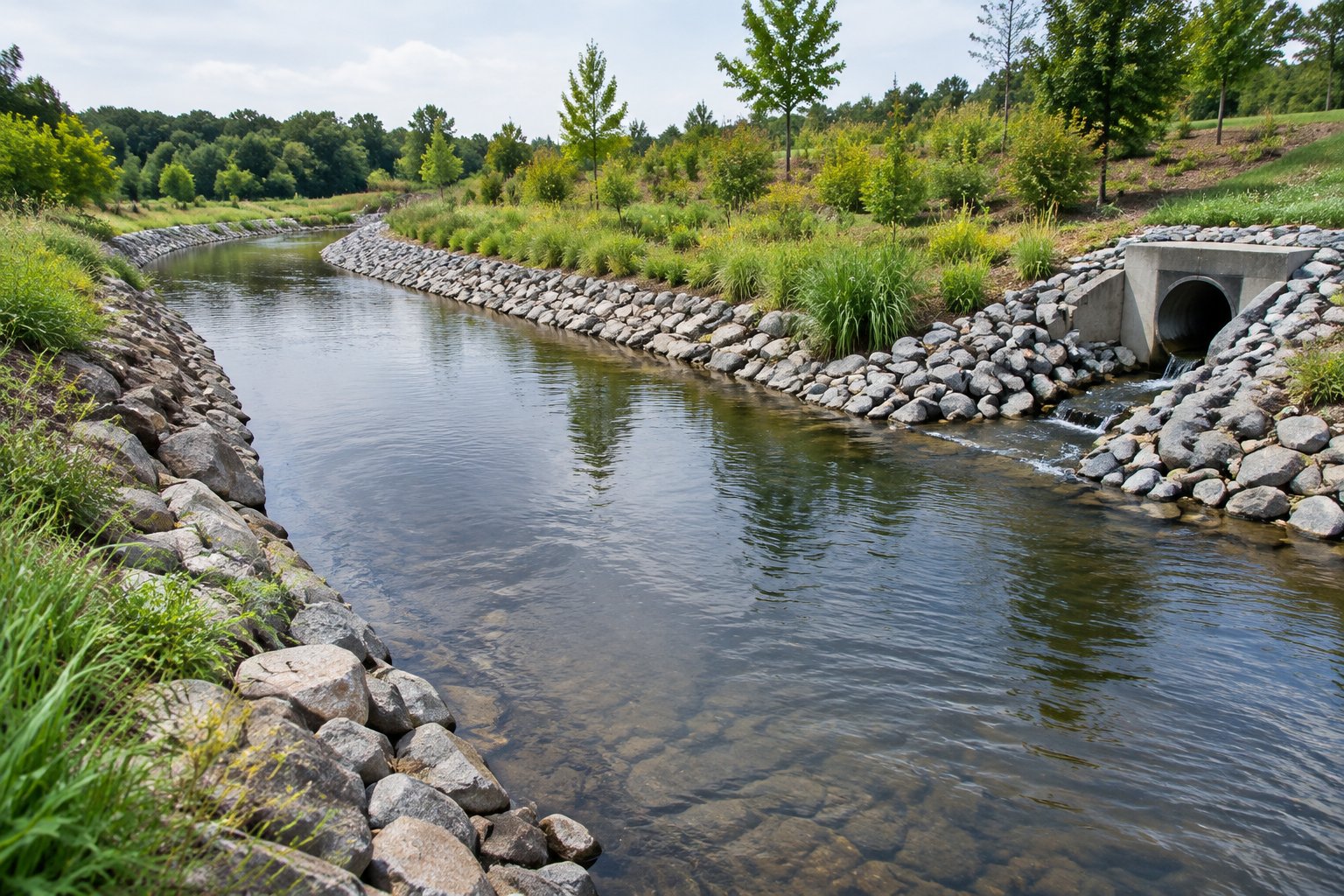
- Channelized flow and ditch bottoms: erosion blankets or rock protection
- Creek and wetland buffers: blankets plus native seed per permit terms
Hydraulic Mulch, Erosion Blankets, and Flexterra Applications
Hydraulic mulch is fast, economical, and covers ground efficiently. It is the workhorse for most of a corridor's linear footage.
Erosion blankets provide physical armor in channels and on slopes where flow concentrates. They stay in place and hold seed under conditions that wash mulch away.
Flexterra is a premium flexible growth medium (FGM) built for demanding slopes and disturbed soils. We specify it where standard hydraulic mulch would not survive the first significant rain.
Sequencing Protection Before Rain Creates a Compliance Issue
Timing is where most corridor restoration goes wrong. Crews wait for the entire spread to finish. Then get caught by a front moving in off the Gulf. Stabilize completed segments as they are released.
Progressive stabilization reduces exposure and keeps sediment out of receiving waters. It also gives you erosion control under compliance pressure instead of scrambling after a violation. With treatments matched to conditions, the remaining variable is coordination across a long, multi-party project.
Planning Large-Scale Reclamation Work Around Schedule and Compliance
Right-of-way restoration involves more parties than most site work: the operator, the general contractor, inspectors, and individual landowners along the route. Seeding has to fit all of their timelines at once.
Corridors also span seasons. A spread that starts in October may not finish until spring. This changes seed mix decisions midway through the job.
Coordinating Seeding After Installation, Maintenance, or Decommissioning
New installation, integrity digs, and decommissioning each leave different site conditions. A single integrity dig might be an acre. A full replacement spread might run 40 miles.
Scope the work by segment, not by total mileage. Segments released for final grade should be seeded within days, not months. Coordinate access windows early. Gate keys, landowner notification, and crop schedules cause more delays in corridor work than weather does.
Documenting Vegetation Establishment for Landowners and Operators
Documentation closes the file. Operators and landowners want proof that vegetation has been established, not just proof that seed was applied.
Record application dates, seed mix and rate, treatment type by station, and photos at established intervals. Follow-up photos at 30 and 60 days show real progress against the timeline.
That record supports permit closeout and settles landowner questions before they escalate.
Restoration Considerations for Oil and Gas Pipeline Corridors
Oil and gas corridors carry conditions that other projects do not. Compacted access roads, workspace pads, and chemically altered soils around valve sites all need attention beyond routine seeding.
Soil testing in those areas tells you whether amendments are needed. Skipping that step produces thin stands and a return trip. Our crews handle this work across the Houston metro, the Gulf Coast, and into Louisiana, Oklahoma, and New Mexico. Corridor conditions vary widely by county.
Move the Right-of-Way Toward Stable Vegetation
Bare corridor soil is a liability with a clock on it. Getting ground cover established quickly protects the operator, the contractor, and the landowner relationship.
The practical path is straightforward: assess conditions by segment, match treatment to slope and flow, choose seed for the region, and stabilize as segments are released.
Choosing a Practical Scope for Your Corridor Conditions
Scope by segment length, slope class, and access. Most corridors split into standard hydroseeding for the bulk footage; upgraded products on slopes; and blankets at crossings.
Get the cost picture early. Our hydroseeding pricing calculator gives a rough range so you can budget before final grade is complete.
Requesting a Fast Pipeline Restoration Quote
Give us your corridor length, slope conditions, soil type, and target completion date. That is usually enough to scope a real number.
Allied Hydromulch TX, LLC has delivered commercial hydroseeding and erosion control across Texas and the Gulf South since 1990. Call 281-482-8212 or request a project estimate with your site details.
Frequently Asked Questions
What Does Hydroseeding Accomplish After Pipeline Construction Is Complete?
It puts protective cover and seed on disturbed ground in one pass. This reduces sediment loss from the corridor. The mulch layer shields soil while grass roots develop. That protection is what supports permit closeout and landowner sign-off.
How Much Does Hydroseeding Cost for a Pipeline Right-of-Way Restoration Project?
Cost depends on total square footage, slope class, seed specification, soil condition, and site access. Long, open corridors price differently than steep segments needing Flexterra or blankets. Our online calculator gives a rough range. A phone call confirms it against your actual conditions.
Which Seed Mix Works Best for Pipeline Restoration in Texas?
Regionally adapted native warm-season grasses generally perform best, including little bluestem, sideoats grama, and buffalograss, depending on the ecoregion. Coastal and Louisiana segments often need humidity- and moisture-tolerant species. Landowner agreements and permit conditions can also dictate the mix.
How Long Does Hydroseeded Vegetation Take to Establish on a Pipeline Easement?
With standard hydroseeding, germination typically begins within 7 to 14 days, and establishment follows in 4 to 6 weeks. Native grass mixes typically germinate in 2 to 4 weeks, with establishment closer to 2 to 3 months. Heat, rainfall, and soil conditions move those windows in either direction.
Will Heavy Rain Wash Away Hydroseed on Pipeline Slopes and Disturbed Soil?
Standard hydraulic mulch holds well on flat to moderate ground but can fail on steep, disturbed slopes during heavy rain. That is why steeper segments get bonded fiber matrix, Flexterra, or erosion blankets instead. Matching the product to the slope is what prevents rework.
What Erosion Control Measures Should Be Installed with Hydroseeding on a Pipeline Project?
Pair seeding with slope interrupters, erosion blankets at drainage crossings, and sediment controls at discharge points. Concentrated flow areas need physical protection because vegetation alone cannot stop scour. Sequence those items before rain, not after the first washout.