.svg)


The first heavy rain after grading is the real test of a slope. It can strip topsoil, send sediment offsite, and put your stormwater permit in jeopardy before grass ever sprouts.
Standard hydraulic mulch is fine for flat ground, but when slopes get steep, soils are loose, and a Gulf Coast storm is in the forecast, Flexterra erosion control is what holds the ground together.
At Allied Hydromulch TX, we have put Flexterra to work on commercial, industrial, and infrastructure projects throughout Texas and the Gulf South since 1990. With over 15 million square feet of mulch installed in 2025 alone and a strong track record on more than 60 projects, we know where this flexible growth medium makes sense and where it doesn't.
Let's dig into how Flexterra bonds to soil, where it outperforms standard hydroseeding mulches or blankets, what installation looks like on real job sites, and what kind of germination you can expect in Texas. This isn't product hype. It's based on what actually happens in the field.
What Flexterra Does on Active Job Sites
Flexterra acts as a high-performance flexible growth medium (HP-FGM) that sticks to exposed soil and gives immediate erosion resistance, even before grass appears. Unlike loose-fiber hydraulic mulch that can wash away, Flexterra forms a tough, interlocking matrix that shields soil from rainfall and runoff as soon as it cures.
On Texas construction sites, that fast effectiveness is often the difference between a passing inspection and a violation. Crews spray it with the same equipment they use for regular hydromulch, so it fits right into existing workflows, with no special gear or extra mobilization required.
How a Flexible Growth Medium Bonds to Soil
Flexterra works through both chemical and mechanical bonding. Its fibers lock together and grip the soil surface as the slurry dries, creating a mat that can handle more erosion force than standard tackified mulch. This mechanical grip helps the matrix stay put on slopes, even when gravity and water are working against it.
Chemical bonding comes from special adhesive agents in the mix. These cure in place and hold up through the wet-dry cycles that are so common along the Gulf Coast. You end up with a protective layer that doesn't crack, peel, or separate from the soil during typical Texas weather swings.
Why Immediate Surface Protection Matters Before Germination
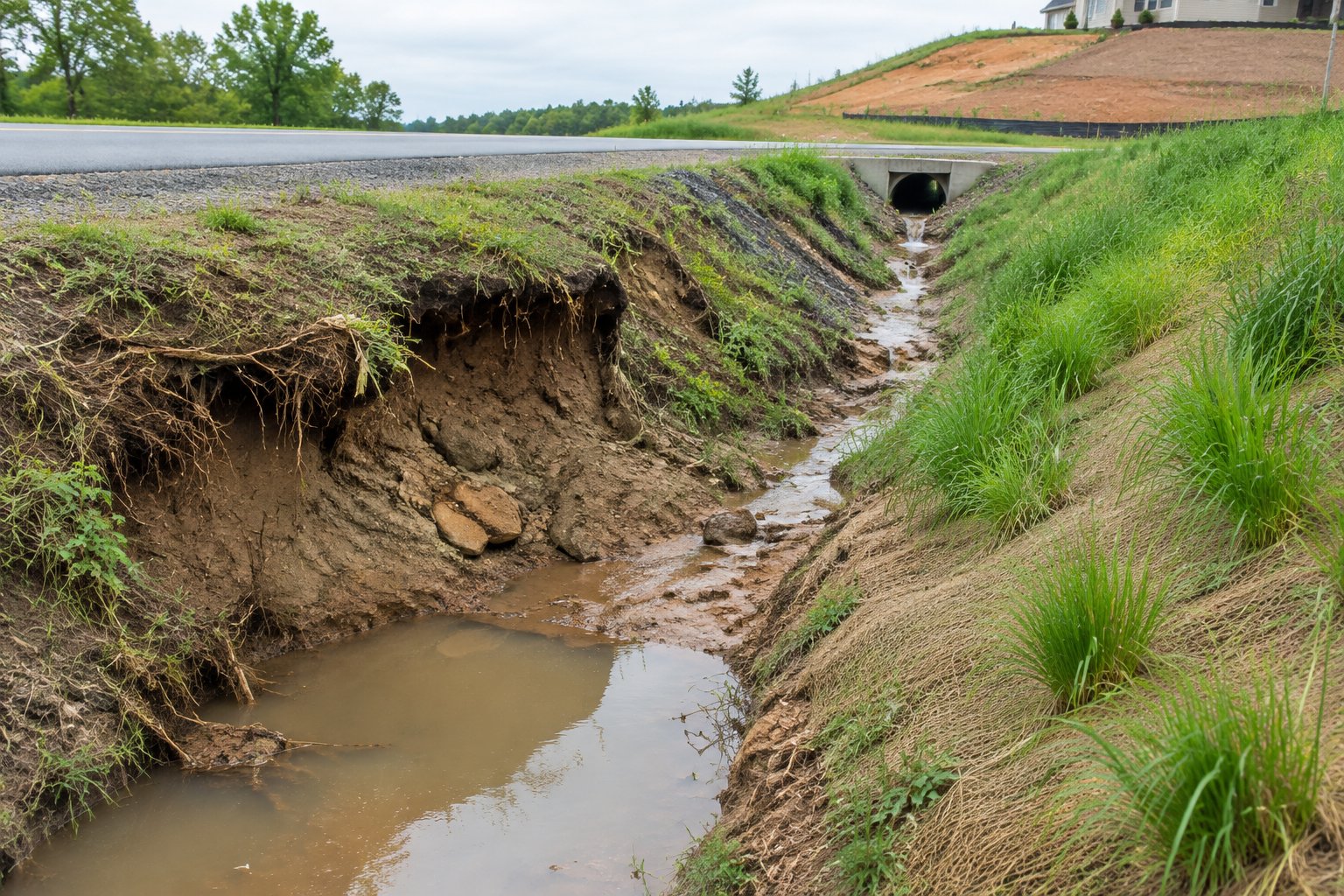
Seeds take time, usually 7 to 14 days for warm-season grasses to show any green. During that gap, bare soil is exposed, and every rainstorm can trigger rill erosion, gullies, and sediment discharge that put your project at risk.
Flexterra covers that vulnerable window. Its bonded fiber matrix protects the soil within hours of application, defending the site until grass roots take over.
For crews working under TCEQ stormwater permit requirements, that fast coverage can be the difference between staying compliant and facing enforcement. It's basically buying time for vegetation to get established without leaving the site exposed.
Where Flexterra Erosion Control Fits in a Stormwater Compliance Plan
Flexterra isn't a sediment control device. It's for erosion control, and that difference matters. Erosion controls stop soil from moving in the first place, while sediment controls like silt fence try to catch what already washed away. A solid stormwater pollution prevention plan covers both.
On projects covered by the Texas Construction General Permit (TXR150000), you have to stabilize disturbed areas within certain timeframes.
FGM erosion control meets that requirement on slopes and disturbed spots where seeding alone won't work fast enough. Including Flexterra in the erosion control section of a stormwater plan, along with sediment controls at the edge, shows inspectors a layered approach.
When Standard Hydraulic Mulch Is Not Enough
Standard hydraulic mulch does fine on flat or gently sloped ground with stable soils. It falls short when you hit steeper slopes, loose soils, or when heavy rain comes before grass can anchor itself. Spotting these limits early avoids rework and compliance headaches.
Steep Slopes and Severe Slopes
Slopes steeper than 3:1, horizontal to vertical, push standard mulch past its limits. Water moves faster, and loose mulch just can't hold on. At 2:1 or steeper, gravity pulls water and mulch downhill, leaving bare spots up top and sediment collecting at the bottom.
Flexterra's interlocking fibers tackle this head-on. The bonded layer stays put on grades where standard mulch would slide off, keeping coverage from top to bottom. For stabilizing steep slopes on commercial sites, this is often the deciding factor.
Disturbed Soils With Immediate Rainfall Exposure
Freshly graded sites in Southeast Texas deal with a triple threat: loose soils, frequent heavy rain, and a tiny window between grading and the next downpour. Standard mulch often washes away before it can help seeds germinate.
Flexterra's bonded matrix cures quickly and provides fast protection against raindrop impact and sheet flow.
Near the Gulf Coast, where storms can pop up with little warning, that rapid protection keeps soil in place while seeds start their cycle. Anyone who has had to redo a slope after a single storm knows the cost of using a product that can't keep up.
Channels, Embankments, and Other High-Risk Areas
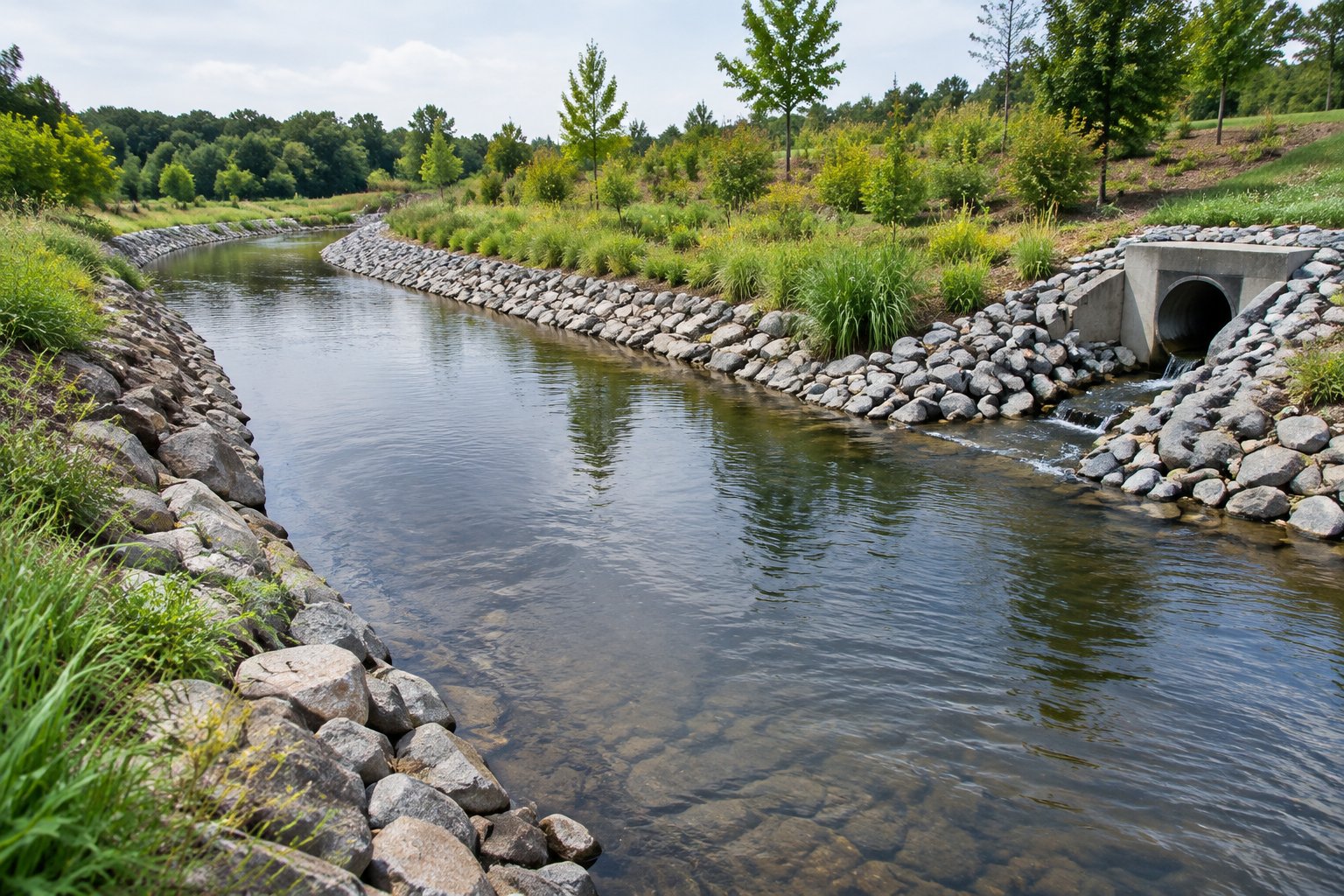
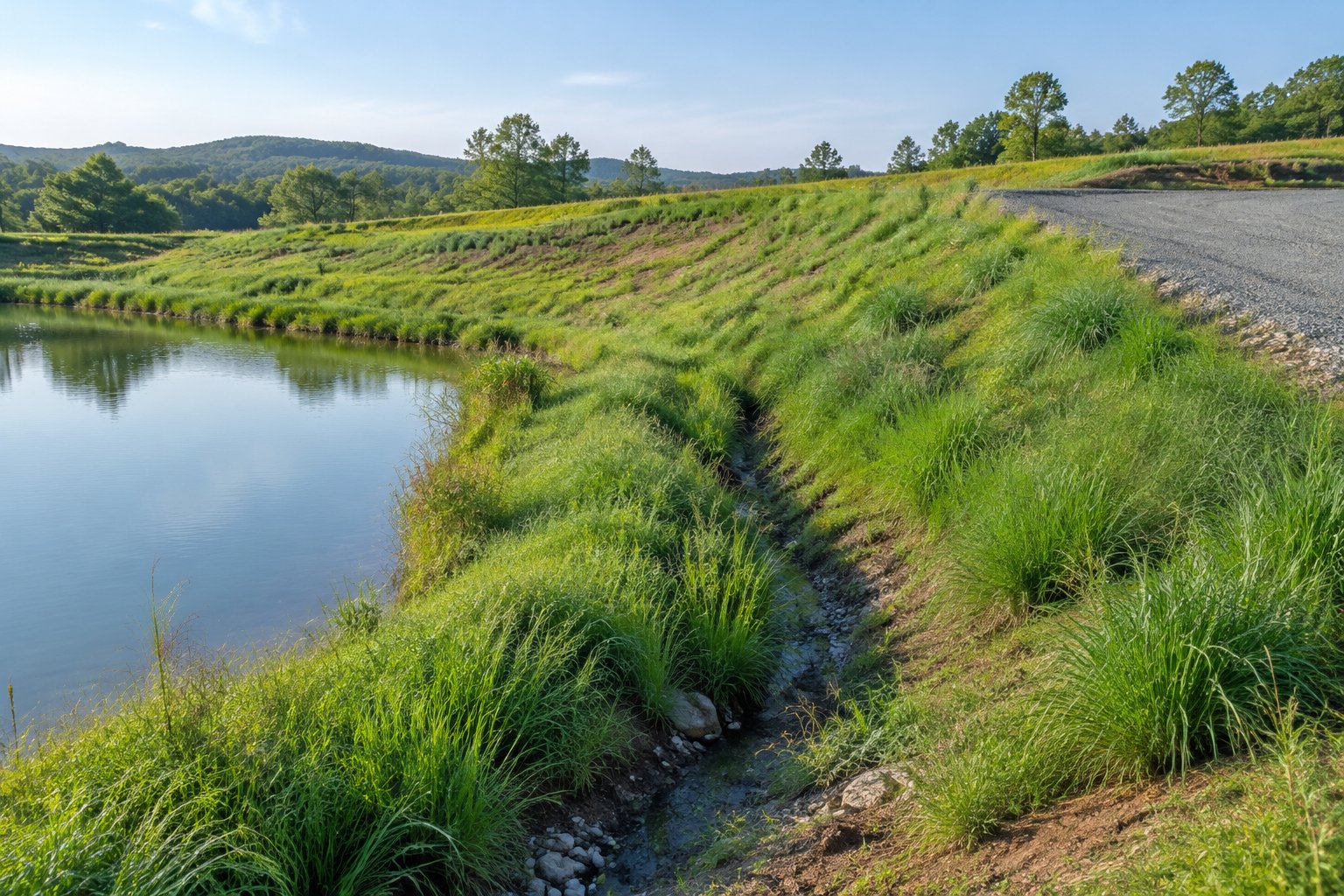
Drainage channels, pond embankments, and roadside ditches concentrate water flow and create much higher shear stress than flat areas. These spots need something rated for concentrated flow.
Flexterra was made for these high-risk areas. On highway and roadside runoff projects, it holds where other products can't. TxDOT and municipal specs for erosion prevention methods on roadways now often call for a bonded fiber matrix or similar material in these applications.
How Flexterra Installation Works in the Field
Flexterra goes on with a simple hydraulic application, but the details of prep and coverage make or break performance. Crews with Texas experience handle these steps differently than someone just reading a product sheet.
Site Assessment and Soil Preparation
Before spraying anything, you have to assess the site. Slope angle, soil type, drainage patterns, and nearby water bodies all affect application rate and seed mix. On Gulf Coast clays, surface prep might mean a light scarification to help the FGM bond better.
Remove debris, rocks, and standing water before you start. Flexterra bonds to soil, not to puddles or trash. A clean, prepped surface ensures the matrix sticks where it's supposed to, which is what really drives erosion resistance.
Hydraulic Application and Coverage Control
We mix the slurry in a hydroseeder and spray it over the prepared surface with standard equipment. Application rates depend on slope and specs, but even coverage is what matters most. Thin spots are weak spots.
Experienced teams watch coverage closely, using systematic spray patterns and checking visually as they go. On tricky sites with changing slopes, you might need multiple passes for a consistent layer. Application rates depend on:
- Slope gradient (steeper means more product)
- Soil type and texture
- How close you are to sensitive water features
- Seed mix density
- Regulatory requirements for coverage
Post-Application Inspection and Protection Window
After application, Flexterra needs time to cure before it reaches full strength, usually 24 to 48 hours in warm Texas weather. Keep traffic and equipment off until it sets.
Inspect after application to confirm even coverage and touch up any thin spots. For projects with active stormwater compliance in Houston, photo documentation at this stage goes into the inspection file.
Expected Performance for Germination and Revegetation
Flexterra does two things at once: it protects bare soil from erosion and creates a better environment for seed germination. The fiber matrix holds moisture at the soil surface, which is huge for fast vegetation establishment.
How Flexterra Supports Seed Germination
The bonded matrix traps moisture and reduces evaporation, giving seeds more time to take up water each day. In Texas summers, where bare soil surfaces can climb well past 130°F, that extra moisture can make or break germination.
It also insulates the surface, softening temperature swings that can stress seedlings. This mix of moisture retention and temperature moderation helps seeds germinate quickly, even during the hottest months on Gulf Coast and Central Texas jobs.
Typical Vegetation Growth and Establishment Outcomes
With the right conditions and enough water, warm-season grasses seeded under Flexterra usually show green-up in 7 to 14 days. A thick stand that resists erosion on its own typically fills in within 4 to 6 weeks.
For native grass mixes, the timeline stretches out. Native species might take 2 to 4 weeks to germinate and up to 2 or 3 months to fully establish. The FGM sticks around and keeps protecting the soil through that whole period, which is key for native grass on large commercial sites.
What Affects Germination Timelines in Texas and the Gulf South
Several real-world factors affect how fast vegetation establishes under FGM:
- Seed species: Bermuda and buffalograss come up faster than native bluestem
- Season: Summer helps; winter slows things down
- Irrigation: With no irrigation, you're at the mercy of rainfall
- Soil quality: Compacted or poor soils slow root growth
- Slope aspect: South-facing slopes dry out faster and might need more product
These aren't just theoretical. They drive real project schedules, and knowing them upfront helps set realistic expectations for final stabilization inspections.
How It Compares With Other Stabilization Methods
Choosing between Flexterra, standard hydroseeding mulch, erosion blankets, and mechanical seeding comes down to slope, budget, schedule, and what the regulations require. No single product is perfect for every scenario.
Flexterra Versus Standard Hydroseeding Mulch
Standard hydromulch is less expensive and works fine on flatter or gently sloped ground. Flexterra costs more upfront but doesn't need reapplication on steeper, more erosion-prone sites. It's really about the site's needs and how much risk you're willing to take on.
If your site falls within what standard mulch can handle, there's rarely a need to pay for the premium product. But on severe slopes that demand Flexterra HP-FGM, the cost of fixing failed mulch usually outweighs the upfront investment.
Flexterra Versus Erosion Blankets
Erosion control blankets offer physical protection and help establish vegetation, but installing them takes time and labor, especially on big or uneven sites. Getting blankets to fit snugly on rough terrain is a challenge, and gaps lead to problems.
Flexterra goes down with a hydroseeder, covering tough areas quickly. For channels and embankments on commercial sites, the labor savings can make up for the higher material cost. Blankets still have their place when flow velocities are too high for FGMs or when permanent armoring is required.
When Drill Seeding or Native Grass Seeding Makes More Sense
Not every job needs an FGM. Large, flat projects with stable soils and no urgent erosion risk might be better off with standard hydroseeding or a different site coverage strategy. Drill seeding, for example, puts the seed right into the soil at the correct depth, giving good seed-to-soil contact without a mulch layer.
On restoration sites or wetland buffers, native grass seeding often pairs well with Flexterra if slopes are involved. But for flat reclamation areas, standard hydromulch usually does the trick. The right choice depends on the site, not just the product's claims.
Making the Right Spec for Slope and Compliance Deadlines
Specifying Flexterra starts with matching the product to the site's needs, gathering the right documentation for the bid, and working with a crew that has handled similar jobs. Doing this upfront helps avoid change orders and missed deadlines.
What to Review Before You Specify an FGM Solution
Before writing Flexterra into a spec, check whether the site has the conditions where a bonded fiber matrix really makes sense: slopes steeper than 3:1, areas with concentrated runoff, freshly disturbed soils just before rain, or active stormwater compliance. These are all strong candidates for FGM.
Flexterra is biodegradable and non-toxic, so it's a good fit near waterways, wetlands, or habitats where you can't leave synthetic materials behind. On projects where appearance matters long-term, it breaks down as grass grows in, leaving nothing behind.
Documentation, Product Data, and Crew Coordination
A solid bid package should have the Flexterra product data sheet, safety data sheet, recommended application rates for the slope, and the right seed mix for the region. For TxDOT projects, reference the TxDOT hydraulic erosion control specifications for hydraulically applied products.
Coordination with the crew matters too. The applicator needs to know the slope layout, access for equipment, water sources, and the project's stabilization deadline. Sharing these details ahead of time keeps things moving and helps get the job done in one go when possible.
Next Steps for Regional Projects in Texas and the Gulf South
Across Texas, Louisiana, Oklahoma, and New Mexico, getting the FGM spec right starts with a site-specific conversation.
Slope, soil, seed mix, and compliance timelines all play into the plan. An experienced applicator looks at these factors and recommends Flexterra, standard hydromulch, or a combination, depending on what fits best.
Allied Hydromulch TX, LLC has handled Flexterra applications on industrial, commercial, and infrastructure projects around the Gulf South for over 35 years. Call 281-482-8212 for an estimate, or run your slope and acreage through the online job price calculator to get a ballpark figure before you plan the whole job.
Frequently Asked Questions
What site conditions make a bonded fiber matrix the right call versus straw or blankets?
Bonded fiber matrix works best when slopes are steeper than 3:1, soils are freshly disturbed, or water flows through the area. Straw mulch can't hold up on steep ground and washes away in heavy rain. Erosion blankets help on moderate slopes but take time and labor to install, especially on big or uneven sites.
How fast can the installed mat handle rainfall and runoff after application?
Flexterra starts resisting erosion within a few hours as the fibers bond. Full cure usually happens in 24 to 48 hours in warm Texas weather. Once cured, it handles both sheet flow and moderate concentrated flow without shifting.
What cure time should we plan for before foot traffic, equipment, or an inspection?
Give it 24 to 48 hours of undisturbed cure time before walking or driving light equipment over it. Keep heavy equipment off until grass starts to grow. Inspectors can usually verify the application right away, and photos from install day are often enough for documentation.
What is the typical installed cost per acre and what factors drive the price up or down?
Installed cost depends on slope, site access, seed mix, and how much material the job needs. Steeper slopes and tough access add to the price. The best way to get a real number is to request a project estimate with your slope, acreage, and access info.
What submittals should we expect for a bid package: product data, spec sheet, and application rates?
A complete submittal for Flexterra includes the product data sheet, safety data sheet, recommended rates for the slope, and seed mix specs. For TxDOT or municipal jobs, include references to the relevant erosion control spec sections from the agency's standards.
Where can we source the material locally, and what lead times should we plan for on Texas projects?
Flexterra is usually sourced through the contractor applying it, not bought directly. Lead times are short when you work with an applicator who keeps inventory or has good supplier connections in the area. Checking on material availability during bidding helps avoid project delays.
Get Your Slope Protected Before the Next Storm
Flexterra is made for the tough jobs, the steep slopes, disturbed soils, and drainage zones where keeping everything in place while grass grows is critical. It fills the gap between standard mulch and permanent armoring, and goes down in a single pass that fits your project schedule.
Whether you're working on a highway embankment, a retention pond in Houston, or an industrial site near Corpus Christi, the right FGM application locks down soil, helps grass take off, and checks the compliance boxes from day one. Call 281-482-8212 to reach a superintendent who will look at your slope and recommend the right approach, or run the numbers through the online cost estimator before you plan the whole job.