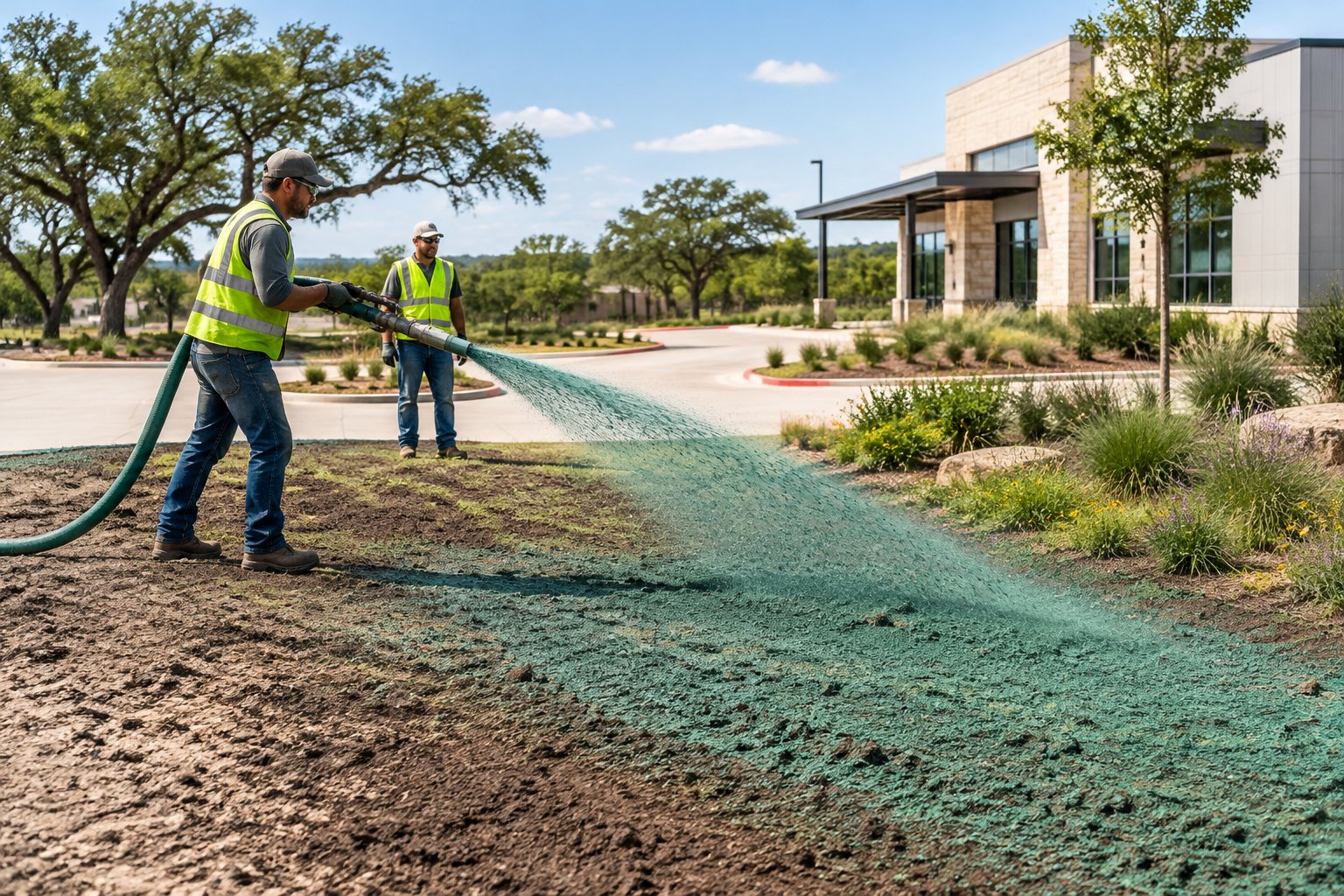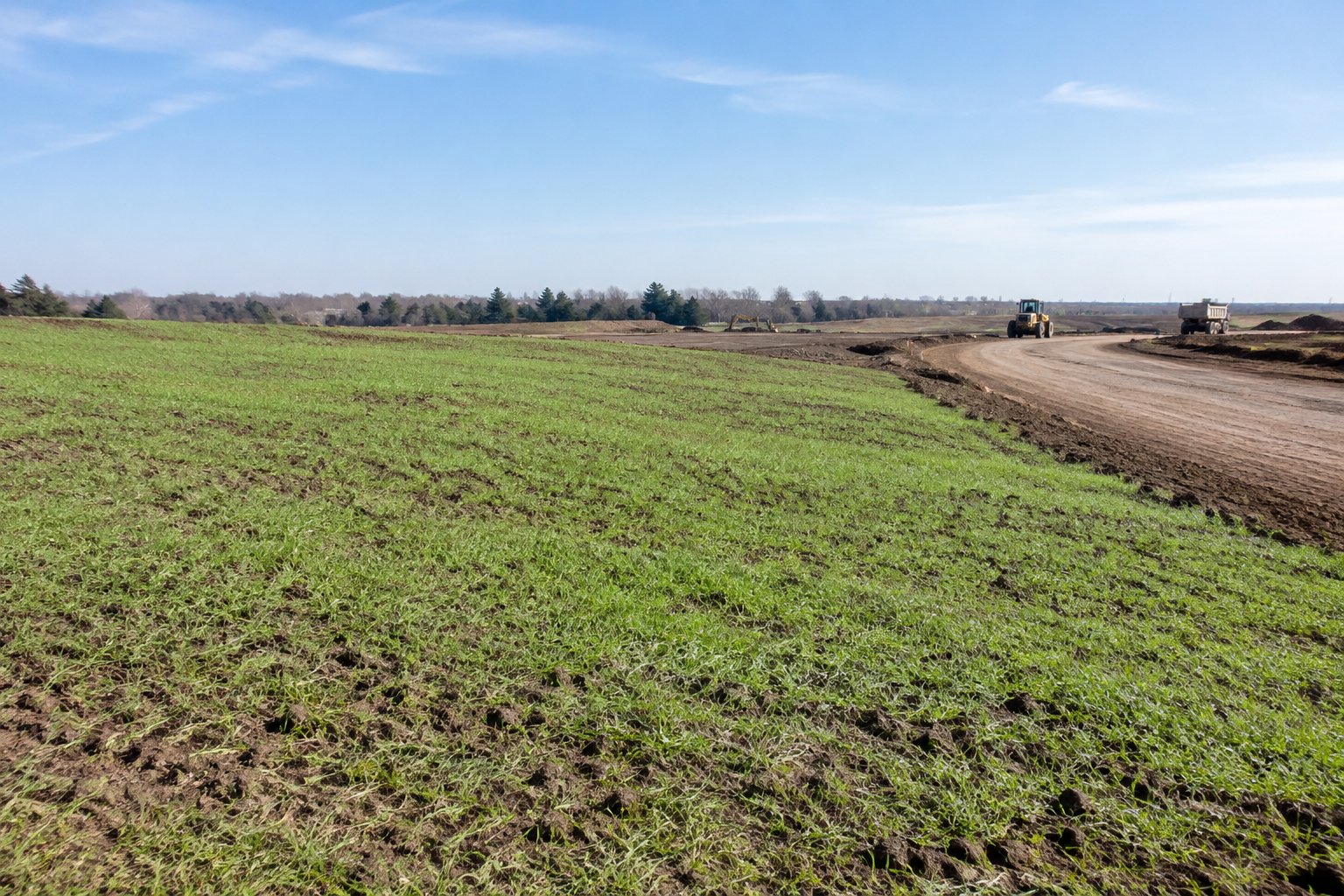
Grading does not stop in November, but bermudagrass and most native seed will not come up again until the soil warms in spring. The usual answer is a cool-season annual, most often annual ryegrass or cereal rye, sprayed or drilled as temporary cover so disturbed ground is protected through the winter rains and the site stays in compliance until permanent seed can go down. Where nothing will grow, or the ground is about to be regraded, a hydromulch application without seed can do the same job.
This article is about that winter gap: which temporary seed to use, when it is better to skip seed altogether, and how to hand the site over to warm-season grass in spring without leaving it bare in between.
Why Do Texas Sites Need Winter Cover at All?
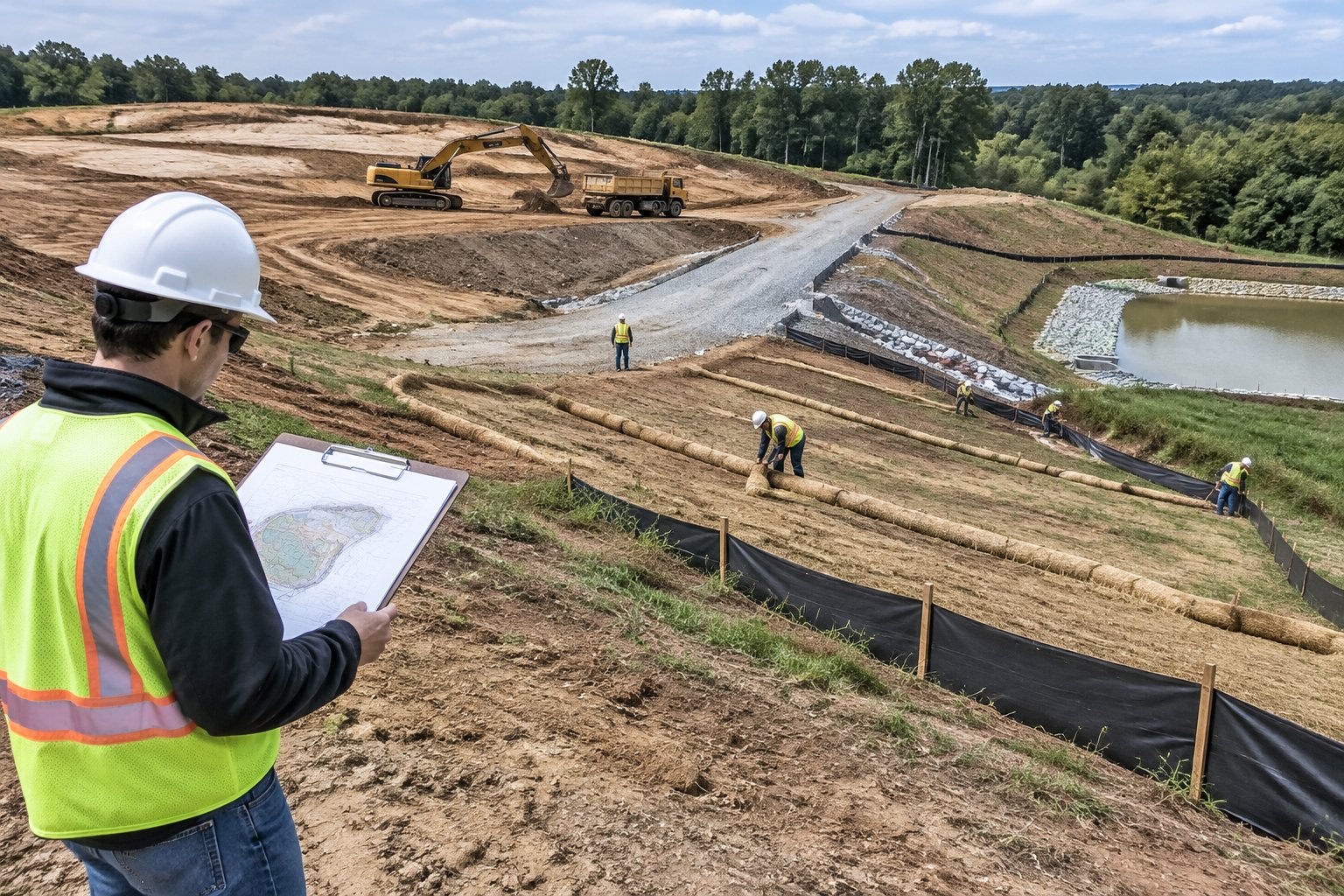
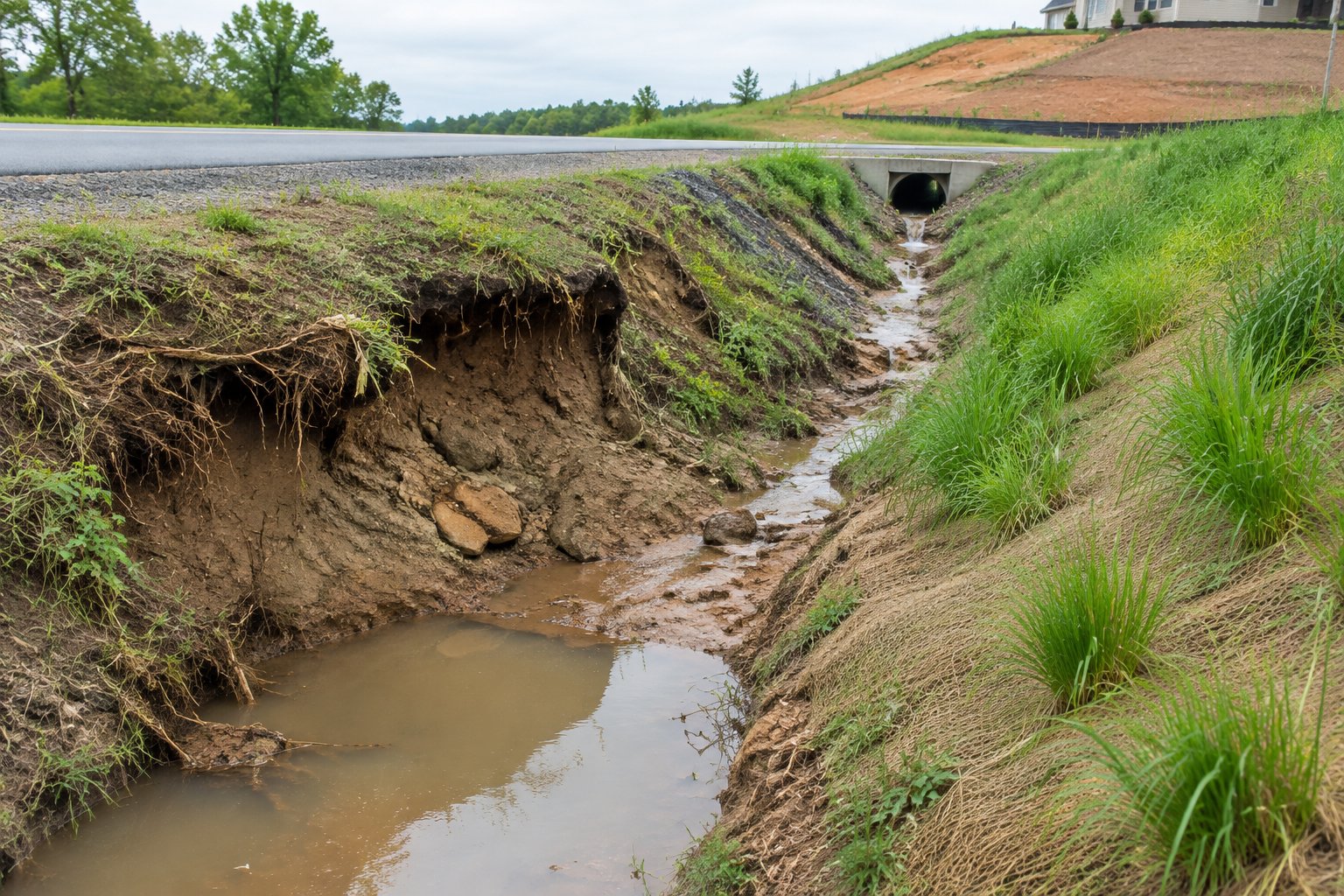
Winter in most of Texas is mild enough for rain and cold enough to stop warm-season grass. That combination is what catches projects out. A pad finished in late October and left for spring seeding sits open through months of fronts and soaking rain, and on clay that means rills, sediment at the silt fence and a writeup at the next inspection.
Your SWP3 expects disturbed areas that will sit idle to be stabilized, temporarily if not permanently. A cool-season stand, or a tacked mulch layer, gives you that interim cover and something to point to on the inspection report. Our post on keeping Texas sites inspection-ready covers the wider compliance picture.
Which Winter Grass Seed Fits Temporary Site Cover?
Three cool-season annuals do most of the winter work in Texas, and each has a different strength. Texas A&M AgriLife forage guidance ranks their cold tolerance with rye at the top and oats at the bottom, which is the single most useful fact when you are choosing between them.
Annual Ryegrass
Annual ryegrass is the common choice for hydroseeded winter cover on pads, swales, lot perimeters and embankments. The seed is small and mixes well in a slurry, and the stand forms a mat of fine roots near the surface. AgriLife notes that it grows better on wet soils than any other cool-season annual grass, which counts for a lot on Gulf Coast clay that stays soggy for weeks after a front.
Cereal Rye
Cereal rye is a small grain (sold as rye or grain rye), and despite the name it is a different plant from ryegrass. It is the most cold-hardy of the group, so it is the safer pick in North Texas, the Panhandle and on any site seeded later in the fall. The larger seed suits a drill, which makes it practical on big disturbed tracts, pipeline corridors and reclamation acreage. It also gets tall and leaves a lot of residue, which needs a plan before spring.
Oats and Other Options
Oats grow quickly in fall but have the least cold tolerance of the cereal grains, so they are mainly a South Texas and coastal option. Perennial ryegrass and tall fescue show up in some mixes, but neither is a first choice for temporary cover on a typical Texas construction site.
When Should You Seed Winter Cover?
Earlier is better. Cool-season annuals need a few weeks of reasonable soil temperature to germinate and root before hard cold sets in. AgriLife's winter pasture guidance puts the main planting window from mid-September through October, with the best date depending on location, and later seeding in colder regions gives a thinner stand.
That does not mean November work is a lost cause, especially along the Gulf Coast and in Louisiana, where winters stay mild. It does mean the further north you are and the later in the year it gets, the more you should lean toward cereal rye or toward mulch-only cover. Our post on the best time to hydroseed in Texas covers the full-year calendar.
Water still matters in winter. Rain is usually more reliable than in summer, but Central and West Texas can go weeks without it. Before seeding, know how the site will get moisture if the forecast stays dry.
When Is Hydromulch-Only Cover the Better Call?
Sometimes seed is the wrong answer. A hydromulch application without seed covers bare soil with a tacked fiber layer that cuts raindrop impact and holds the surface in place. It makes sense when:
- It is too late in the season for seed to establish before hard freezes
- The area will be regraded, trenched or built on within a few weeks
- Utilities or other trades still need to cross the ground
- You need cover immediately and cannot wait for germination
The trade-off is that mulch alone does not grow roots, so it will not last the way a stand of grass does, and it does not count toward permanent vegetation. On steep cuts and fill slopes, standard hydraulic mulch may not hold through heavy winter storms, and a heavier product such as Flexterra HP-FGM or bonded fiber matrix is the better fit. We explain how mulch with and without seed compare in hydroseed vs. hydromulch for Texas construction sites.
On many sites the right answer is both: rye or ryegrass on areas that will sit until spring, and mulch-only cover on the pads that are coming back into play next month. If you want a rough number for the seeded areas, our hydroseeding pricing calculator gives a quick range for standard hydroseeding.
How Does Winter Cover Hand Over to Permanent Grass?
Winter cover is a bridge, and the far end of it needs planning as much as the near end. Annual species die out on their own as the weather heats up, and if permanent seed is not established by then, the ground goes bare again right as the spring storms arrive.
Final Stabilization Needs Permanent Vegetation
TCEQ's construction general permit defines final stabilization around a uniform perennial vegetative cover, at a density of 70 percent of the native background cover for the area (or equivalent permanent measures). Annual ryegrass and cereal rye are not perennials, so a green winter stand keeps you covered in the meantime but will not, on its own, get you to the Notice of Termination. Check the specific language in your SWP3.
Manage the Rye Before Spring Seeding
Ryegrass competes with young warm-season seedlings for light and water. Mowing it short in spring opens the canopy and lets the soil warm, and annual ryegrass fades naturally as temperatures climb. Cereal rye takes more planning because it grows tall and leaves heavy residue that can shade out new seedlings. Depending on the site, crews mow it, terminate it or drill the permanent seed through the residue, which keeps the old roots holding soil while the new stand comes in.
Schedule Both Applications Together
Set the spring seeding date before the winter cover goes down. Know when your region's soil will support bermudagrass or your native mix, who will do the permanent application, and which areas will be disturbed again in between so they are not seeded twice. Budgeting both mobilizations together avoids a surprise line item in March.
Get Winter Cover Down Before the Next Front
Our crews install temporary seed, hydromulch and permanent seeding across Texas and Louisiana, so one team can carry your site from fall cover to spring closeout. To plan the erosion control services your site needs this winter, contact Allied Hydromulch or call 281-482-8212.
Frequently Asked Questions
Is cereal rye the same as annual ryegrass?
No. Cereal rye is a small grain, while annual ryegrass is a forage and turf grass. Rye is more cold-hardy and grows taller; ryegrass handles wet ground better and forms a finer, denser stand.
Can I seed winter cover in December?
Along the Gulf Coast it can still work in a mild year. Farther north, germination slows and frost risk rises, so hydromulch-only cover is often the more reliable choice that late.
Does winter rye count as final stabilization?
Generally no. Final stabilization under the TCEQ construction general permit is based on perennial vegetation, and winter annuals die out in spring. Plan the permanent seeding to follow.
Will ryegrass crowd out bermudagrass seeded in spring?
It can if it is left tall. Mow it short as spring arrives so light reaches the soil, and annual ryegrass will decline on its own as the heat builds.