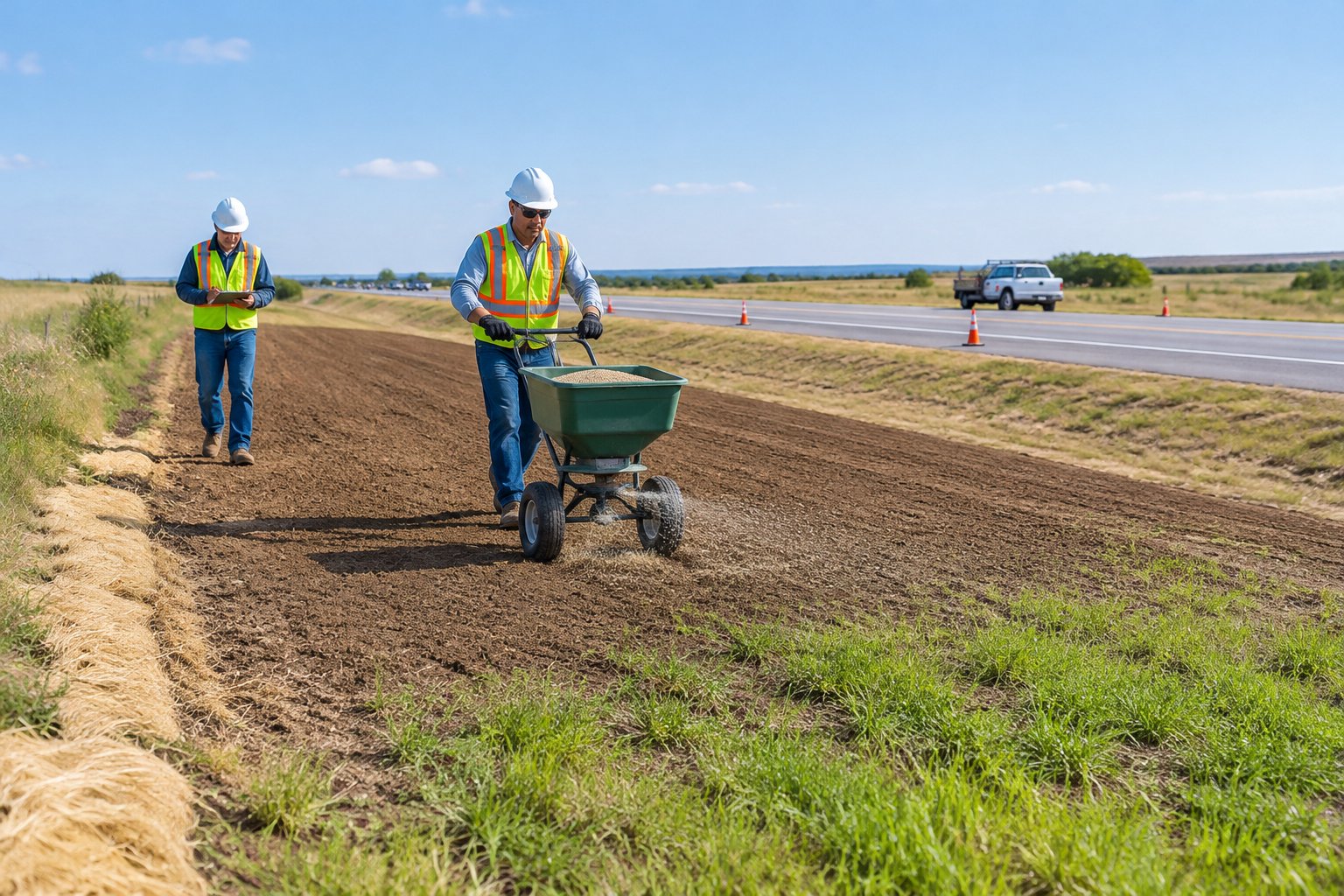
Seeding is often the last open item on a TxDOT job, and it is the one most likely to be misread at bid time. TxDOT Item 164, Seeding for Erosion Control, is the standard specification that covers preparing the surface and providing and distributing temporary or permanent seeding on the areas shown on the plans. In the 2024 Standard Specifications it sets the seed mixes by district and soil, the planting dates, the approved placement methods and how the work is measured and paid.
This guide walks through what the 2024 item actually says, from a seeding contractor's point of view. Always check the contract: the edition cited, the plan sheets and any special provisions control over a general summary like this one.
What Does Item 164 Cover?
The item covers seedbed preparation, seed, mulch and tacking for both temporary and permanent seeding. Fertilizer and watering are tied in through other items: fertilizer follows Item 166 and is subsidiary to Item 164, and irrigation water, when specified, is paid under Item 168, Vegetative Watering. Sod falls under Item 162 and soil retention blankets under Item 169, so those show up as separate bid lines.
Before pricing, confirm three things in the proposal:
- Which specification edition the contract cites. Older projects and some local agencies still work from earlier editions.
- Whether a special provision modifies Item 164.
- Which plan sheets show seeding limits, the mix designations and any district vegetation notes.
Cities and counties sometimes write their own "Item 164" or borrow TxDOT numbering with different content, so read the version actually attached to the contract.
How Are Seed Mixes Selected?
The 2024 item organizes seed mixes into five tables:
- Table 1: permanent rural mixes, by district, with separate mixes for clay and sandy soils.
- Table 2: permanent urban mixes, organized the same way.
- Table 3: temporary cool-season mixes.
- Table 4: temporary warm-season mix.
- Table 5: flower seeding mixes by region, applied along with the Table 1 or Table 2 mix.
Rates are written in pure live seed (PLS), so the seed tags matter. Seed has to meet Texas Seed Law testing and labeling, arrive in labeled, unopened containers and be used within 12 months of its analysis date. If a species is unavailable, the item increases the remaining species in that group proportionally, and any substitute species or rate needs the Engineer's approval. Where the plans call out highly erodible land, bermudagrass is added to the Table 1 mix. Keep every tag and delivery ticket in the project file.
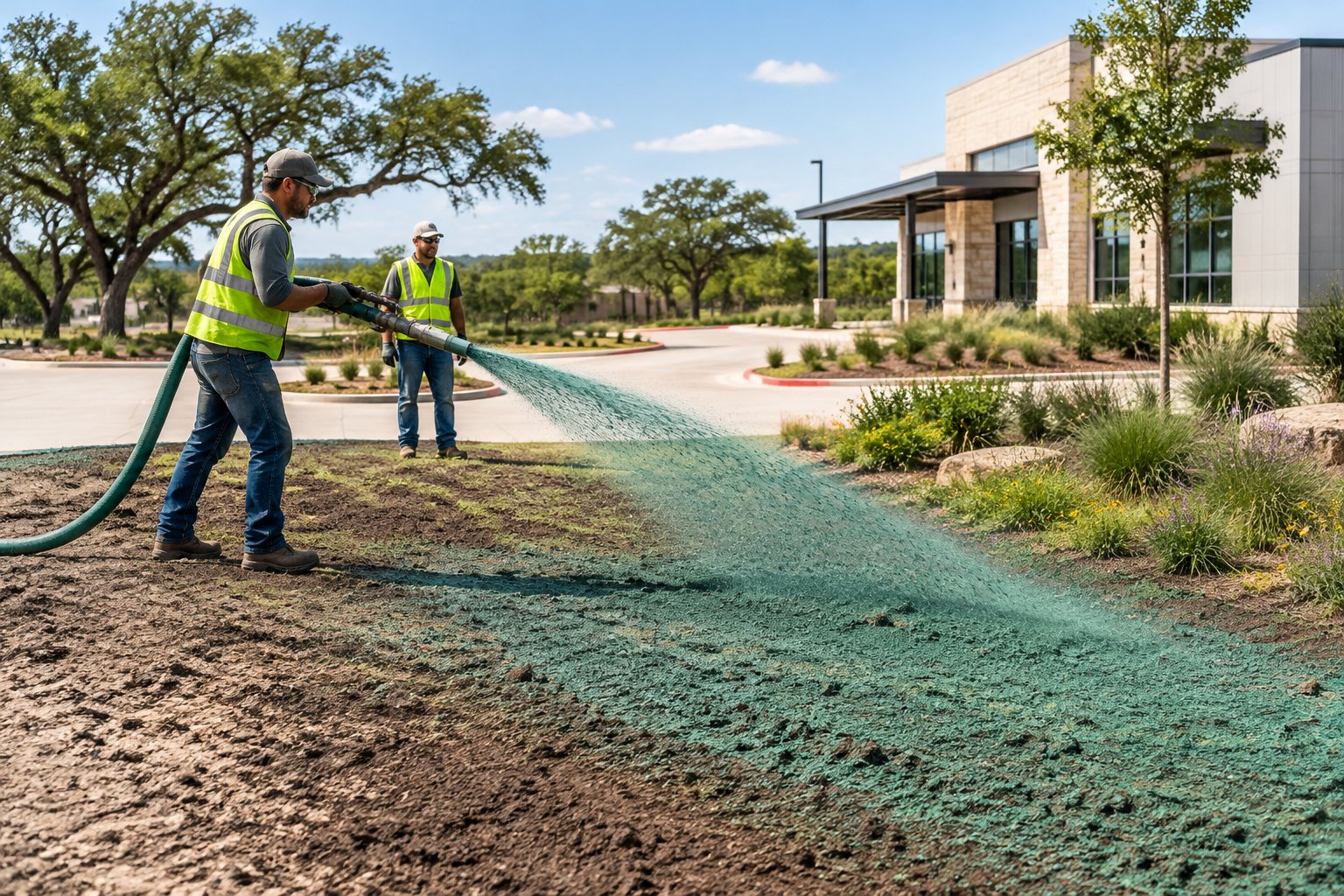
One detail catches people out: the table rates are for drill seeding. Every other placement method requires a 25 percent increase in the seeding rate, which changes the seed quantity on a hydraulic or broadcast job.
When Can Seed Be Planted?
The 2024 item sets planting windows in Section 3.1:
- Temporary cool-season mix: September 1 to January 31.
- Temporary warm-season mix: February 1 to August 30.
- Permanent seeding: begins January 15, February 1 or February 15 depending on the district, and ends May 15 for all districts.
Twelve districts start January 15, including Houston, Beaumont, Tyler, Bryan, San Antonio and Corpus Christi. Eleven start February 1, including Dallas, Fort Worth, Austin and Waco. Amarillo and Lubbock start February 15.
These windows drive mobilizations. On a Gulf Coast job where grading wraps up in October, the realistic path is a cool-season temporary seeding to hold the ground, then a return trip for the permanent mix once its window opens. When permanent seed goes over an established temporary stand, the spec calls for scarifying to 4 inches or mowing first. Our guide to roadside hydroseeding for corridor stabilization covers how phased corridor work fits around those trips.
How Do the Item 164 Seeding Methods Compare?
The pay items are split by method, each in a permanent and a temporary version. The method on the bid line is the method you install.
The hydro mulch rates are split four ways: sandy soils at 2,500 lb per acre on slopes of 3:1 or flatter and 3,000 lb on steeper slopes, and clay soils at 2,000 lb and 2,300 lb respectively. The item also says fertilizer and seed must not be combined in the same slurry during hydro mulch seeding, which affects how the crew loads the tank.
There is also a standalone Straw or Hay Mulching pay item for mulch placed without seed.
Seedbed Preparation
Unless otherwise directed, the area is scarified to a depth of 4 inches before seed goes down, and seeding happens only after the area is graded to the lines and grades shown. Equipment needs an agitator or equivalent so the mix stays uniform. On crusted or compacted clay this prep is what keeps seed from washing off in the first heavy rain, so do not let it get squeezed out of the schedule.
How Is the Work Measured and Paid?
Item 164 is measured by the square yard or by the acre and paid at the unit price bid for each seeding pay item. The price covers materials, the seed mixes (including flower and highly erodible land additions), water for hydraulic operations, tacking, mowing, labor, equipment and incidentals. Fertilizer is not paid separately. Irrigation water, when the plans specify it, goes under Item 168.
Two things are worth settling before the subcontract is signed. First, the 2024 item text does not set a coverage percentage or establishment period, so acceptance terms come from the plans, general notes and the project's stormwater requirements. Second, the item says seeded areas are watered at the rates and frequencies shown on the plans or as directed, so find out whether watering is a pay item on this job and who runs the water truck. Our post on hydroseeding for government infrastructure projects covers submittals and documentation on public work in more depth. For a rough budget figure on standard hydroseeding while you build the bid, try our pricing calculator.
Talk to a Seeding Crew That Works to the Spec
Allied Hydromulch has handled hydroseeding and drill seeding for public agencies, general contractors and civil projects across Texas and Louisiana since 1990. We read the plans and the item with you, keep seed tags and records for the inspector and schedule mobilizations around the planting windows. Contact our team or call 281-482-8212 with your plan sheets and bid date.
Frequently Asked Questions
Does the 2024 edition apply to every TxDOT project?
No. The edition named in the contract applies, and special provisions can modify it. Some active projects still cite earlier editions.
Why is the seeding rate higher for hydroseeding than the table shows?
The Item 164 tables list drill seeding rates. Broadcast and hydraulic placement require a 25 percent increase over those rates.
Can fertilizer go in the hydroseed slurry on TxDOT work?
Not during hydro mulch seeding. The 2024 item says fertilizer and seed are not combined in the same slurry for that method.
Is sod covered by Item 164?
No. Sodding is a separate item (Item 162) with its own bid line.