.svg)


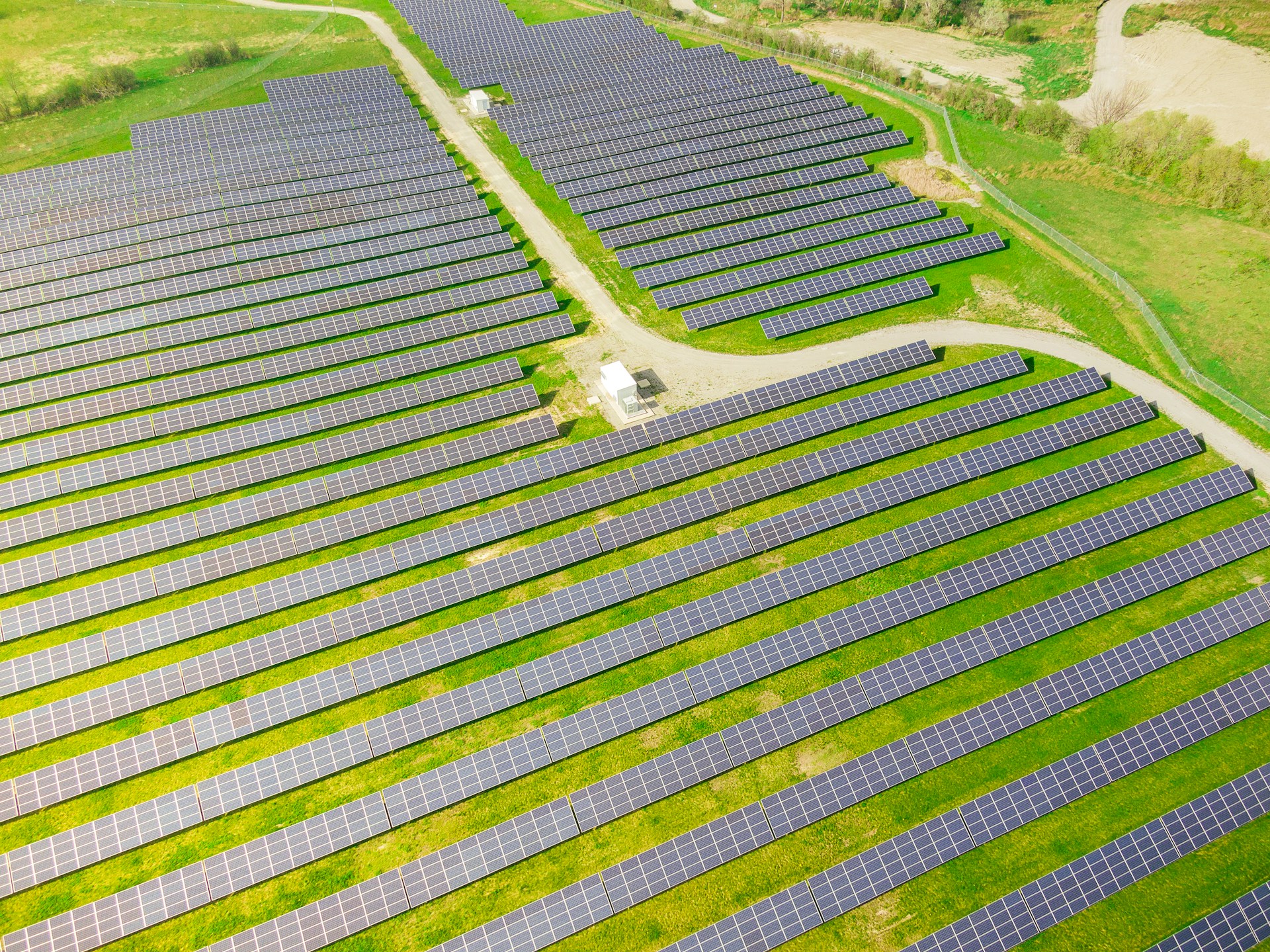
Utility-scale solar construction removes vegetation from hundreds of acres, leaving bare soil exposed to erosion. Grading for panel arrays, trenching for conduit, and building roads create large disturbed areas. Without quick vegetation, project managers risk sediment runoff, permit delays, and costly rework before panels are operational.
Hydroseeding contractors for solar farms address this by applying seed, mulch, fertilizer, and soil conditioners in a single hydraulic application. In Texas, Louisiana, Oklahoma, and New Mexico, soil types and weather patterns add extra challenges.
Clay-heavy soils shed water quickly, and heavy rain can wash out bare slopes. We time applications around these conditions from years in the field.
Why Solar Sites Need Fast Vegetation Coverage
Solar farm grading can disturb 500 to 2,000 acres. Exposed soil becomes an erosion and compliance risk as soon as it rains.
How Bare Graded Acreage Creates Runoff and Permit Exposure
Every acre of bare soil on a solar site falls under the Construction General Permit (CGP) TXR150000 from the Texas Commission on Environmental Quality (TCEQ).
Sites disturbing one acre or more must file a Stormwater Pollution Prevention Plan (SWP3) and maintain erosion controls until stabilized. If vegetation is not established on time, inspectors can issue violations that halt construction.
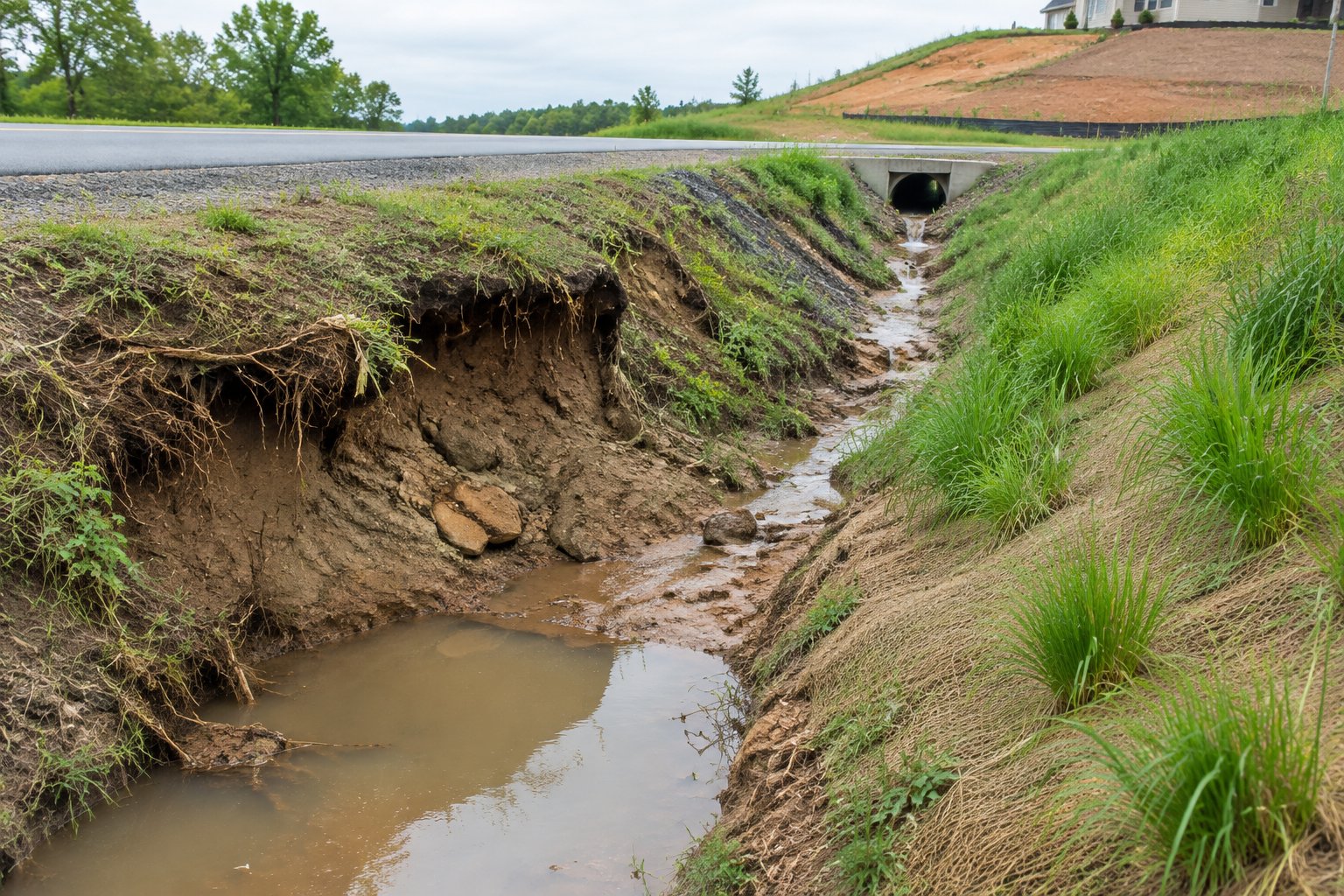
Clay soils on Gulf Coast projects worsen the problem. Clay sheds rainfall, so even moderate storms send sediment runoff into drainage channels and retention basins. Longer periods of bare soil increase downstream sediment and make final inspections harder to pass.
Why Sod Usually Fails the Scale and Logistics Test
Sod works for small commercial entrances but not for large solar farms. The cost, logistics, and labor to install and maintain sod on hundreds of acres make it impractical. Sod also struggles on moderate slopes commonly found around panel arrays.
Hydroseeding can cover 50,000 to 80,000 square feet per truckload. A single crew can spray multiple acres daily. This speed is essential when the general contractor must establish vegetation before the next TCEQ stormwater inspection.
How Hydroseeding Supports Faster Closeout on Utility-Scale Tracts
Hydroseed applications usually start germinating within 7 to 14 days with proper conditions. Full turf often establishes in 4 to 6 weeks. This schedule fits the 30- to 60-day closeout windows most solar projects require for stabilization.
Faster closeout lets owners file a Notice of Termination (NOT) sooner, ending CGP monitoring. For project managers, this administrative relief is as important as erosion control.
What Drives Method Selection on Solar Farm Projects
Site layout, soil type, and equipment access determine whether a solar farm needs standard hydroseeding, bonded fiber matrix on steep grades, or drill seeding on open areas.
Panel Row Spacing and Equipment Access Constraints
Solar arrays are arranged in tight, parallel rows with limited space between posts and trays. A hydroseed truck needs about 12 feet of width to operate between rows. If panels are already installed, we plan spray patterns to avoid overspray on sensitive equipment.
When panels are not yet installed, the whole site is open for spraying. This is the most efficient scenario. Project managers should coordinate early with the seeding contractor to ensure application before steel installation restricts access.
Grading Severity, Slopes, and Drainage Features
Solar farms often include flat fields, perimeter berms, and engineered swales. Each area may require a different treatment:
Solar farm zone | Slope | Treatment
- Flat array fields | 5% or less| Standard hydraulic mulch with turf or native seed mix
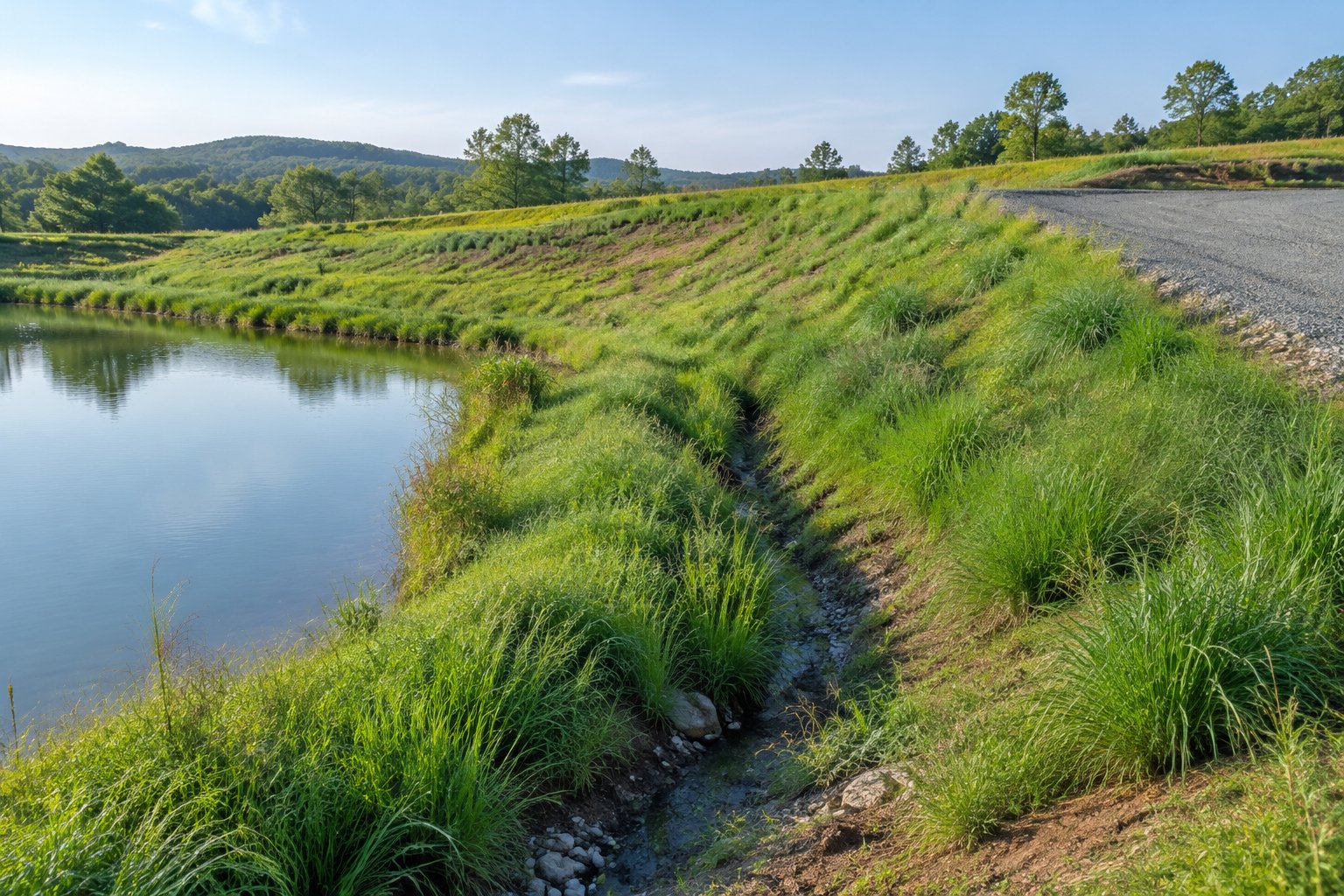
- Perimeter berms and cut slopes | 3:1 to 2:1| Flexterra slope protection for better seed retention
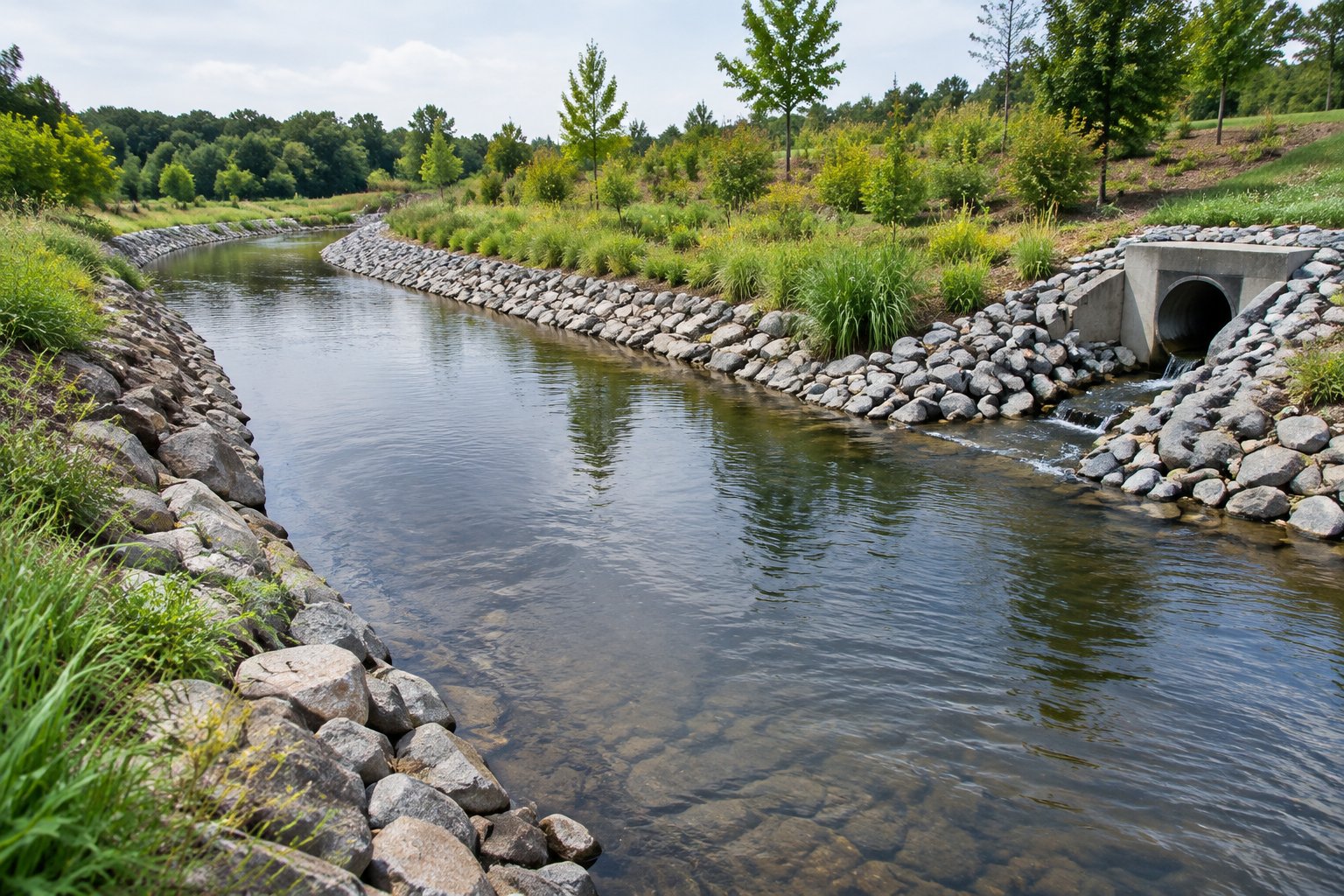
- Drainage swales and outfall channels | Varies| Erosion control blankets combined with hydroseeding
Civil engineers specify slope ratios in grading plans. Matching the right product to each area prevents rework and reduces the risk of failed stabilization during heavy rain.
Texas and Gulf South Soil Conditions That Affect Establishment
Texas soils vary widely. Heavy clay holds surface moisture but resists root growth. Sandy loams drain quickly and may need more mulch to retain moisture between rains.
Gulf Coast sites also face high humidity, which can cause fungal issues for seedlings. On active Texas job sites, we adjust mulch rates, tackifier, and seed varieties for local conditions. Proper timing in the construction sequence is just as important as product selection.
Where Hydroseeding Fits in the Construction Sequence
The best time to hydroseed is after final grading, before panel installation, and while equipment access remains open.
Post-Grading and Post-Trenching Application Timing
After grading and trenching crews finish and the civil engineer approves final grades, the site is ready for seeding. Waiting too long after grading increases erosion risk. Applying too early, before trenching ends, means reseeding disturbed areas later.
The ideal time for hydroseeding is within 7 to 14 days of final grade approval. This timing keeps the soil fresh for good seed contact and reduces erosion risk before rain events.
Stabilizing Access Roads, Swales, and Array Perimeters
Not all zones on a solar farm are seeded at once. Access roads and crane paths may stay bare longer because equipment continues to use them. Swales and perimeter berms should be stabilized as soon as grading is finished in those areas.
A phased approach works best:
- Phase 1: Hydroseed drainage swales, retention pond banks, and perimeter berms immediately after grading.
- Phase 2: Seed inter-row areas after trenching and backfill.
- Phase 3: Stabilize access roads and staging areas after heavy equipment leaves.
This phasing keeps the project compliant at each inspection milestone and allows active work zones to continue.
Planning Around Rain Windows and Inspection Deadlines
In Southeast Texas and the Gulf Coast, rain can happen any week, but the heaviest storms are from May through October. Scheduling hydroseeding before a light rain helps germination. Scheduling before a major storm risks washout.
Project managers should allow a 48- to 72-hour dry period after application. This lets the mulch bond with the soil before rain.
Aligning application dates with upcoming SWP3 inspection cycles shows proactive compliance. Once timing is set, consider whether the site needs additional erosion protection beyond hydroseeding.
When Hydroseeding Needs Added Erosion Protection
Hydroseeding covers most flat to moderately sloped areas. Steeper grades, high-flow zones, and exposed berms often need extra erosion control.
Using Hydraulic Mulch to Protect Seed Before Germination
Hydraulic mulch provides the first layer of protection. Applied with the hydroseed, it forms a mat that holds seed, retains moisture, and shields against rain. On slopes of 4:1 or flatter, standard wood-fiber mulch is usually enough for germination.
For steeper or exposed areas, a bonded fiber matrix like Flexterra creates a stronger bond with the soil. It resists higher flow and stays in place through several rain events while roots develop.
Where Erosion Control Blankets Make Sense on Berms and Steeper Slopes
Erosion control blankets (ECBs) are rolled products pinned to the soil surface. On berms steeper than 3:1, ECBs provide reinforcement that hydraulic mulch alone cannot. They hold soil while vegetation grows through the blanket.
Common zones for ECBs on solar sites include:
- Perimeter berms facing storm runoff
- Outfall channels to off-site drainage
- Cut slopes near substation pads and inverter platforms
- Steep transitions between graded tiers
ECBs add material and labor cost. Specify them only where slope and flow justify the need. A site walk with the seeding contractor identifies which areas need blankets versus mulch alone.
How Silt Fence Supports Sediment Control During Establishment
Silt fence is a sediment control measure, not an erosion control product. It catches soil that has already moved. On solar sites, silt fencing is installed along downslope perimeters and around sensitive features like wetlands, streams, and property lines.
During the germination window (the first 7 to 14 days after hydroseeding), silt fence acts as backup. If rain moves sediment before grass roots anchor the soil, the fence captures it and keeps it on site.
Once vegetation covers about 70% of the area, most permits allow silt fence removal. The right runoff risk reduction strategy uses silt fencing, hydroseeding, and blankets together for best results.
Choosing Grass Mixes for Long-Term Solar Site Performance
The seed mix impacts how much maintenance a solar farm will need over the next 20 to 30 years. Choosing the right mix at the start saves on mowing, irrigation, and reseeding costs.
Low-Grow and Native Mixes for Reduced Mowing Under Panels
Solar panels usually sit 3 to 8 feet above the ground, depending on the racking system. Tall grass that reaches the panels can cause shading, fire risk, and make maintenance difficult.
Low-grow turf blends and native grass mixes, which grow to 12 to 18 inches, help avoid these issues. Native warm-season grasses like buffalograss and blue grama work well for Texas solar sites.
These grasses develop deep roots that stabilize soil and resist drought. Their natural height stays below the panels, reducing interference.
The USDA Natural Resources Conservation Service offers native grass conservation guidance for solar projects, noting that these grasses support pollinator habitat and soil health throughout the installation's life.
When Native Grass Seeding or Drill Seeding Is the Better Fit
Hydroseeding covers most solar farms quickly. On large, flat areas with little slope, drill seeding can be more cost-effective per acre because it places seed at a consistent depth.
This method improves seed-to-soil contact, reduces waste, and promotes even germination, usually within 1 to 3 weeks. Native grass seeding takes longer to establish, often 2 to 3 months.
Project managers should plan for this longer establishment period. On sites needing fast erosion control and long-term native cover, a two-phase approach works: hydroseed with a quick nurse crop first, then use native drill seeding once the site stabilizes.
Balancing Establishment Speed with Long-Term Maintenance Goals
Fast-germinating mixes help meet permit deadlines. Low-maintenance mixes help reduce costs over time.
Annual ryegrass provides quick cover in 7 to 10 days but only lasts one season. Native perennial mixes take longer to establish but need little irrigation and mowing for years.
The best mix depends on compliance deadlines, maintenance budgets, and whether the site will support pollinators or agricultural use under panels.
Keeping the Project Moving with Fewer Subcontractors
Combining hydroseeding and erosion control with one contractor reduces coordination and keeps the schedule on track.
Why Combined Seeding and Erosion Control Simplifies Vendor Management
On a typical solar farm, the general contractor might hire separate vendors for silt fence installation, erosion blankets, and hydroseeding. This creates multiple schedules and points of failure.
If one crew finishes late, the next task gets delayed. A single contractor handling hydroseeding, soil stabilizers, erosion blankets, and silt fence installation streamlines the process.
One crew and one schedule make project management easier. This approach is valuable on large solar tracts where delays can affect many zones.
What to Confirm Before Mobilization on Large Solar Tracts
Before the seeding contractor arrives, project managers should confirm:
- Final grade acceptance from the civil engineer
- Trenching and backfill completion in the target zone
- Soil test results (pH, organic content, compaction levels)
- Seed mix approval from the owner or environmental consultant
- Access routes are clear of debris and water
- A 48- to 72-hour dry weather window in the forecast
Confirming these items avoids wasted trips and ensures proper application. On clay-heavy Texas soils, compaction testing is crucial because overcompacted ground slows germination even with a good seed mix.
Next Step for Budgeting and Site Review
Start budgeting by knowing the total acreage, slope, and seed mix requirements. The solar site estimator gives a rough estimate before a formal site review.
For large solar tracts, a phone call with an estimator helps scope the work accurately. Call 281-482-8212 to review your site plan and get a quote based on your construction schedule.
Frequently Asked Questions
What Seed and Mulch Blend Holds on Steep Solar Farm Berms and Perimeter Slopes in Texas Wind and Heat?
For slopes steeper than 3:1, use a bonded fiber matrix like Flexterra with a native warm-season grass mix. This combination resists wind and sheet flow while keeping moisture in Texas heat. Standard wood-fiber mulch works for slopes of 4:1 or flatter.
How Do You Meet SWPPP, TPDES, and County Erosion Control Requirements on Utility-Scale Solar Sites?
Vegetation establishment is a key part of final stabilization under the TCEQ Construction General Permit TXR150000. A compliant approach uses hydroseeding, perimeter silt fencing, and erosion blankets on steeper grades, all documented in the SWP3 binder. Regular inspections and photo documentation support Notice of Termination filing once 70 percent vegetative cover is reached.
When Is the Right Window to Hydroseed on a Solar Farm so You Get Germination Before the Next Storm Cycle?
Apply hydroseed within a 48- to 72-hour dry window after grading. In the Gulf Coast region, spring and early fall offer the most reliable weather gaps. Applying before a light rain can help seeds germinate faster.
How Do You Keep Sediment and Overspray out of Panel Rows, Inverter Pads, and Access Roads During Application?
We adjust spray patterns to avoid electrical infrastructure and finished surfaces. If panels are already installed, we use targeted nozzles and windscreen techniques. Applying before panel installation is the most efficient way to prevent overspray.
What Is the Typical Production Rate per Day for Hydroseeding Large Acreage, and How Does That Affect the Construction Schedule?
One hydroseed truck covers about 50,000 to 80,000 square feet per load. Crews usually complete several loads per day. On a 200-acre site, a crew can finish coverage in 5 to 10 working days, depending on slope and water access. Project managers should include this window in the schedule after grading and before panel installation.
What Site Prep Is Required After Grading, Including Rock Content, Topsoil Depth, and Soil Amendments, Before Hydroseeding?
The soil should be free of rocks larger than 2 inches and have at least 2 to 4 inches of loose topsoil or amended material. On compacted clay sites, light scarification helps water infiltration and root growth. Soil pH testing shows whether lime or sulfur amendments are needed before seeding.
Get Your Solar Site Quoted and Scheduled
Bare soil on a solar farm creates permit risks and future maintenance problems. The right hydroseeding contractor matches seed mixes, mulch, and erosion controls to your site's slope, soil, and weather.
Allied Hydromulch TX, LLC has served contractors in Texas and the Gulf South since 1990 and can cover utility-scale solar acreage on your timeline. Use the budget estimate tool for a rough number, or call 281-482-8212 to discuss your project with an experienced estimator.