.svg)


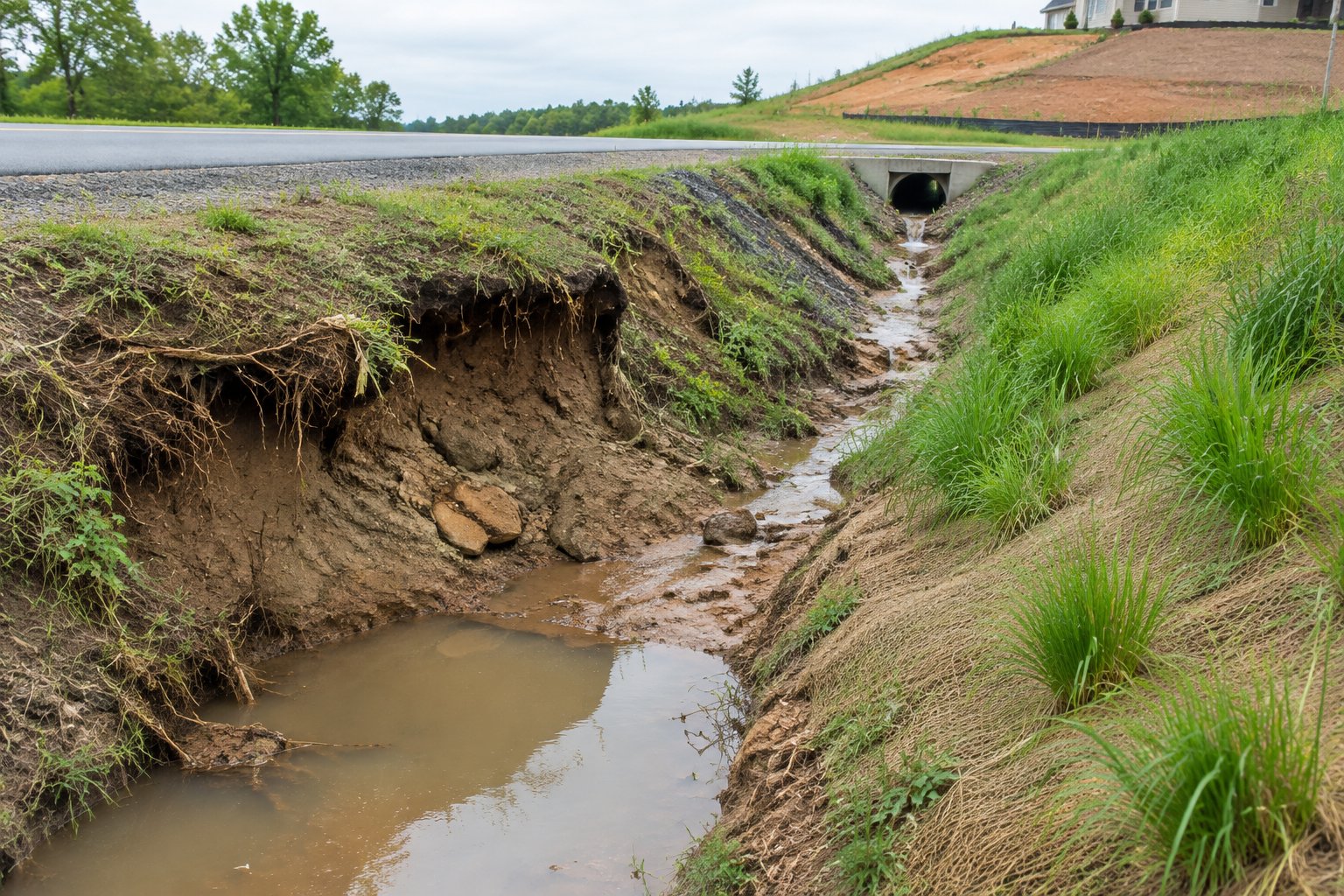
A well pad sits stripped to subsoil, the access road cuts across a draw, and the right-of-way runs three miles of bare clay. The first heavy rain moves sediment off that ground and into a ditch. That is when a reclamation delay turns into a compliance problem with a paper trail attached.
Hydroseeding for oil and gas sites solves that gap faster than sod or hand-broadcast work ever will. Allied Hydromulch TX, LLC has been applying hydraulic mulch across Texas, Louisiana, Oklahoma, and New Mexico since April 1990.
This includes roughly 15 million square feet installed in 2025 alone. Pipeline corridors, compressor station pads, and industrial complexes are routine work for our crews.
In this guide, you will find how hydraulic slurry establishes cover on disturbed industrial ground, what soil prep compacted pads actually need, how to pick native seed for regional conditions, and how germination windows line up with closeout dates. By the end, you should be able to scope a reclamation package that survives inspection instead of needing a second mobilization.
Why Bare Disturbance Areas Create Cost and Compliance Risk
Bare soil on an oil and gas site is a liability from the day the equipment leaves. Every rain event moves material, and every moved yard of material is a potential violation, a repair cost, or a landowner complaint.
Large-scale land disruptions from gas pipeline installations, drilling sites, and infrastructure development strip the plant cover that held the surface together. What remains is loose spoil over compacted subgrade. That combination sheds water instead of absorbing it.
Erosion and Sediment Runoff After Construction
Sediment leaving a disturbed area is the single most common finding on industrial sites. Runoff carries fines into drainage channels, road ditches, and adjacent property.
Texas Commission on Environmental Quality (TCEQ) programs covering oil and gas water compliance put real weight behind keeping soil in place. Silt fences and rock berms slow water down, but they do not stop the soil from moving in the first place.
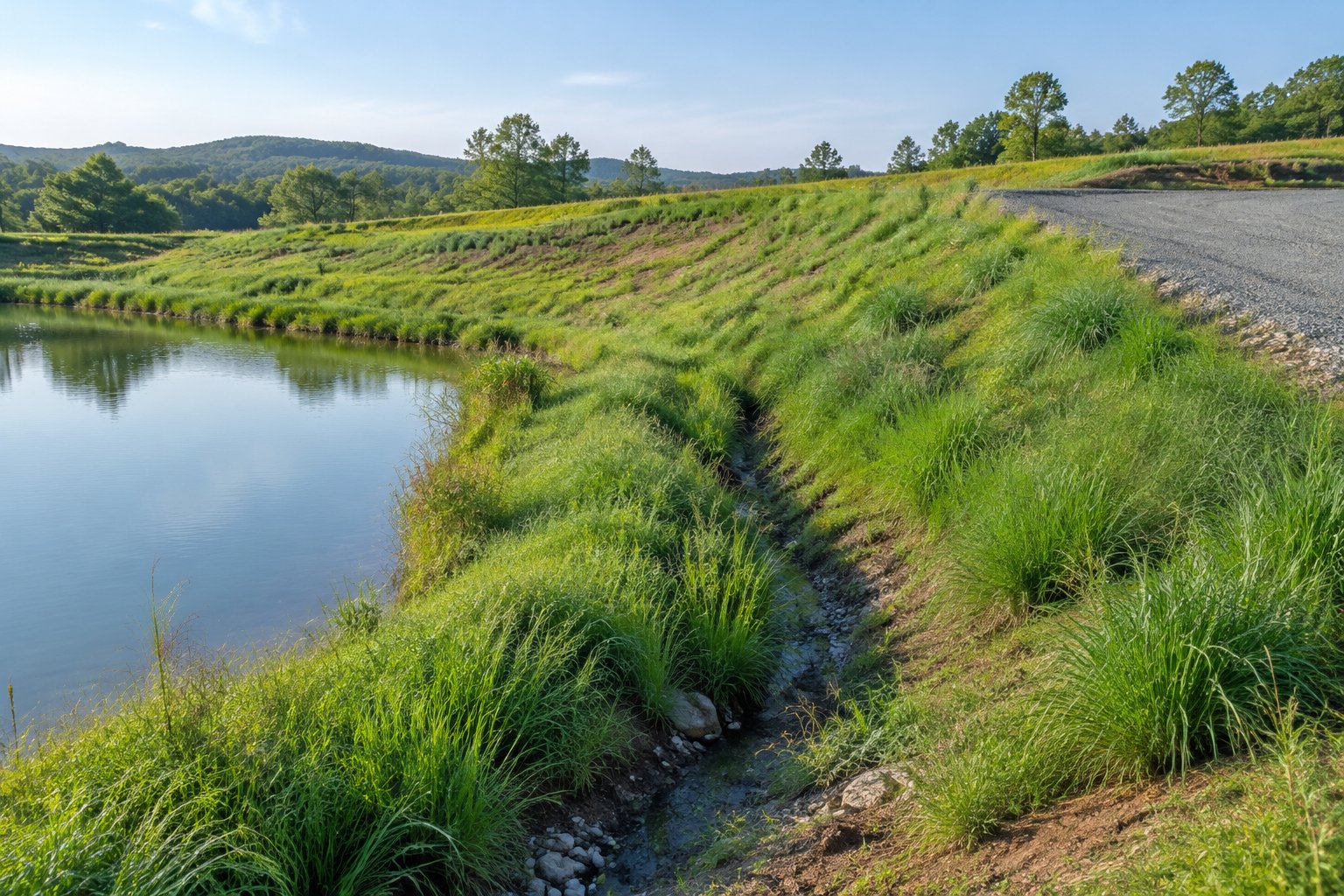
Vegetation does. TxDOT guidance on surface protection after disturbance treats a good stand of plants as the best long-term erosion answer available.
Vegetation Loss on Rights of Way and Well Pads
Rights-of-way and well pads lose topsoil structure during trenching, stockpiling, and traffic. Native seed banks in that soil get buried or hauled off, so natural recovery is slow and patchy.
Barren ground on these sites also invites weeds. Aggressive annuals colonize open ground fast and crowd out the perennials the closure plan calls for.
Common problem areas on a typical disturbance footprint:
- Trench spoil rows along the right-of-way centerline
- Well pad shoulders and cut-fill transitions
- Access road ditch backslopes
- Laydown yards with heavy compaction
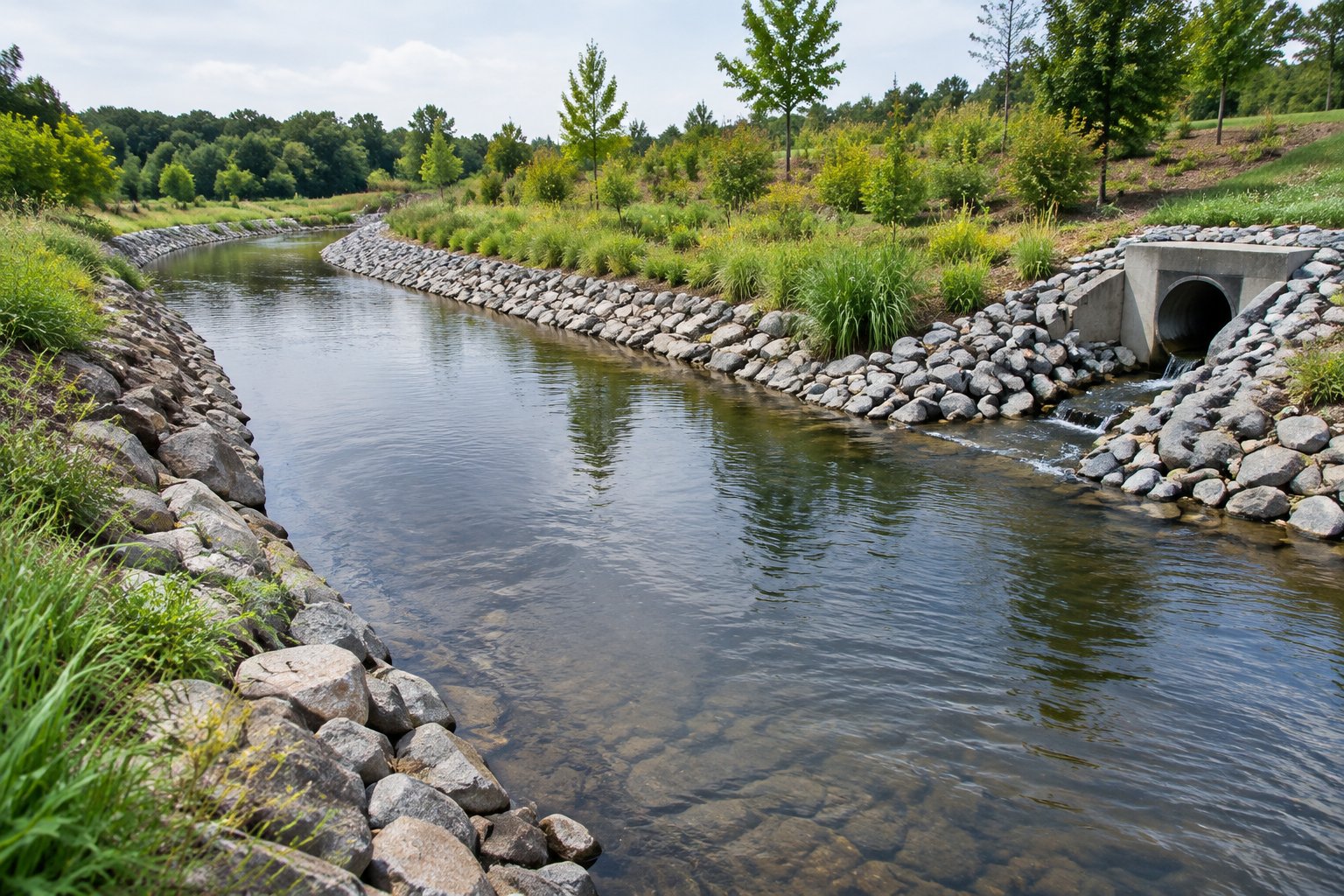
- Culvert outfalls and drainage crossings
Closure Requirements and Local Goodwill
Regulatory challenges usually arrive as a percentage cover requirement tied to the release of the site. Inspectors want to see uniform, living cover across the disturbed area, not scattered clumps.
Local goodwill matters just as much. Landowners who see grass back on their pasture within one season are far easier to work with on the next project in that county. Getting cover established that fast comes down to how the seed is applied and what protects it.
How Hydraulic Slurry Establishes Cover on Industrial Sites
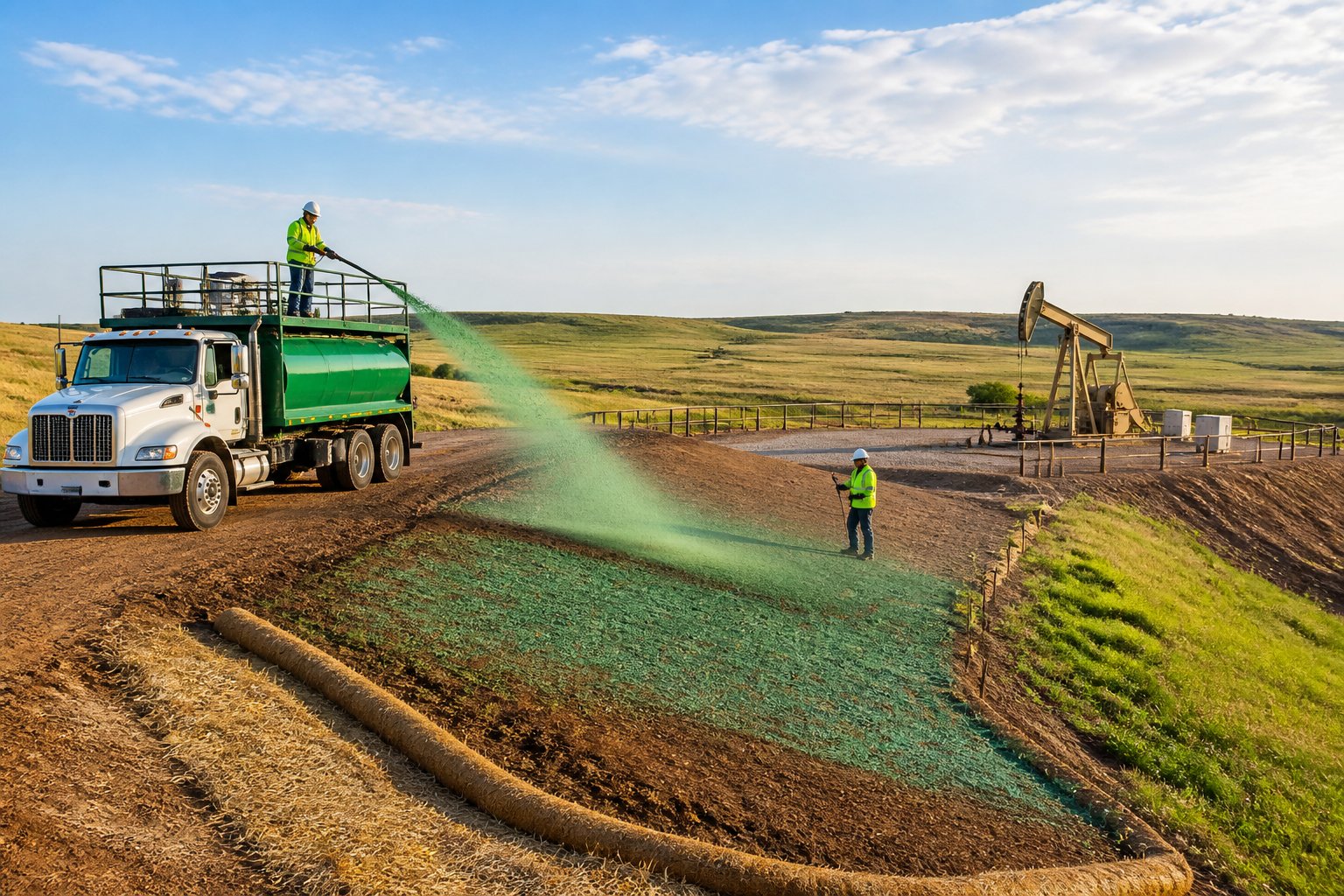
Hydroseed is a pumped mixture of seed, water, fiber mulch, fertilizer, and tackifier sprayed onto prepared ground. It puts seed and its growing medium down in one pass, at rates a crew can document.
Hydroseeders carry the slurry in tanks and shoot it through hoses or tower nozzles. One machine covers ground that would take a hand crew days to broadcast and blanket.
What Goes Into a Hydroseed Application
Every component in the tank has a job. Skip one, and re-vegetation slows down or fails outright.
- Seed: the specified mix, at the rate the closure plan or permit calls for
- Water: the carrier that moves seeds and fiber onto the soil evenly
- Mulch or fiber: holds moisture at the soil surface and shades seed
- Fertilizer: supplies starter nutrients that stripped subsoil lacks
- Tackifier: glues the matrix down so wind and rain do not strip it
Blend ratios shift with slope, soil, and season. Steeper ground and thinner soil call for more fiber and more tack.
How Mulch and Tackifier Protect Seed
Mulch fiber creates a damp layer against the soil. Seeds need that moisture window to swell and split. Bare ground in West Texas heat dries out in hours.
Tackifier binds fiber into a mat that stays put through the first storms. Guidance from the Natural Resources Conservation Service on hydromulching for erosion control describes the same water, fiber, and tackifier combination used to stabilize burned slopes. That mat also cuts raindrop impact. This is what dislodges soil particles and starts rill erosion on fresh spoil.
Why Hydraulic Application Fits Remote and Irregular Terrain
Pipeline corridors and pad sites are rarely flat or square. Hoses reach across ditches, around anchors, and up backslopes where a seed drill cannot track safely.
Remote locations favor hydraulic work too. A tank truck and support water source cover long linear footage without staging pallets of blankets and stakes. None of that helps if the ground underneath is sealed off. This is where soil prep comes in.
Preparing Compacted and Altered Soils for Revegetation
Compacted pad soils shed water and block roots. Prep work has to open that surface before any slurry goes down. Otherwise, the seed germinates and then dies out.
Soil types across the region vary widely. Gulf Coast clays hold water and crust hard. Caliche and sandy loams in the Permian and Panhandle drain fast and hold almost no moisture.
Assessing Soil Types, Compaction, and Drainage
Walk the site and probe it. A rod that stops at two inches tells you the pad needs ripping, not just raking. Check where water collects and where it leaves. Concentrated flow paths across a pad need armor or a channel liner. Seed alone will not hold in moving water.
Chemically altered spots, brine scars, or drilling fluid stains need soil amendment before seeding. Applying an expensive mix onto dead ground wastes the mix and the mobilization.
Addressing Slopes and Surface Roughness Before Application
Slopes get graded and then roughened across the contour. Track walking or light disking leaves small ridges that catch seed, water, and mulch instead of letting them run downhill.
Surface roughness matters more on steep slopes and challenging terrain than almost any other prep step. Smooth, compacted slopes are the most common cause of hydroseed failure we see on industrial jobs. Soil stabilization also means keeping the toe of the slope intact while cover grows in.
Selecting Added Protection for Steep Slopes
Standard hydraulic mulch has limits. Past roughly 3:1 and in high rainfall areas, a stronger product carries the load.
Flexterra flexible growth medium (FGM) holds on steep cut slopes and disturbed soils where conventional mulch would slough. Erosion blankets are the other option where flow velocity or slope length is extreme.
Our erosion control services for compliance-driven sites pair those systems with seeding in one sequence. With the surface ready, the seed specification becomes the decision that determines long-term performance.
Selecting Native Seed Mixes for Long-Term Land Reclamation
Native grass seeding is the right call for most oil and gas land reclamation work. Native species handle regional heat, drought, and soil chemistry without irrigation once established. Introduced cover crops green up faster but often fade after two seasons. Closure requirements that call for self-sustaining cover push toward native mixes and sustainable land stewardship.
Matching Native Species to Regional Conditions
Species selection follows soil and rainfall, not preference. Little bluestem, sideoats grama, and buffalograss perform across much of Texas. Sand bluestem and blue grama fit drier western ground.
Mix design also balances quick cover with long-term structure. A short-lived companion grass protects the surface while slower perennials build deep roots.
Seeding rates deserve care. An analysis from the International Erosion Control Association on hydroseeding with native seed warns that doubling rates by habit adds cost without adding performance.
When Drill Seeding Is the Better Fit
Drill seeding places seed at a consistent depth and spacing. This improves seed-to-soil contact on flat, trafficable ground. Germination typically occurs within one to three weeks under proper conditions.
Wide pads, laydown yards, and long flat right-of-way segments suit a drill. Our approach to drill seeding for large-acreage restoration covers where that method beats hydraulic application on big tracts.
Slopes, rocky ground, and irregular corridors stay with hydroseeding. Many projects use both: drilled on the flats and hydroseeded on the banks.
Native Grass Recovery Along Pipeline Corridors
Pipeline projects create narrow, long disturbance areas that cross multiple soil types over a few miles. A single mix rarely fits the whole run. Native grass establishment typically takes two to three months, with germination in two to four weeks.
Planning for durable native grass site restoration means accepting that timeline instead of chasing a fast green-up that will not hold. That timeline is exactly what has to be mapped against inspection dates.
Scheduling Establishment Around Inspection and Closeout Milestones
Hydroseeding germination typically starts within 7 to 14 days, with full establishment in 4 to 6 weeks, depending on conditions. Native mixes run longer. Build your closeout schedule backward from those numbers.
Applying two weeks before a final walkthrough almost never works. Applying eight to ten weeks out usually does.
Typical Germination Windows for Hydroseeding
Warm-season seeds need soil temperature, not just calendar date. Spring and early fall applications in Texas hit the widest germination window. Mid-summer applications on the Gulf Coast still work, but they demand water.
High heat pulls moisture out of the fiber mat within a day or two. Winter dormant seeding is a legitimate option. Seed sits protected under mulch and breaks in spring. This suits pipeline crews closing out in December.
How Weather and Irrigation Affect Establishment
Rainfall drives results more than any other single factor. Gulf Coast humidity and frequent showers help; Permian Basin dry spells do not.
Where a water truck is available, light, frequent watering for the first two to three weeks pays for itself. Environmental regulations for industrial hydroseeding services in Texas do not care why the cover failed. Only that it did.
Soil erosion during that establishment window is the risk being managed. Keep sediment controls in place until cover is real. Not just visible.
Monitoring Coverage After Rain Events
Walk the site after the first heavy rain. Look for rills, bare streaks below the crest, and mulch sloughing at slope breaks. Small failures repaired at week three cost very little. The same failures at week eight become a redo across the whole slope.
Documenting those walks with dated photos supports the compliance file when the inspector arrives.
Planning a Reclamation Scope That Holds Through Closeout
A reclamation scope that survives closeout starts with accurate site information and a clear sequence. Guessing at acreage, slope, and access is what drives change orders. Erosion control, soil stabilization, and seeding are one package on oil and gas sites. Not separate line items bid by separate trades.
Information to Provide for a Fast Site Assessment
Bring these details, and quoting takes minutes instead of days:
- Total disturbed acreage or linear footage and width
- Slope ratios and locations of steep sections
- Soil type and any known chemical impacts
- Required seed specification or permit language
- Water source availability and access road condition
- Target application window and closeout date
Photos and a site plan help more than a long description. Our project cost calculator gives a rough range before the conversation starts.
Coordinating Hydroseeding With Erosion Control Sequencing
Sequence matters. Final grade, then roughening, then hydroseeding, then blanket or matting where specified. Seeding before the final grade wastes the application. Installing a blanket before seeding on a slope that needs hydraulic mulch creates a rework loop nobody budgeted for.
Drainage features come first on drilling sites and compressor pads. Retention areas and channels need erosion control tied to permit timelines before upslope areas are seeded.
Getting a Fast Quote for Oil and Gas Revegetation
Scope, acreage, and access drive price on hydroseeding for industrial developments. Slope and seed specification move it more than square footage alone. A phone call with those details usually produces a number the same day.
Send drawings through our project estimate request if the site is complex. The remaining questions contractors ask before committing are covered below.
Frequently Asked Questions
What site conditions make hydroseeding a practical choice for disturbed pipeline corridors and well pads?
Irregular terrain, slopes steeper than a drill can safely work on, and long linear footage all favor hydraulic application. Hoses reach across ditches, spoil rows, and backslopes in a single pass. Compacted pads still need ripping and roughening first.
How quickly can hydroseeded vegetation establish on oil and gas construction sites?
Germination typically begins within 7 to 14 days, with full establishment in 4 to 6 weeks, depending on rainfall, soil, and temperature. Native mixes germinate in 2 to 4 weeks and take 2 to 3 months to establish. Schedule application well ahead of any final inspection.
Which seed mixes work best for Texas energy sites with poor soils and limited rainfall?
Warm-season natives such as little bluestem, sideoats grama, and buffalograss handle heat and drought once rooted. Drier western ground often does better with blue grama and sand bluestem. Match the mix to the soil type and the permit specification. Not to a standard rate sheet.
Can hydroseeding meet SWPPP and erosion control requirements during site reclamation?
Yes, when it is sequenced correctly and documented. Hydraulic mulch provides immediate surface protection while vegetation establishes. This is what a Stormwater Pollution Prevention Plan (SWPPP) is asking for. Keep sediment controls in place until cover is verified.
How should slopes, drainage channels, and access roads be prepared before hydroseeding?
Bring slopes to final grade, then track walk or disk across the contour to create surface roughness. Drainage channels with concentrated flow need a blanket or matting. Not mulch alone. Rip compacted road shoulders and pad edges before any slurry goes down.
What maintenance is needed after hydroseeding a reclaimed oil and gas site?
Light, frequent watering for the first two to three weeks helps significantly where a water source exists. Walk the site after each heavy rain and repair rills or bare streaks early. Keep traffic and equipment off seeded ground until cover is established.
Get the Ground Covered Before the Inspector Arrives
Reclamation on oil and gas sites comes down to two things: opening up the soil so roots can work, and getting protective cover down early enough to matter. Hydroseeding does both in one mobilization, at a cost and pace that fit a construction schedule.
If a well pad, corridor, or compressor station is heading toward closeout, the seeding date should already be on the calendar. Eight to ten weeks ahead of a final walkthrough is a realistic target for most Texas conditions.
Allied Hydromulch TX, LLC has handled hydroseeding, native grass seeding, and erosion control across Texas, Louisiana, Oklahoma, and New Mexico since 1990. Run your acreage through the online cost estimator for a rough range. Or call 281-482-8212 to talk through the site with someone who has seen ground like yours.