.svg)


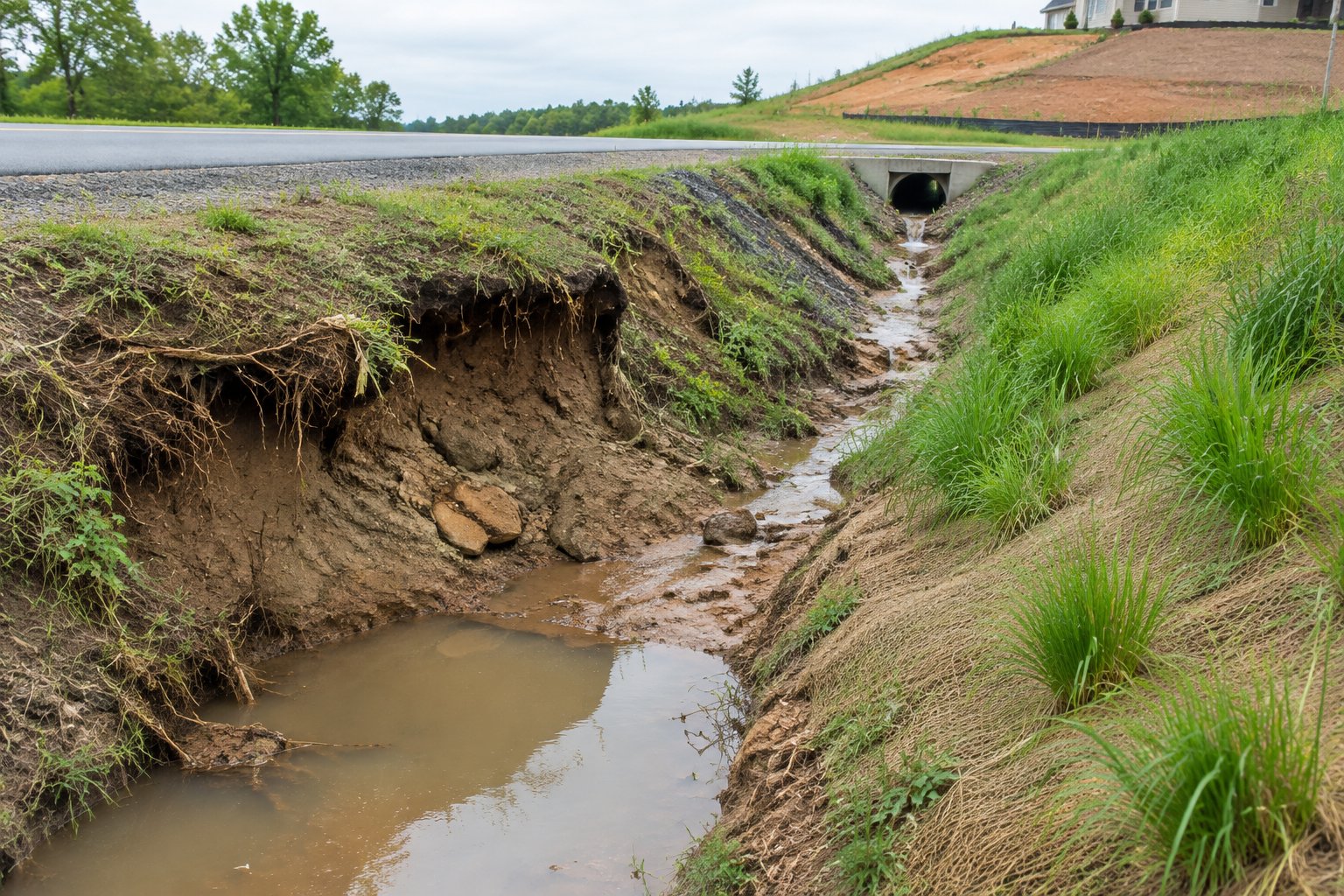
Bare soil on an active construction site is more than a grading problem. It creates permit risk, schedule delays, and direct liability with every rain event.
Sediment that leaves your site and reaches storm drains or waterways can bring inspection holds. It can also trigger enforcement under a Texas Pollutant Discharge Elimination System (TPDES) permit. Erosion control services close the gap between exposed earth and stable, compliant ground cover.
Allied Hydromulch TX, LLC has handled this problem across Texas and the Gulf South since 1990. We installed more than 15 million square feet of mulch in 2025. We know which methods hold on steep cut slopes in Houston clay and which products fail in Gulf Coast thunderstorms.
This guide draws on that field experience. Use it to match the right erosion and sediment control method to your site condition, slope, and compliance timeline.
What Bare Soil Liability Looks Like on Active Jobsites
Exposed soil creates problems within days. Sediment moves off-site through sheet flow, clogs inlets, stains roads, and draws complaints that bring inspectors to your project.
How Sediment Runoff Triggers Schedule and Inspection Problems
One storm can bury a silt fence, overload inlet protection, and leave material on public streets. When that happens, you can receive a corrective action notice or a stop-work order until best management practices (BMPs) are fixed.
Repairing failed sediment control delays grading, paving, and utility work. Replacing washed-out blankets, re-trenching silt fence, and re-mobilizing a crew all hit the budget. The schedule impact is often worse than the repair cost, since inspections tie to construction milestones.
Where SWPPP and TPDES Pressure Show Up First
A Stormwater Pollution Prevention Plan (SWPPP) is required for any Texas site disturbing one acre or more. It lists every control measure, inspection frequency, and corrective action. A Texas Commission on Environmental Quality (TCEQ) investigator compares that plan to what is installed and working on-site.
Enforcement usually comes from the gap between the plan and the field. Missing BMPs, poorly maintained controls, and bare slopes past the 14-day stabilization deadline lead to violations. TPDES permits carry penalties, and repeat issues can escalate to formal enforcement.
Why Texas Clay Soils and Gulf Coast Rain Change the Risk
Texas clay behaves differently from sandy or loam soils in rain. Its low permeability sends water across the surface instead of into the ground. That runoff picks up fine clay particles and carries them off-site as turbid discharge, which standard controls struggle to filter.
Gulf Coast rainfall intensity raises the stakes. Houston storms can drop two or more inches in under an hour. Standard BMPs fail when the plan does not account for peak rainfall. Review your soil erosion control approach before you select stabilization methods.
Knowing your site's risk is the first step. The next is matching the control method to your conditions.
How to Match the Control Method to the Site Condition
Each disturbed area has its own slope, soil type, and exposure window. Let those factors drive product selection. Here is the baseline.
Method | Best site condition | Establishment / notes
- Hydroseeding’s best condition is large, flat to moderate slopes | Germinates in 7 to 14 days; cost-effective over big areas
- Hydraulic soil stabilizer’s best condition is moderate slopes | Bridges standard mulch and bonded fiber matrix
- Flexterra’s best condition is 2:1 slopes, highly disturbed soil. | Holds under heavy rain before vegetation establishes
- Erosion control blanket’s best condition is swales, channels, steep embankments. | Immediate physical protection; more labor to install
- Drill seeding’s best condition is large acreage, reclamation. | Germinates in 1 to 3 weeks; strong seed-to-soil contact
When Hydroseeding Fits Large Disturbed Areas
Hydroseeding establishes grass efficiently on large, flat to moderate slopes. We spray a slurry of seed, mulch, fertilizer, and soil conditioners over prepared soil in a single pass.
Germination usually starts in 7 to 14 days, with full coverage in 4 to 6 weeks depending on weather and irrigation. It works well on commercial pads, warehouse developments, parks, and post-construction site restoration.
When you need rapid vegetative stabilization across large areas, hydroseeding beats sod on cost.
When Hydraulic Soil Stabilizers and Flexterra Make More Sense
Standard hydraulic mulch does not hold on slopes steeper than 3:1. For 2:1 slopes or highly disturbed soils, a bonded fiber matrix like Flexterra resists erosion far better. It is a flexible growth medium that locks into the soil and protects it under heavy rain before vegetation establishes.
Hydraulic soil stabilizers sit between standard mulch and bonded fiber products in performance. They suit moderate slopes where mulch would fail, but Flexterra may be more than the site needs. For guidance on stabilizing steep slopes, the choice comes down to slope, rainfall, and how fast vegetation must grow.
Where Erosion Control Blankets Work Best
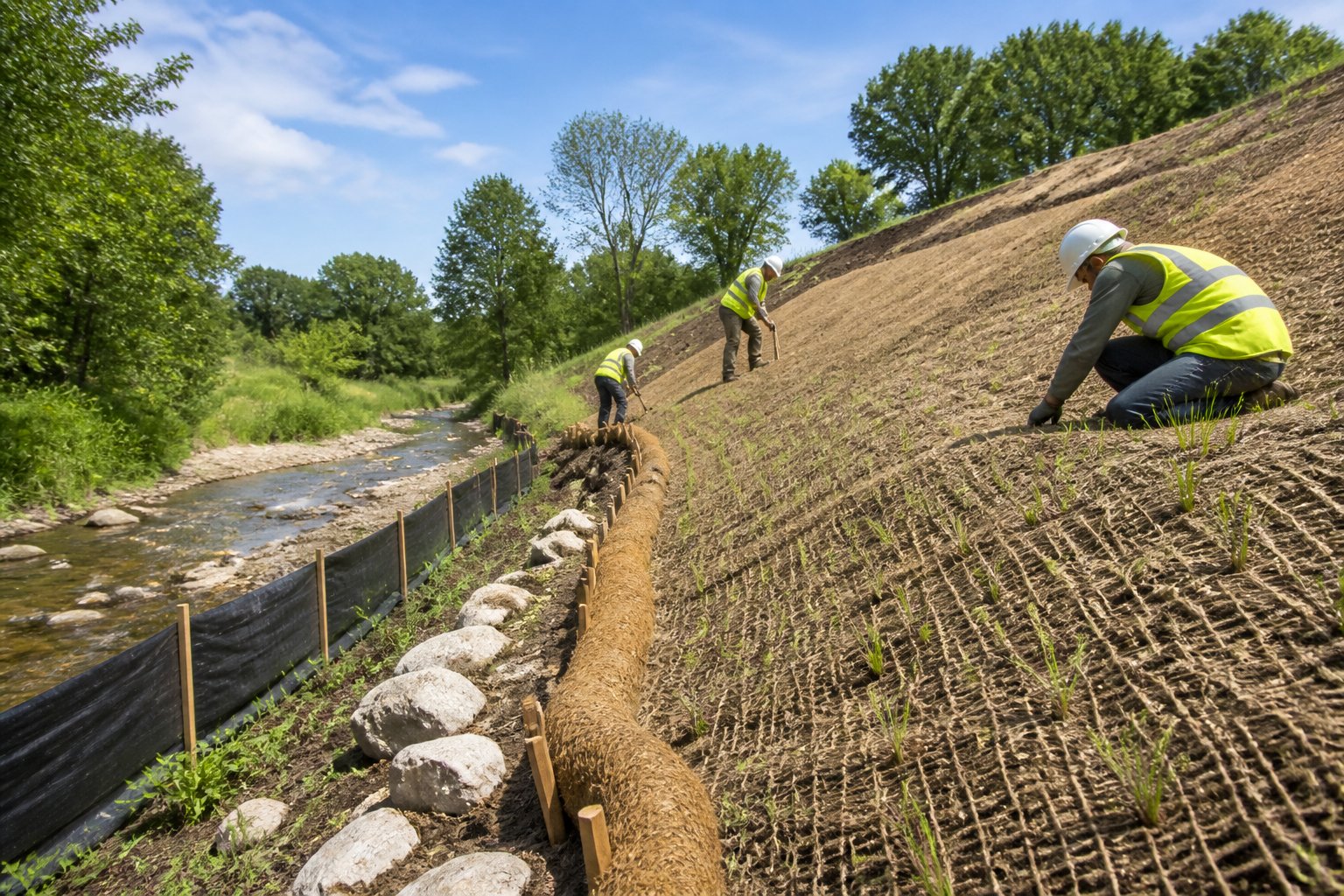
Erosion control blankets (ECBs) are rolls of straw, coconut fiber, or synthetic material staked to the soil. They work best in concentrated flow areas like drainage swales, channel linings, and steep embankments.
ECBs give immediate physical protection. The Texas Department of Transportation (TxDOT) uses them on highway cut and fill sections for slope surface protection. They take more labor than hydraulic application, but they hold where flow is too high for sprayed-on solutions.
When Drill Seeding Is the Better Long-Term Option
Drill seeding places seed into the soil at a controlled depth and spacing. That improves seed-to-soil contact and cuts waste from wind and runoff.
Germination usually starts in 1 to 3 weeks under good conditions. It works best for large acreage, roadside stabilization, infrastructure right-of-ways, and reclaimed land that needs durable vegetation.
The method pairs well with native grass mixes that need good soil contact for deep roots.
Perimeter and Drainage Measures That Support Vegetative Cover
Vegetative stabilization needs support. Perimeter and drainage controls hold sediment on-site while grass roots develop.
Silt Fence and Wattles for Containment at the Edge of Disturbance
Silt fence is the most common perimeter control on Texas sites. Install it along the downslope edge of disturbed areas to intercept sheet flow and trap sediment.
Proper installation means trenching the fabric at least 6 inches into the soil and compacting the backfill. Surface-staked silt fence fails quickly.
Fiber wattles, also called sediment logs or filter socks, serve a similar purpose. They work better on slopes and in concentrated flow, slowing runoff and trapping coarser particles. On active jobsites with clay soils, wattles often outlast silt fence because they handle higher flow without collapsing.
- Install silt fence with a minimum 6-inch trench and compacted backfill.
- Place wattles perpendicular to flow on slopes steeper than 4:1.
- Inspect all perimeter controls within 24 hours of rain over 0.5 inches.
- Replace any section where sediment reaches one-third of the barrier height.
- Log every inspection in the SWPPP record before the next review.
Safety Fence and Access Separation Around Sensitive Areas
Safety fence marks the line between construction and areas that must stay undisturbed. Wetland buffers, tree zones, and finished stabilization areas need physical separation from equipment.
On large projects, route access roads and staging away from freshly seeded slopes. Tire tracks through new hydroseeding break the mulch and open runoff channels. Fence lines and clear signs prevent that damage and cut re-application costs.
Street Sweeping and Sediment Housekeeping During Active Construction
Sediment tracked onto public roads is a visible compliance issue. Inspectors and municipal staff notice it fast.
Regular street sweeping at construction entrances is a critical BMP. Stabilized entrances with aggregate pads reduce tracking, but they need upkeep. Mud and clay build up on the rock within days and cut its effectiveness. A maintained entrance pad plus scheduled sweeping keeps the site compliant and complaint-free.
What Commercial Teams Should Evaluate Before Hiring a Crew
Choosing an erosion control contractor is a key decision. The wrong crew leads to failed applications, extra cost, and compliance gaps.
Site Access, Slope Geometry, and Coverage Scale
Before you request a quote, know the total disturbed acreage, the steepest slope, and whether equipment can reach every treatment area. Hydroseeding trucks need access within hose range of the target.
Steep cut slopes above 2:1 may call for Flexterra or blankets instead of standard mulch. That changes both the price and the crew setup. Limited-access work, such as slope stabilization contractors handle, needs the right equipment to avoid damaging completed areas.
Seed Specification, Grassing Goals, and Establishment Windows
Texas projects carry specific seed requirements from the owner, municipality, or state agency. TxDOT projects require mixes from an approved list. Private commercial work may specify turf-type Bermuda or a native grass mix for long-term restoration.
The establishment window matters as much as the seed. Warm-season grasses germinate roughly April through September in Texas. Applying Bermuda late in the fall without flagging the risk sets the project up for rework.
Documentation, Scope Coordination, and Compliance Follow-Through
Erosion control services cover more than application. We document what was applied, where, and when. That record becomes part of the SWPPP file and supports the general contractor during inspections.
Scope coordination matters too. If the grassing contractor handles only hydraulic application, the subcontract must clearly list silt fence, inlet protection, and watering exclusions. Follow-through means we confirm establishment, flag touch-up areas, and support final stabilization sign-off.
Regional Conditions That Change Product Selection in Texas and the Gulf South
Texas spans several climate zones. Product choice, timing, and BMP design shift by region: humid Gulf Coast, semi-arid Hill Country, or clay-heavy Blackland Prairie.
Houston Area Rainfall Patterns and Drainage Sensitivity
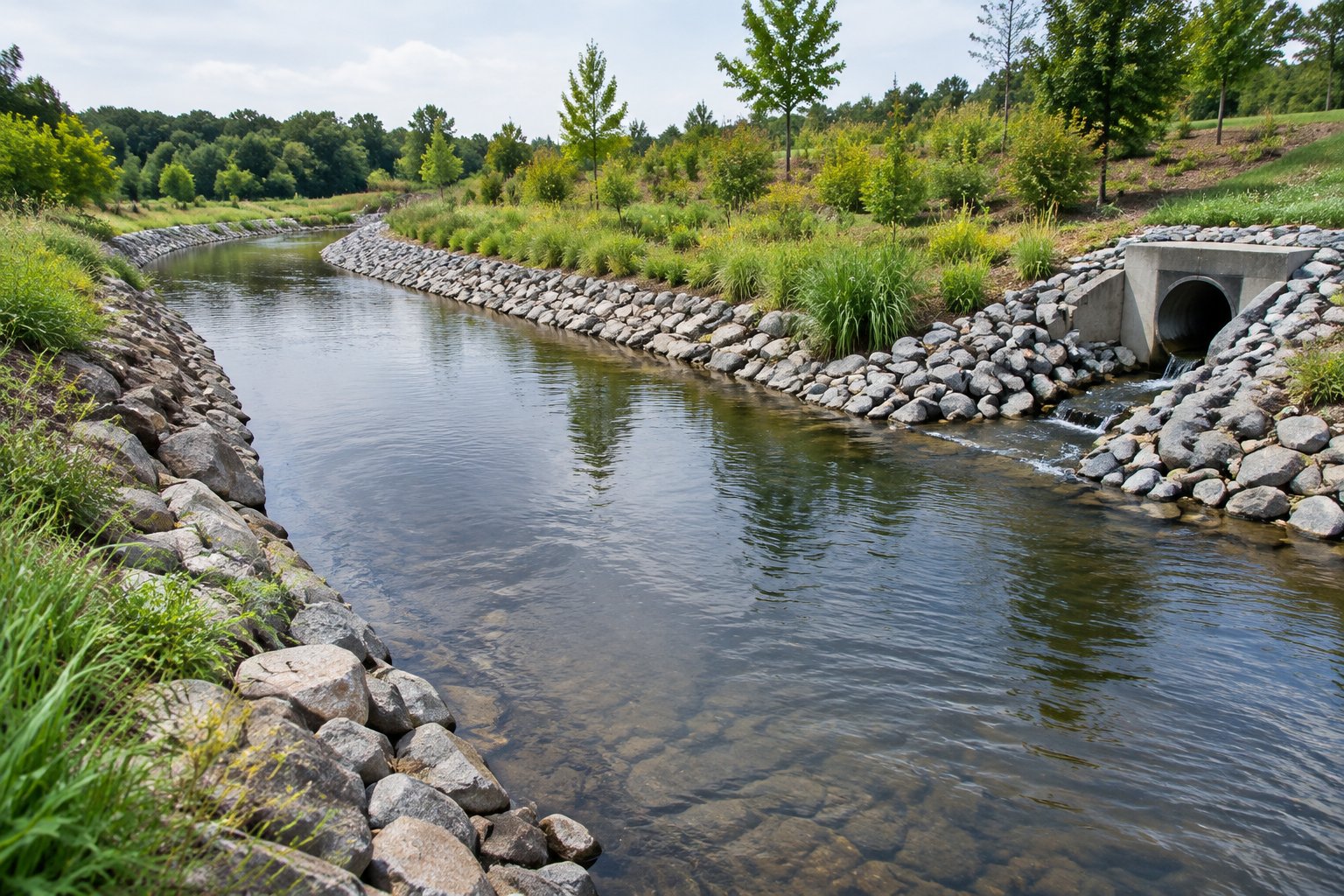
The Houston metro area averages 50 or more inches of rain a year. Single storm cells can drop several inches at once. Harris County, Fort Bend County, and the surrounding region face higher runoff than Central or West Texas. Drainage channels, retention ponds, and outfalls need controls that survive peak flow.
On Houston-area commercial sites, standard hydroseeding suits flat to moderate grades. Steeper slopes and channel banks call for bonded fiber matrix or blankets that resist displacement in heavy rain.
Industrial and Highway Work with Higher Compliance Demands
Industrial sites carry stricter documentation than standard grading. Liquefied natural gas (LNG) facilities, petrochemical plants, and large manufacturing sites often require third-party stormwater inspections and detailed BMP records beyond the standard SWPPP.
Highway and TxDOT corridor work adds another layer. State specifications dictate approved erosion control devices and practices, seed mixes, and installation methods. Crews that use the wrong mulch spec cause rejections and delay the project.
Native Establishment on Rural, Corridor, and Reclamation Projects
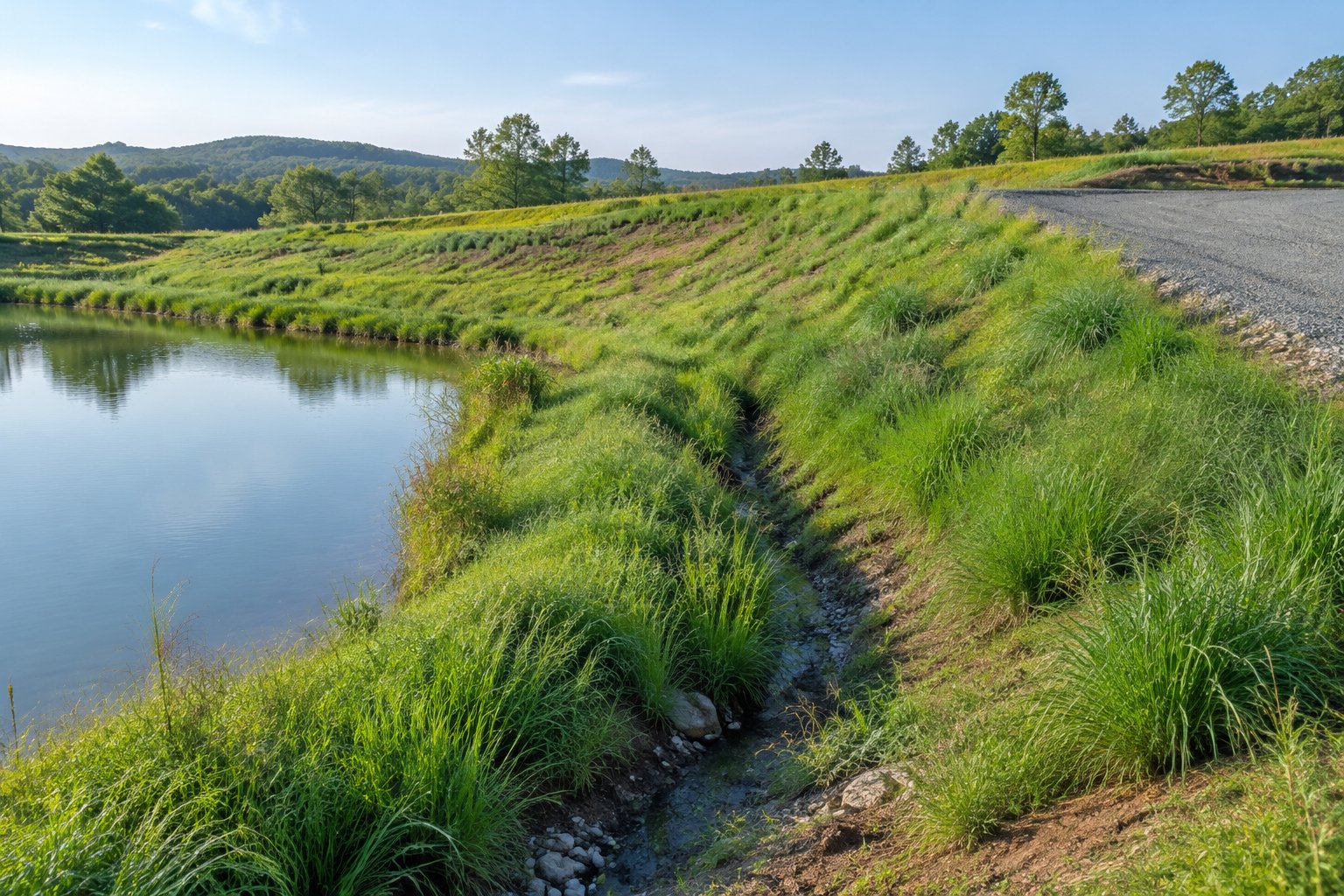
Rural and reclamation projects in Oklahoma, Louisiana, and New Mexico aim for long-term native cover. Native mixes need two to three months to establish, and seed must match the local ecoregion. Drill seeding is often preferred for its seed-to-soil contact across large, uneven terrain.
Pipeline corridors, solar farm land prep, and post-mining reclamation all need stabilization that lasts for years. Matching regional seed to the right method is what separates a lasting stand from one that needs re-seeding next season.
Choosing a Scope That Holds Through the Next Rain Event
A site that passes inspection usually differs from one that fails in how the scope was prioritized, not in the lowest product price.
How to Prioritize Immediate Protection Versus Vegetation Establishment
Some areas need protection right away. Others need vegetation within 14 days of final grading. Separating urgent stabilization from scheduled grassing prevents treating the whole site with one method at one time.
Immediate protection areas include:
- Active cut and fill slopes exposed to direct rainfall
- Drainage swales and channels carrying concentrated flow
- Stockpile perimeters where sediment can migrate off-site
- Slopes next to waterways, wetlands, or storm drain inlets
Vegetation areas include pad sites awaiting final grading and buffer zones set for permanent native cover. Perimeters where turf is part of the final landscape also qualify. Sequencing this way keeps the SWPPP current and avoids paying to stabilize ground that will be re-disturbed.
What to Have Ready Before Requesting Pricing or Mobilization
A contractor who avoids rework needs accurate information up front. Before you request a quote, have these ready:
- Total disturbed area in square feet or acres
- Steepest slope ratio on the site
- Seed specification required by the owner or agency
- Target date for final stabilization
- Any access restrictions for the crew
Providing this on the first call lets us price accurately and mobilize without a pre-visit. For a rough cost range, the online job price calculator at alliedhydromulch.com gives a starting point based on area and application type.
Frequently Asked Questions
What Are the Typical Erosion Control Measures Required for a Construction Site in Texas?
Texas sites disturbing one acre or more must have a SWPPP with erosion and sediment control BMPs. Typical measures include silt fence, stabilized entrances, inlet protection, temporary seeding or mulching, and blankets on slopes. Site size, proximity to waterways, and the TPDES general permit set the specifics.
How Much Does It Cost to Install and Maintain Erosion Controls on a Jobsite?
Cost depends on acreage, slope, product choice, and the number of mobilizations. Hydroseeding is usually the most cost-effective method for large-area vegetative stabilization. Premium products cost more but cut failure risk on steep slopes. Maintenance covers inspections, silt fence repair, and post-storm corrective actions.
What Does an Erosion Control Specialist Handle During Site Prep, Grading, and Stabilization?
A specialist installs and maintains BMPs through construction. They apply hydroseeding or other products after grading and document everything for SWPPP compliance. On well-run projects, they sequence applications to the grading schedule so exposed soil is stabilized inside the 14-day window.
How Do You Stop Erosion on Steep Slopes and Drainage Swales After Heavy Rain?
Steep slopes above 3:1 usually need bonded fiber matrix or erosion control blankets, not standard hydroseeding. Drainage swales benefit from turf reinforcement mats or channel linings that handle concentrated flow. Pick a product rated for the slope and expected flow before the rain arrives.
Which Products Work Better for Temporary Stabilization: Socks, Blankets, or Hydraulically Applied Mulch?
Each fits a different condition. Sediment socks handle perimeter containment and slope interruption. Blankets suit concentrated flow and steep slopes that need anchoring. Hydraulic mulch covers large flat to moderate areas fast. The best choice depends on slope, flow velocity, and whether the area needs permanent cover.
What Paperwork and Inspection Support Is Needed to Stay Compliant with SWPPP and Local Requirements?
SWPPP compliance needs documented inspections at least every 14 days and within 24 hours of rain over 0.5 inches. Records must show BMP condition, corrective actions, and stabilization progress. We provide application records, product specifications, and seed certifications for the SWPPP file.
Getting Your Site Stabilized Before the Next Inspection
Erosion control on Texas construction sites comes down to matching the right method to the site and applying it before the next storm. Slope, soil, rainfall, and permit requirements all shape product selection. Projects stay on schedule when the scope is built on accurate site data.
Allied Hydromulch TX, LLC has provided these services across Texas and the Gulf South since 1990. Call 281-482-8212 for a project estimate, or use the online job price calculator for a cost range. Your site does not wait. Neither do we.