.svg)


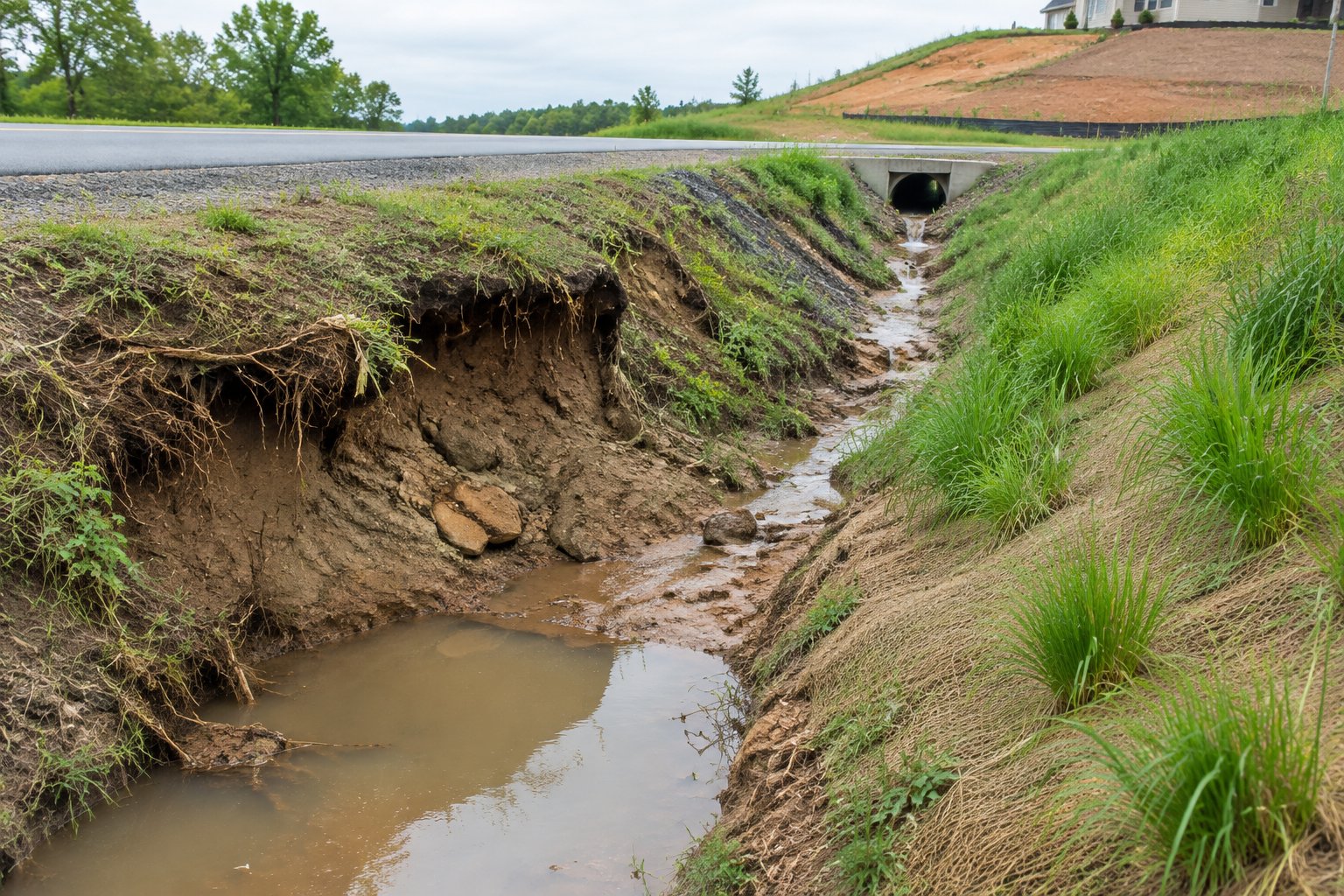
Steep cut slopes on construction sites face weather risks immediately. When a 2:1 or 3:1 grade sits exposed, a single Gulf Coast rain can wash away seed, soil, and your schedule.
Standard hydraulic mulch works on moderate slopes. Severe slopes and strict stormwater deadlines need a product with stronger erosion resistance. Flexterra installation offers that higher level of protection.
Allied Hydromulch TX, LLC has installed Flexterra and other high-performance flexible growth media (HP-FGM) across Texas, Louisiana, Oklahoma, and New Mexico since 1990. Our senior field team brings decades of direct slope experience and installs millions of square feet of mulch each year.
Below, find out when Flexterra outperforms standard hydroseeding or erosion blankets. Learn how we set site prep and application rates, and what to expect during and after installation.
When Flexterra Fits the Site Better Than Standard Cover
Flexterra is a premium HP-FGM for sites where standard hydraulic mulch cannot provide enough erosion resistance or bonding strength. It is a targeted solution for tough conditions that challenge other products.
Steep and Severe Slopes With Runoff Exposure
Slopes steeper than 3:1 increase water velocity quickly. On a 2:1 highway embankment or steep pond bank, standard hydromulch can wash away before vegetation establishes.
Flexterra's interlocking fiber matrix bonds chemically and mechanically to the soil surface. It holds position through strong flow events that would strip conventional mulch.
This matters on TxDOT corridor work and industrial grading projects, where slope stabilization crews must keep the surface intact through storms. Flexterra is rated for slopes up to 1:1 in many specifications, giving engineers a hydraulically applied option where blankets or mats were the only choice before.
Disturbed Soils Under Tight Stormwater Deadlines
Construction sites under a Texas Pollutant Discharge Elimination System (TPDES) permit face real deadlines for stabilizing disturbed soil. A stormwater inspection that finds bare, unprotected slopes can cause violations, stop-work orders, and fines.
Flexterra provides immediate surface protection once it cures, buying time while seed germinates.
On Gulf Coast projects, that same-day protection is often required for compliance. Sites near Corpus Christi, Houston, and the Louisiana coast regularly face storms that test erosion control soon after application, as outlined in the Texas Commission on Environmental Quality (TCEQ) stormwater permitting rules.
Where Hydraulic Mulch or Blankets May Fall Short
Standard hydraulic mulch works well on moderate slopes with good soil structure. Erosion blankets perform on slopes where crews can anchor them safely.
- Standard hydraulic mulch lacks bonding strength for steep slopes in high-rainfall areas.
- Erosion blankets need manual installation and overlapping, which increases labor and cost on large sites.
- On rocky or uneven ground, blankets leave gaps that channel water underneath and cause hidden erosion.
- Flexterra fills voids, conforms to irregular terrain, and bonds directly to the soil without hardware.
When conditions fall between "standard hydromulch is fine" and "we need a full turf reinforcement mat (TRM) system," Flexterra closes that gap with a single hydraulic application.
What the Installed Matrix Is Designed to Do
Once applied, Flexterra forms an interlocking matrix of crimped fibers that lock onto the soil. This is not a loose blanket. It is a bonded, continuous layer that resists displacement from rainfall and surface flow.
Interlocking Matrix and Immediate Surface Protection
The fibers in Flexterra entangle as they hydrate and cure. Within hours, the matrix creates an erosion-resistant surface that shields bare soil from raindrop impact.
On a freshly graded slope, raindrop energy can quickly dislodge soil and form rills. The matrix absorbs that impact and spreads it across the fiber network, keeping the soil intact while vegetation takes root.
Chemical and Mechanical Bonding to Soil
Flexterra bonds to soil particles through both chemical tackifiers and mechanical fiber entanglement. This dual bonding sets HP-FGM apart from standard mulch, which relies mostly on gravity and moisture.
On compacted subgrade or exposed clay, this bonding is essential. Texas clays swell and crack with moisture, and a product that only sits on top will lift and peel. The chemical bond penetrates the soil surface, and the mechanical interlock resists sliding on steep grades.
How It Supports Germination and Vegetation Establishment
The matrix supports seed germination by retaining moisture, moderating soil temperature, and reducing seed washout. Seed stays in contact with soil instead of moving downslope after rain.
Germination through an HP-FGM usually starts within 7 to 14 days under good conditions. The key difference: seed stays where it was placed, even on steep slopes, leading to more uniform coverage and fewer bare patches that require rework on job sites.
Site Preparation Before Hydraulic Application
Proper site prep determines whether Flexterra bonds to the soil. No HP-FGM can make up for a poorly prepared surface.
Soil Preparation and Surface Conditions That Matter
The soil surface should be free of loose debris, standing water, and large rocks. On compacted subgrade, light scarification or track-walking creates roughness for the matrix to grip.
Texas clay soils need special attention. When the surface is slick and sealed, Flexterra cannot bond well. A light disc pass or rake scarification breaks that seal and improves adhesion. On sandy soils, pre-wetting the surface helps the matrix hydrate fully.
Measuring Coverage Areas and Checking Specifications
Application rates for Flexterra are measured in pounds per acre. The correct rate depends on slope, soil type, and project specs. Engineers and inspectors will check the spec sheet to confirm the right coverage.
- Moderate slopes (3:1 or flatter): rates start around 3,500 pounds per acre.
- Steep slopes (2:1 to 1:1): rates often increase to 4,000 pounds per acre or higher.
- Channels and concentrated flow areas: rates may be higher as directed by the engineer.
- Always confirm the specified rate before loading the tank.
Accurate area measurement is important. Under-applying leaves thin spots that erode, and over-applying wastes material and budget. GPS-mapped site plans or field-measured calculations help prevent both problems.
Slope Tracking, Access, and Hydroseeder Setup
Before a hydroseeder arrives, we check equipment access and hose reach, and identify areas that need tower gun or hose-end nozzle work. On large embankments or industrial sites, this planning avoids delays.
Slopes should be flagged or staked by gradient. Our operator adjusts application rates as conditions change across the site. A 3:1 grade transitioning to a 1.5:1 cut requires a rate change, and the operator needs to know where that happens before spraying starts.
How Application Works in the Field
Flexterra installation is a hydraulic process. We mix the product in a hydroseeder tank and spray it onto the prepared soil with a hose or tower gun. The quality of the installation depends on how the slurry is mixed and applied.
Mixing Sequence, Water Loading, and Slurry Consistency
Water goes into the tank first, followed by seed, fertilizer, and tackifier. We add Flexterra fibers last and in stages to prevent clumping.
The tank runs at full agitation while mixing. Flexterra fibers need time to hydrate and separate before application. A properly hydrated slurry has a smooth, uniform consistency with no clumps.
Nozzle Choice, Coverage Technique, and Multi-Directional Spray
The operator selects a nozzle based on slurry thickness and distance to the slope. Flexterra's fiber content is heavier, so a larger nozzle and higher pressure are often needed.
Tower gun application covers broad slopes, while hose-end nozzles give control on tight areas and transitions. Coverage uses a multi-directional spray pattern: we make one pass, then cross back at an angle to build even thickness. Multi-pass coverage is standard practice for every Flexterra application.
Cure Expectations, Inspection Points, and Rework Risks
After application, the matrix needs time to cure before it reaches full strength. In warm Texas conditions, initial bonding occurs within hours. Full cure strength develops over 24 to 48 hours, depending on weather.
If rain hits before the matrix cures, the surface may wash and need touch-up. Inspectors should schedule a post-cure walkdown to check for thin spots, rill formation, or areas where the matrix did not bond. Catching these issues early helps reduce runoff risk and keeps the site compliant.
How Flexterra Compares With Other Stabilization Methods
Choosing between Flexterra, standard hydroseeding, erosion blankets, or turf reinforcement mats (TRMs) depends on slope severity, flow conditions, budget, and performance requirements.
Flexterra Versus Standard Hydroseeding on Challenging Slopes
Standard hydroseeding uses a lighter mulch slurry that works well on flat to moderate grades. On slopes steeper than 3:1, the slurry lacks the bonding strength to resist runoff. Flexterra's HP-FGM matrix is rated for conditions where standard hydromulch would wash off before seeds can germinate.
Flexterra costs more per acre than standard hydroseeding for commercial sites. The higher price pays off when it prevents failed applications, bare slopes during inspection, and extra mobilization charges. On moderate slopes with good soil, standard hydroseeding remains a more cost-effective choice.
When Erosion Blankets or TRMs Make More Sense
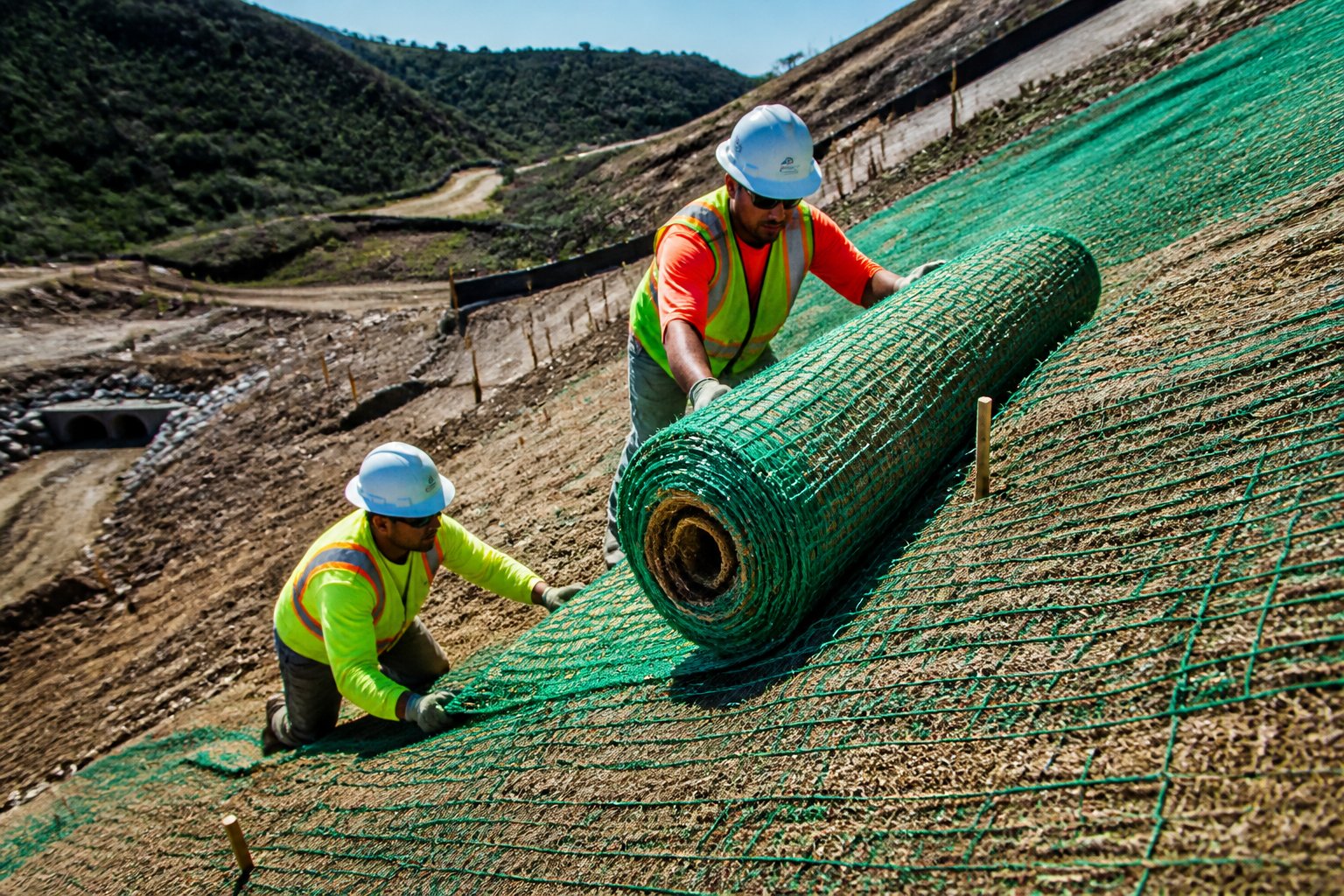
Erosion blankets, also called erosion control blankets (ECBs), are staked or stapled to the soil surface. They work well on slopes with moderate flow and accessible terrain. These blankets provide physical protection but require manual labor for installation, seaming, and anchoring.
TRMs are permanent reinforcement systems designed for high-velocity channels and slopes that must resist flow for years. They are heavier and cost more than Flexterra.
- Erosion blankets suit slopes where crews can work safely and efficiently.
- TRMs are specified when permanent reinforcement is required after vegetation is established.
- Flexterra fills the gap between blankets and TRMs and is applied hydraulically with no staking labor.
- On irregular or rocky slopes, Flexterra conforms to the surface better than blankets, which can bridge over voids.
Combining HP-FGM With Turf Reinforcement Systems
Engineers may specify Flexterra as a base layer underneath a TRM on severe sites. The HP-FGM fills voids, promotes seed contact, and provides immediate erosion resistance. The TRM adds long-term reinforcement.
This layered approach is common on highway cut slopes, dam faces, and large drainage channels where bonded fiber matrix stabilization is both an erosion control and structural concern. The combination adds cost but delivers protection that neither product provides alone.
Choosing the Right Approach for Texas and the Gulf South
Regional soil conditions, rainfall intensity, and regulatory pressure influence which erosion control method performs best on your site.
Clay Soils, Intense Rainfall, and Regional Compliance Pressure
Texas clay soils swell when wet and crack when dry. This movement stresses erosion control products. Flexterra's chemical and mechanical bonding helps it stay attached better than products relying only on surface adhesion.
Gulf Coast rainfall is intense. Houston averages over 50 inches of rain per year, and tropical storms can drop several inches in hours. A product that needs 48 hours of dry weather to cure is risky in this climate. Flexterra bonds within hours, offering a real advantage over slower-curing options.
TPDES permits enforced by the TCEQ require construction sites to stabilize disturbed soil within set timeframes. Failing an inspection can halt a project. The right erosion control method is the one that holds through storms and passes inspection.
Project Types That Commonly Specify Flexterra
Certain project types use Flexterra more often because their site conditions match the HP-FGM performance range.
- Highway embankments and roadside corridor work with steep slopes.
- Industrial site grading around refineries, liquefied natural gas (LNG) plants, and manufacturing facilities.
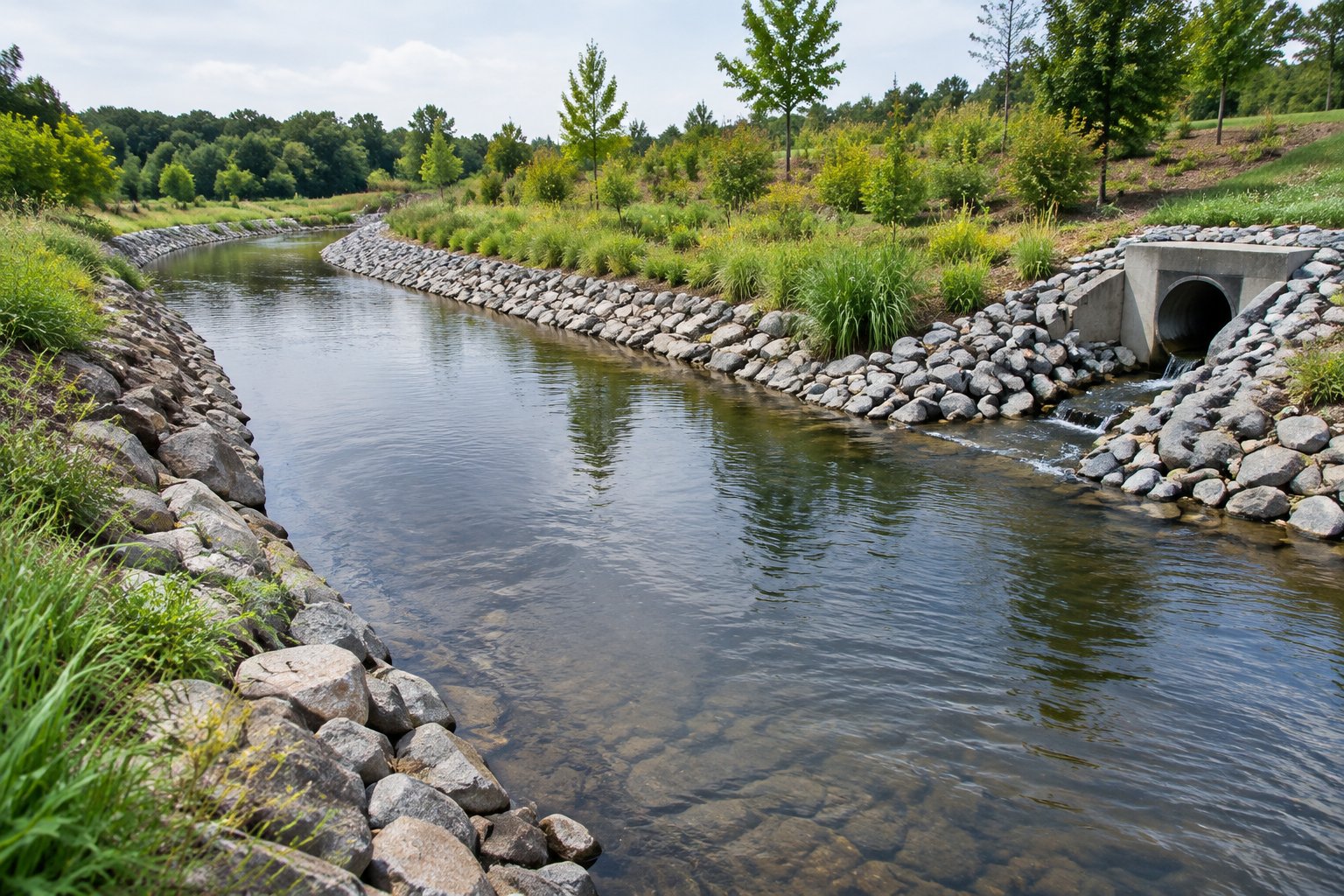
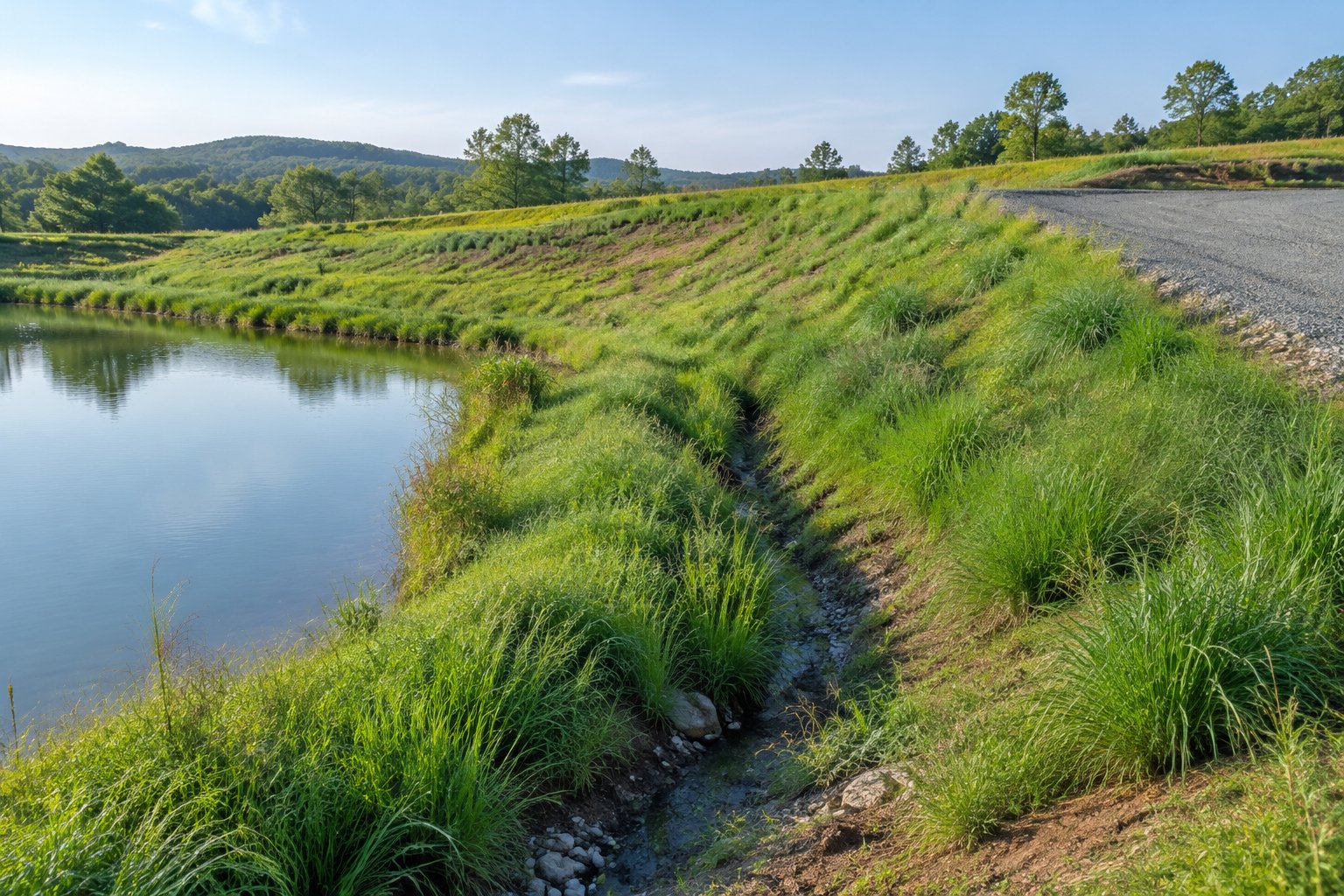
- Retention pond banks and drainage channels with concentrated flow paths.
- Solar farm land preparation where large acreage must be stabilized quickly before panel installation.
- Commercial developments with tight permit timelines and fast construction schedules.
These projects need more erosion resistance than standard hydromulch provides, but usually do not require the cost and labor of a full TRM system.
Next Step for Contractor Pricing and Scheduling
Every site is different. The right method depends on slope angle, soil type, drainage patterns, and compliance deadlines. Talking with a crew experienced with Flexterra on Texas slopes helps confirm whether it fits your project or if another approach is better.
Allied Hydromulch TX, LLC has provided erosion control across Texas and the Gulf South since 1990. Use the online cost calculator for a rough cost range. Call 281-482-8212 to discuss your site with a crew familiar with local conditions.
Frequently Asked Questions
What Site Conditions Determine Whether a Bonded Fiber Matrix Is Needed Versus Standard Hydromulch?
Slope steepness, rainfall intensity, and soil type drive the decision. If the slope is steeper than 3:1, the soil erodes easily, or the site faces concentrated runoff, a bonded fiber matrix like Flexterra works better than standard hydromulch. On moderate, well-drained slopes, standard hydraulic mulch is usually enough.
How Is the Application Rate Calculated in Pounds per Acre for Slope and Channel Work?
Start with the manufacturer's specifications and adjust based on slope gradient, soil condition, and the project engineer's plan. Steep slopes and channels with concentrated flow often require 4,000 pounds per acre or more. Moderate slopes may need 3,500 pounds per acre. Always confirm the rate against project plans before loading.
What Water, Tackifier, and Fiber Mix Sequence Prevents Clumping and Ensures Full Hydration in the Tank?
Load water first, then add seed, fertilizer, and tackifier with the agitator running. Add Flexterra fibers last and in stages to prevent clumping. Keep agitating until the slurry is smooth and uniform before spraying.
How Long Does It Take to Cure Before a Rainfall Event, and What Happens if It Rains the Same Day?
Initial bonding usually occurs within a few hours in warm weather. Full strength develops over 24 to 48 hours. If rain hits before curing, the outer layer may wash and need touch-up on affected areas. Timing application with weather forecasts is important on Gulf Coast projects.
What Surface Prep Is Required on Compacted Subgrade so the Matrix Keys in and Does Not Lift or Slide?
Compacted subgrade needs light scarification or track-walking to break the sealed surface and create micro-roughness for bonding. On slick Texas clay, a disc pass or rake across the contour is standard. Skipping this step makes the matrix more likely to peel or slide during rain.
What Should Be Included in a Submittal Package for Engineer Approval?
A complete submittal includes the manufacturer's product data sheet with performance ratings, the proposed application rate in pounds per acre, and the seed mix and fertilizer specifications. It also includes our installation plan with equipment type, coverage method, and cure expectations. Some engineers require a site map showing slope gradients and application zones. Preparing this documentation in advance helps keep the project on schedule.