.svg)



On a Texas jobsite, the gap between final grade and the first rain is where erosion plans get tested. Miss that window and sediment leaves the site, a stormwater inspector takes notice, and the violation lands on the GC's schedule.
Construction site erosion control is not a box to check after the fact. It is a schedule-critical scope item that, if missed or done poorly, triggers permit holds, rework costs, and downstream fines that land squarely on the general contractor's desk.
The methods available to protect bare soil are well established, from hydroseeding and hydraulic soil stabilizers to silt fence and inlet protection. The real challenge is matching the right combination to your site conditions, slope grades, and regulatory requirements before the next rain event hits.
In Texas and the Gulf South, that window can be measured in hours, not weeks.
Keep reading to learn which temporary erosion control methods work on active jobsites, what triggers stormwater compliance obligations under Texas permits, how to sequence BMPs across construction phases, and what to look for when evaluating an erosion control contractor before award.
Why Bare Soil Becomes a Schedule and Compliance Problem Fast
Unprotected soil starts eroding the moment it loses its vegetative cover. On a commercial construction site in Houston or Corpus Christi, that erosion begins with the first raindrop.
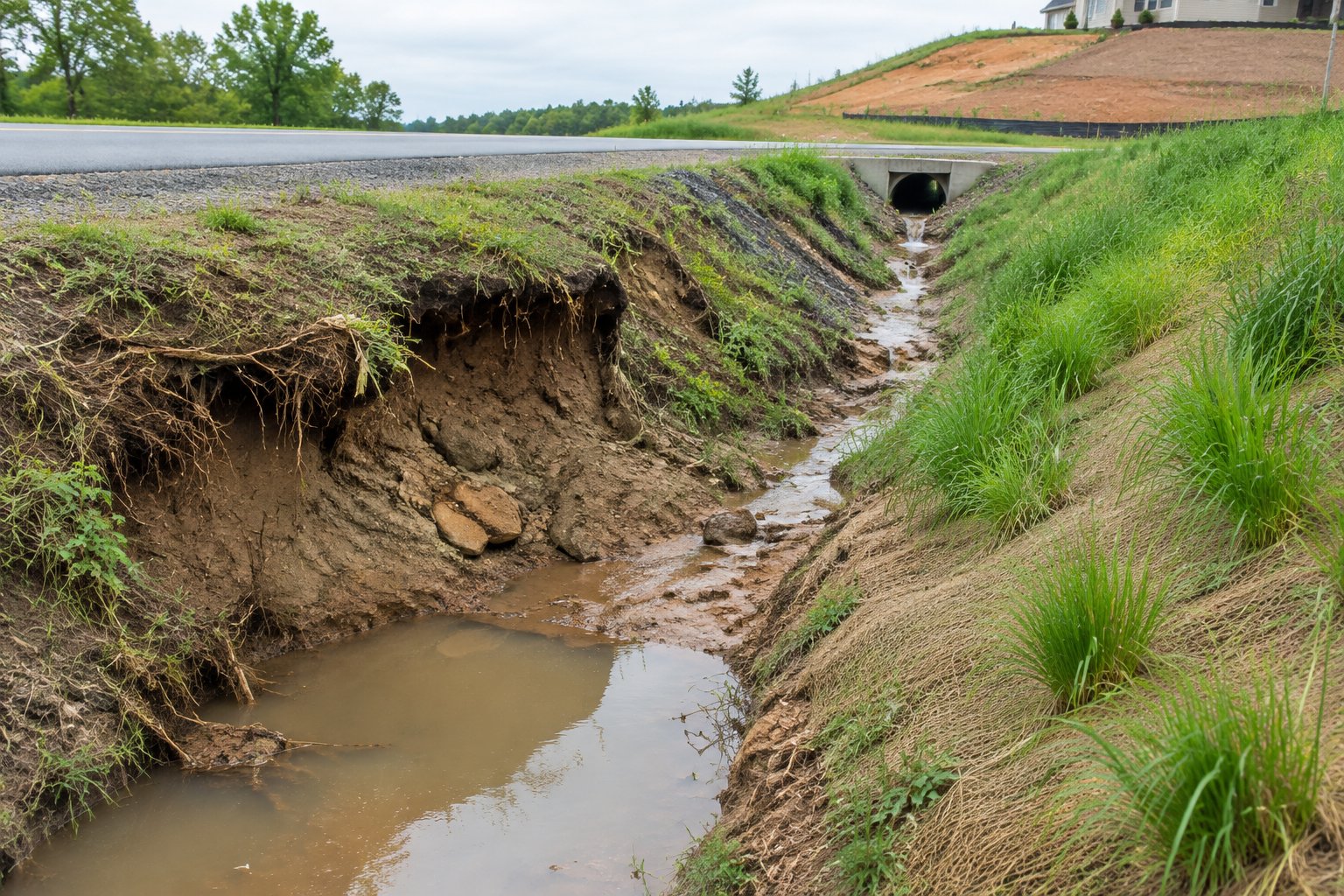
How Exposed Grading Turns Into Sheet, Rill, and Gully Erosion
Sheet erosion is the first stage. Rainfall hits flat, bare ground and moves a thin layer of topsoil downslope in a broad wash.
It is easy to miss visually, but it strips the nutrient-rich surface layer that seeds need to germinate. Left unchecked, concentrated flow carves narrow channels called rills, which deepen quickly into gullies, especially on slopes steeper than 3:1.
On Texas clay soils, this progression can happen in a single storm event. Expansive clays common across the Houston metro and Gulf Coast resist infiltration, so water sheets across the surface rather than soaking in.
A 2-inch rainfall on a 5-acre graded pad can generate thousands of gallons of sediment-laden runoff in under an hour. Wind erosion adds another layer of soil loss on exposed sites, particularly during dry spells in Central and West Texas. Fine particles blow off-site and deposit on adjacent properties or into drainage channels.
Why Sedimentation Creates Permit Risk, Rework, and Water Quality Issues
Sediment that leaves your site does not just disappear. It enters storm drains, retention ponds, and downstream waterways, raising turbidity levels and potentially violating your stormwater discharge permit.
Under the construction stormwater control requirements in the federal effluent guidelines, construction sites with one or more acres of disturbance must implement erosion and sediment controls under their NPDES permit. A single failed inspection can trigger a stop-work notice, require immediate corrective action, and delay every trade behind you on the schedule.
The rework cost of re-grading a washed-out slope or cleaning accumulated sediment from a detention basin runs far higher than the original erosion control application. Water quality impacts are not abstract. Turbidity spikes in receiving waters draw regulatory attention from the Texas Commission on Environmental Quality (TCEQ), which administers the state's construction general permit.
Texas Site Conditions That Make Failures Worse
Gulf Coast humidity, clay-heavy soils, and intense summer storms create a combination that punishes poor erosion control planning. Here are the site-specific factors that elevate risk:
- Expansive clay soils resist water absorption, increasing surface runoff volume and velocity.
- Tropical weather systems can deliver 4 to 8 inches of rain in a 24-hour period along the Gulf Coast.
- Summer heat above 100°F dries out unprotected mulch and delays germination if seeding is not timed correctly.
- Flat coastal grading with minimal natural drainage concentrates water in low spots, creating standing water and washout zones.
- Hurricane season, June through November, compounds risk with sustained, heavy precipitation events.
These conditions mean that a method adequate for a site in the Midwest may fail completely on a Texas jobsite. The question becomes which specific methods hold up under these pressures.
The Core Construction Site Erosion Control Methods Used on Active Jobsites
Temporary erosion control on an active construction site is not a single product. It is a system of overlapping methods, each designed to handle a specific part of the erosion-to-sediment chain.
Hydroseeding and Mulching for Rapid Soil Stabilization
Hydroseeding applies a slurry of seed, mulch, fertilizer, and soil conditioners directly onto prepared soil. The mulch layer locks in moisture, shields seed from wind and rain impact, and promotes germination typically within 7 to 14 days.
Full turf establishment follows in 4 to 6 weeks under normal conditions. For construction sites that need vegetation cover quickly to meet permit stabilization deadlines, hydroseeding is the most efficient option for large acreage.
A single crew can cover multiple acres in a day, versus the labor and cost intensity of sod installation. On sites where temporary seeding is required before final grading, hydroseeding for fast vegetation on large commercial sites provides rapid soil protection without the logistical burden.
Mulching alone, without seed, is used on areas where vegetation is not the goal but surface protection is still required. Straw mulch, wood fiber mulch, and hydraulic mulch each offer different levels of erosion resistance depending on slope and rainfall intensity.
Hydraulic Soil Stabilizers and Flexterra for Higher-Risk Slopes
Standard hydraulic mulch works well on moderate slopes, 3:1 or flatter. Steeper grades demand more.
Hydraulic soil stabilizers bond to the soil surface and create a matrix that resists displacement during heavy rain events. Flexterra HP-FGM, a flexible growth medium, is a premium product designed for demanding slope conditions where standard mulch would wash off before vegetation establishes.
It interlocks with the soil surface and maintains protection even under sustained, high-intensity rainfall. For sites with slopes steeper than 2:1, understanding when Flexterra outperforms standard hydraulic mulch is a specification decision that directly affects whether you pass your next inspection.
Erosion Control Blankets for Channels, Embankments, and Steeper Grades
Erosion control blankets are rolled materials, typically made from straw, coconut fiber, or synthetic blends, that are staked or stapled over prepared soil. They protect the surface from raindrop impact and concentrated flow while allowing vegetation to grow through the blanket material.
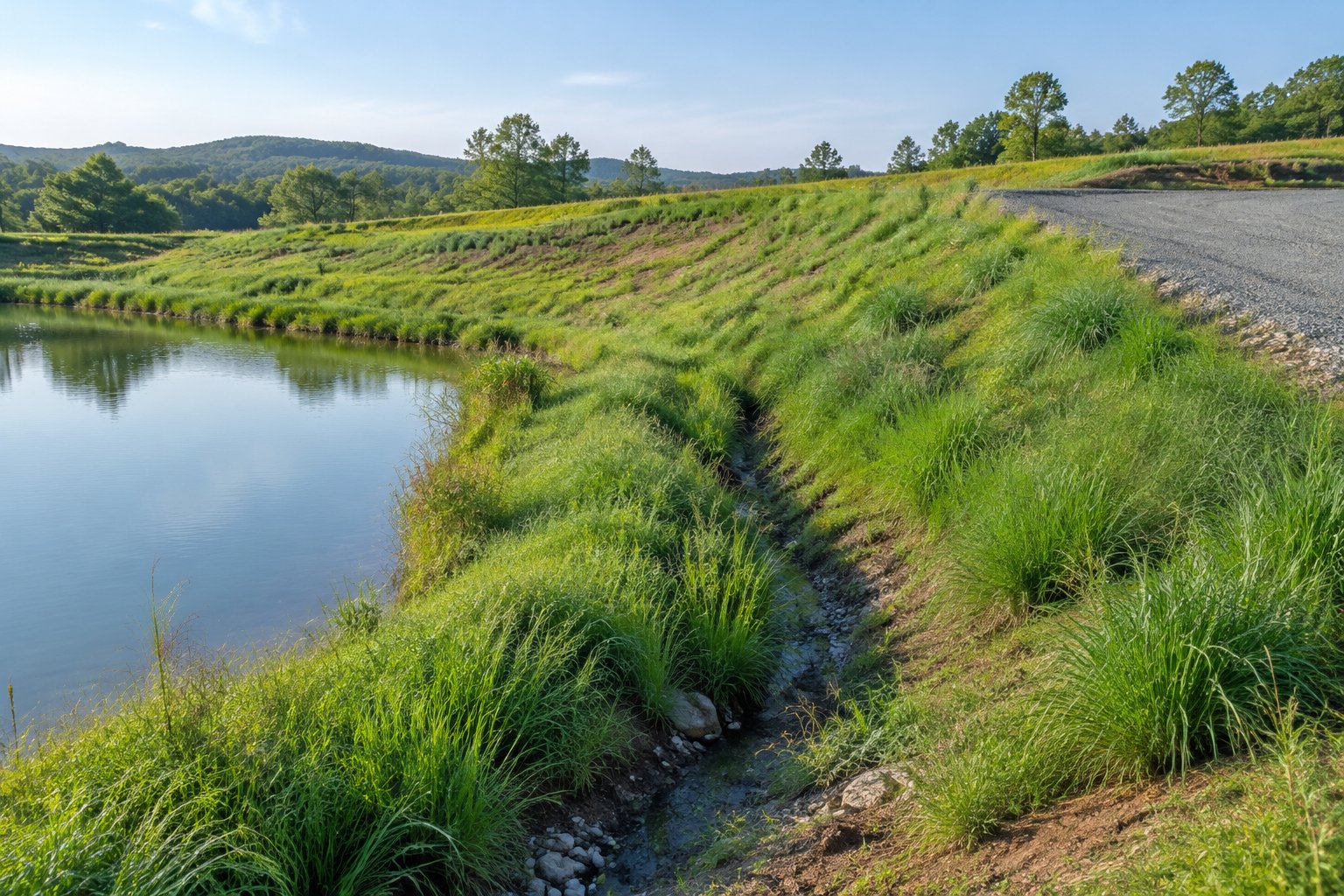
Blankets are commonly specified for drainage channels and swales where concentrated water flow would wash away loose mulch. They are also used on embankment slopes along roadways and retention ponds, and in areas requiring longer-term protection before permanent vegetation establishes.
The choice between a blanket and a hydraulic application depends on slope angle, flow velocity, and how long the area will remain exposed. On steep slopes where bonded fiber matrix competes with blankets, the right selection can mean the difference between one application and three.
Silt Fence and Perimeter Control for Sediment Capture
Silt fence is the most widely recognized perimeter control on construction sites. It captures sediment at the boundary of disturbed areas before it can migrate off-site into storm drains, waterways, or neighboring properties.
Proper silt fence installation requires trenching the fabric into the ground, not just stapling it to posts. In Texas clay soils, poor installation is the leading cause of silt fence failure during rain events.
Posts must be driven on the downslope side, and fabric must be anchored with a minimum 6-inch burial depth. Silt fencing alone does not prevent erosion. It only captures sediment after erosion has occurred.
That distinction matters for compliance, because inspectors look for source controls, meaning erosion prevention, in addition to perimeter controls that capture sediment.
Inlet Protection, Berms, and Check Dams for Runoff Control
Storm drain inlets on active sites need protection to prevent sediment from entering the municipal storm sewer system. Inlet protection devices include filter fabric wraps, rock bags, and manufactured drop-inlet guards.
Check dams built from rock, sandbags, or fiber rolls slow water velocity in temporary drainage channels. Berms and diversion dikes redirect runoff away from exposed slopes and toward controlled outlets.
Together, these BMPs form the runoff control layer that works alongside erosion prevention and perimeter sediment capture.
Method
Primary Function
Best Application
Limitation
Hydroseeding
Erosion prevention via vegetation
Large flat to moderate slopes
Requires 7 to 14 days for germination
Flexterra HP-FGM
Erosion prevention on steep slopes
Slopes steeper than 2:1
Higher material cost than standard mulch
Erosion control blankets
Surface protection and flow control
Channels, embankments, steep grades
Labor-intensive installation
Silt fence
Perimeter sediment capture
Site boundaries, lot lines
Does not prevent erosion at the source
Inlet protection
Drain inlet sediment filtration
Storm drains, curb inlets
Requires regular cleanout
Check dams
Velocity reduction in channels
Temporary swales, ditches
Must be sized to flow conditions
What Triggers Stormwater Requirements in Texas
Any construction project in Texas that disturbs one acre or more of soil is required to obtain stormwater discharge permit coverage. That threshold catches virtually every commercial, industrial, and infrastructure project in the state.
When NPDES Permit Coverage and a SWPPP Usually Apply
The Clean Water Act established the National Pollutant Discharge Elimination System (NPDES) program, which regulates stormwater discharges from construction sites. In Texas, the TCEQ administers this program through the Texas construction general permit (TXR150000).
Projects disturbing between 1 and 5 acres file a site notice. Projects disturbing 5 or more acres require a Notice of Intent and a complete Stormwater Pollution Prevention Plan, called a SWPPP or SWP3 in TxDOT terminology.
The SWP3 must be developed before construction begins and kept on-site for the duration of the project. Failure to obtain permit coverage before breaking ground is itself a violation, separate from any erosion or discharge issues that follow.
How an Erosion Control Plan Supports Stormwater Pollution Prevention
The SWP3 is the document that specifies which best management practices will be used on-site, where they will be installed, and who is responsible for maintaining them. It must include:
- A site map showing disturbed areas, drainage patterns, and BMP locations
- A description of each erosion and sediment control measure and its installation sequence
- A construction phasing plan that limits the acreage of exposed soil at any one time
- Pollution prevention measures for concrete washout, fuel storage, and other non-sediment pollutants
- An inspection schedule and maintenance protocol for all installed BMPs
A well-written erosion control plan gives the GC a clear operational blueprint that coordinates earthwork, grading, and BMP installation across the project timeline. More detail on how to prevent permit holds with proactive erosion control is worth reviewing before the pre-construction meeting.
Inspection and Maintenance Expectations During Active Construction
Once the SWP3 is in place and BMPs are installed, the permit requires regular inspections. In Texas, erosion and sediment control inspections must occur at least once every 14 calendar days and within 24 hours after any rainfall event of 0.5 inches or more.
Inspectors check whether BMPs are functioning as designed, whether accumulated sediment has been removed from silt fences and basins, and whether any new areas of disturbance have been left unprotected.
Non-compliance findings require corrective action within a specified timeframe, and repeated violations can escalate to enforcement action with daily penalties.
For GCs managing multi-phase projects, inspection and maintenance are ongoing labor and cost commitments. The question is how to sequence BMPs efficiently, so they protect the site without creating conflicts with other trades on the schedule.
Matching the Right BMPs to Slope, Drainage, and Construction Phase
Selecting erosion and sediment control methods is not a one-time decision. It is a rolling process that changes as grading progresses, utilities go in, and final surfaces take shape.
Sequencing Land Clearing and Grading to Limit Open Soil
The most effective way to reduce erosion risk is to minimize the amount of bare soil exposed at any given time. Phased clearing, where only the area needed for current construction is stripped, keeps the rest of the site vegetated.
On large commercial pads in Texas, coordinate with the earthwork subcontractor to clear in sections rather than stripping the entire site at once. TxDOT guidance on construction vegetation management supports this approach, especially where sensitive habitats may be present.
Temporary seeding or mulch should be applied to any graded area that will sit idle for 14 days or more. This 14-day window aligns with the Construction General Permit stabilization requirements for most Texas regions.
Where Sediment Basins, Sediment Traps, and Diversion Ditches Fit
Sediment basins are required on large construction sites where 10 or more acres drain to a common discharge point. These basins capture runoff, allow sediment to settle, and discharge cleaner water downstream.
Accumulated sediment must be removed when it reaches 50% of the basin's design capacity. Sediment traps serve a similar function at a smaller scale, typically at pipe outlets or low points in temporary drainage patterns.
Diversion ditches and dikes redirect clean water around disturbed areas, reducing the volume of runoff that contacts exposed soil.
On Gulf Coast sites with minimal grade change, creating positive drainage toward sediment controls requires careful grading. Standing water in low areas can delay subgrade prep and compromise fill compaction.
When Riprap, Geotextiles, and Retaining Walls Make Sense
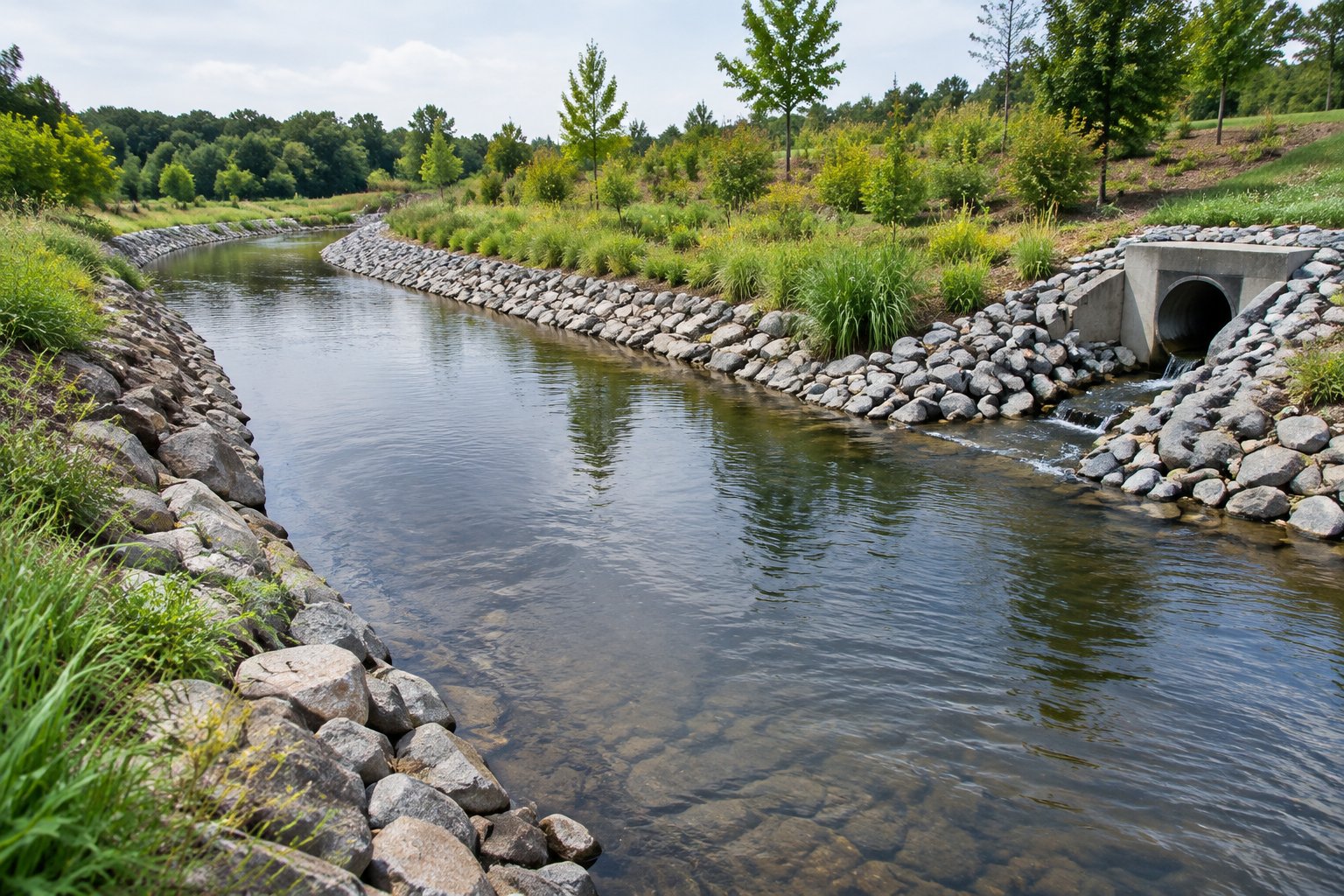
Riprap is used at pipe outlets, channel transitions, and areas where concentrated flow would erode soil faster than vegetation can establish. Geotextile fabric is placed beneath riprap to prevent soil from migrating through the rock layer.
Retaining walls are necessary where slope angles exceed the soil's natural angle of repose or where property lines prevent grading to a stable slope.
On cut-and-fill operations common in Texas highway and commercial site work, retaining walls combined with erosion control methods for active jobsites protect both the structural fill and adjacent ground.
Geotextile fabric also serves as soil separation and filtration in drainage applications. This prevents fine-grained Texas clays from clogging aggregate drainage layers behind walls and under pavements.
When Temporary Seeding Should Transition to Permanent Vegetation
Temporary seeding uses fast-establishing grass species to stabilize soil during construction. It is not intended to be the final ground cover.
Once final grading is complete and the site is ready for closeout, permanent seeding or permanent vegetation must replace the temporary cover. Permit coverage cannot be terminated until final stabilization is achieved, which typically means 70% uniform vegetative cover over all disturbed areas.
On large sites, this requirement drives the timeline for final hydroseeding or native grass installation. For projects with extended durations, temporary cover crops may need to be reseeded seasonally.
Selecting species that perform in Texas summer heat versus winter dormancy periods affects both coverage success and cost. Knowing how to choose the right site coverage strategy prevents gaps in protection during the transition.
How To Evaluate an Erosion Control Contractor Before Award
The erosion control subcontractor you select directly affects whether your site passes inspection and stays on schedule. Not all vendors bring the same level of field knowledge or equipment capacity.
Experience With Texas Soil, Rain Events, and Large Acreage Mobilization
A contractor bidding erosion control in Texas should demonstrate direct experience with the state's soil types, rainfall patterns, and regulatory environment. Gulf Coast clay, Blackland Prairie vertisols, and sandy East Texas soils each respond differently to the same erosion control treatment.
Ask for project references on sites of similar size and complexity to yours. A crew with experience installing millions of square feet of mulch in a single year has the equipment fleet and labor depth to mobilize quickly.
Allied Hydromulch TX, LLC installed roughly 15 million square feet in 2025 across more than 60 clients, which is the kind of track record that signals a crew can scale to your site.
Regional knowledge also means understanding local TCEQ enforcement patterns, TxDOT seed specification lists, and the germination windows that shift between Houston's humid growing season and the drier conditions in San Antonio or Dallas.
Method Selection, Documentation, and Right-First-Time Planning
A qualified contractor evaluates slope angles, soil conditions, and drainage patterns before selecting the method. That evaluation should result in a recommendation that matches your SWP3 requirements and site conditions.
Documentation matters for compliance. Your erosion control sub should provide application records, seed mix certifications, and photo documentation that supports your SWP3 inspection log.
On sites where stormwater violations are a real risk, this paper trail is what keeps you in compliance during an audit. A right-first-time approach means one application that performs as intended, eliminating re-mobilization costs and schedule disruption.
Questions To Ask About Capacity, Germination Windows, and Maintenance
Before awarding the erosion control scope, ask these questions:
- What is your daily application capacity in square feet? This tells you whether the crew can cover your site in a single mobilization or will need multiple visits.
- What seed mix do you recommend for this soil type, slope, and season? The answer should reference specific species and germination timelines, not vague assurances.
- Do you provide post-application inspection or maintenance support? Some contractors monitor germination and address any washout areas proactively.
- Can you provide compliance documentation for the SWP3? Application logs, seed tags, and photo records should be standard deliverables.
- What is your experience with Flexterra, bonded fiber matrix, or erosion blankets on slopes? A contractor that only offers one method may not be equipped for every condition your site presents.
The answers to these questions separate a professional erosion control specialist from a generalist.
Frequently Asked Questions
What do inspectors and civil plans typically require for temporary sediment control at the perimeter?
Most Texas construction permits require silt fence or equivalent perimeter controls installed before grading begins, with the fence trenched into the ground a minimum of 6 inches. Inspectors verify that the fence is intact after each qualifying rain event and that accumulated sediment has not reached more than one-third of the fence height.
When do you need to install slope protection, and how do you choose between blankets, mats, and turf reinforcement?
Slope protection should be installed immediately after grading on any slope steeper than 3:1. Erosion control blankets work well on slopes up to 2:1 in moderate flow conditions; for steeper grades or high-velocity drainage areas, turf reinforcement mats or hydraulic products like Flexterra provide more durable protection during the vegetation establishment period.
How do you handle erosion control on steep cut-and-fill slopes after a heavy rain hits mid-project?
Assess the slope for rill and gully formation within 24 hours of the rain event, as required by your permit. Re-grade any rills, reapply hydraulic mulch or bonded fiber matrix to damaged areas, and reinforce toe-of-slope sediment controls. Waiting to address washouts increases repair costs and extends re-stabilization timelines. More detail on reducing runoff risk on steep sites covers the sequencing that prevents repeat failures.
Where do wattles, socks, and compost logs work best on a site, and what spacing is typical?
Fiber rolls, also called wattles, and compost socks perform best on moderate slopes as slope interruption devices, breaking the length of unprotected slope into shorter segments. Typical spacing is 10 to 25 feet apart depending on slope steepness, with closer spacing on steeper grades. They also work along the perimeter of stockpile areas and at transitions between disturbed and undisturbed ground.
How do you keep sediment out of curb inlets and storm drains without slowing down paving and concrete work?
Use manufactured inlet protection devices that can be installed and removed quickly as paving crews work through the site. Filter fabric wraps and rock-bag barriers provide effective sediment capture while allowing access for curb pours and paving operations. Coordinate inlet protection removal and reinstallation with the paving schedule in the daily site meeting.
What should an erosion and sediment control plan include to pass pre-construction and post-rain inspections?
A complete plan includes a site map with BMP locations, a construction phasing sequence that limits exposed soil, specific product and installation details for each erosion and sediment control measure, an inspection schedule every 14 days and within 24 hours of 0.5-inch rainfall, and a maintenance log documenting corrective actions. The stormwater pollution prevention plan requirements outline documentation standards that align with the construction general permit.
Keep Your Site Moving and Your Permit Clean
Construction site erosion control is a core schedule element that protects your permit, your budget, and every trade that follows earthwork. The methods and sequencing covered here apply to sites across Texas, Louisiana, Oklahoma, and New Mexico, where soil types and weather patterns demand careful planning.
The contractor you choose determines whether the work holds through the next rain event or becomes a rework line item. Look for verifiable field experience, method flexibility, and documentation that stands up to inspection.
Allied Hydromulch TX, LLC has provided hydroseeding and erosion control across Texas and the Gulf South since 1990. Use the online cost estimator to get a starting number for your project, or call 281-482-8212 to discuss your site with a superintendent.