.svg)


Work areas on an active Fort Bend County site change every week. Grading moves, stockpiles shift, utility trenches open and close, and exposed soil shows up where it was not planned. That moving target is the hardest part of erosion control in Fort Bend County, TX, and it is why so many stabilization scopes fall behind the dirt work.
The practical answer is to plan stabilization in phases that match your grading sequence, and to lock in a contractor who can mobilize on short notice when work on a slope, pad, or channel stops for good or is expected to pause for more than 14 days. Stabilization has to start at that point, not after the area has already sat idle for two weeks. Bare soil sitting idle through a Gulf Coast rain event is what triggers sediment problems, inspection findings, and rework.
Fort Bend County adds a layer most Texas counties do not. The county drainage district reviews plans and protects channel flow conditions, so your erosion control approach has to line up with approved drainage design. Sugar Land, Katy, Richmond, and unincorporated tracts each have their own review path.
Soil conditions here do not help. Heavy clay sheds water fast, holds moisture at the surface, and crusts in summer heat. Getting vegetation started on that ground takes the right material and the right timing.
How Fort Bend County Drainage Requirements Shape Site Planning
Fort Bend County drainage requirements drive where erosion control goes and when it can be installed. The Fort Bend County Drainage District reviews drainage reports, plans, and plats for new developments before approval by Commissioners Court, with the goal of preventing adverse drainage impact on current and future residents, as described on the county drainage district page.
That review sets your flow paths. Your stabilization plan has to protect those paths, not fight them.
Reviewing Drainage Plans, Grading, and Outfalls Before Mobilization
Before anyone rolls equipment, we look at the approved drainage plan next to the current grading plan. Those two documents tell us where water will concentrate and how fast it will get there.
Key items to pull together:
- Outfall locations and the condition of receiving channels
- Finished grade versus current field conditions
- Detention or retention areas scheduled to come online
- Slope ratios on embankments, berms, and pond banks
- Areas that will stay exposed longest between phases
Outfalls deserve extra attention. Concentrated discharge into an unprotected channel undoes good work upstream in one storm.
Coordinating With the Drainage District and Applicable Jurisdiction
Jurisdiction decides who inspects your site and which standards apply. A project inside Sugar Land or Katy city limits answers to that city's review process. An unincorporated tract answers to the county.
The drainage district maintains channels where it holds easements and reviews submittals for new development. Construction plan and plat submittals can be sent digitally for review and approval. Confirm the applicable review path early so your stabilization schedule matches the inspection schedule.
Separately, sites disturbing one acre or more, or smaller disturbances that are part of a larger common plan of development, that discharge stormwater to surface water in the state fall under the Texas construction general permit administered by the Texas Commission on Environmental Quality (TCEQ), which requires a Stormwater Pollution Prevention Plan (SWP3) before construction starts.
When Regrading Is Needed to Maintain Positive Drainage
Regrading comes first when water ponds against a pad, backs up behind a stockpile, or sheets over a slope face in an unplanned direction. Seeding into a low spot wastes material.
We check for positive drainage before any hydraulic application. If the surface holds water, the slurry sits and the seed rots. Fixing grade adds a day; fixing a failed application adds a week and a second mobilization.
Stormwater Erosion Control in Fort Bend County During Construction
Stormwater erosion control in Fort Bend County works best when it follows the dirt work instead of waiting for final grade. Sites here deal with clay soils, flat drainage gradients, and rainfall that arrives hard and fast.
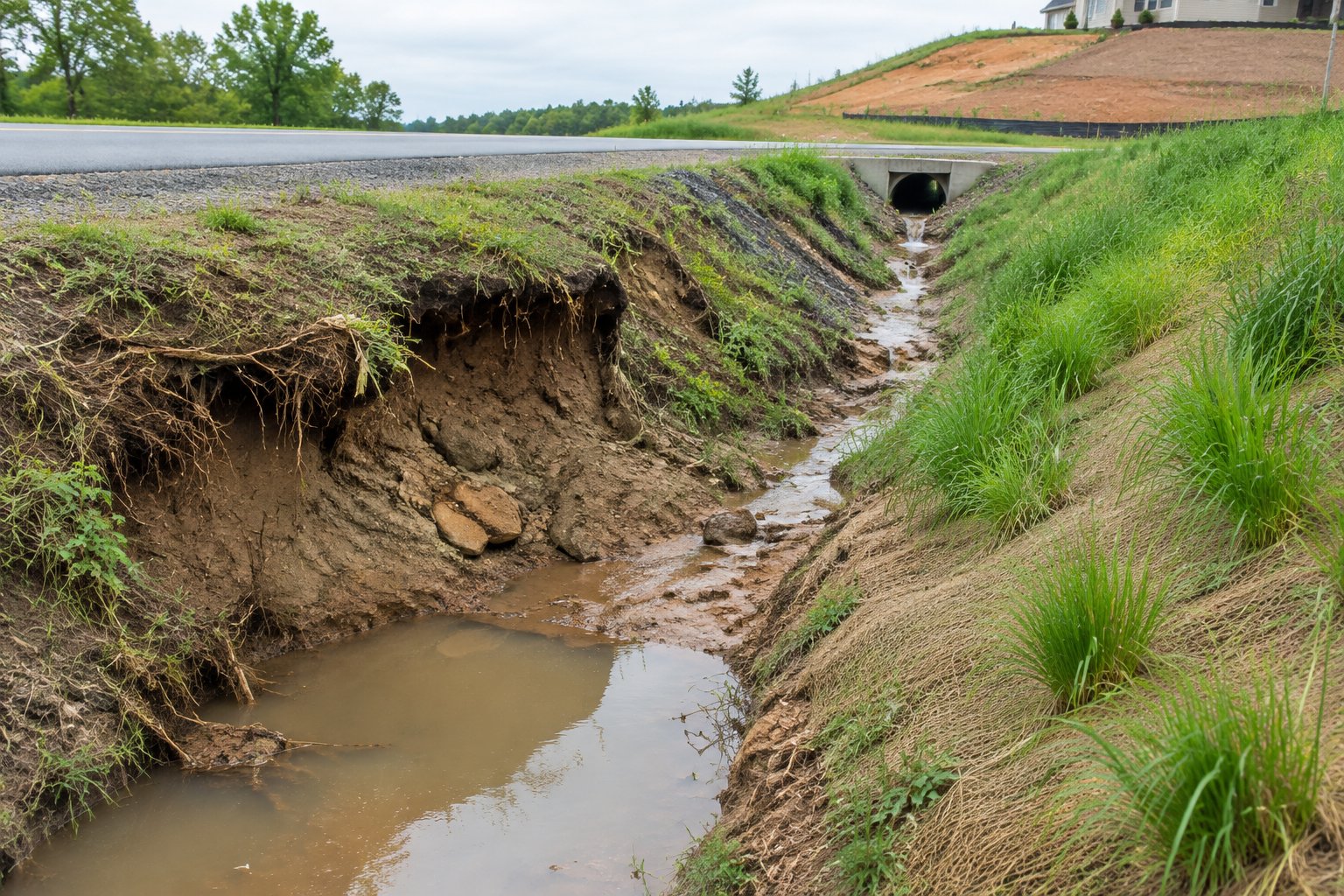
Sediment leaving your property is the visible failure. Scouring inside your own channels and slopes is the expensive one.
Stabilizing Changing Work Areas and Disturbed Soil
Active sites rarely have one clean stabilization event. They have a series of them. We plan around the phases where soil goes idle.
Timing is set by the permit. Under Part III.F.2 of the TCEQ Construction General Permit, stabilization must be initiated immediately when construction activities have permanently ceased on a portion of the site, or have temporarily ceased and are not expected to resume for more than 14 days, subject to the permit's exceptions. Initiating stabilization is not the same as completing it; the permit sets separate requirements for completion.
Common triggers for temporary stabilization:
- A pad or lot reaches rough grade and pauses for permitting
- Utility trenches backfill ahead of paving
- Detention pond banks finish before the outlet structure
- A phase boundary sits exposed while the next area is cleared
- Weather delays push paving out by several weeks
Hydraulic mulch covers these areas quickly. Coverage happens in a single visit on most work areas, and germination on a hydroseed application often begins within 7 to 14 days when temperature and moisture are favorable.
Managing Runoff at Slopes, Channels, and Drainage Features
Slopes and channels take concentrated flow, so they need more than a light mulch cover. TxDOT guidance notes that embankments often receive concentrated runoff from pavement surfaces, and that soil type and slope steepness together determine which temporary erosion control measure fits, as laid out in TxDOT's erosion prevention methods guidance.
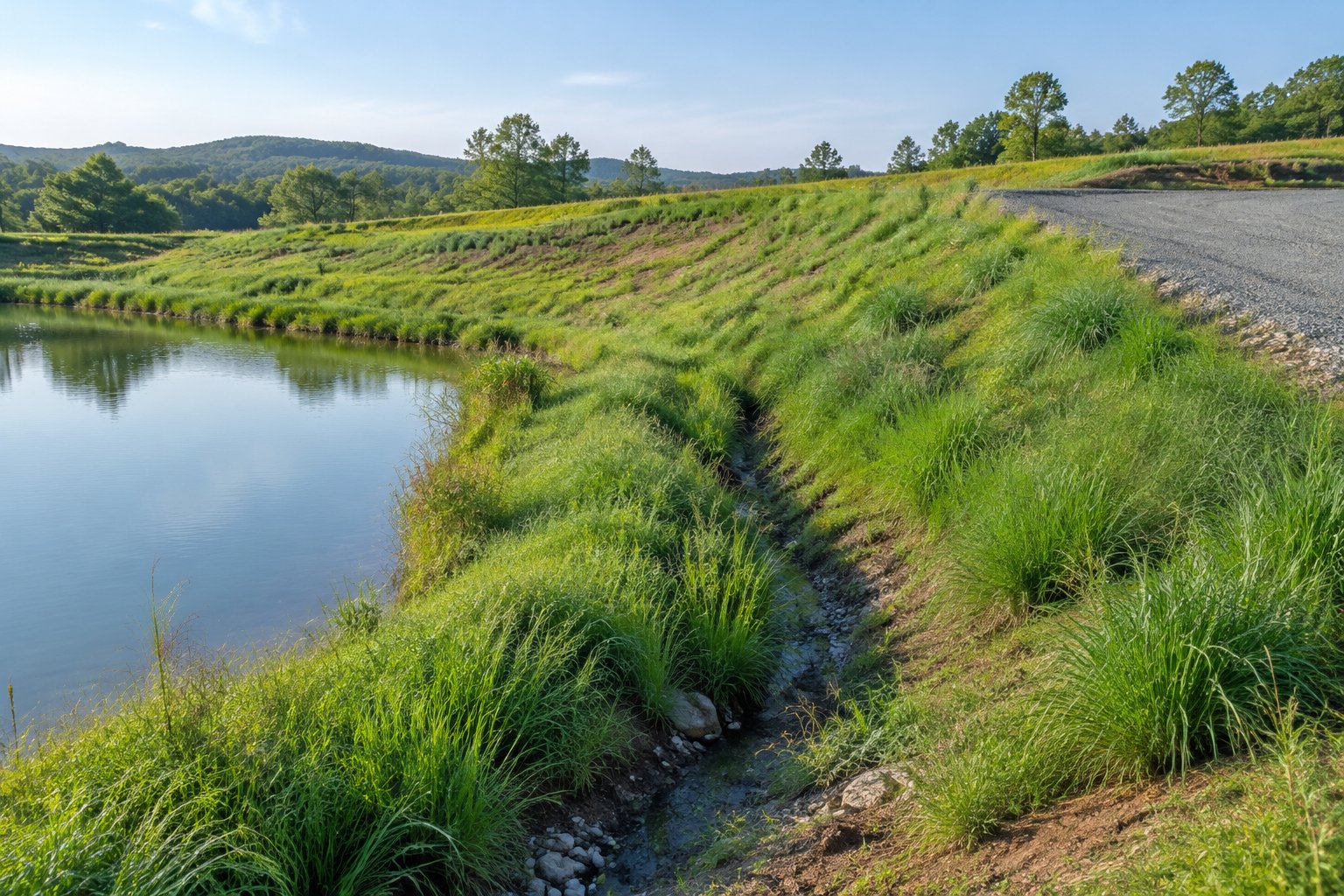
Retention ponds and drainage swales carry their own timing pressure. Our breakdown of hydroseeding for retention ponds covers how permit milestones affect when banks should be seeded.
For steeper faces, a bonded fiber matrix or a flexible growth medium holds the soil while roots develop. Practical guidance on reducing runoff risk on steep ground walks through the field decisions involved.
Preventing Scouring Before Heavy Rain Events
Scouring starts where water speeds up: at the toe of a slope, at an outfall, and in any unlined swale. Once a rill forms, the next storm deepens it.
We watch the forecast during active phases and prioritize the areas most likely to channelize. Protecting a slope before a front moves through costs far less than repairing the gullies afterward. Silt fence and perimeter controls help at the boundary, and this explanation of silt fence function covers where it fits alongside surface stabilization.
Selecting Stabilization Methods for Slopes and Drainage Areas
Material selection comes down to slope steepness, soil type, expected flow, and how long the protection needs to last. A 6H:1V pond bank and a 2H:1V embankment do not get the same treatment.
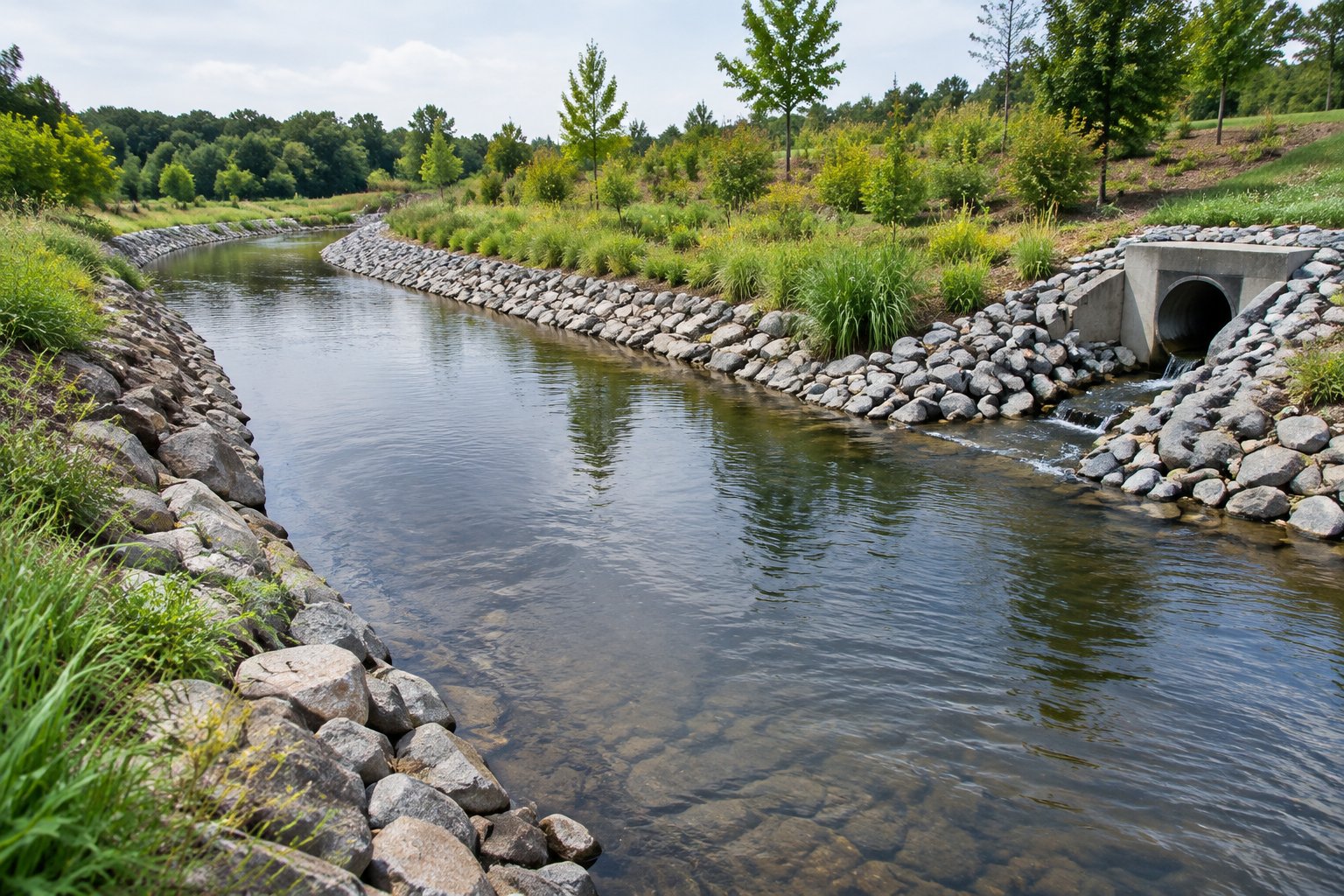
Riprap has its place in permanent channel armoring and streambank work. For disturbed construction soil that needs vegetation, hydraulic products do the job at a fraction of the cost.
When Hydraulic Mulch and Hydroseeding Fit the Site
Hydroseeding fits graded areas with moderate slopes and reasonable equipment access. The slurry of seed, mulch, fertilizer, and soil conditioners sprays over prepared soil and forms a moisture-holding layer.
Good candidates include:
- Building pads and parking lot perimeters at rough grade
- Detention pond bottoms and gentle banks
- Right-of-way strips and roadway shoulders
- Large open acreage between construction phases
Under favorable conditions, a usable cover often develops in 4 to 6 weeks, depending on weather and irrigation; mature vegetation that meets final stabilization criteria takes longer. Our overview of hydroseeding for commercial sites goes deeper on large-area coverage, and germination timing in Texas helps with closeout planning.
When Erosion Blankets or Hydraulic Soil Stabilizers Are Needed
Blankets and hydraulic soil stabilizers take over when slope or flow exceeds what standard mulch can hold. TxDOT distinguishes between organic channel liners used mainly for vegetation establishment and synthetic materials that work with the root matrix for long-term channel protection, and notes synthetics are preferred in ditches with frequent flows deeper than 8 inches, per its channel liner and blanket guidance.
Blankets also help on shaded slopes, sandy pockets, and areas where seed needs physical protection from sheet flow. A bonded fiber matrix application is the middle ground when blanket installation is impractical.
Using Flexterra for Demanding Slopes and Disturbed Soils
Flexterra is a flexible growth medium (FGM) built for slopes and disturbed soils where standard hydraulic mulch will not hold. It bonds tightly to the surface and starts protecting immediately after application.
We reach for it on steep cut and fill faces, pond banks with tight ratios, and areas that must perform through a rain event before vegetation arrives. Details on Flexterra slope protection explain how it fits into a compliance timeline.
What Brazos River Erosion Projects Show About Local Risk
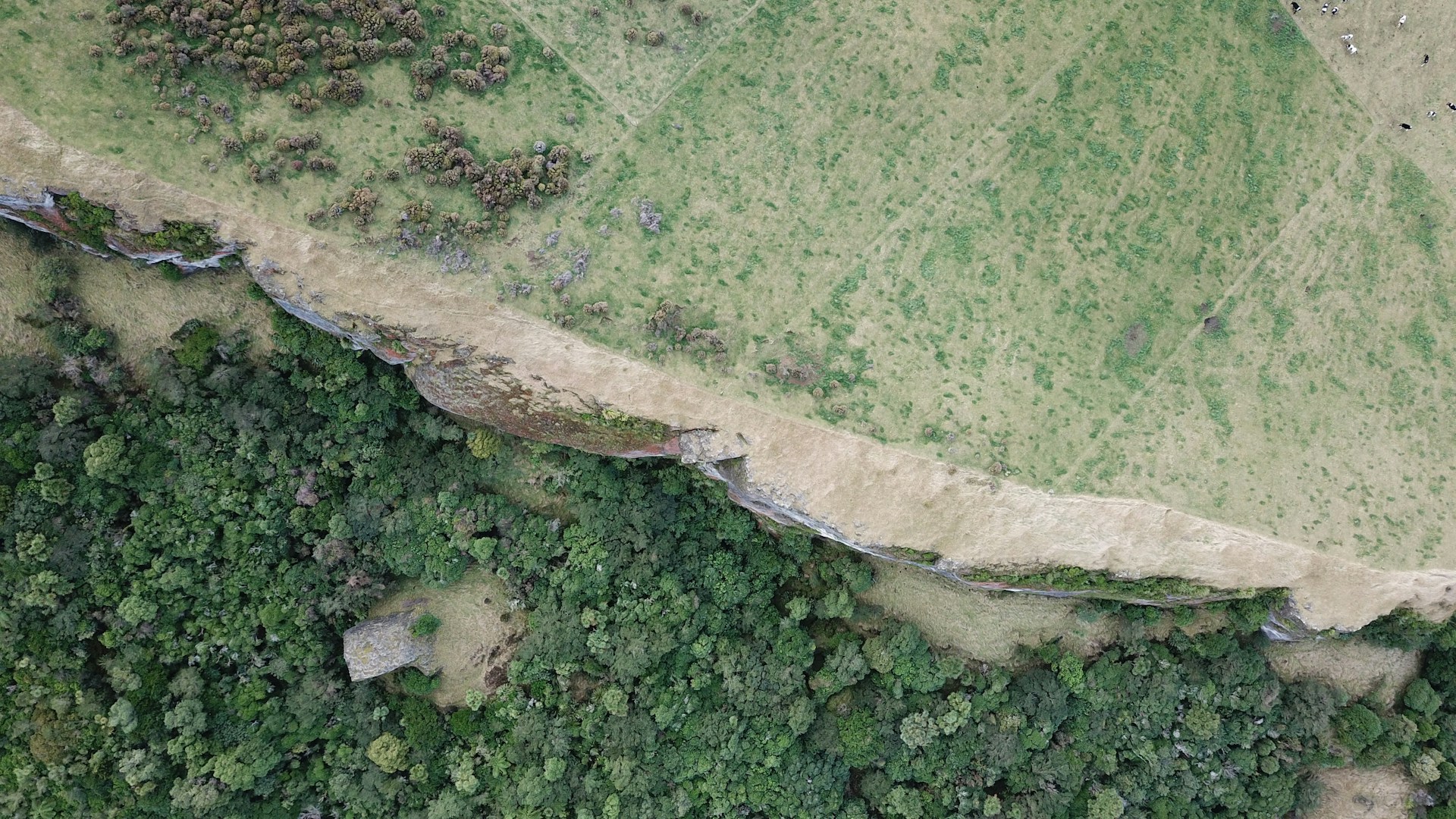
Brazos River erosion work in Fort Bend County shows how much force moving water carries, and how expensive it gets once banks start giving way. That risk sits in the background of every project near the river corridor.
The scale of public spending here tells the story better than any general warning.
The Simonton Pinch Point and Concentrated River Erosion
Fort Bend County received roughly $25.8 million from the Texas General Land Office (GLO) to address erosion along a five-mile stretch of the Brazos River at the Simonton Pinch Point, part of a larger $72.5 million regional mitigation fund, according to Fort Bend County Precinct 3 Commissioner Andy Meyers.
Meyers said experts fear two portions of the river could erode until they join, increasing velocity and creating erosion problems both upstream and downstream. One homeowner in the area estimated losing up to 10 feet of yard.
How Flood Mitigation Projects Affect Development Planning
Flood mitigation projects change hydrology in the areas around them. New structures, access roads, and regraded banks shift how water moves through nearby tracts.
Developers working near active mitigation work should expect coordination requirements, temporary access constraints, and drainage review that accounts for the finished condition. Build that into your schedule instead of discovering it at plan review.
Separating Riverbank Protection From Construction Site Stabilization
Riverbank protection and construction site stabilization solve different problems. Bank work uses engineered structures and heavy stone to resist channel forces over decades.
Construction site stabilization protects disturbed soil during a project window and establishes vegetation that holds afterward. Hydraulic mulch, blankets, and seeding handle the second job. They are not a substitute for engineered bank armoring, and no one should specify them that way.
Preparing an Erosion Control Scope That Keeps Work Moving
A clear scope prevents the most common delay: a crew mobilizing to a site that is not ready. Grade has to be finished, debris cleared, and access open for the equipment.
The more detail you share up front, the tighter the schedule holds.
Site Details to Share With an Erosion Control Contractor
Useful information at the inquiry stage:
- Total disturbed acreage and the portion ready for treatment now
- Slope ratios on embankments, ditches, and pond banks
- Soil type and whether topsoil was stripped or replaced
- Required seed specification, including any TxDOT or municipal mix
- Target dates for inspection, phase turnover, or substantial completion
- Access restrictions, active utilities, and equipment staging areas
Our erosion control services for sites under compliance pressure covers how those details change the recommended approach. For budgeting, Allied's calculator estimates standard hydroseeding from your project size in square feet. Blankets, Flexterra, and channel work need a project quote.
Sequencing Installation Around Grading, Utilities, and Inspections
Stabilization slots between final grade and the next trade. Miss that window and you are either seeding into traffic or waiting weeks for another opening.
We sequence around three fixed points: when grading crews finish an area, when utilities stop crossing it, and when the inspection happens. Sites in Houston and Fort Bend often run tight between those markers, and keeping Houston sites on schedule walks through how that coordination works in practice.
Documentation matters for sign-off. This guide to stormwater compliance and inspection readiness covers what inspectors look for.
Coordinating Work Across Fort Bend County and Nearby Gulf Coast Projects
Many developers run several Texas projects at once, and using one contractor across them simplifies scheduling. The same GLO regional mitigation fund that supported Fort Bend County also directed money to Galveston, Liberty, Hardin County, Bedias, Bremond, Midway, and San Augustine, which gives some sense of how widely this work spreads across the state.
We cover Texas as our primary market, plus Louisiana, Oklahoma, and New Mexico. In 2025 we mulched approximately 15 million square feet for more than 60 unique clients.
Early Stabilization Supports Compliance and Schedule Control
Erosion control in Fort Bend County, TX works when it is planned alongside grading, not bolted on at the end. Drainage district review shapes your flow paths, jurisdiction determines your inspection path, and clay soil determines how quickly vegetation takes hold.
Treating stabilization as a series of phase-matched installations keeps disturbed soil covered through the parts of the schedule where it would otherwise sit exposed. That is what protects the permit and the sequence behind it.
Allied Hydromulch TX, LLC has handled hydroseeding and erosion control across Texas and the Gulf Coast since 1990. Tell us your slope conditions, acreage, and target inspection date, and we will talk through what fits. Call 281-482-8212 to request a project quote. If part of the site only needs standard hydroseeding, our online calculator gives a rough estimate from the project size in square feet.
Frequently Asked Questions
What Erosion Control Is Needed for an Active Construction Site in Fort Bend County?
Most active sites need a combination of perimeter sediment control, surface stabilization on exposed soil, and reinforced protection at slopes and outfalls. The right mix depends on disturbed acreage, slope ratios, and how long each area stays idle. Sites disturbing one acre or more, or smaller sites within a larger common plan of development, also need an SWP3 in place before construction begins.
Do Fort Bend County Drainage Requirements Affect Erosion Control Planning?
Yes. The drainage district reviews drainage reports, plans, and plats for new development before Commissioners Court approval, and that review defines the flow paths your stabilization plan has to protect. Confirm whether your tract falls under the county or a city such as Sugar Land or Katy, since the review path differs.
How Can Contractors Stop Erosion on a Sloped Construction Site?
Cover the slope face before the next rain event with a product rated for that slope ratio and soil type. Standard hydraulic mulch works on gentler grades, while steeper faces call for a bonded fiber matrix, a flexible growth medium such as Flexterra, or an erosion blanket. Protect the toe of the slope and any concentrated discharge point at the same time.
Can Hydraulic Mulch Help Stabilize Exposed Soil Before Vegetation Is Established?
Yes. Hydraulic mulch bonds to the soil surface on application and starts protecting against raindrop impact and sheet flow right away, while holding moisture for the seed underneath. On a hydroseed application, germination often begins within 7 to 14 days when temperature and moisture are favorable.
When Should an Erosion Control Contractor Be Scheduled During Site Development?
Bring the contractor in during planning, then schedule installation as each area reaches final grade and whenever work in an area stops permanently or is expected to pause for more than 14 days, since temporary stabilization can be required during construction pauses. The permit requires stabilization to be initiated immediately in those cases and sets separate requirements for completing it. Waiting until the whole site is graded leaves earlier phases exposed for months and creates a rush before inspection. Sharing your grading sequence early lets us build a phased schedule that matches it.